Hear from Our Customers
You’re working with glass because you need precision. Maybe it’s an architectural feature that has to fit exact measurements, or an industrial component where tolerances matter. Maybe it’s a custom design that can’t be replicated if the first cut fails.
Traditional glass cutting methods generate heat. That heat creates stress points that lead to cracks, especially on thicker glass or intricate patterns. You end up with wasted material, missed deadlines, and the frustration of explaining why the project costs more than quoted.
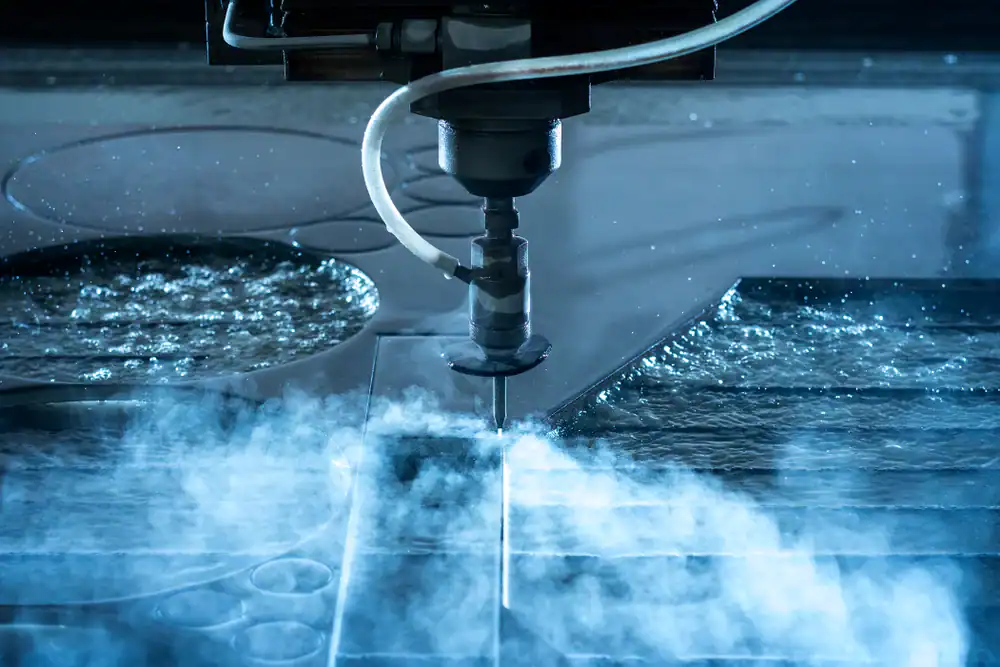
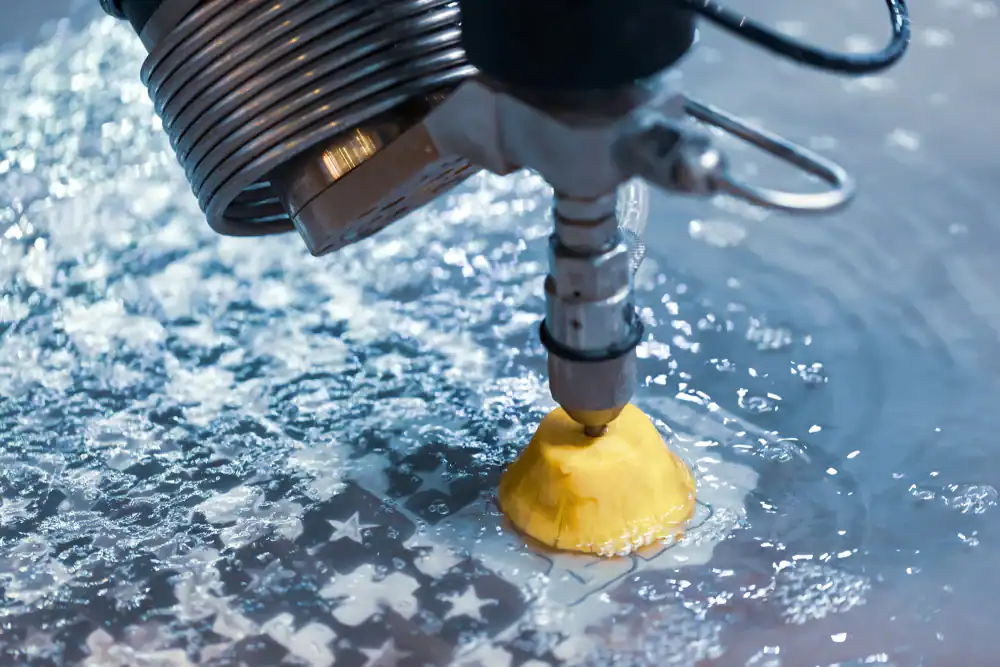
Waterjet cutting uses high-pressure water mixed with fine abrasive to cut through glass without generating any heat. The material stays cool throughout the entire process. That means no thermal stress, no micro-fractures, and no unexpected breakage. You get clean edges that need minimal finishing, complex curves that would be impossible with traditional scoring methods, and accuracy within 0.1mm. Your design gets executed exactly as planned, and the glass arrives ready to install.
We handle precision waterjet cutting for architects, designers, contractors, and manufacturers throughout Baldwin, NY and the surrounding tri-state area. We work with projects that require exact specifications—the kind where a millimeter matters and there’s no room for do-overs.
Baldwin sits in Nassau County, where residential renovations, commercial builds, and industrial manufacturing all demand reliable fabrication partners. We’re local enough to understand project timelines in this market, and experienced enough to handle everything from one-off custom pieces to production runs.
Our CNC glass waterjet cutting equipment handles laminated glass, thick architectural panels, delicate design work, and industrial components. We consult on material selection before the cut happens, so you’re not guessing whether your glass type will work with your design.
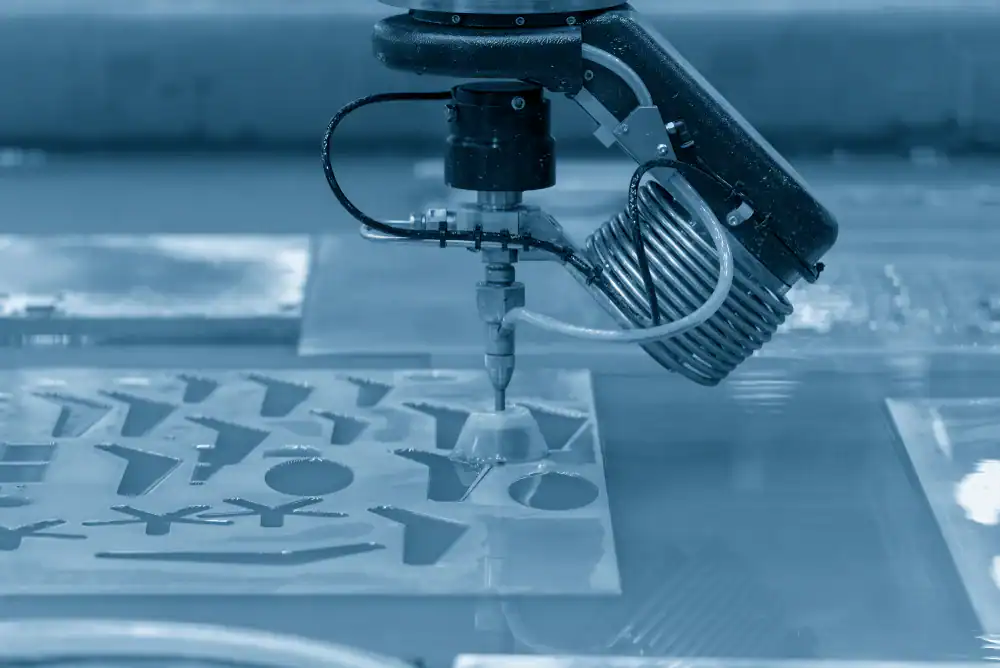
You send us your design file—CAD drawings, DXF files, or even detailed sketches if that’s what you’re working from. We review the design against the glass type you’re using to flag any potential issues before we start cutting. If your glass is too thin for the design, or if the shape creates weak points that’ll break during handling, we’ll tell you upfront.
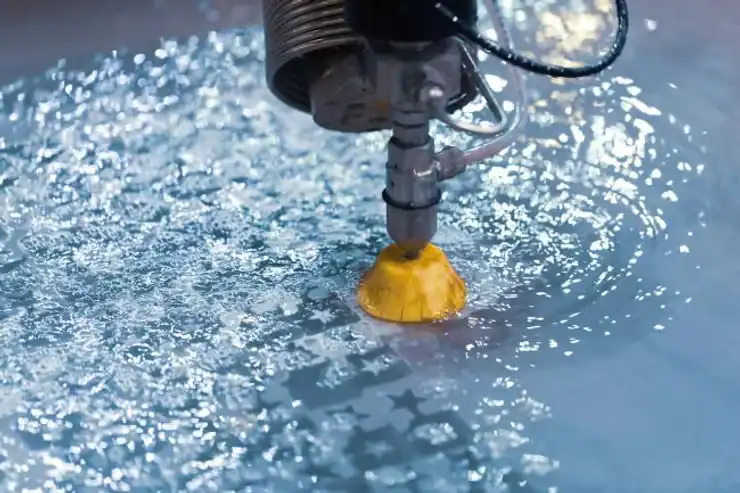
Once the design is confirmed, we program the CNC waterjet system with your exact specifications. The machine uses a high-pressure stream of water mixed with garnet abrasive to cut through the glass. There’s no blade, no heat, no vibration that could cause cracking. The waterjet follows your design path with precision that stays consistent across the entire sheet.
We support the glass on a perfectly flat surface throughout the cutting process to prevent flexing. Glass breaks when it bends too much, so proper support isn’t optional—it’s the difference between a clean cut and a ruined piece. After cutting, we inspect edges for any micro-chipping or frosting, then finish as needed based on your project requirements.
You get glass that matches your design file, with edges clean enough for most installations without additional grinding or polishing.
Ready to get started?
Waterjet cutting handles shapes that traditional methods can’t touch. Tight inside corners, complex curves, intricate patterns—all possible because there’s no physical blade that needs room to turn. If you can draw it, we can cut it.
The process works on glass from 3mm up to 100mm thick. Thicker architectural panels, laminated safety glass, even glass with embedded materials all cut cleanly. You’re not limited to straight lines or simple curves.
In Baldwin’s construction and design market, architectural glass projects often require custom shapes for storefronts, interior partitions, decorative panels, and structural elements. Residential glass cutting services here cover everything from custom shower enclosures to kitchen backsplashes with intricate inlays. Industrial clients need precision components for equipment housings, machine guards, and specialized manufacturing applications.
Edge quality comes out smooth enough that many installations don’t require additional finishing. When you do need polished edges for aesthetic reasons, there’s less material to remove, which means faster finishing and lower costs. The lack of heat also means no temper loss on pre-treated glass and no discoloration on coated materials.
No, and you shouldn’t let anyone try. Tempered glass is heat-treated to create internal stress that makes it stronger—but that same stress means it shatters completely if you attempt to cut it after tempering. The waterjet process will cause the entire piece to explode into small fragments.
If your project requires tempered glass with custom shapes, the cutting has to happen before the tempering process. You cut the glass to shape first, finish the edges, then send it out for tempering. There’s no workaround for this—it’s a fundamental property of how tempered glass is manufactured.
We work with clients on this sequencing regularly. If you’re planning a project that needs both custom cuts and tempered glass, we’ll cut your pieces to specification, then you arrange tempering with a glass treatment facility. Just know that tempering can cause slight dimensional changes, so we factor that into the cutting measurements when needed.
Chipping and frosting happen when stray abrasive particles hit the glass surface or when the waterjet exits the material. We control this through cutting parameters, proper masking, and equipment setup.
The waterjet stream has to exit into a catch tank that’s deep enough to prevent splash-back. If water and abrasive bounce back onto the glass surface, you get frosting—that cloudy, abraded appearance around the cut. We maintain our tank levels and use proper baffling to eliminate this issue.
Micro-chipping along edges occurs when the waterjet exits the bottom of the glass. We reduce this by adjusting water pressure, slowing traverse speed on delicate materials, and using finer abrasive grades for finish cuts. Some edge chipping is inherent to the process on certain glass types, but it’s typically minimal—we’re talking about chips measured in fractions of a millimeter. For applications where edges will be visible and need to be perfectly smooth, we finish them after cutting. For applications where edges get framed or sealed, the as-cut edge quality is usually sufficient.
We cut glass as thin as 3mm, but success depends heavily on the design and how well the material is supported. Thin glass flexes easily, and flexing causes breaks. The waterjet puts downward pressure on the material during cutting, so without proper support, thin glass will bend and crack.
We use a completely flat cutting surface with full support across the entire sheet. No gaps, no uneven areas where the glass can dip down as the cut progresses. For very thin material or intricate designs, we sometimes use sacrificial backing material underneath to provide additional support and reduce vibration.
The design matters too. Long, narrow cuts on thin glass create weak sections that can break during handling even if the cutting goes perfectly. Sharp inside corners concentrate stress. We’ll review your design before cutting and flag any areas that might cause problems. Sometimes a small design adjustment—like slightly larger corner radii or adding temporary tabs that get removed after cutting—makes the difference between a successful cut and a broken piece. If you’re working with thin glass, send us the design first so we can evaluate it before you commit to material costs.
Laser cutting uses focused heat to melt or vaporize material, which creates significant problems with glass. Glass doesn’t absorb laser energy efficiently, so you need extremely high power levels. That heat creates thermal stress that causes cracking, especially on thicker glass or complex shapes. You also get heat-affected zones around the cut that can weaken the material or cause discoloration.
Waterjet cutting is a cold process. Zero heat means zero thermal stress. The material properties don’t change around the cut edge. You can cut right up to the edge of the glass without worrying about heat damage to nearby areas. This matters for laminated glass, coated glass, or any material where heat would damage the bonding layers or surface treatments.
Laser cutting is faster on thin materials and works well for some applications, but it’s limited in what it can handle. Waterjet cutting works on any glass thickness, any glass type, and produces edges that don’t have the micro-cracking you sometimes see with laser cuts. For architectural, industrial, or custom glass work where precision and material integrity matter, waterjet is the more reliable process. You’re not fighting against the material’s properties—you’re just cutting it cleanly.
We handle CAD file conversion as part of the service. You can send us DXF, DWG, AI, or most common design file formats, and we’ll convert them to the machine code our CNC waterjet system uses. If you’re working from sketches or PDFs, we can often work with those too, though complex designs may require some back-and-forth to ensure we’re interpreting your intent correctly.
File conversion isn’t just about translating formats—it’s about optimizing the cutting path for glass. The order of cuts matters. If you cut certain sections first, you can create unsupported areas that break when the waterjet continues. We program the machine to cut in sequences that maintain material stability throughout the process.
We also check for design elements that won’t translate well to waterjet cutting. Lines that are too close together, corners that are too sharp, or features that are smaller than the kerf width of the waterjet stream. If we spot issues, we’ll contact you before cutting to discuss options. Sometimes it’s a simple adjustment that doesn’t change the design intent. Other times we need to have a conversation about what’s physically possible with the material and process you’ve chosen. Either way, you’re not paying for a failed cut because we didn’t catch a file issue upfront.
Turnaround depends on the complexity of your design, the amount of material being cut, and our current production schedule. Simple cuts on standard glass sizes typically take a few days from file approval to finished pieces. Complex designs with intricate patterns or multiple pieces can take a week or more, especially if edge finishing is required.
We’re located in Baldwin, which means we’re not dealing with long shipping times to reach clients in Nassau County or the surrounding tri-state area. Local pickup is available if your timeline is tight, or we can arrange delivery for larger or more delicate pieces.
The biggest factor in turnaround time is usually the design review and approval process. Once we receive your file, we review it for any potential issues and send you feedback. If changes are needed, that adds time. If the design is clean and the material is straightforward, we move into production quickly. For projects with firm deadlines—construction schedules, installation dates, event timelines—let us know upfront. We can often prioritize rush work when needed, though that may affect pricing. The key is communication early in the process, not three days before you need the glass installed.
Useful Links
Other Services we provide in Baldwin