Hear from Our Customers
You’ve dealt with it before. Glass arrives on site, doesn’t fit right, and now you’re looking at delays, extra labor, and explaining to your client why installation is taking longer than promised. Or worse, you’re eating the cost of reordering because the cuts weren’t precise enough.
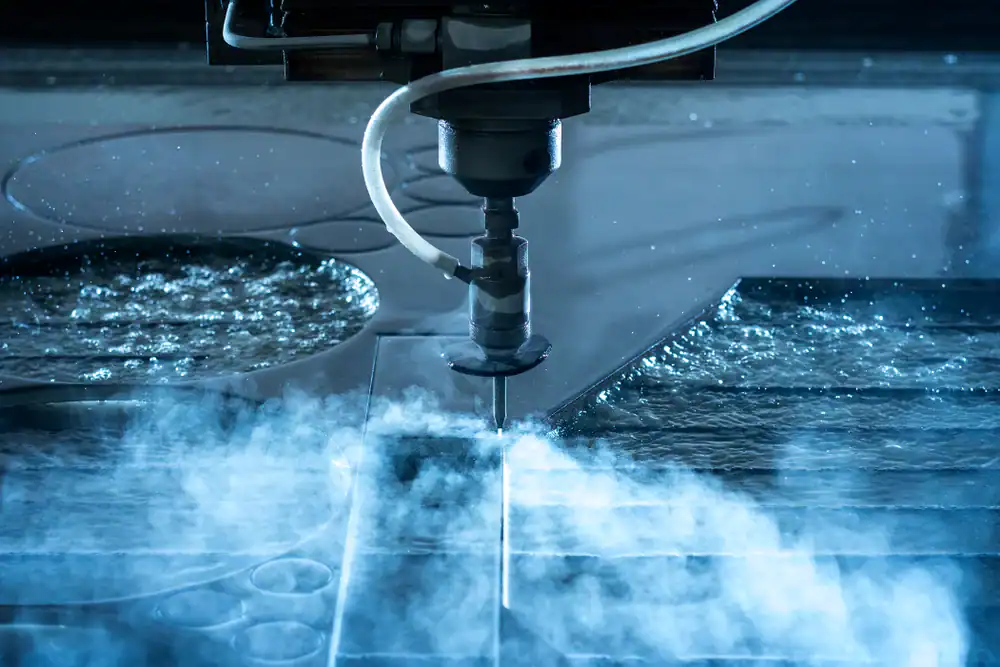
Waterjet cutting changes that. The process uses a high-pressure stream that cuts glass down to 0.01mm accuracy without generating heat. That means no thermal stress, no cracking during the cut, and no weakened edges that fail during handling or installation.
You get pieces that fit exactly as designed. Balustrades line up flush. Double glazing units seal properly. Architectural panels install without gaps or shimming. The kind of precision that makes your job easier and keeps projects moving forward.
We serve the contractors, fabricators, and designers working across Copiague’s active construction sector. With nearly 10% of the local workforce in construction and manufacturing, this area knows what precision work looks like.
We run CNC waterjet systems that transform your CAD files into finished glass components. Our in-house design team reviews every file before cutting to catch issues that would cause problems during fabrication or installation.
You’re working in an area where the average project budget reflects higher standards and expectations. We meet those standards by delivering architectural glass waterjet cutting in Copiague, NY that matches your specifications exactly, whether you’re outfitting commercial facades or custom residential installations.
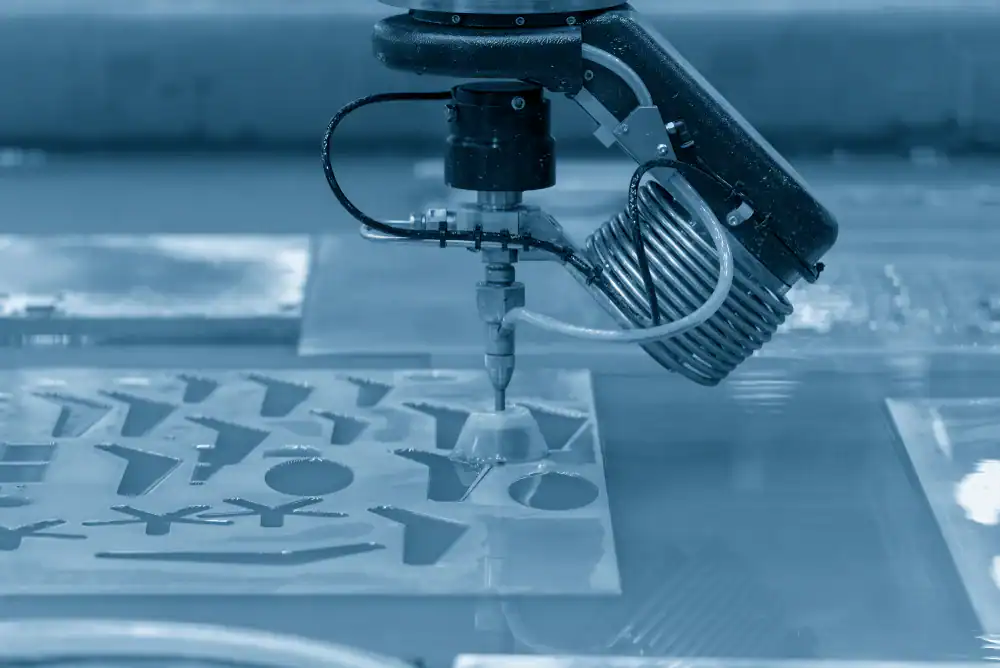
You send us your design file. DXF, DWG, or most CAD formats work. Our team reviews it for any potential cutting issues, tolerance conflicts, or design elements that might not translate well to the fabrication process. If we spot something, we reach out before we cut.
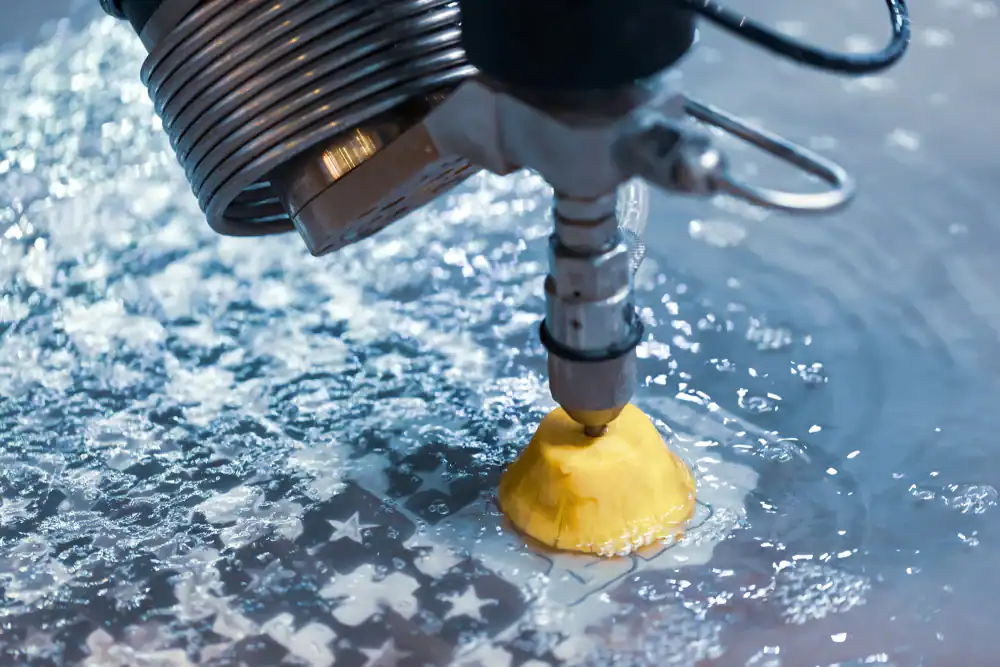
Once the file is approved, your glass goes onto the CNC waterjet table. The cutting head follows your exact specifications using a high-pressure water stream mixed with fine abrasive. No blades, no heat, no vibration that could cause stress fractures.
The omnidirectional jet cuts curves, angles, and intricate shapes that traditional methods can’t handle. Thin glass stays intact. Tight radiuses come out clean. When the cut is complete, edges are smooth enough that most applications don’t need additional finishing. You get glass that’s ready to install, not glass that needs more work.
Ready to get started?
This isn’t just about making cuts. It’s about what those cuts enable you to do. Complex shapes for architectural features that traditional scoring and breaking can’t achieve. Precise holes and cutouts for hardware mounting without the risk of radial cracking. Intricate patterns for decorative panels that maintain structural integrity.
Copiague’s construction market increasingly demands custom architectural glass for commercial facades and high-end residential projects. With 47% of global processed glass installations going into construction facades, the local demand mirrors that trend. You need capabilities that match those expectations.
Waterjet cutting handles varying glass thicknesses in the same run. It processes tempered glass without shattering. It cuts laminated glass without delaminating the layers. The lack of mechanical force means you’re not introducing the micro-fractures that lead to spontaneous breakage weeks or months after installation. That matters when you’re responsible for the longevity and safety of what you install.
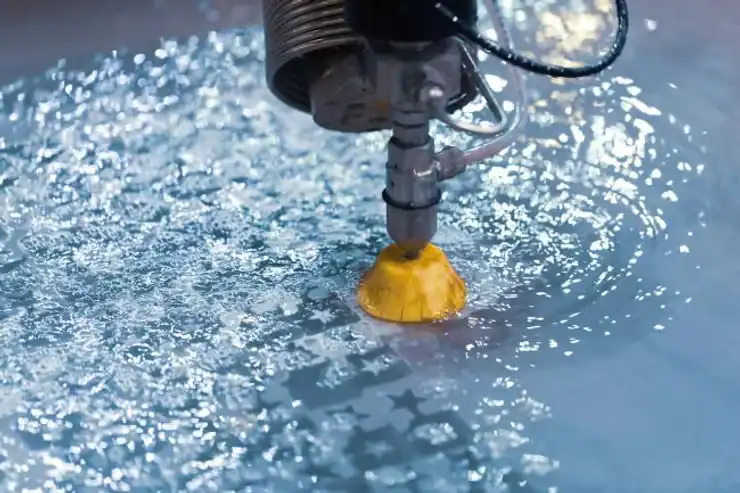
Waterjet handles virtually every glass type you’re working with. Annealed, tempered, laminated, low-iron, tinted, coated—all cut cleanly without the thermal shock that causes problems with heat-based methods.
Tempered glass is particularly tricky with traditional cutting because it’s already under internal stress. Waterjet doesn’t add heat or mechanical stress, so the glass maintains its structural integrity. Laminated glass cuts without separating the interlayer, which is critical for safety glass applications.
Thickness isn’t a limiting factor either. Thin decorative glass at 3mm or heavy structural glass at 25mm both process on the same equipment. If you’re working with specialty glass like textured, patterned, or antique glass for restoration projects, the gentle cutting action preserves surface characteristics that grinding or scoring would damage.
Traditional glass cutting uses a scoring wheel to create a controlled fracture line, then breaks the glass along that score. It works for straight cuts and gentle curves, but it has real limitations. You can’t do tight radiuses, intricate interior cutouts, or complex shapes without multiple pieces and seams.
Waterjet doesn’t rely on fracture mechanics. The abrasive stream erodes material away in a controlled path, following whatever geometry your design requires. That means you can cut shapes that would be impossible or prohibitively expensive with traditional methods.
The edge quality is also different. Scored and broken glass often needs edge grinding to remove sharpness and micro-chips. Waterjet edges come off the machine smooth and clean, typically requiring minimal or no secondary processing. For production work, that’s significant time and cost savings. For installation, it means fewer edge chips during handling and better sealing surfaces for glazing applications.
Turnaround depends on project complexity and current queue, but waterjet cutting is substantially faster than you might expect. Simple cuts on standard glass can often be completed within a few days. More complex architectural pieces with multiple cutouts or intricate patterns typically take a week to ten days from file approval to finished product.
The speed advantage comes from the cutting process itself. Waterjet moves quickly through material compared to traditional methods that require multiple setups, tool changes, and secondary finishing operations. We’re cutting while other methods are still in setup.
Rush projects can be accommodated when your timeline is tight. Construction schedules change, installation dates move up, and sometimes you need glass faster than the standard lead time. The key is communication—the earlier we know about your deadline, the better we can plan the production schedule to meet it. For Copiague contractors working on commercial projects with firm completion dates, that flexibility matters.
Yes, and that’s where waterjet really shows its value for architectural applications. Large glass panels for storefronts, curtain walls, and interior partitions all process on our cutting tables. The size limitation is the table bed, not the cutting technology itself.
For commercial facades and architectural glazing, you’re often working with panels that are 6 feet by 10 feet or larger. Waterjet handles those dimensions while maintaining the same precision you’d get on a small piece. The cutting head doesn’t care about panel size—it follows the programmed path regardless of scale.
Large format cutting also benefits from waterjet’s ability to make interior cutouts without edge access. If you need openings for doors, windows, or mechanical penetrations in a large glass panel, waterjet cuts those from the interior without requiring cuts from the edge. That eliminates the need for multiple pieces and the structural weak points that come with seams and joints in architectural glass installations.
CNC waterjet cutting delivers precision down to 0.01mm, which translates to about four ten-thousandths of an inch. For context, that’s tighter tolerance than most glass installation specifications require. When you’re fabricating components that need to fit together precisely—like frameless shower enclosures or glass balustrade panels—that level of accuracy is what prevents gaps and alignment issues.
The CNC control means repeatability. If you’re ordering multiple identical pieces for a project, each one comes out dimensionally identical to the others. That consistency matters for production runs and for projects where you’re installing a series of matching panels that need to line up perfectly.
The precision also extends to edge quality. Because the cutting stream is only about 1mm wide and follows the programmed path exactly, you don’t get the edge variation that comes from manual cutting methods. Edges are perpendicular to the face, corners are sharp where they need to be, and curves are smooth without flat spots. For architectural glass waterjet cutting in Copiague, NY, where projects often involve high-visibility installations, that edge quality is part of the finished appearance.
We work with standard CAD formats that most designers and fabricators already use. DXF and DWG files are ideal because they contain the vector geometry our CNC systems read directly. AI, EPS, and PDF files with vector paths also work, though sometimes they need minor conversion.
If you’re working in AutoCAD, SolidWorks, Rhino, or similar design software, you can export directly to a compatible format. The important thing is that your file contains actual vector paths, not just images or raster graphics. We need the mathematical definition of the cut lines to program the machine accurately.
Before cutting, our design team reviews your file to verify that all dimensions are correct, that there are no overlapping lines or gaps in the geometry, and that corner radiuses are appropriate for the material thickness you’ve specified. We’ve caught countless issues in this review stage that would have resulted in unusable parts if we’d just run the file as received. It’s part of making sure what you designed is what you actually get.
Useful Links
Other Services we provide in Copiague