Hear from Our Customers
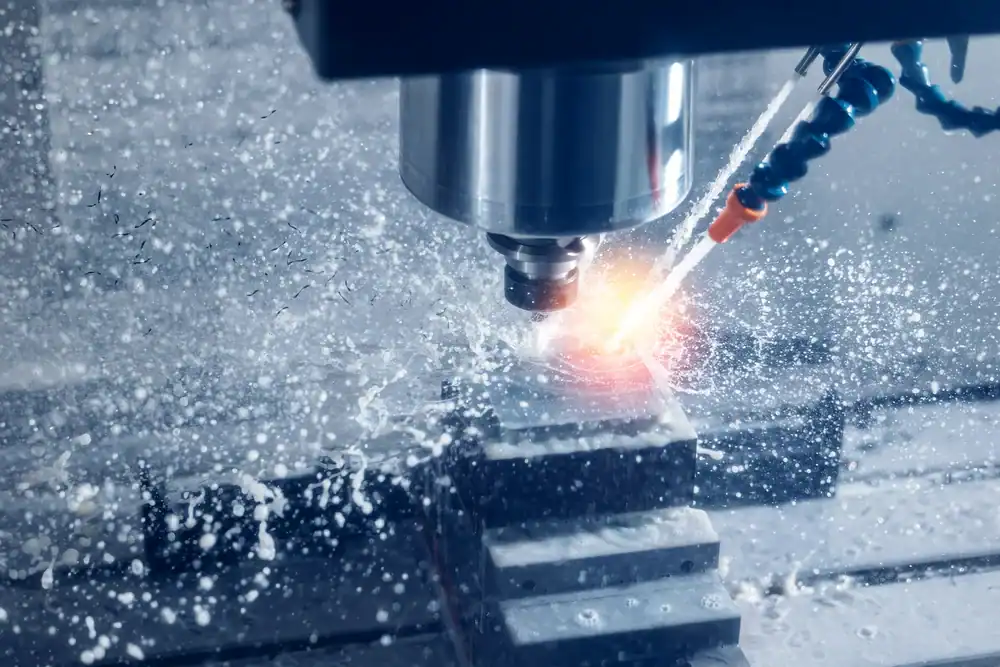
You’re not dealing with cracked edges or panels that don’t fit. The glass shows up sized correctly, with smooth edges that don’t need additional finishing work.
That matters when you’re coordinating with glaziers, managing project timelines, or trying to avoid the nightmare of re-ordering because something arrived a few millimeters off. CNC glass waterjet cutting in East Meadow, NY means programmable precision that repeats accurately across production runs.
No thermal stress. No warping. No discoloration from heat exposure. The waterjet stays cold throughout the cut, so your glass maintains its structural integrity from the first piece to the last. Whether you’re working with standard float glass or specialty materials, the process adapts without compromising quality.
We operate out of West Islip, serving architects, contractors, and manufacturers across Nassau County and the greater Long Island, NY area. We’ve built our reputation on delivering precision cuts for projects where accuracy isn’t negotiable.
East Meadow’s construction and design community knows what happens when glass fabrication goes wrong. Installation delays. Material waste. Budget overruns. We handle the technical side so you can focus on your project, not your vendor’s mistakes.
Our facility runs KMT Waterjet systems capable of pressures from 60,000 to 90,000 PSI. That’s not marketing talk—it’s the equipment that makes tolerances of ±0.005 inches possible, even on glass up to 12 inches thick.
You send us your specifications or CAD files. We review dimensions, material type, and edge requirements to confirm feasibility and catch potential issues before cutting begins.
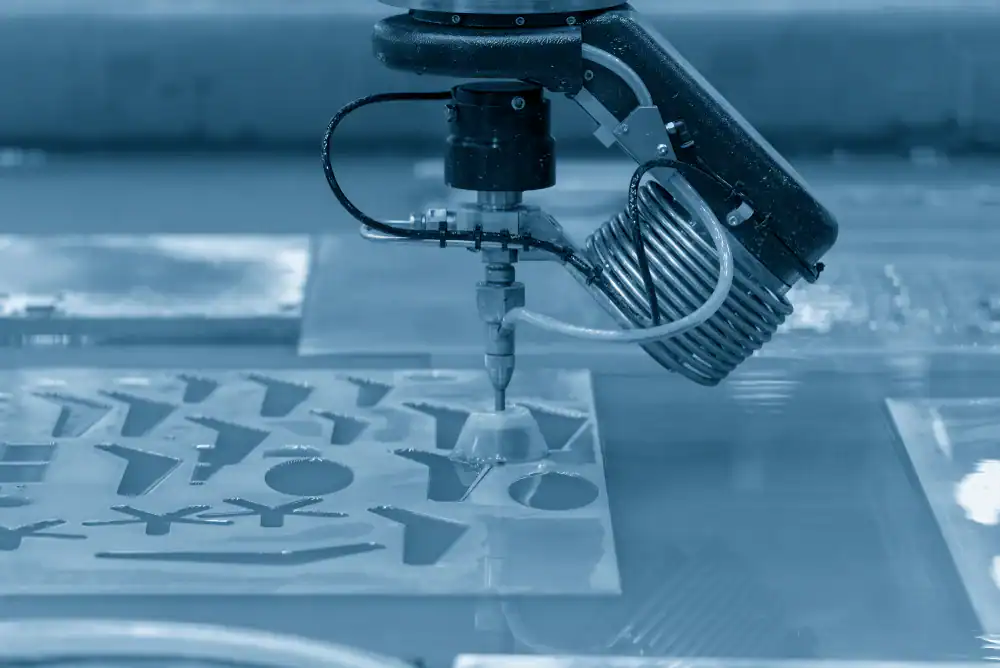
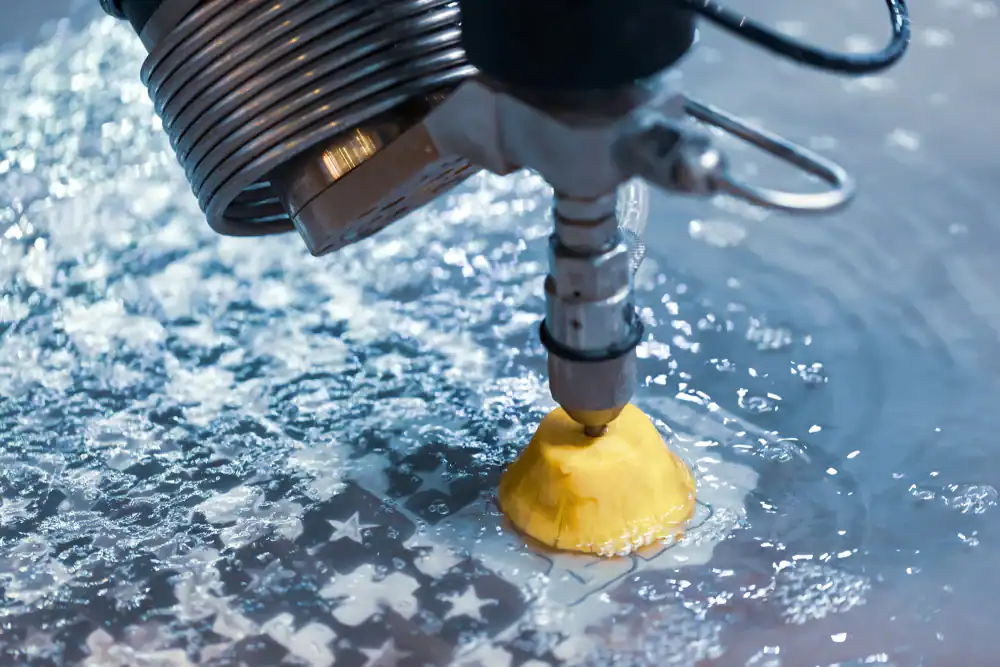
The waterjet system translates your design into precise tool paths. A high-pressure stream of water mixed with fine abrasive particles cuts through the glass without generating heat. The narrow kerf—just .005 or .007 inches depending on the orifice—minimizes waste and keeps cuts accurate.
Once cutting is complete, we inspect each piece against your specifications. You receive glass that’s ready for installation or integration into your assembly process. No secondary grinding. No edge polishing. Just clean cuts that meet the tolerances your project demands.
Ready to get started?
You get complex geometries that traditional scoring and breaking methods can’t handle. Curves, intricate patterns, and interior cutouts become feasible without risking material failure or excessive waste.
East Meadow’s median household income of $128,770 supports a market that values quality over shortcuts. Homeowners investing in custom glass installations expect precision. Contractors working on commercial projects in the area need fabrication that doesn’t create installation headaches.
Waterjet cutting handles laminated glass, tempered glass, and specialty materials without the limitations of heat-based methods. The process works for single prototypes or production runs, maintaining consistent quality regardless of volume. You’re not choosing between speed and accuracy—the CNC system delivers both.
The environmental angle matters too. No toxic emissions. No chemical coolants. The process uses water and recyclable abrasive, which aligns with the sustainability standards increasingly common in Long Island, NY construction projects.
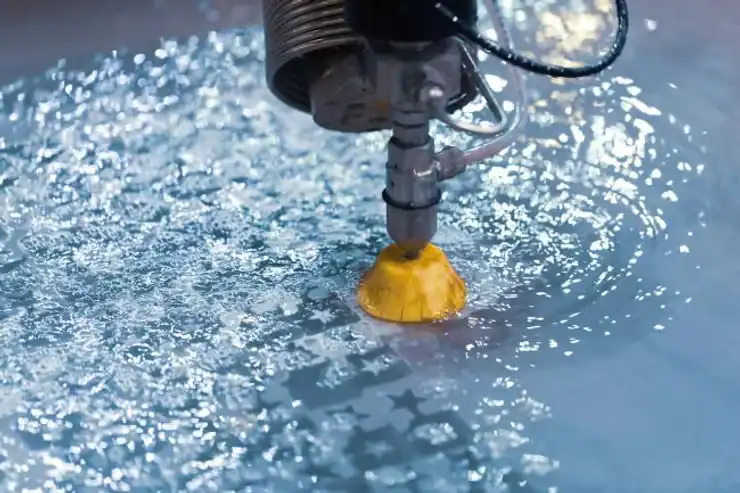
Our waterjet systems cut glass up to 12 inches thick, which covers virtually every architectural and industrial application you’ll encounter. Most residential and commercial glazing projects use glass between 1/4 inch and 1 inch thick, well within the capability range.
Thicker glass—like the specialty applications in aquariums, security installations, or structural elements—requires higher pressure settings and slower cutting speeds. Our KMT systems adjust pressure from 60,000 to 90,000 PSI to match material thickness and density.
The cold-cutting process matters more as thickness increases. Thicker glass stores more thermal energy when exposed to heat-based cutting methods, creating internal stresses that lead to cracking. Waterjet cutting eliminates that risk entirely, which is why it’s become the standard for precision work on thick glass materials.
Laser cutting generates heat, which creates thermal stress in glass. That stress shows up as microfractures, discoloration, or warping—especially problematic with tempered or laminated glass where internal structure matters.
Waterjet cutting stays cold. The abrasive stream removes material mechanically, not thermally, so the glass maintains its original properties throughout the cut. You don’t get heat-affected zones or changes in material strength.
Edge quality differs too. Laser-cut glass often needs grinding or polishing to remove rough edges and thermal damage. Waterjet-cut glass comes off the machine with smooth, clean edges that are ready for installation. That’s fewer steps in your fabrication process and lower labor costs on your end. For architectural glass waterjet cutting in East Meadow, NY, where projects often involve visible edges or structural applications, that difference matters.
Turnaround depends on material availability, design complexity, and current production schedule. Simple cuts on standard glass materials typically process within a few days. Complex patterns or specialty glass may take longer.
The CNC nature of waterjet cutting actually speeds things up compared to manual methods. Once your design is programmed, the machine runs continuously without operator intervention. That efficiency matters when you’re managing project deadlines or coordinating multiple trades on a job site.
Rush services are available when project timelines demand it. The key is communication—send us your specifications early, and we’ll give you a realistic timeline based on current capacity. East Meadow contractors and architects working on time-sensitive projects appreciate knowing exactly when their glass will be ready, not getting vague estimates that create scheduling conflicts.
Tempered glass must be cut before the tempering process. Once glass is tempered, cutting it releases the internal tension and causes it to shatter. That’s a material property, not a limitation of the cutting method. We cut glass to your specifications, then you send it for tempering if your application requires it.
Laminated glass cuts cleanly with waterjet technology. The process goes through both glass layers and the interlayer material without delamination or edge separation. The cold cutting prevents heat damage to the polymer interlayer, which can melt or discolor with laser cutting.
For custom glass waterjet cutting in East Meadow, NY, understanding these material limitations upfront prevents costly mistakes. We’ll review your specifications and flag any sequencing issues before cutting begins. If your project needs tempered glass with custom shapes, we cut first, then coordinate with tempering services to complete the process in the correct order.
Waterjet cutting handles intricate patterns, tight radius curves, and interior cutouts that would be impossible or prohibitively expensive with traditional methods. The narrow cutting kerf—just .005 or .007 inches—allows for fine detail work without excessive material removal.
CNC programming translates CAD files directly into cutting paths, so if you can design it digitally, we can cut it. That includes organic curves, geometric patterns, and complex assemblies where multiple pieces need to fit together precisely. Tolerances of ±0.005 inches mean parts align correctly during installation.
The limitation isn’t the technology—it’s material properties. Glass has minimum radius requirements based on thickness to prevent stress concentration. We’ll review your design and recommend adjustments if needed to ensure structural integrity. For industrial glass waterjet cutting in East Meadow, NY, that consultation prevents fabrication failures and keeps your project moving forward.
The narrow kerf removes less material per cut, which matters when you’re nesting multiple pieces from a single sheet. Traditional saw cutting removes 1/8 inch or more per cut. Waterjet cutting removes less than 1/100th of an inch. That difference adds up quickly across production runs.
Precision matters too. Accurate cuts mean fewer rejected pieces and less rework. When panels arrive at the job site sized correctly the first time, you’re not dealing with offcuts, breakage, or material that can’t be used. That’s particularly important with specialty glass where material costs are high.
The CNC system optimizes cut paths to maximize yield from each sheet. Software calculates the most efficient layout before cutting begins, minimizing scrap and reducing your material costs. For contractors and fabricators in East Meadow working with tight budgets, that efficiency translates directly to better project margins.
Useful Links
Other Services we provide in East Meadow