Hear from Our Customers
You need glass cut to exact specifications. Not close—exact. The kind of precision where tolerances matter, where edge quality affects the entire install, and where one crack means starting over.
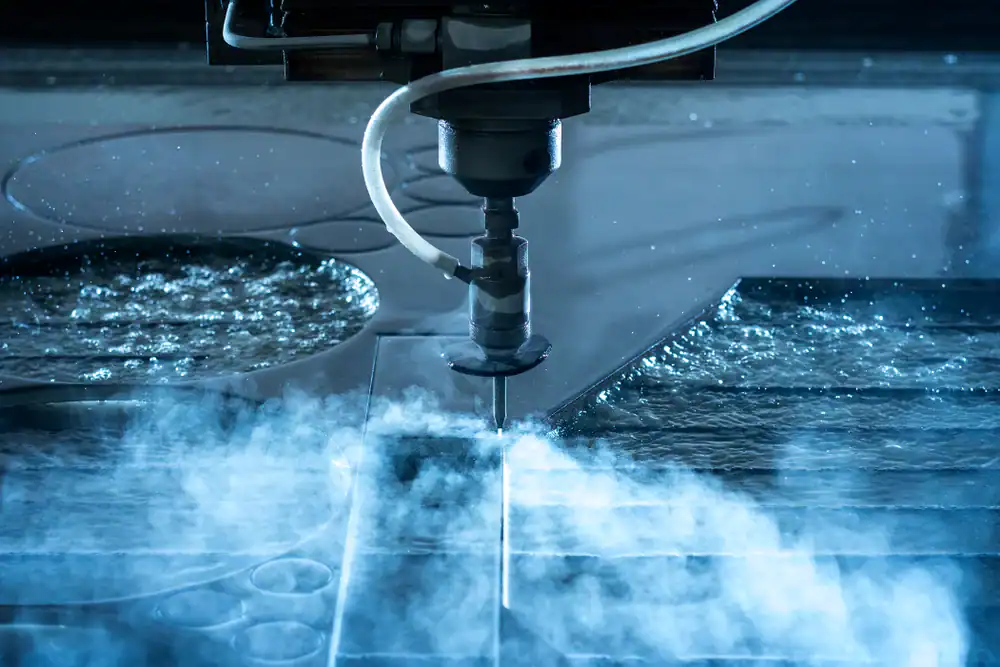
Waterjet cutting handles what traditional methods can’t. Intricate patterns in thick architectural glass. Complex curves for custom installations. Detailed work in tempered or laminated materials. All without the heat that causes micro-fractures or the vibration that leads to edge chips.
The result is glass that’s ready to install. Edges come out smooth enough that secondary finishing isn’t necessary for most applications. No grinding, no polishing, no extra time added to your timeline. When you’re working on projects where the glass is a focal point—lobby features, custom storefronts, architectural panels—the quality of the cut determines whether the finished piece looks amateur or professional.
We operate out of West Islip, serving the Long Island, NY region with CNC waterjet capabilities that handle everything from single custom pieces to full production runs. We’re close enough to understand the specific demands of projects in Farmingville and throughout Suffolk County—tight timelines, exacting standards, and the reality that delays cost money.
Long Island, NY’s construction and design market moves fast. Contractors and architects here don’t have weeks to wait for specialty cuts, and they definitely don’t have budget for do-overs when a traditional cutting method damages expensive glass. That’s where waterjet technology makes the difference—it’s not just about precision, it’s about reliability.
We’ve built our operation around one principle: deliver what we promise, when we promise it. No excuses, no surprises.
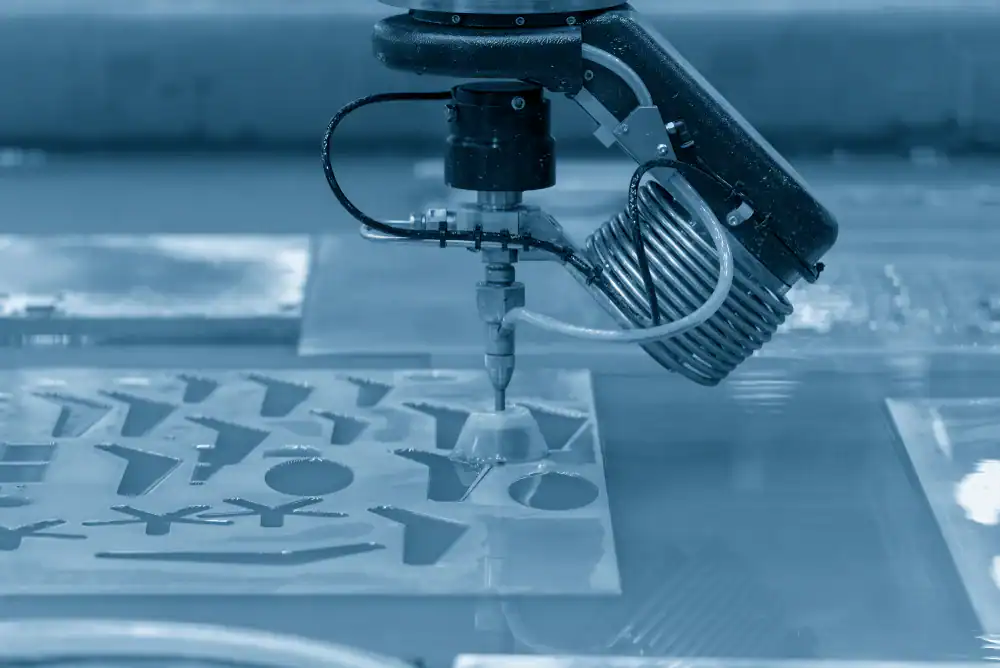
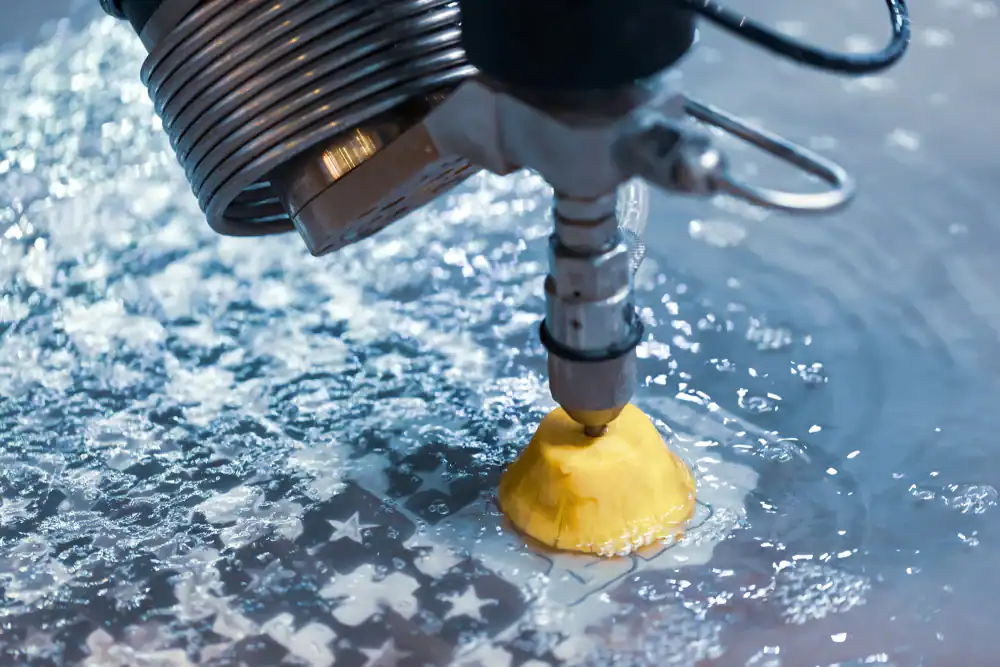
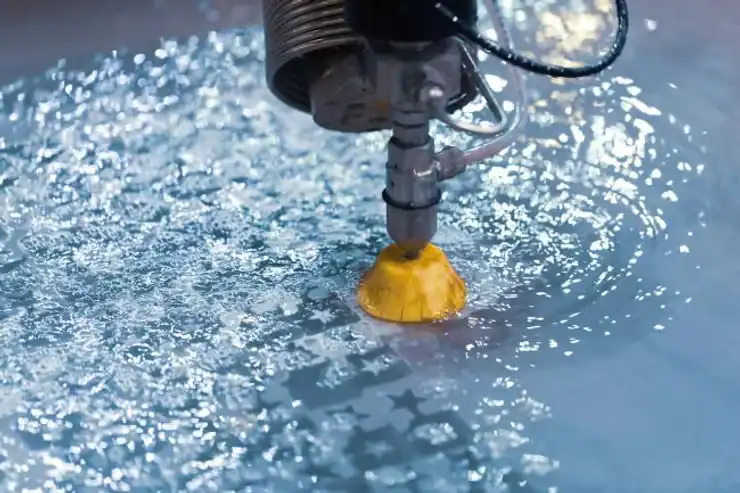
The process starts with your design file. CAD drawings, DXF files, or even detailed sketches—we program the CNC system to follow your exact specifications. The waterjet uses a high-pressure stream mixed with fine abrasive particles to cut through glass without generating heat. No thermal stress means no micro-cracks forming along cut lines.
Because the cutting stream is only a few thousandths of an inch wide, intricate details stay sharp. Interior cutouts, tight radius curves, complex geometric patterns—the machine follows the programmed path with repeatable accuracy. For thicker glass or laminated materials, we adjust pressure and feed rates to maintain edge quality throughout the entire cut.
Once cutting is complete, most pieces are ready to go. The waterjet process leaves edges that are smooth to the touch, eliminating the sharp, dangerous edges that come from scoring and snapping. For applications requiring polished edges, the clean cut from waterjet work means less material needs to be removed during finishing, which saves time and reduces the risk of edge damage during secondary operations.
Ready to get started?
Custom glass waterjet cutting in Farmingville, NY means access to capabilities that traditional glass shops can’t match. We cut any glass type—annealed, tempered, laminated, low-iron, textured—without changing tooling or methods. Thickness ranges from thin decorative panels up to heavy structural glass. The process works the same regardless of material.
For residential projects in the Farmingville area, that means custom shower enclosures with intricate patterns, kitchen backsplashes with detailed cutouts for outlets and fixtures, or decorative glass panels for interior features. Homeowners investing in custom glass want pieces that look intentional, not like someone tried to make a standard product work.
Industrial and architectural applications get the same precision at larger scale. Storefront glass with company logos cut directly into panels. Architectural features for commercial lobbies. Marine applications where salt exposure means every edge needs to be perfect to prevent corrosion starting points. The Long Island, NY market has diverse needs, and waterjet cutting handles all of them without compromising on quality or requiring you to source different vendors for different materials.
Tempered glass can’t be cut after the tempering process—attempting to cut it will cause the entire piece to shatter. That’s true for any cutting method, not just waterjet. The tempering process puts the glass under internal stress, and any cut releases that stress catastrophically.
For tempered glass projects, waterjet cutting happens before tempering. We cut the glass to your exact specifications, including all holes, notches, and edge details. Then the cut pieces go through the tempering process. This sequence gives you the strength of tempered glass with the precision of waterjet cutting.
Laminated glass is different. The laminated structure—two or more glass layers bonded with an interlayer—can be cut with waterjet after lamination. The cold cutting process doesn’t generate heat that could delaminate the layers, and the lack of vibration prevents edge separation. This makes waterjet ideal for custom laminated glass work where you need specific shapes or cutouts in already-laminated panels.
Traditional glass cutting uses a scoring tool to create a weak line in the glass, then applies pressure to snap the glass along that line. This works fine for straight cuts in thinner glass, but it has serious limitations. Complex curves are difficult. Interior cutouts require drilling and careful scoring. Thick glass doesn’t snap cleanly. And the process creates sharp edges that need grinding.
Waterjet cutting doesn’t have those limitations. The cutting stream follows any path programmed into the CNC system—tight curves, sharp angles, intricate patterns. Interior cutouts happen without pre-drilling. Thick glass cuts as easily as thin glass, just slower. And because there’s no mechanical stress applied to the glass, there’s no risk of the piece breaking along an unintended line.
The edge quality difference is significant. Scored and snapped glass has a sharp edge that’s dangerous to handle and often needs grinding before installation. Waterjet edges come out smooth, with a slightly frosted appearance that’s safe to handle. For most applications, no additional edge work is needed. When polished edges are required, the waterjet cut provides a better starting point than traditional methods, which means less material removal and faster finishing.
Turnaround depends on three factors: material availability, design complexity, and current production schedule. For standard glass types that we stock or can source quickly, simple cuts can often be completed within a few days. Complex designs with intricate details take longer—not because the cutting is slower, but because programming and setup require more attention to ensure accuracy.
If you’re providing the glass material, turnaround starts when we receive it and verify it’s the correct specification. We inspect incoming material for defects before cutting because waterjet can’t fix problems that already exist in the glass. A small inclusion or stress point in the raw material will still be there after cutting, and it’s better to catch those issues before we invest time in cutting.
For projects in Farmingville and throughout Suffolk County, we factor in realistic timelines that account for material sourcing, production time, and quality verification. Rush jobs are possible when the schedule allows, but the reality is that precision work takes the time it takes. We’d rather give you an honest timeline upfront than promise something unrealistic and miss the deadline. Most contractors and architects appreciate knowing the real schedule so they can plan accordingly.
Waterjet cutting is one of the most material-efficient cutting methods available. The cutting stream is extremely thin—typically around 0.030 to 0.040 inches wide—which means very little material is removed during the cut. Compare that to saw cutting, where the blade width can be several times larger, and the material savings add up quickly on expensive glass.
The CNC programming also allows for efficient nesting of multiple parts on a single sheet of glass. We can arrange your pieces to minimize the unused areas, which reduces waste and lowers your material costs. For production runs where you need multiple identical pieces, this efficiency becomes even more significant.
The waste that is generated—small glass pieces and the abrasive slurry from the cutting process—is handled through our water filtration system. The abrasive material settles out and is disposed of properly, and the water is filtered and reused. This closed-loop system reduces environmental impact and operating costs. For projects where sustainability matters, waterjet cutting offers a cleaner process than methods that generate glass dust or require chemical coolants.
Yes. The CNC control allows us to cut any design that can be drawn in CAD software. Company logos, decorative patterns, geometric designs, custom artwork—if you can provide it as a vector file, we can cut it. The level of detail possible depends on the glass thickness and the minimum feature size, but for most applications, the precision is more than adequate.
For surface etching rather than through-cutting, we can program the waterjet to cut partially through the glass. This creates a frosted pattern on the surface while leaving the glass intact. It’s an effective way to add branding or decorative elements to glass panels without compromising structural integrity. The depth of the etch is controllable, which allows for different visual effects.
One consideration: intricate designs with very fine details work best in thinner glass. As glass thickness increases, the waterjet stream can develop a slight taper, which affects the sharpness of very small features. For thick architectural glass with detailed logos or patterns, we’ll review your design and let you know if any adjustments are needed to ensure the finished piece matches your expectations. It’s better to have that conversation during the planning phase than to discover limitations after cutting begins.
Architectural projects use waterjet cutting for custom storefront panels, decorative lobby features, glass railings with intricate patterns, and building facades where glass panels need precise shapes to fit complex designs. These applications demand accuracy because the glass is highly visible and any imperfection stands out.
Interior design projects include custom shower enclosures with curved or angled panels, kitchen backsplashes with exact cutouts for electrical outlets and fixtures, glass countertops, decorative room dividers, and furniture components. Residential clients in Farmingville investing in custom glass want pieces that look intentional and professionally finished, not adapted from standard sizes.
Industrial applications cover a wide range: marine windshields and windows where salt exposure requires perfect edges, automotive glass for custom or restoration work, aerospace components, display cases for retail or museum use, and glass components for machinery or equipment. These projects often have strict tolerances and material specifications, which is where waterjet cutting’s repeatability and precision become critical. The ability to work with technical drawings and maintain tight tolerances makes waterjet suitable for applications where the glass isn’t just decorative—it’s a functional component that needs to perform reliably.
Useful Links
Other Services we provide in Farmingville