Hear from Our Customers
You’re not cutting glass because it’s easy. You’re doing it because your architectural design, custom installation, or manufacturing project requires shapes that can’t be scored with a hand tool. The problem is that most cutting methods either generate heat that causes micro-fractures, or they limit you to straight lines and basic curves.
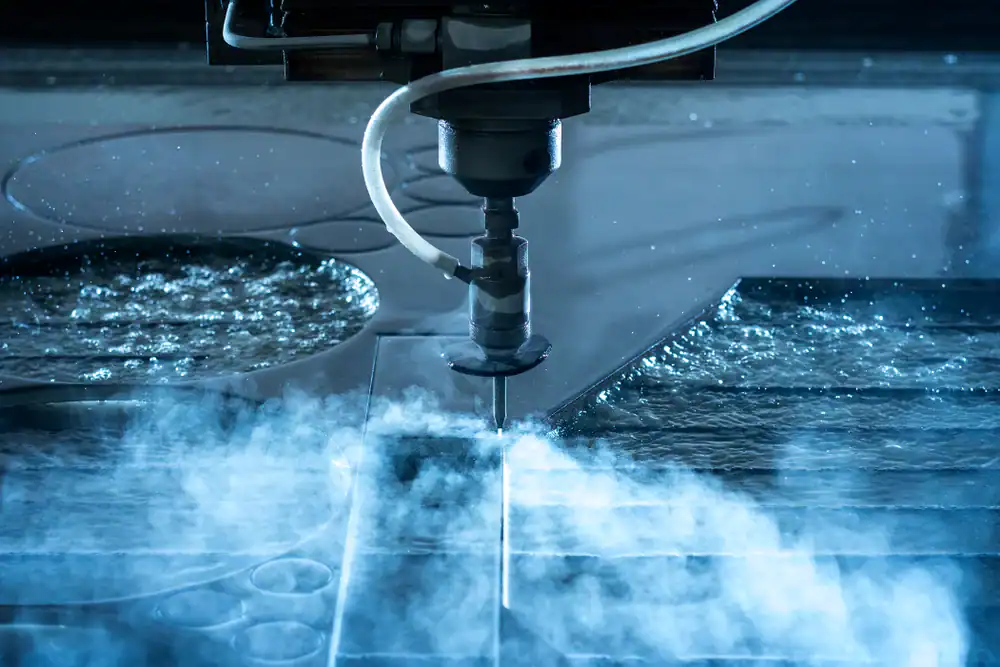
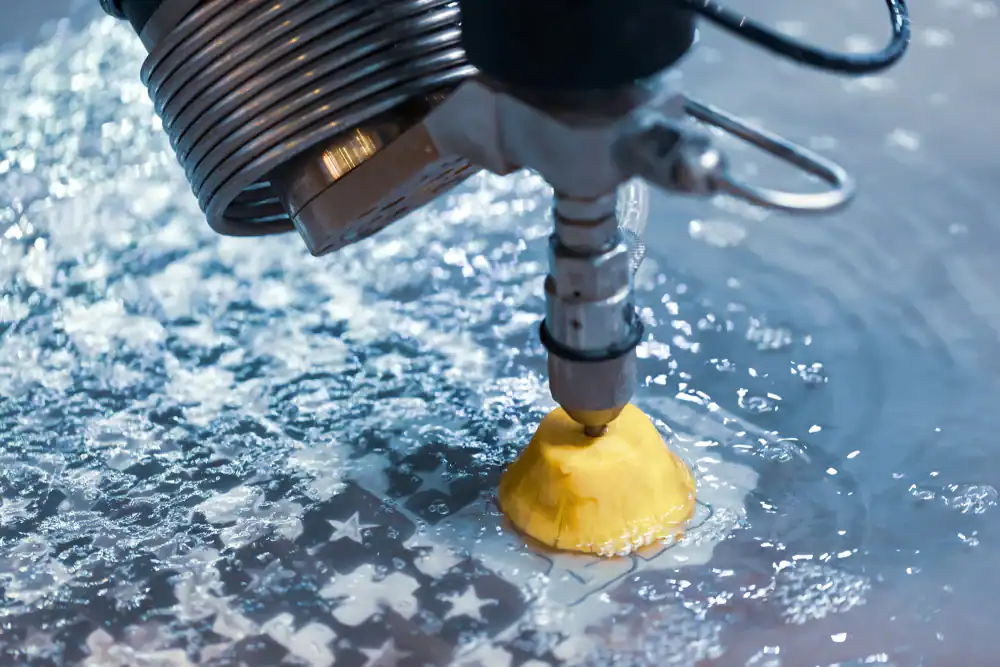
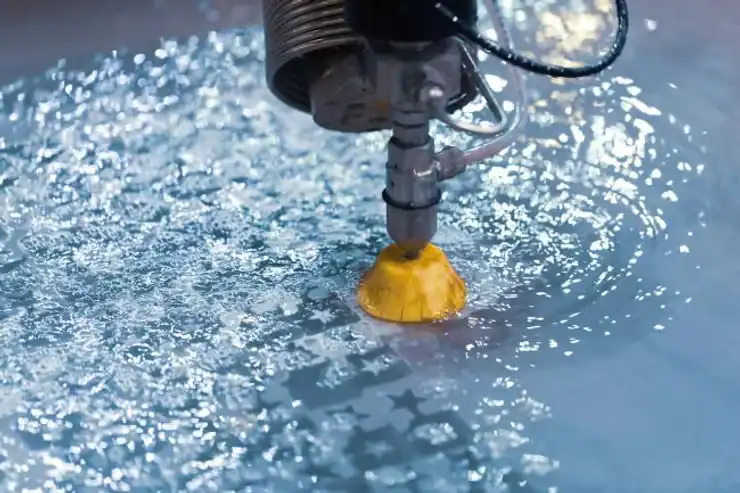
Glass waterjet cutting in Franklin Square, NY solves both issues. The process uses high-pressure water mixed with fine abrasive particles to cut through glass without generating any heat whatsoever. No thermal stress means no hidden fractures waiting to show up after installation. No heat-affected zones means the structural integrity of your glass stays intact from edge to edge.
What you get is a finished piece with smooth edges that need minimal finishing work. The cuts are accurate within thousandths of an inch, which matters when you’re fitting glass into metal frames, creating decorative panels with multiple pieces, or producing parts that need to align perfectly. You’re not spending extra time grinding down rough edges or dealing with chips that compromise the look of your finished project.
We’ve been serving architects, contractors, designers, and manufacturers throughout Franklin Square, NY and the surrounding New York metro area for years. We’re not the cheapest option, and that’s intentional. You’re paying for CNC precision, experienced operators who understand how different glass types behave under the waterjet stream, and a process that gets your project done right the first time.
Franklin Square sits in a dense commercial and residential area where construction timelines are tight and rework isn’t an option. When you’re working on a storefront installation in Garden City, a custom residential project in New Hyde Park, or an architectural feature for a building in Manhattan, you need glass fabrication that shows up on time and fits correctly. That’s what we do.
We handle everything from single custom pieces for residential glass cutting services to production runs for industrial applications. If you can design it, we can cut it.
You start by sending us your design file or specifications. CAD files work best, but we can work with detailed drawings if that’s what you have. Our team reviews the design to confirm it’s optimized for waterjet cutting and identifies any potential issues before we touch your glass. This is where we catch problems like cuts that are too close together or features that might create weak points.
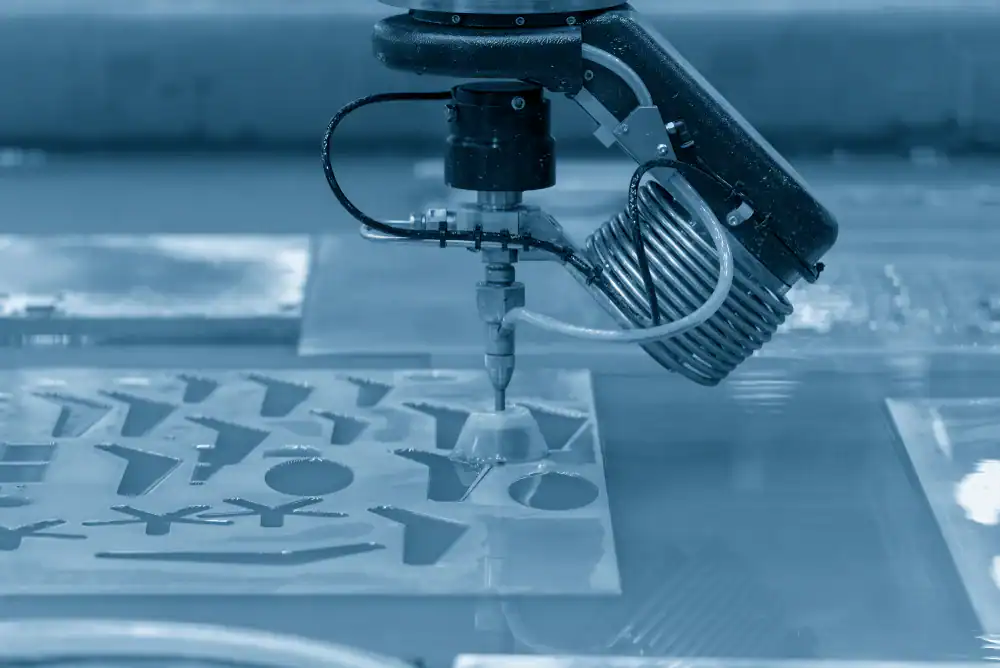
Once the design is approved, we program the CNC waterjet system with your exact specifications. The glass gets secured on the cutting bed with proper support to prevent any vibration or movement during cutting. This matters more than most people realize because even small vibrations can affect edge quality on detailed cuts.
The waterjet stream starts cutting, following the programmed path with precision that hand cutting can’t match. For complex shapes with interior cutouts, the system pierces through the glass at designated points and then follows the cut path. The entire process is monitored to maintain consistent pressure and abrasive flow, which keeps your edge quality uniform across the entire piece.
After cutting, we inspect each piece to verify it matches your specifications. Depending on your needs, we can provide additional edge finishing, though most waterjet cuts come off the machine ready to use. You get glass that fits your project requirements without the trial-and-error waste that comes with traditional methods.
Ready to get started?
Architectural glass waterjet cutting in Franklin Square, NY covers everything from decorative wall panels and custom shower enclosures to structural glass elements and branded installations. If you’re an architect or designer working on projects in Nassau County, you’re dealing with clients who expect high-end finishes and details that stand out. Waterjet cutting gives you the design freedom to create intricate patterns, precise holes for hardware, and complex profiles that traditional cutting methods can’t handle.
For contractors managing residential or commercial builds, our industrial glass waterjet cutting service means you can offer custom solutions without the lead times and costs of outsourcing to distant fabricators. A custom glass feature for a Franklin Square home renovation or a storefront installation in nearby Elmont gets done faster when you’re working with local fabrication that understands regional project timelines.
Manufacturers and product designers use our CNC glass waterjet cutting for components that require repeatability and tight tolerances. When you’re producing lighting fixtures, furniture components, or specialized equipment that incorporates glass parts, you need every piece to match exactly. Our CNC system delivers that consistency across production runs, whether you need ten pieces or ten thousand.
The New York metro area has a high concentration of design-forward projects where standard glass cutting doesn’t cut it. Custom glass waterjet cutting in Franklin Square, NY gives you access to capabilities that match the quality expectations of this market without the logistics headaches of working with fabricators outside the region.
Waterjet cutting works on annealed glass, not tempered glass. Here’s why that matters: tempered glass has internal stresses that are created during the tempering process. Any attempt to cut tempered glass after it’s been tempered will cause it to shatter completely. If your project requires tempered glass, the cutting needs to happen before the tempering process.
For laminated glass, waterjet cutting can work, but it requires specific techniques to handle the interlayer material. The challenge is that the plastic or resin layer between glass sheets doesn’t cut the same way glass does. We adjust pressure, abrasive flow, and cutting speed to get through both the glass layers and the laminate without delamination or edge quality issues.
If you’re not sure what type of glass your project needs, that’s a conversation worth having before you order material. Annealed glass gives you the most flexibility for complex cuts. You can always have it tempered or laminated after cutting if your application requires those properties.
The practical minimum distance from a cut to the edge of the glass is typically around a quarter inch, though this varies based on glass thickness and the complexity of your cut. Getting too close to the edge increases the risk of the glass breaking during cutting because there’s not enough material to handle the stress of the waterjet stream.
For interior cuts or holes, spacing depends on what you’re creating. Small holes for hardware mounting can be placed closer together than large cutouts. The thickness of your glass also affects minimum spacing because thicker glass can handle tighter tolerances than thin glass.
This is why the design review step matters. If your CAD file shows cuts or holes that are too close to edges or to each other, we’ll flag it before cutting starts. Sometimes a small design adjustment solves the problem without affecting the look or function of your finished piece. Other times, we can add temporary support material during cutting to make tight spacing work. Either way, you know about potential issues before they become expensive mistakes.
Waterjet systems can cut glass up to several inches thick, though most architectural and commercial applications use glass in the quarter-inch to one-inch range. The limiting factor isn’t whether the waterjet can cut through thick glass—it’s whether the cut quality and edge finish meet your project requirements as thickness increases.
Thicker glass takes longer to cut because the waterjet stream needs more time to penetrate through the material. This affects your project timeline and cost. For very thick glass, you might also see some taper on the cut edge, where the top of the cut is slightly wider than the bottom. Advanced systems with taper compensation can minimize this, but it’s something to consider if you’re working with glass over two inches thick.
Most residential glass cutting services in Franklin Square, NY involve standard thickness glass for shower doors, tabletops, shelving, and decorative panels. Industrial applications might use thicker glass for specialized equipment or protective barriers. Whatever thickness your project requires, the key is matching the cutting parameters to the material so you get consistent quality through the entire depth of the cut.
Laser cutting generates significant heat, which creates thermal stress in glass. That stress often leads to micro-cracks that can propagate into larger fractures over time or during installation. Waterjet cutting is a cold process—no heat means no thermal stress and no hidden damage that shows up later.
Edge quality is another major difference. Laser-cut glass often needs additional grinding and polishing to achieve a smooth edge because the heat can cause rough or uneven surfaces. Waterjet cutting produces clean edges that typically need minimal finishing work. For projects where edge quality affects the final appearance, waterjet cutting saves you time and labor on post-processing.
The other consideration is material versatility. If your project combines glass with other materials like metal, stone, or composites, waterjet cutting handles all of them with the same machine. You’re not switching between different cutting methods or coordinating with multiple fabricators. This matters for architectural installations that integrate glass with other materials in a single assembly.
CAD files in DXF or DWG format work best because they give us precise vector paths that translate directly into cutting instructions for the CNC system. If you’re working in AutoCAD, SolidWorks, or similar design software, exporting to DXF is straightforward and preserves all the dimensional accuracy of your design.
PDF files can work if they’re created from vector artwork rather than scanned images or photos. The key is that we need clean, scalable paths that define exactly where cuts should happen. Raster images like JPG or PNG files don’t contain the precision data needed for CNC cutting, though we can sometimes use them as reference if you provide dimensions separately.
If you don’t have CAD files, detailed drawings with accurate dimensions let us create the cutting file for you. This adds a step to the process, but it’s often the right solution for custom residential projects or one-off architectural elements where you’re working from sketches rather than formal design files. The goal is to get from your concept to a finished glass piece without dimensional errors or misunderstandings about what the final product should look like.
Turnaround time depends on the complexity of your cuts, the number of pieces, and our current production schedule. A simple project with straight cuts or basic shapes might be done in a few days. Complex architectural pieces with intricate patterns, multiple interior cutouts, or tight tolerances take longer because the cutting process itself is more time-intensive.
The design review and file preparation stage usually takes one to two business days. This is where we confirm your design is optimized for waterjet cutting and identify any adjustments needed. Actual cutting time varies widely—a single decorative panel might take an hour on the machine, while a production run of identical parts could run for several days depending on quantity and complexity.
For projects in Franklin Square, NY and the surrounding areas, we understand that construction and installation timelines are often tight. If you’re working against a deadline, let us know upfront. We can often accommodate rush projects when needed, though that may affect pricing. The key is communication early in the process so we can give you realistic expectations about when your glass will be ready for pickup or delivery.
Useful Links
Other Services we provide in Franklin Square