Hear from Our Customers
Your glass arrives with edges clean enough to install immediately. No grinding, no polishing, no wondering if the heat from a laser weakened the structure.
The cold cutting process means thick glass doesn’t develop micro-fractures from temperature gradients. Intricate curves and tight radiuses that would crack under traditional scoring methods come out intact. If you’re working with tempered glass, laminated panels, or fragile specialty materials, the absence of vibration and heat makes the difference between a usable piece and expensive scrap.
You’re not waiting two weeks for a custom shape, either. CNC glass waterjet cutting in Freeport, NY runs faster than manual methods, with repeatable accuracy across single prototypes or full production runs. The narrow kerf width means less material waste, which matters when you’re cutting expensive architectural glass or working within tight budget constraints.
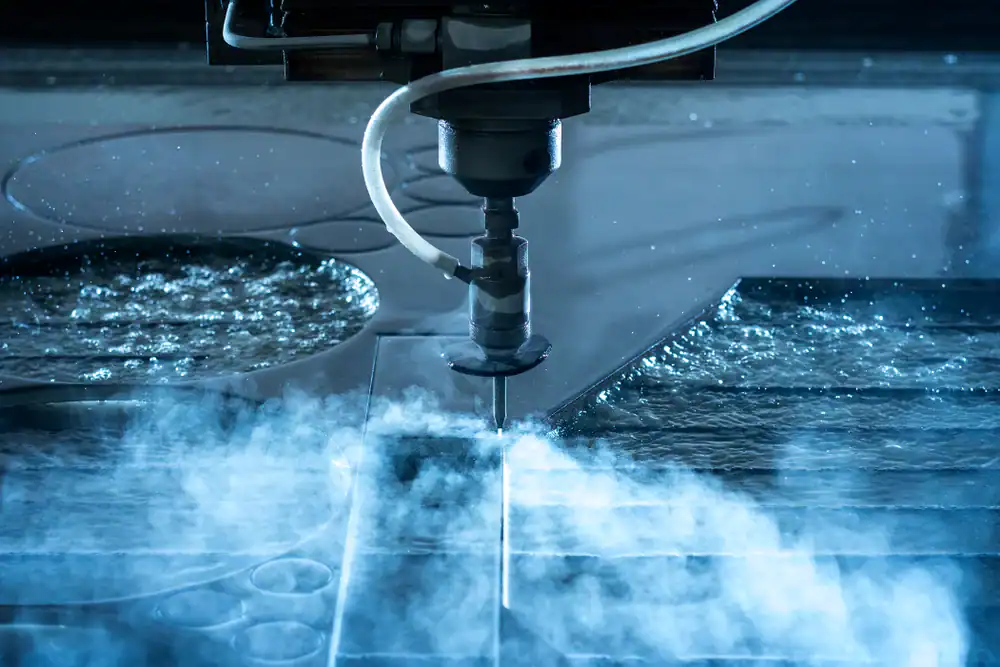
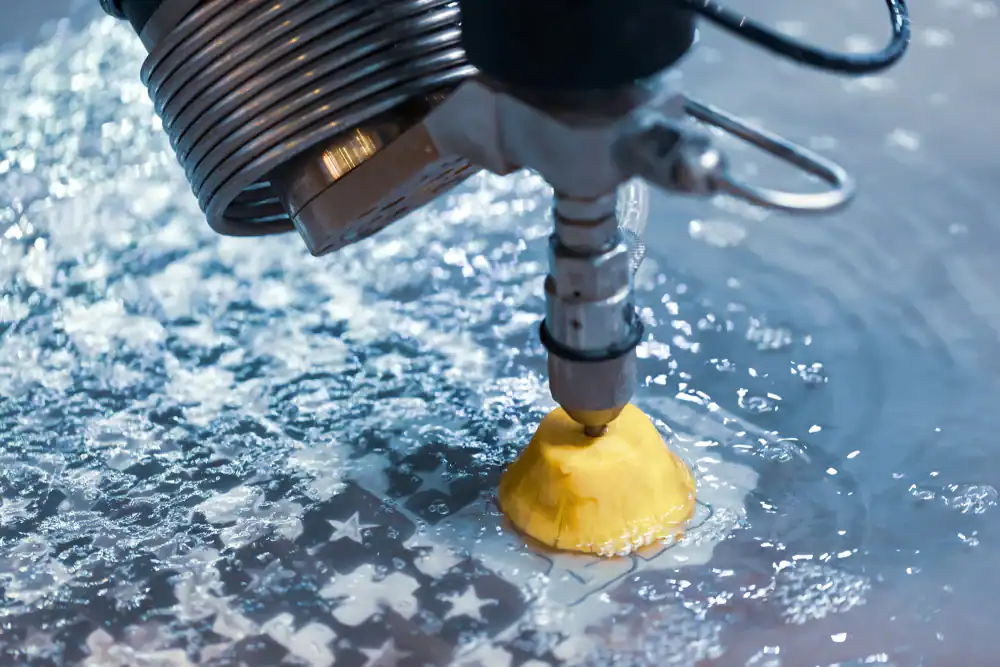
We operate with KMT Streamline PRO® systems generating up to 90,000 PSI—water moving at three times the speed of sound, mixed with fine abrasive to slice through glass up to 200mm thick. That’s not marketing speak. It’s the equipment spec that determines whether your tolerances hold or don’t.
Freeport’s industrial and commercial sectors demand quick turnarounds without sacrificing quality. Whether you’re an architect specifying custom glazing for a Nassau County project, a manufacturer prototyping aerospace components, or a contractor needing decorative glass panels that fit the first time, our equipment handles it. We’ve cut everything from shower enclosures for residential builds to complex automotive windshields requiring tight tolerances.
Our facility is ISO 9001:2015 certified, which means the process behind your part follows documented standards—not just for the cut itself, but for how projects move from quote to delivery.
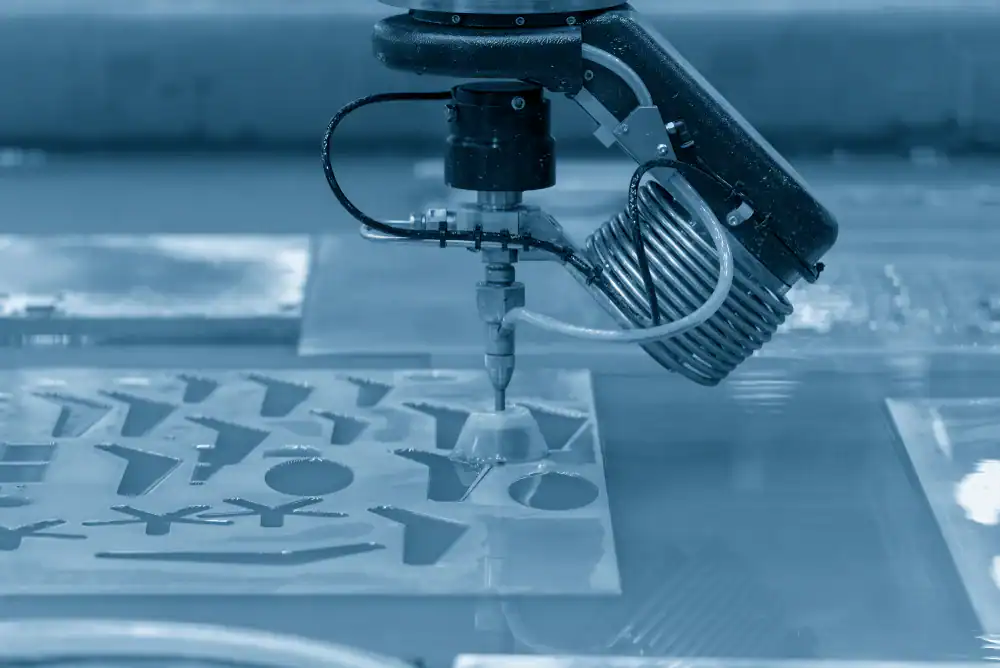
You send specs—drawings, DXF files, or even a sketch if that’s what you have. Our programming team converts that into CNC toolpaths that account for material thickness, edge quality requirements, and any holes or cutouts.
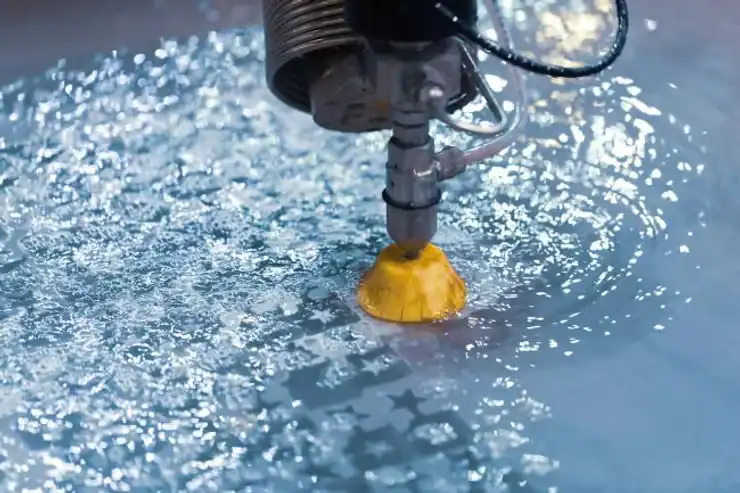
Your glass gets fixtured on the cutting bed with minimal clamping. Unlike methods that require heavy pressure to hold the material, waterjet uses just enough support to keep things stable. The nozzle moves along the programmed path, and the high-pressure stream does the work. No heat builds up. No tool wear changes the cut quality halfway through a production run.
Once the cut finishes, parts come off the table ready for installation or assembly. If you need beveled edges or specific finish work, that’s a separate conversation—but most projects don’t require it. The edge quality straight off the waterjet is clean enough for direct use in architectural applications, custom furniture, or protective panels.
You’ll get a timeline upfront. For standard custom glass waterjet cutting in Freeport, NY, turnaround typically runs faster than traditional fabrication shops because there’s no tool changeover between different shapes or materials.
Ready to get started?
Our residential glass cutting services in Freeport, NY include custom shower enclosures, tabletops, shelving, decorative panels, and mirrors—anything requiring precise dimensions and clean edges. If you’re renovating a home in Freeport or working on new construction, waterjet handles the odd angles and non-standard measurements that come with older buildings or custom designs.
For commercial and industrial clients, the scope expands to architectural facades, automotive glass, aerospace windows, and interior design elements like countertops or partition panels. Freeport’s proximity to both New York City’s design market and Long Island, NY’s manufacturing base means projects range from one-off art installations to production runs requiring hundreds of identical parts.
The process works with annealed glass, tempered glass, laminated safety glass, and specialty materials like borosilicate or quartz. Thickness capacity goes up to 200mm, though most architectural and residential applications fall between 6mm and 25mm. If your project involves stacking or bonding multiple layers, waterjet produces the tight tolerances needed for proper alignment.
Material waste stays low because the cutting stream is narrow—usually less than 1mm. That matters when you’re working with expensive glass or trying to maximize yield from standard sheet sizes. You’re not paying for excess scrap or secondary operations to clean up rough edges.
Waterjet cuts annealed glass and laminated glass effectively, but tempered glass is a different situation. Once glass goes through the tempering process, it’s under internal stress that makes it shatter if you try to cut it. If you need a specific shape, the cutting has to happen before tempering.
Laminated glass works fine because the plastic interlayer holds the glass plies together during cutting. The cold process doesn’t generate heat that could delaminate the layers or create bubbles. You’ll get clean cuts through both the glass and the interlayer without separation.
For projects requiring tempered glass in custom shapes, the workflow involves waterjet cutting the annealed glass to final dimensions, then sending it out for tempering. If you’re handling that coordination yourself, the edges come off the waterjet smooth enough that they won’t need additional grinding before the tempering process—which saves time and reduces the risk of edge chips that could cause the glass to fail during tempering.
Lasers generate heat, and glass doesn’t handle thermal stress well. When a laser cuts glass, the focused heat creates a localized melt zone and rapid cooling, which often leads to micro-cracks along the cut edge. Thicker glass is especially prone to thermal shock because the temperature gradient between the heated cut line and the surrounding material causes internal stress.
Waterjet uses high-pressure water and abrasive with no heat generation. The material stays at room temperature throughout the process, which eliminates thermal stress and the micro-fractures that come with it. For thick glass—anything over 10mm—waterjet produces significantly cleaner edges with better structural integrity.
Lasers can work for very thin glass in some applications, but you’re limited in thickness and you’ll often need secondary edge treatment to remove the heat-affected zone. Waterjet handles everything from thin decorative glass to 200mm structural panels without changing the process. If your project involves tight tolerances or complex curves, the absence of heat distortion means dimensions hold more consistently across production runs.
Standard custom projects typically run 3-7 business days from approved drawings to finished parts. That assumes the material is in stock and the design doesn’t require special fixturing or multiple setups. Rush jobs can move faster if the production schedule allows it, but you’re looking at realistic timelines—not the 2+ week waits common with traditional glass fabrication shops.
Complex architectural projects with multiple part types or high-volume production runs take longer, but you’ll get a specific timeline during quoting. The CNC process means once programming is done, the actual cutting moves quickly. A part that might take hours to hand-cut can come off the waterjet in minutes.
If you’re coordinating a larger project with multiple trades, knowing the glass will arrive on schedule matters. Our production process is consistent enough that delays are rare. You’re not waiting for a craftsman to hand-cut each piece or dealing with the variability that comes with manual methods. The machine runs the program, and parts come out repeatable.
Most applications don’t require additional edge work. The waterjet produces a smooth, clean edge that’s ready for installation in architectural glazing, shower enclosures, furniture, and protective panels. You won’t see the rough, chipped edges that come from scoring and breaking or the heat discoloration from thermal cutting methods.
If your project has specific aesthetic requirements—like a polished edge for a glass tabletop or decorative panel—that’s a separate finishing step. But it’s not necessary for structural integrity or fit. The edge quality straight off the waterjet is clean enough that many commercial and industrial applications use the parts as-is.
For safety-critical applications or anywhere people might contact the edge, you might want a light deburr or seam. That’s minimal work compared to the grinding and polishing required with other cutting methods. The waterjet does the heavy lifting, and any finishing is just cosmetic refinement rather than correcting defects or rough cuts.
DXF and DWG files work best because they translate directly into CNC toolpaths without conversion issues. If you’re working in CAD, exporting your design as a DXF gives our programming team exactly what they need—dimensions, curves, holes, and cutouts all defined mathematically.
PDF drawings work if they’re dimensioned clearly, though there’s sometimes a manual step to convert them into machine-readable paths. If you’re early in the design process and don’t have formal drawings yet, a sketch with measurements is enough to start the conversation. We can help refine the design and flag any issues—like radiuses too tight for the material thickness or features that would create weak points.
For production runs or repeat orders, the file gets saved so reordering is straightforward. You don’t need to resend drawings every time. If you’re prototyping and expect design changes, waterjet makes iteration easy because there’s no hard tooling to remake. Update the file, reprogram the path, and cut the new version. That flexibility matters when you’re dialing in fit or testing different configurations.
Waterjet excels at intricate shapes that would crack or chip with traditional methods. Curves, radiuses, and complex geometries come out clean because there’s no mechanical stress on the material—just the cutting stream removing material along the programmed path. If you’re creating decorative panels, artistic installations, or architectural elements with detailed patterns, waterjet handles the complexity.
Inside corners have a small radius limitation based on the nozzle diameter—typically around 0.5mm to 1mm. True sharp 90-degree inside corners aren’t possible because the stream is round, but for most applications, that minimal radius is acceptable. If your design absolutely requires sharp inside corners, there are workarounds like pierce points or secondary cuts, though those add time.
The real advantage shows up when you’re cutting shapes that traditional methods struggle with—tight curves, small holes, slots, or patterns with lots of detail. Glass is brittle, and mechanical cutting methods apply force that propagates cracks. Waterjet applies almost no force to the material itself. The high-pressure stream does the work, which means fragile or intricate designs stay intact through the cutting process.
Useful Links
Other Services we provide in Freeport