Hear from Our Customers
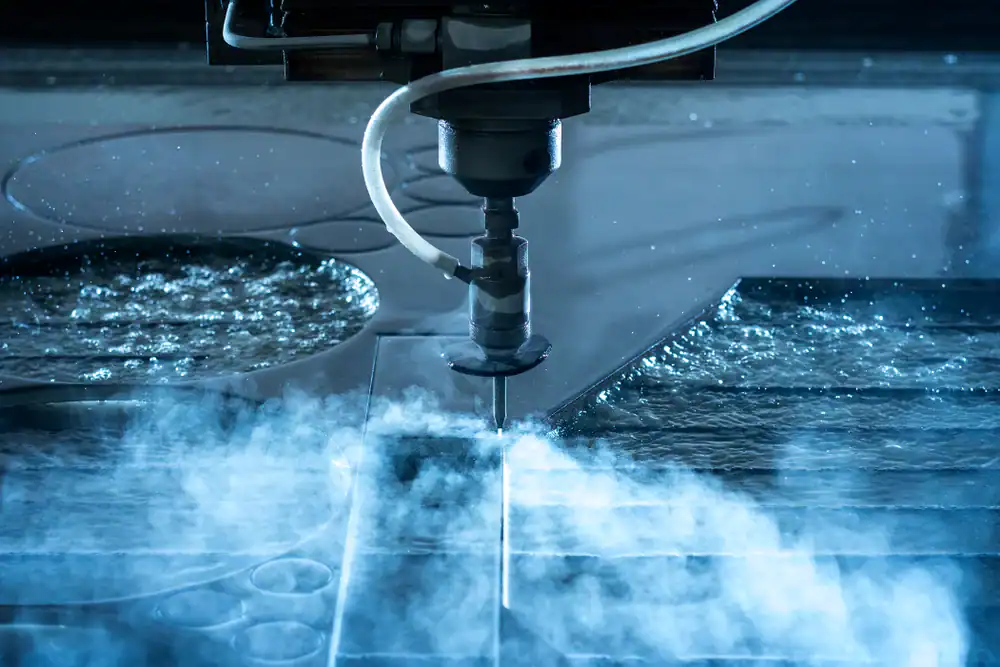
Traditional glass cutting generates heat. Heat creates microcracks, warping, and structural weaknesses you can’t always see until it’s too late. Waterjet cutting eliminates that risk entirely.
You’re working with a cold-cutting process that uses high-pressure water and abrasive to slice through glass without altering its molecular structure. No heat-affected zones. No thermal stress. No compromised edges that fail inspection or crack during installation.
The result is glass that maintains its full strength, with edges so clean they often don’t require secondary finishing. Whether you’re cutting thick architectural panels, intricate decorative patterns, or precision components for industrial equipment, you get consistent, repeatable accuracy that traditional scoring and breaking simply can’t match.
This matters when you’re on a timeline, working within tight tolerances, or can’t afford to waste expensive materials on inconsistent results.
We bring CNC-controlled precision to glass fabrication in Holbrook, NY and across Long Island, NY. We’re not a general glass shop trying to do everything—we specialize in waterjet cutting because it’s the most advanced method for complex, high-stakes projects.
Our equipment operates at nearly 60,000 PSI, guided by CNC programming that ensures every cut matches your specifications down to the smallest detail. We’ve handled everything from ultra-clear float glass for premium architecture to laminated safety glass for commercial installations.
Holbrook’s construction and design community knows that when a project requires shapes traditional methods can’t handle—tight interior radii, sharp corners, bevels, or intricate decorative work—waterjet is the answer. We’ve been serving contractors, architects, glaziers, and manufacturers who need that level of capability without the risk of material failure.
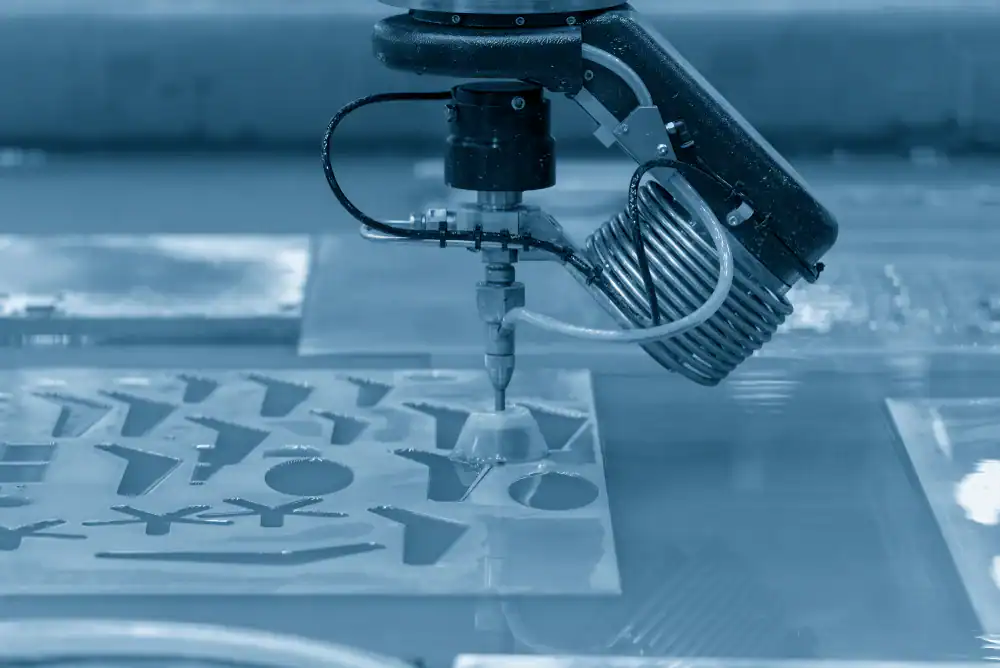
You send us your design file or specifications. If you’re working from a concept rather than a CAD drawing, we can help translate that into a cuttable format. Our CNC system takes that file and maps out the exact toolpath.
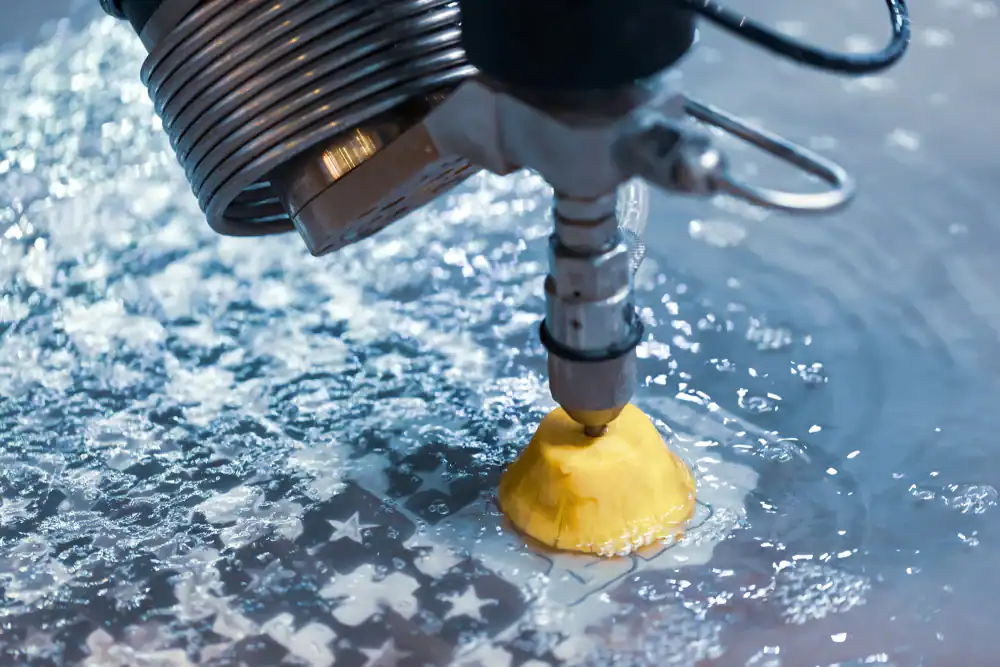
The glass gets positioned on our cutting bed. A high-pressure stream of water mixed with fine abrasive garnet begins cutting along the programmed path. The stream is thinner than traditional cutting wheels, which means tighter nesting of parts and less wasted material.
Because there’s no heat, there’s no risk of thermal shock or microfractures. The process works on virtually any thickness—from delicate 3mm panels to heavy 6-inch industrial glass. Complex curves, interior cutouts, and precision holes all happen in a single setup.
Once cutting is complete, your pieces come off the table with smooth, burr-free edges. In most cases, they’re ready for installation or assembly without additional grinding or polishing. You get exactly what you ordered, cut to spec, without the trial-and-error waste that comes with manual scoring methods.
Ready to get started?
Waterjet cutting works across the full range of glass types—float glass, tempered glass, laminated safety glass, mirrors, and decorative art glass. If your project involves materials that crack easily under thermal stress or require cuts that traditional methods can’t execute cleanly, this is the process that gets it done.
Holbrook’s commercial construction market increasingly demands custom architectural glass—building facades, interior partitions, decorative panels with intricate patterns. Residential projects need precision-cut shower enclosures, tabletops, and custom mirrors. Industrial manufacturers require glass components for equipment, machinery, and specialized applications.
Waterjet handles all of it. You can cut shapes with sharp 90-degree corners, something nearly impossible with traditional methods. Small interior holes, tight-radius curves, and complex geometries that would normally require multiple setups and tool changes happen in one pass.
The environmental aspect matters too. This is a green process—no toxic fumes, no hazardous waste, no air pollution. The abrasive is natural garnet, and the water is recyclable. For projects pursuing LEED certification or sustainability goals, that’s not just a nice-to-have—it’s a requirement.
Tempered glass can’t be cut after the tempering process—it will shatter. Waterjet cutting happens before tempering, which means we cut the glass to your exact specifications first, then it goes through heat treatment if needed.
Laminated glass is a different story. Waterjet handles it exceptionally well because there’s no heat to melt or distort the interlayer material between glass sheets. Traditional methods often struggle with laminated glass because heat causes the bonding layer to separate or bubble.
The cold-cutting process slices cleanly through both the glass and the laminate without delamination. This makes waterjet the preferred method for automotive glass, safety glazing, and architectural applications where laminated panels are required by code. You get clean edges on both glass layers with the interlayer intact and properly sealed.
Laser cutting generates intense heat, which creates thermal stress in glass. That stress leads to microcracks, edge chipping, and potential failure points that might not show up immediately but can cause problems during installation or over time.
Waterjet is a cold process. No heat means no thermal stress, no microcracks, and no heat-affected zones that weaken the material. The edges come out smooth and structurally sound without the need for secondary grinding or polishing in most cases.
Lasers also have thickness limitations—typically maxing out around half an inch for most materials. Waterjet can cut glass up to six inches thick, which opens up applications that lasers simply can’t handle. If your project involves thick architectural glass, decorative art installations, or industrial components, waterjet is often the only viable option that maintains precision without compromising material integrity.
Waterjet cutting works on glass as thin as 3mm without the cracking and breaking issues you’d face with traditional scoring methods. The key is that the cutting force is highly controlled and localized to the exact point of contact.
Traditional glass cutting relies on scoring the surface and then applying mechanical stress to snap the piece along that line. Thin glass often fractures unpredictably because the stress distributes unevenly. With waterjet, there’s no snapping or breaking—just a continuous, controlled cut that follows your design path precisely.
This makes it ideal for delicate decorative work, intricate art glass projects, or thin panels that need complex shapes. You’re not limited to straight lines or gentle curves. Tight interior radii, sharp corners, and detailed patterns all happen without the material failure that makes thin glass so difficult to work with using conventional methods.
Waterjet cutting significantly reduces waste because the cutting stream is extremely thin—typically less than 1mm. That narrow kerf allows parts to be nested much closer together on the sheet, maximizing how much usable glass you get from each piece of raw material.
Traditional scoring methods require wider spacing between cuts and often result in unusable scraps because breaks don’t follow the score line perfectly. You end up with more offcuts, more rejected pieces, and higher material costs overall.
For projects where you’re working with expensive specialty glass—ultra-clear low-iron glass, decorative art glass, or precision-grade optical materials—that waste reduction translates directly to cost savings. The CNC programming also optimizes the layout automatically, finding the most efficient arrangement of parts before any cutting begins. You’re not guessing or relying on manual layout that leaves money on the table in the form of scrap.
Yes. Waterjet cutting handles curves, sharp corners, interior cutouts, and intricate patterns that would be extremely difficult or impossible with traditional scoring and breaking techniques. The CNC control system follows your design file exactly, no matter how complex the geometry.
Traditional glass cutting is limited to relatively simple shapes—straight lines and gentle curves. Anything with tight radii, sharp angles, or detailed interior work requires multiple setups, specialized tools, and a high risk of breakage. Even experienced glass cutters struggle with these cuts because the mechanical stress of breaking along a score line doesn’t distribute predictably in complex shapes.
Waterjet eliminates that limitation entirely. The cutting stream follows the programmed path with precision that doesn’t depend on how the material wants to break. You can cut decorative patterns, logos, architectural details, or functional components with interior holes and complex profiles—all in a single setup without tool changes or repositioning. This is why architects and designers specify waterjet for projects that push beyond what standard glass fabrication can deliver.
In most cases, no. Waterjet cutting produces smooth, burr-free edges that are often ready for installation or assembly without secondary grinding, polishing, or seaming. The quality of the edge depends on cutting speed and abrasive flow, both of which we adjust based on your project requirements.
For applications where the edge will be visible—like glass tabletops, shower enclosures, or architectural panels—we can optimize the cutting parameters to deliver a finished edge quality that meets your aesthetic standards right off the machine. If you need a polished edge for a specific look, that’s still an option, but it’s not automatically required the way it often is with traditional cutting methods.
This saves time and cost. You’re not paying for additional finishing steps or waiting for parts to move through secondary processes. The glass comes off our cutting bed ready to move forward in your project timeline, which matters when you’re coordinating installations, managing construction schedules, or working against deadlines that don’t have room for extra processing delays.
Useful Links
Other Services we provide in Holbrook