Hear from Our Customers
You’re looking at a project that requires precision. Maybe it’s an architectural panel with curves and cutouts. Maybe it’s tempered glass that can’t handle heat. Maybe you’ve already had another shop tell you it’s too complex or they can’t guarantee the edges won’t chip.
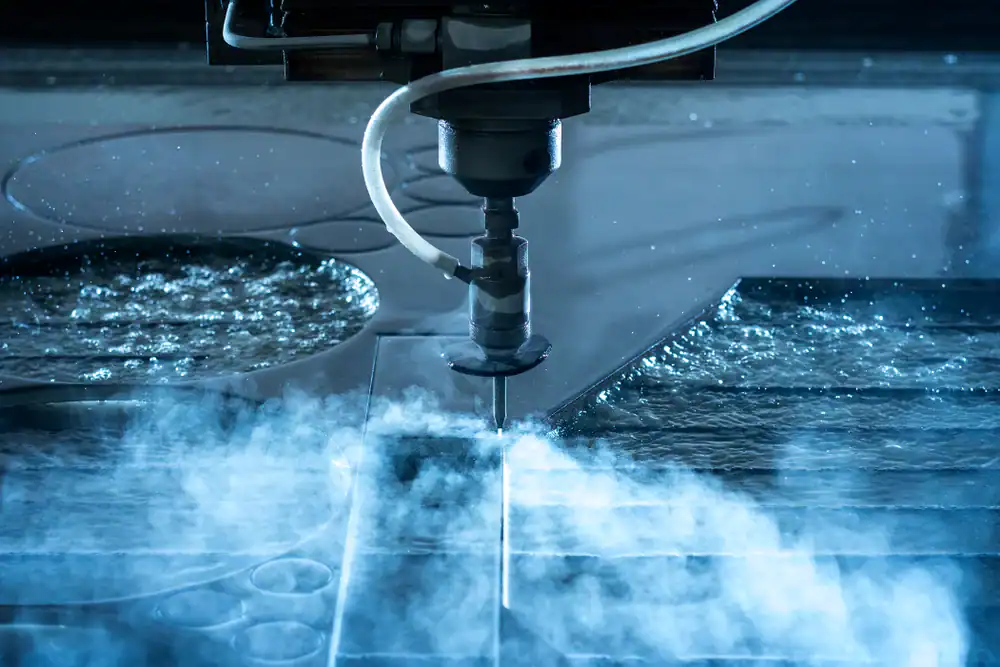
Waterjet cutting removes those limitations. The process uses high-pressure water mixed with fine abrasive garnet to cut through glass without applying heat, which means no thermal stress, no microfractures, and no warping. You get clean edges with a uniform matte finish straight from the cut.
The technology handles laminated glass, mirrors, thick architectural panels, and intricate decorative patterns. Sharp inside corners, small diameter holes near edges, complex curves—all of it gets cut accurately because the system is CNC controlled. You send the design file, and the machine follows it to within ±0.1mm.
If your project has tight deadlines, this matters. There’s no tooling to fabricate, no custom dies to build. Change the file, and you’re cutting a completely different shape in minutes.
We operate out of West Islip at 217 Union Blvd, serving architects, contractors, designers, and manufacturers across Long Island, NY and the surrounding metro area. We run a Flow Mach 500, a CNC-controlled waterjet system that cuts directly from CAD files.
You’re not working with a generalist trying to figure out glass on the fly. We handle material consultation, custom design work, and fabrication. If you’re not sure whether your glass type will work or how to optimize your design for cutting, that’s part of the conversation before any cutting starts.
Islip and the broader Long Island, NY market see a lot of custom residential builds, commercial renovations, and architectural projects that require non-standard glass components. That’s where waterjet cutting makes sense—when off-the-shelf won’t work and you need something fabricated to spec without compromising on quality or turnaround time.
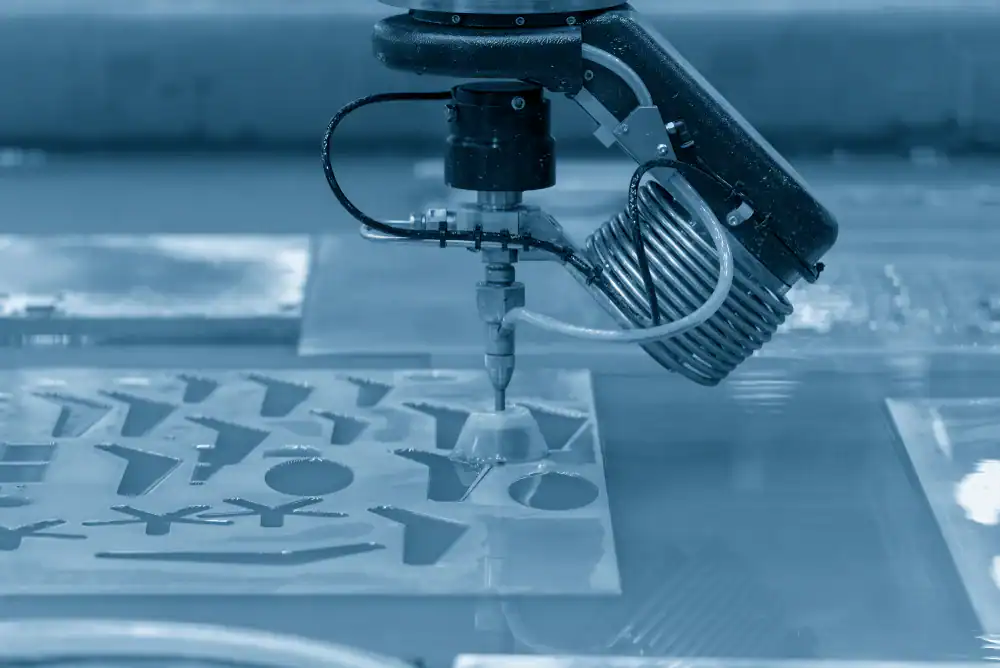
The process starts with your design. If you already have a CAD file, that goes straight into the CNC system. If you’re working from a sketch or concept, our design team translates that into a production-ready file using computer-aided design tools.
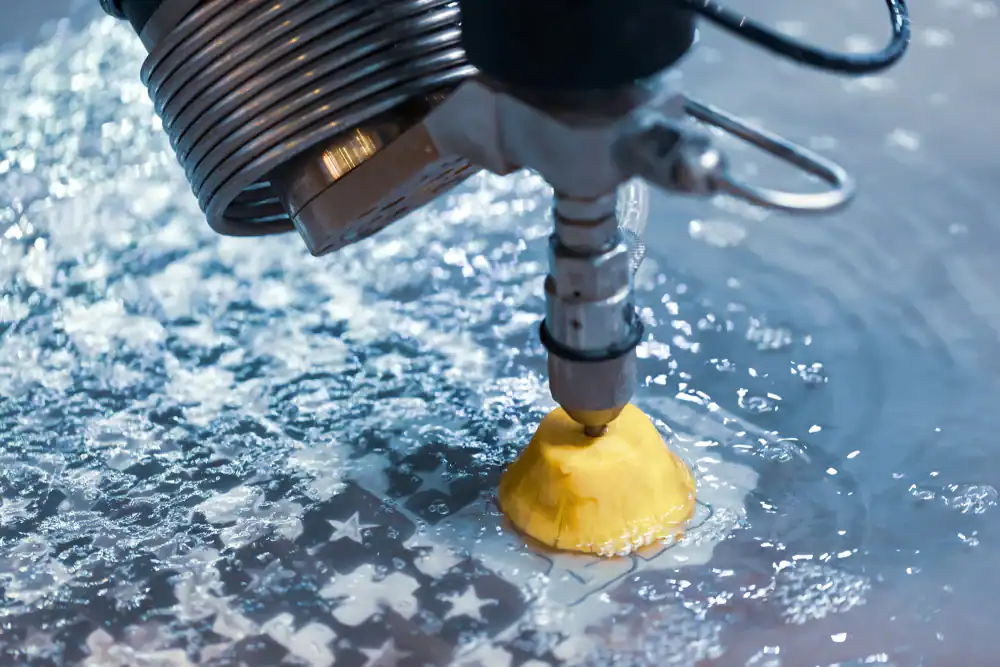
Once the file is loaded, the waterjet system positions the cutting head and begins. A stream of water pressurized between 40,000 and 60,000 PSI mixes with abrasive garnet and cuts through the glass along the programmed path. The system adjusts pressure and speed based on glass thickness and type to prevent chipping or microfractures during piercing and cutting.
Because there’s no heat involved, the glass doesn’t experience thermal expansion or stress. That’s critical for tempered or laminated glass, where heat can cause failure. The abrasive stream creates a frosted edge finish that’s often desirable for architectural and decorative applications, reducing or eliminating the need for additional edge treatment.
After cutting, parts are inspected for dimensional accuracy and edge quality. If secondary operations like polishing or drilling are needed, those get handled before delivery. Most projects move from file to finished part within days, not weeks.
Ready to get started?
This isn’t just about making cuts. You’re getting access to a process that handles glass types and design complexity that other methods can’t manage safely or accurately.
Architectural projects in Islip and across Long Island, NY increasingly demand custom glass elements—whether that’s decorative panels for commercial facades, intricate interior partitions, or one-off residential features. Waterjet cutting accommodates those demands without the design restrictions of traditional scoring and breaking methods.
Our CNC system maintains consistent precision across production runs, so if you need multiples of the same part, each one matches the original within microns. That repeatability matters for installations where panels need to align perfectly or hardware needs to fit without field modifications.
Material waste drops significantly compared to traditional methods because the cutting path is optimized digitally before any material is touched. For projects with expensive glass types or tight budgets, that efficiency translates directly to cost savings. The process also produces no toxic fumes or glass dust, which creates a cleaner, safer fabrication environment and reduces environmental impact.
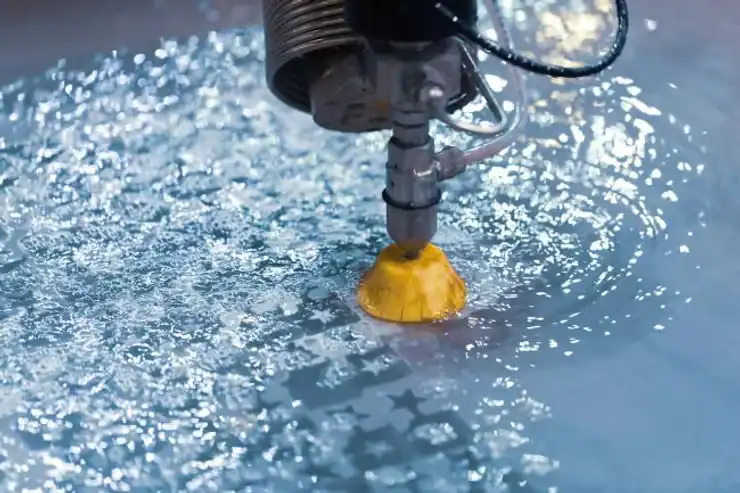
Waterjet handles most glass types you’ll encounter in architectural, industrial, or residential applications. That includes standard float glass, tempered glass, laminated glass, low-iron glass, mirrors, and thick architectural panels up to 150mm.
Tempered glass is particularly tricky with traditional methods because it can’t be cut after tempering without shattering. Waterjet works on tempered glass because there’s no heat or mechanical stress that would trigger failure. Laminated glass, which has a plastic interlayer between glass sheets, also cuts cleanly without delamination.
If you’re working with specialty glass—coated, textured, or heat-sensitive—waterjet is often the only viable option. The cold-cutting process doesn’t affect surface treatments or coatings, and the CNC control ensures intricate patterns are reproduced accurately regardless of glass composition.
Our Flow Mach 500 system maintains tolerances of ±0.1mm, which is tight enough for most architectural and industrial applications. That level of precision holds across different glass thicknesses and remains consistent throughout production runs.
For context, that means if you’re cutting holes for hardware or creating interlocking panels, the dimensions will be accurate enough that parts fit together without gaps or forced alignment. CNC control eliminates the variability you get with manual cutting, where operator skill and tool wear affect consistency.
Precision also extends to edge quality. The waterjet stream produces uniform edges without the chipping or microcracks common with mechanical cutting tools. If your project requires polished edges, the waterjet cut provides a clean starting point that reduces polishing time and material removal.
Most projects move from design approval to finished parts within a few days. Simple cuts on standard glass types can often be completed within 24 to 48 hours if material is in stock.
Complex designs or specialty glass may take longer, particularly if material needs to be sourced or if secondary operations like edge polishing are required. The advantage of waterjet is that there’s no tooling fabrication delay—once the design file is ready, cutting begins immediately.
For larger production runs or projects with tight deadlines, we coordinate scheduling upfront. Because the system is CNC controlled, overnight or weekend runs are possible when timelines demand it. If you’re working on a construction schedule with hard deadlines, that flexibility matters.
Waterjet cutting produces a frosted or matte edge finish directly from the cut. The abrasive action creates a uniform surface that’s not sharp like a scored and broken edge would be.
For many architectural and decorative applications, that matte finish is actually desirable and requires no additional treatment. It diffuses light nicely and has a clean, modern appearance that works well in interior partitions, decorative panels, and display cases.
If your project requires polished or seamed edges, those operations can be added after cutting. The waterjet edge provides a good starting surface for polishing because it’s free of microcracks and chips, which means less material needs to be removed during finishing. That saves time and reduces the risk of edge damage during secondary operations.
Yes, and that’s one of the key advantages over traditional methods. Waterjet can cut holes as small as the nozzle diameter allows, typically down to around 3mm, and can position those holes very close to edges without risking breakage.
Intricate patterns—think decorative screens, geometric designs, or complex cutouts—are handled easily because the CNC system follows the digital file exactly. Sharp inside corners, tight curves, and detailed features that would be difficult or impossible with manual scoring are routine with waterjet.
Piercing is the most delicate part of cutting glass with waterjet. The system controls abrasive flow and pressure during piercing to prevent the initial impact from shattering the glass or creating star chips. Once the stream penetrates, cutting proceeds smoothly along the programmed path. That controlled piercing is what allows small holes and complex internal cutouts without damaging surrounding material.
For simple straight cuts on standard glass, traditional scoring methods are usually cheaper. But once your design involves curves, cutouts, tight tolerances, or specialty glass types, waterjet becomes more cost-effective.
There’s no custom tooling cost, which is a significant factor for one-off or low-volume projects. Traditional methods like die cutting or routing require fabricating custom tools, which adds upfront cost and lead time. With waterjet, you’re paying for machine time and material, not tooling.
Material waste is also lower because cuts are optimized digitally before any glass is touched. For expensive glass types, that efficiency can offset the higher per-hour cost of waterjet cutting. And because edge quality is better, you’re spending less on secondary finishing operations or dealing with fewer rejected parts due to chips or cracks.
Useful Links
Other Services we provide in Islip