Hear from Our Customers
When you’re working with glass, traditional cutting methods introduce problems you don’t have time for. Chipping at the edges. Micro-cracks that compromise strength. Thermal stress that shows up as breakage down the line.
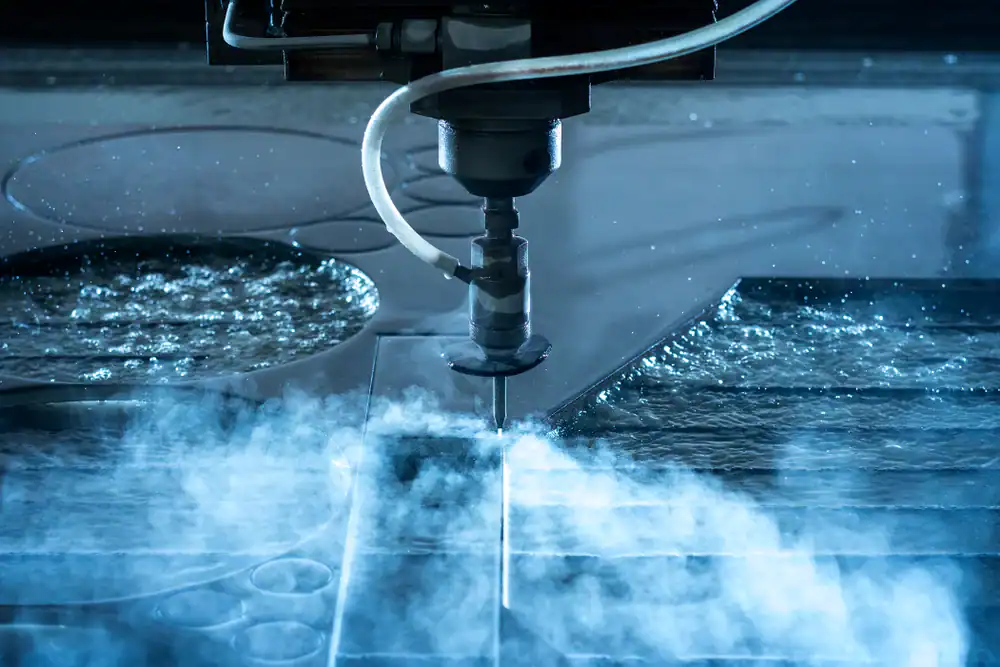
Waterjet cutting removes those risks entirely. No blades. No heat. Just a high-pressure stream of water and abrasive that cuts through glass with accuracy down to 0.01mm. You get smooth, perpendicular edges that don’t need grinding or polishing afterward. That means less rework, less waste, and faster turnaround on your project.
Whether you’re fabricating architectural glass panels for a commercial build or producing custom components for lighting or medical applications, the process stays consistent. Complex curves, tight interior cuts, decorative patterns—waterjet handles it without wandering, without cracking, and without the guesswork that comes with scoring and snapping.
We’ve been serving architects, designers, contractors, and manufacturers across Manhasset, NY and the surrounding areas for over 20 years. We operate from an ISO 9001:2015-certified facility, which means our quality control isn’t just a talking point—it’s documented and auditable.
Manhasset’s professional and construction sectors demand precision. With median household incomes above $180,000 and a concentration of high-end residential and commercial projects, the margin for error is slim. You’re not looking for someone who “does glass cutting.” You’re looking for someone who understands tolerances, material behavior, and project timelines.
We work directly with engineering and operations teams to make sure each part meets your dimensional requirements and ships on schedule. From single prototypes to production runs of 100,000 units, the process stays controlled and repeatable.
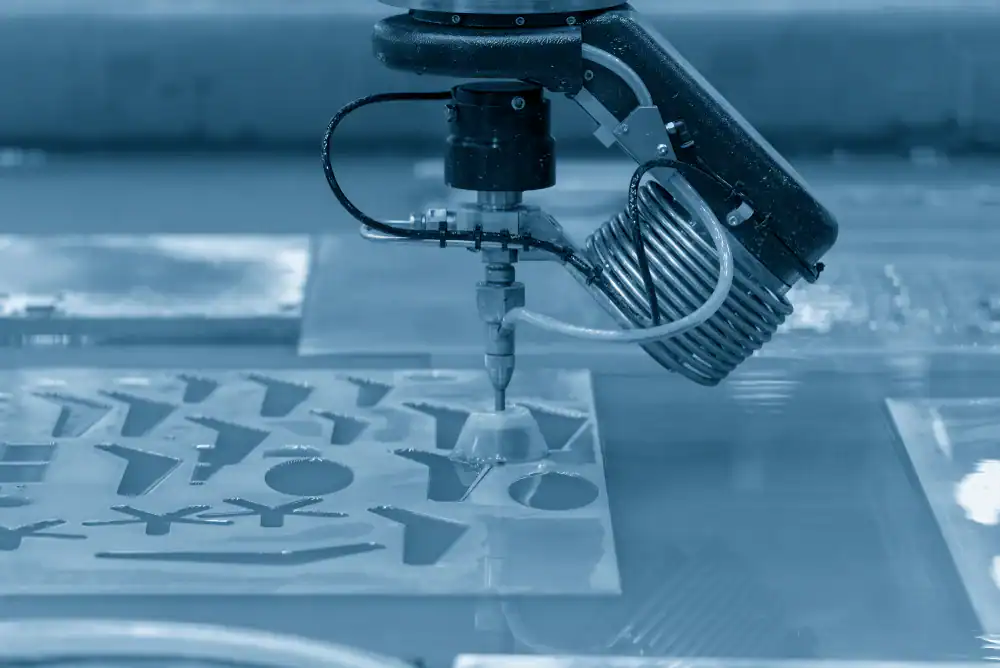
You send us your CAD files or design specs. If you don’t have those yet, we can work with you to develop them based on your project requirements. Once the design is finalized, we program our CNC waterjet systems to follow the exact cut path.
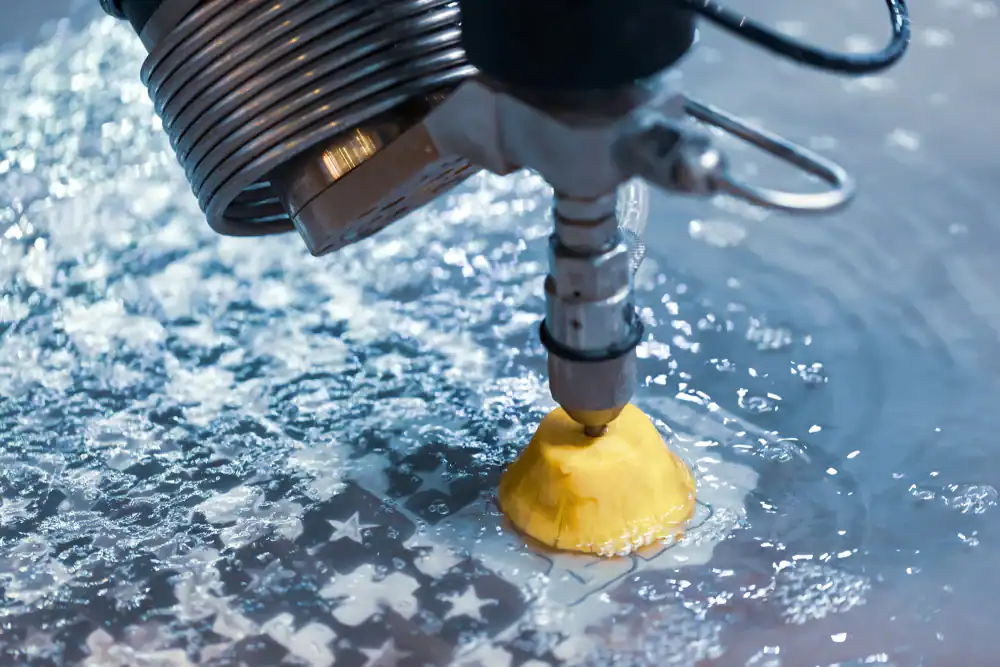
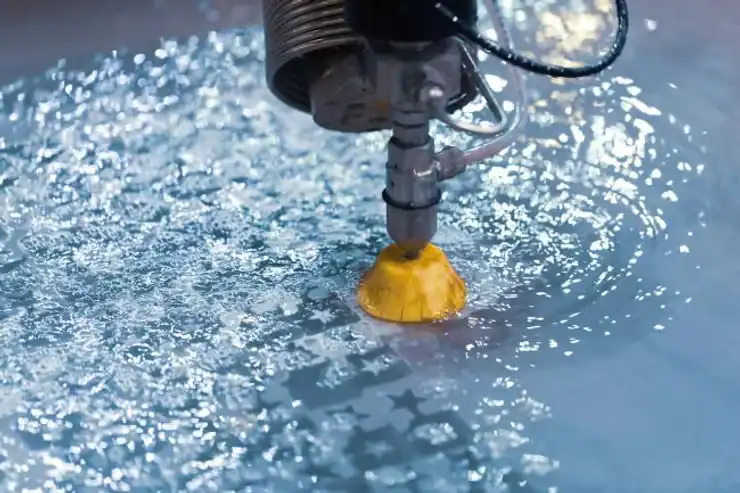
The cutting head uses a focused jet of water mixed with fine abrasive particles. It moves along your programmed path with precision that traditional methods can’t match. Because there’s no heat involved, the glass doesn’t experience thermal expansion or stress fractures. The cut is clean from the first pass.
After cutting, we inspect each piece to confirm it meets your tolerances. If secondary processes like edge finishing or assembly are part of your scope, we handle that too. Then it ships. Most projects move faster than you’d expect because there’s no need for the grinding, polishing, or rework that other methods require.
Ready to get started?
You’re not just getting a cut piece of glass. You’re getting material consultation upfront, so you’re using the right type and thickness for your application. You’re getting CAD support if your design needs refinement or optimization for manufacturing. And you’re getting CNC programming that accounts for material behavior, tool paths, and edge quality.
In Manhasset, where architectural projects often involve custom facades, interior partitions, and decorative installations, the ability to cut complex shapes matters. Waterjet systems handle curves, angles, and interior cutouts that would be nearly impossible with traditional scoring methods. That opens up design possibilities without adding risk.
We also work across industries—automotive, medical, marine, lighting, energy. If your application involves laminated glass, tempered glass, or specialty composites, we’ve handled it before. Production runs scale from one-off custom pieces to high-volume manufacturing, depending on what your project requires. And because our facility is ISO-certified, you get documentation and traceability that larger contracts and institutional projects often require.
Yes. Waterjet cutting works across a wide range of glass thicknesses, including laminated and multi-layer glass assemblies. The process doesn’t generate heat, so there’s no thermal expansion or stress that would cause delamination or cracking between layers.
Traditional methods like scoring and snapping become unreliable once you move beyond standard thicknesses or start working with laminated materials. The snap doesn’t always follow the score line, especially in thicker stock. Waterjet eliminates that variability. The cut follows the programmed path regardless of thickness, and the edges come out clean without secondary grinding.
If you’re working on architectural installations, automotive glass, or any application where laminated safety glass is required, waterjet gives you the control and consistency you need. It also reduces scrap rates, which matters when material costs are high.
Laser cutting generates significant heat, which creates thermal stress in glass. That stress often leads to micro-cracks, edge chipping, or even catastrophic failure during or after the cut. Waterjet cutting uses a cold process—no heat-affected zones, no thermal expansion, no stress fractures.
Laser also struggles with thicker glass and reflective coatings. The beam can scatter or lose effectiveness, leading to inconsistent cut quality. Waterjet handles those materials without issue because it’s a mechanical process, not a thermal one.
For applications where edge quality and structural integrity matter—architectural panels, medical devices, precision optics—waterjet is the more reliable choice. You’re not introducing weaknesses into the material, and you’re not adding post-processing steps to clean up heat damage.
We cut annealed glass, tempered glass, laminated glass, borosilicate, quartz, and specialty glass composites. Each material behaves differently under cutting forces, but waterjet accommodates those differences without requiring tool changes or process adjustments.
Tempered glass is tricky because it’s under internal stress. Cutting it after tempering usually isn’t possible with traditional methods—it shatters. Waterjet can cut tempered glass in specific conditions, but more often, we cut the glass before tempering and coordinate with your tempering vendor to ensure dimensional accuracy through the heat treatment process.
If you’re working with coated glass, low-iron glass, or glass with embedded elements, waterjet handles those too. The key is understanding your material specs upfront so we can program the cut parameters correctly. That’s part of the consultation process before we start cutting.
Our CNC waterjet systems hold tolerances down to ±0.005 inches on most glass cutting projects. For applications that require even tighter control, we can achieve ±0.002 inches depending on material thickness and part geometry.
That level of precision matters when you’re fabricating parts that need to fit into assemblies, align with other components, or meet architectural specifications. Traditional glass cutting methods rely on manual scoring and breaking, which introduces variability. Even small deviations add up when you’re working on multi-panel installations or high-volume production runs.
Waterjet cutting is CNC-controlled, so every part comes out identical to the programmed dimensions. If you need repeatability across hundreds or thousands of units, that consistency is what keeps your project on schedule and within budget. It also reduces the need for hand-finishing or adjustments during installation.
Yes. Waterjet cutting handles complex geometries that would be difficult or impossible with traditional methods. Interior cutouts, tight radius curves, decorative patterns, small holes—all of those are programmable and repeatable.
The cutting head moves along a precise CNC path, so it doesn’t matter how intricate the design is. You’re not limited by the mechanics of scoring tools or the unpredictability of manual breaking. If you can draw it in CAD, we can cut it.
This capability is especially useful for architectural glass, where designers want custom patterns, logos, or functional cutouts for hardware and fixtures. It’s also critical for industrial applications like lighting assemblies, medical devices, and automotive components, where part geometry is driven by performance requirements, not just aesthetics.
Turnaround depends on project complexity, material availability, and production volume. For most custom glass cutting projects, you’re looking at 5 to 10 business days from approved design files to finished parts. Rush timelines are possible if your project requires it.
Prototypes and one-off pieces usually move faster because there’s less setup involved. Production runs take longer, but the per-piece time decreases significantly once the CNC program is dialed in. If you’re working on a project with hard deadlines—architectural installations, product launches, equipment repairs—we can coordinate scheduling to meet your timeline.
The key is getting your design specs and material requirements to us early. The more lead time we have, the more flexibility we have to accommodate changes, run test cuts, or adjust parameters if needed. We work directly with your project team to keep things on track from start to finish.
Useful Links
Other Services we provide in Manhasset