Hear from Our Customers
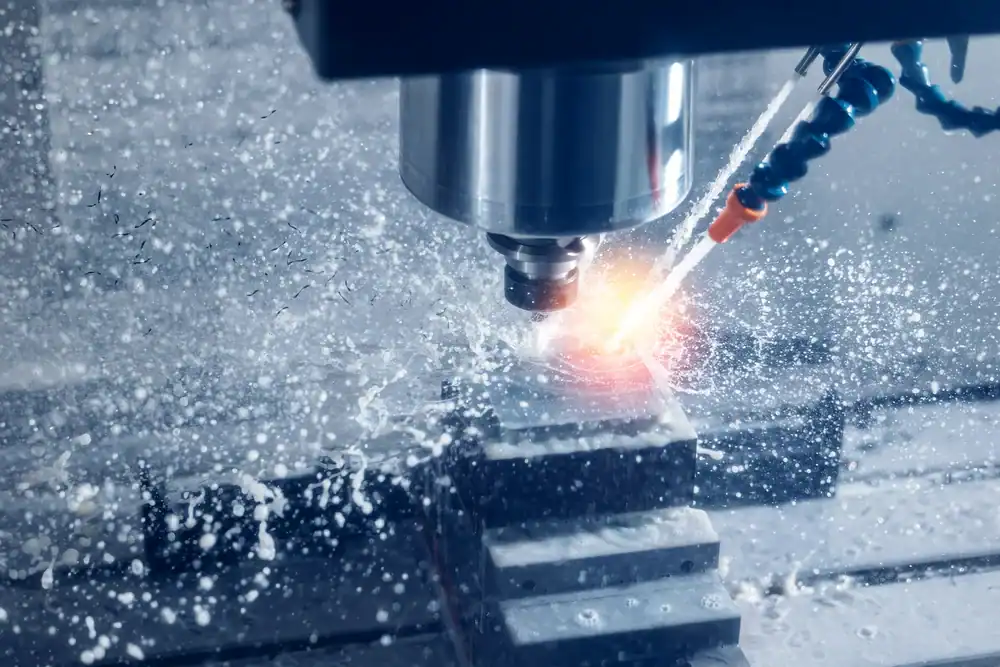
You’re working on a project where the glass has to be perfect. Not close. Perfect.
Maybe it’s an architectural panel for a high-end build in Nassau County. Maybe it’s a custom interior partition, a decorative inlay, or a component that needs to fit within a tenth of a millimeter. Either way, you can’t afford cracks, chips, or the kind of edge quality that forces you into secondary finishing.
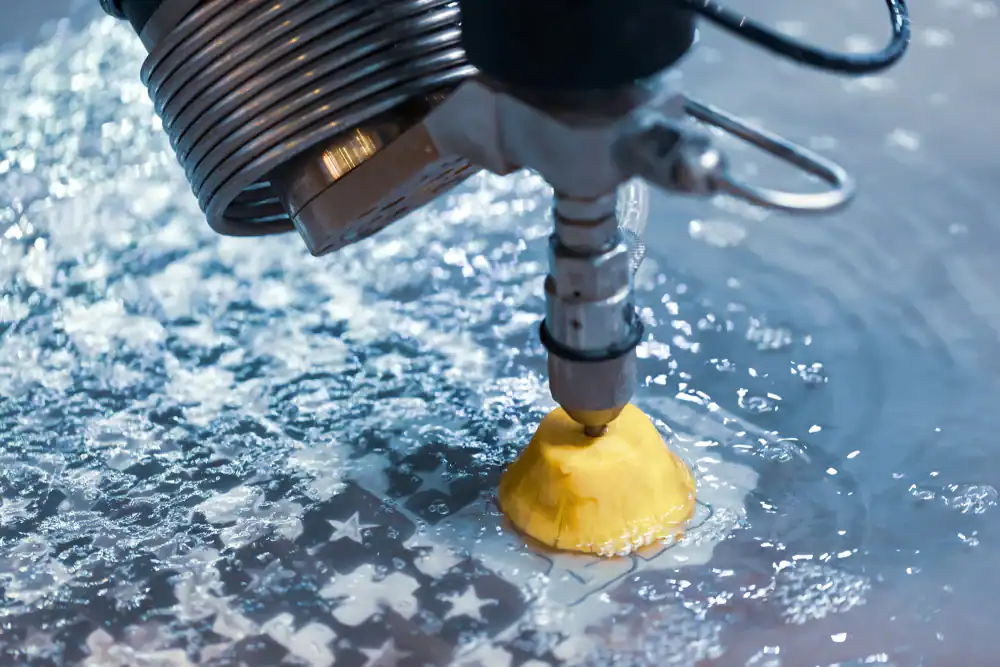
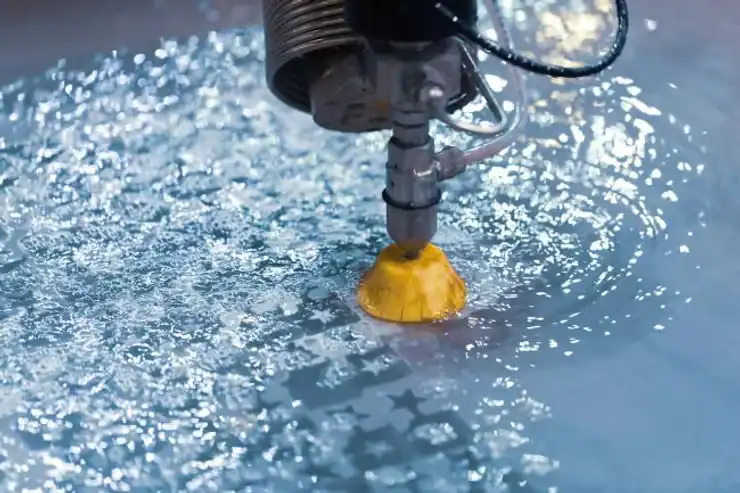
That’s where custom glass waterjet cutting in Massapequa Park, NY makes the difference. The process uses high-pressure water mixed with abrasive to cut through glass without generating heat. No thermal stress. No micro-fractures. Just smooth, clean edges that look finished right off the machine.
You get the shape you need, the tolerances you require, and the edge quality that saves you time. Whether you’re cutting 1/8-inch decorative glass or 10-inch architectural panels, the result is consistent. That means fewer delays, less rework, and a final product you can actually stand behind.
We operate right here in Massapequa Park, NY, serving architects, fabricators, manufacturers, and designers across Long Island, NY and the greater New York metro. We’re not a national chain shipping your glass across the country. We’re a local shop that understands the pace and standards of this market.
Massapequa Park has a history rooted in precision manufacturing—this area once supported aircraft plants and industrial operations that demanded tight tolerances and reliable output. That same expectation still exists today, especially in the professional and technical sectors that make up the bulk of the local workforce.
We cut glass for residential builds, commercial facades, automotive applications, and custom art installations. If it requires accuracy and a clean finish, we’ve handled it. You’re not explaining your project to someone reading a script. You’re talking to people who know how waterjet technology works and what it takes to get your job done right.
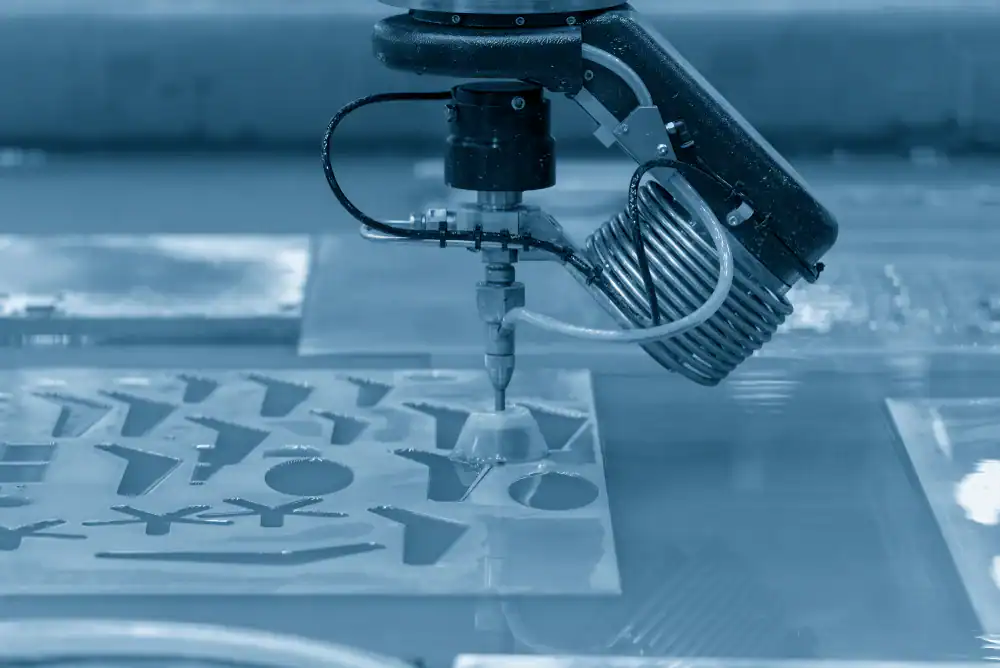
You send us your design file—CAD, DXF, or even a detailed sketch if that’s what you’re working from. We program the CNC system to follow your specifications exactly. The waterjet nozzle moves along the programmed path, cutting through the glass with a stream of water and garnet abrasive at pressures up to 60,000 PSI.
Because there’s no blade and no heat, the glass doesn’t experience thermal expansion or stress. That’s critical when you’re working with thicker material or intricate interior cuts that would normally cause fractures. The edge comes out smooth—not polished, but clean enough that most applications don’t require additional grinding or finishing.
Once the cut is complete, we inspect the piece for accuracy and edge quality. Then it’s ready for pickup or delivery. The whole process is faster than traditional scoring and breaking, and far more reliable when you need curves, angles, or complex geometries.
If your project involves multiple pieces or repeated cuts, the CNC programming ensures every piece matches. You’re not dealing with variation from one cut to the next. You’re getting consistency across the entire run.
Ready to get started?
Architectural glass waterjet cutting in Massapequa Park, NY handles everything from storefront panels to custom interior features. You’re working in an area where the median household income exceeds $170,000 and clients expect high-end finishes. That means your glass can’t show up with chipped edges or stress cracks.
Waterjet cutting gives you the ability to create curved facades, radius corners, and intricate cutouts for hardware or lighting. It works on tempered glass, laminated glass, and even thick structural panels. The process doesn’t weaken the material or alter its properties, so what you specify is what you get.
For industrial applications, you might need glass components for machinery, electronics housings, or automotive parts. The precision here isn’t optional—it’s required. Waterjet cutting delivers tolerances within 0.1mm, which is tight enough for parts that need to fit into assemblies without adjustment.
Residential glass cutting services in Massapequa Park, NY also benefit from this technology. Custom shower enclosures, glass tabletops, decorative panels, and backsplashes all require clean cuts and exact dimensions. Waterjet handles those jobs without the risk of breakage that comes with manual scoring, especially on thicker or tempered material.
Waterjet cutting works on annealed glass, but tempered glass is a different situation. Once glass is tempered, it’s under internal stress. Any cutting or drilling will cause it to shatter. That’s not a waterjet limitation—that’s the nature of tempered glass.
If you need a specific shape, the glass has to be cut before tempering. We can cut the annealed glass to your exact specifications, then you send it out for tempering. The waterjet process leaves clean edges that won’t interfere with the tempering process.
Laminated glass, on the other hand, can be cut with waterjet. The process goes through both layers of glass and the interlayer without delaminating the material. You end up with a clean cut and the laminate stays intact. This is common for automotive or architectural applications where you need the safety benefits of laminated glass but also need custom shapes.
Waterjet cutting handles glass from 1/16 inch up to 10 inches thick, though most projects fall between 1/4 inch and 2 inches. Thicker glass takes longer to cut, but the process doesn’t change. The waterjet stream penetrates the full depth without generating heat or causing internal stress.
Thicker architectural panels—like the kind used in building facades or structural glass walls—benefit from waterjet cutting because traditional methods either can’t handle the thickness or risk cracking the material. The abrasive stream cuts straight through, maintaining edge quality even on heavy stock.
For thinner glass, waterjet is often faster and more reliable than scoring and breaking, especially when you need curves or interior cutouts. There’s no risk of the score line running off course or the glass snapping in the wrong place. The CNC system follows the programmed path exactly, regardless of thickness.
The edge finish from waterjet cutting is smooth but not polished. It has a satin-like texture that’s clean to the touch and free of sharp burrs or chips. For most applications—architectural panels, interior partitions, custom fabrication—this finish is acceptable as-is.
If your project requires a polished edge, that’s a secondary process. But many clients skip it because the waterjet edge is already smooth enough for installation. It doesn’t have the rough, jagged quality you’d get from a saw or grinder. It’s a controlled, consistent finish across the entire cut.
The edge quality also depends on cutting speed and abrasive flow. We adjust those parameters based on your material and tolerances. If you need a finer finish, we slow the cut down. If speed matters more than a mirror edge, we optimize for throughput. Either way, you’re getting an edge that doesn’t require major rework before installation.
CNC glass waterjet cutting in Massapequa Park, NY holds tolerances within 0.1mm, which is tight enough for most precision applications. The system follows your CAD file exactly, so curves, angles, and interior cutouts come out as programmed. You’re not dealing with operator error or tool drift.
Complex shapes—like radius corners, organic curves, or intricate patterns—are where waterjet really outperforms traditional methods. A manual glass cutter can’t follow a curve without risking breakage. A saw leaves rough edges and can’t make interior cuts without drilling entry points. Waterjet does both without issue.
If you’re working on a project that requires multiple identical pieces, the CNC programming ensures every cut matches. That’s critical for architectural installations or production runs where consistency matters. You’re not adjusting each piece to fit. They all come out the same.
Turnaround depends on material thickness, complexity, and current workload, but most custom glass waterjet cutting projects in Massapequa Park, NY are completed within a few days. Simple cuts on standard thickness glass can often be done same-day or next-day if you’re in a bind.
More complex jobs—like multi-piece architectural panels or intricate designs with tight tolerances—take longer because the CNC programming and cutting process require more time. Thicker glass also slows the cut speed, though the process itself is still faster than traditional methods.
If you’re on a tight deadline, let us know upfront. We can often prioritize urgent projects or adjust the schedule to meet your installation date. The key is communication. The earlier we know what you need and when you need it, the better we can plan the job and keep your project on track.
Waterjet cutting produces minimal waste compared to other methods. The kerf—the width of the cut—is narrow, usually around 0.03 to 0.04 inches. That means you’re not losing significant material between cuts, which matters when you’re working with expensive glass or trying to maximize yield from a sheet.
The abrasive and water mixture is contained in a tank beneath the cutting bed. The spent abrasive settles out and can be disposed of or recycled depending on the material. There’s no dust, no fumes, and no chips flying around the shop. It’s a cleaner process than sawing or grinding.
As for secondary cleanup, the glass comes off the table ready to handle. There’s no grinding dust to wash off or burrs to file down. The edges are clean. If you need additional finishing—polishing, beveling, or drilling—that’s a separate step, but the waterjet cut itself doesn’t create extra work. You’re getting a finished edge that’s ready for most applications as soon as it’s dry.
Useful Links
Other Services we provide in Massapequa Park