Hear from Our Customers
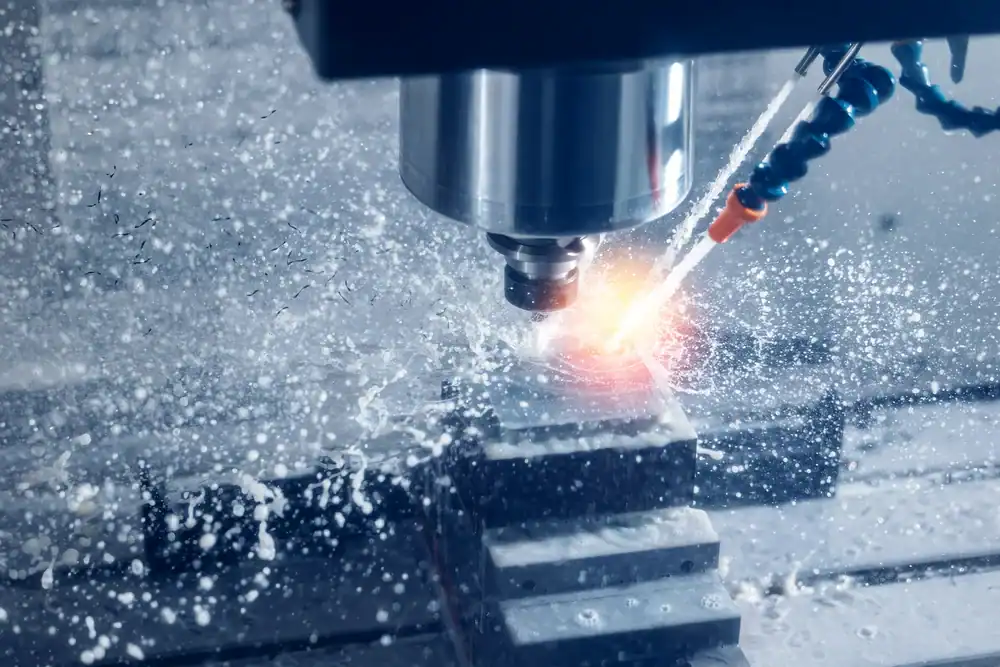
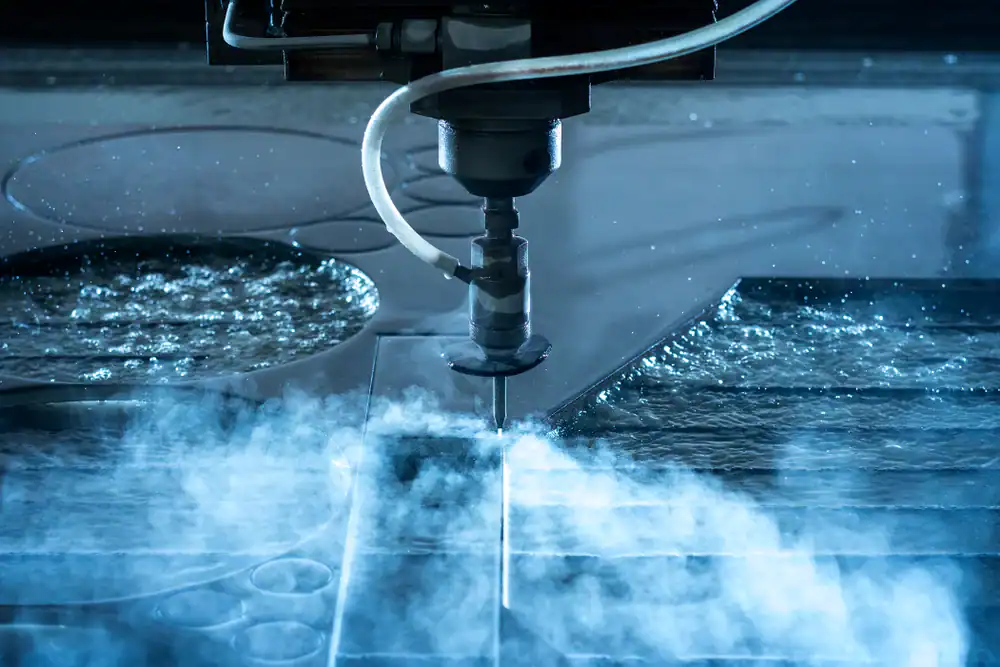
Traditional glass cutting methods generate heat. That heat creates micro-cracks, edge chips, and stress patterns that compromise both the look and structural integrity of your glass. You end up with extra finishing work, wasted material, and delays you can’t afford.
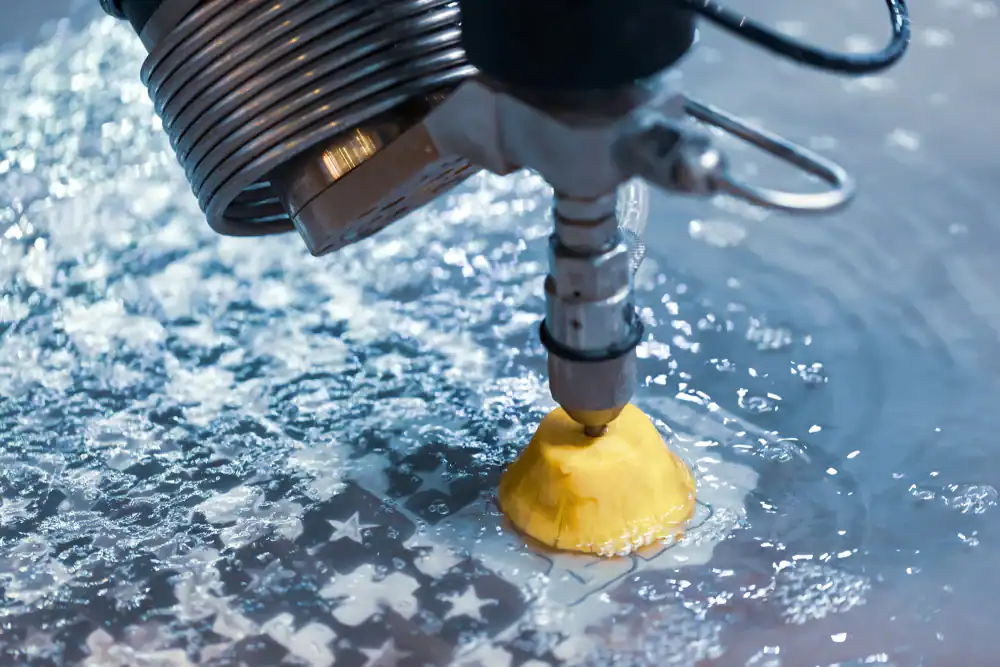
Waterjet cutting uses high-pressure water and natural abrasives to cut glass without generating any heat. The result is clean edges that need minimal finishing, zero thermal distortion, and the ability to cut shapes that would be impossible or cost-prohibitive with traditional methods. You get precision down to 0.01mm, whether you’re cutting straight lines or tight curves.
This matters when you’re working with tempered glass, laminated glass, or custom architectural pieces where a single crack means starting over. It matters when your client is waiting. And it matters when material costs are high and waste eats into your margins.
We serve Melville, NY and the broader Long Island, NY area with industrial-grade waterjet cutting technology. We handle everything from single custom pieces for residential projects to high-volume production runs for industrial manufacturers.
Long Island, NY’s market demands precision. Whether it’s architectural glass for commercial buildings, marine-grade components that need to withstand saltwater environments, or custom residential work for the area’s high-end homes, the tolerance for error is zero. We understand that timeline matters as much as quality when you’re coordinating with contractors, designers, or your own production schedule.
Our equipment handles the full range of glass types and thicknesses. We’re set up for both prototyping and production, so whether you need one piece or a thousand, the process stays consistent.
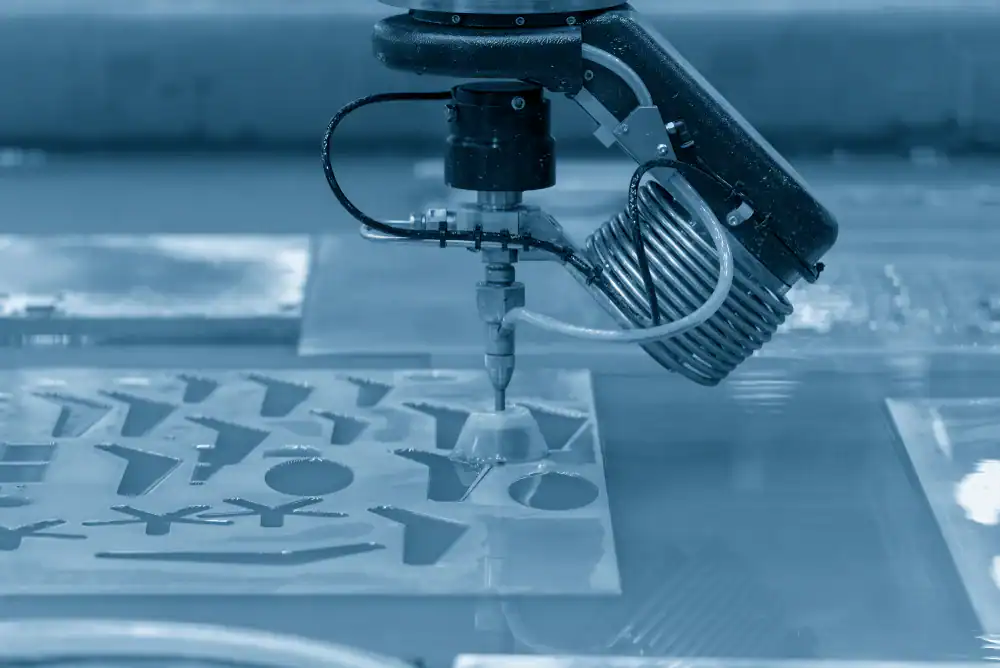
You send us your design file or specifications. If you’re working from a concept rather than a CAD file, we can help translate that into cuttable geometry. Our CNC system reads the file and maps the exact cutting path.
The glass is positioned and secured without the heavy clamping that traditional methods require. This reduces the risk of surface damage before cutting even begins. The waterjet nozzle follows the programmed path, using a focused stream of water mixed with fine abrasive particles to cut through the glass with precision.
Because there’s no heat involved, there’s no thermal expansion, no hardened edges, and no heat-affected zones that weaken the material. The cutting process is fast compared to traditional methods, and because the kerf width is minimal, you lose less material to the cut itself.
Once cutting is complete, most pieces need little to no additional edge treatment. If your project requires polished edges or specific finishing, that’s a separate step, but the waterjet cut itself produces a clean edge that’s often ready to use as-is.
Ready to get started?
You get the ability to cut complex curves, interior cutouts, and intricate patterns that would be difficult or impossible with scoring and breaking methods. This opens up design possibilities for architectural features, decorative panels, and custom installations that set your work apart.
Melville’s commercial construction market increasingly demands energy-efficient glazing and custom glass facades. Waterjet cutting handles these specifications without compromising the glass properties that make those installations effective. You’re not introducing stress points that could fail during installation or over time.
For residential glass cutting services in Melville, NY, homeowners expect flawless results on expensive materials. Whether it’s custom shower enclosures, glass countertops, or decorative elements, waterjet cutting delivers the precision that high-end residential work requires. There’s no room for “close enough” when the glass is going into someone’s home.
Industrial applications benefit from the speed and repeatability of CNC glass waterjet cutting in Melville, NY. If you need fifty identical pieces or a production run with tight tolerances, the process stays consistent from first cut to last. You’re not dealing with tool wear or heat buildup that changes cut quality over time.
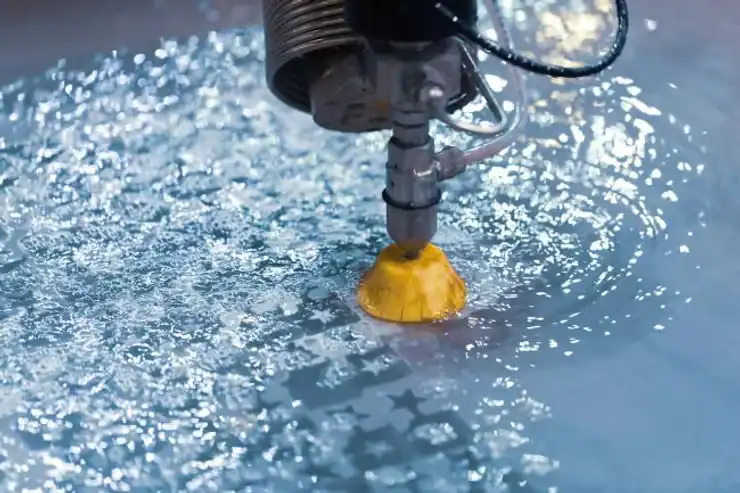
Waterjet cutting works on virtually every type of glass you’d encounter in commercial, industrial, or residential applications. This includes standard float glass, tempered glass, laminated safety glass, low-E coated glass, and specialty glass like borosilicate or quartz.
The process is particularly valuable for tempered glass because traditional cutting methods can’t be used once glass has been tempered. While you still need to cut before tempering in most cases, waterjet cutting gives you the precision to minimize waste during that pre-tempering stage.
Thickness isn’t a limiting factor the way it is with scoring methods. Whether you’re working with thin decorative glass or thick structural glazing, the waterjet adjusts for material thickness without changing the fundamental process. Laminated glass, which can be problematic with heat-based methods due to the interlayer, cuts cleanly because there’s no heat to affect the bonding layer.
The per-cut cost of waterjet cutting is higher than simple straight cuts with a glass scorer. But that’s not the full picture of what you’re actually paying for.
Traditional methods require secondary operations for complex shapes. You’re paying for grinding, polishing, and edge work to clean up what the initial cut left behind. You’re also dealing with higher breakage rates on intricate cuts, which means material waste. When you factor in the cost of ruined pieces, additional labor, and project delays from having to recut failed pieces, waterjet cutting often costs less overall.
For custom or low-volume work, waterjet cutting eliminates tooling costs entirely. There’s no need for custom jigs, fixtures, or specialized cutting tools. The CNC system cuts directly from your digital file. If you need to modify the design, that’s a file change, not a retooling expense.
The real cost advantage shows up in complex projects where traditional methods would require multiple setups, specialized skills, and significant finishing work. Waterjet cutting handles those projects in a single operation with minimal post-processing.
Yes, and this is where waterjet cutting separates itself from traditional methods. The cutting stream is extremely narrow, which allows for tight radius curves that would be impossible to achieve by scoring and breaking.
Interior cutouts, like holes or slots within a glass panel, are straightforward with waterjet cutting. The process pierces through the material at the starting point and follows the programmed path for the interior shape. With traditional methods, you’d need to drill entry points and use specialized tools, which increases the risk of cracking and limits the shapes you can create.
The CNC control means the complexity of the shape doesn’t significantly impact the cutting time or cost. A simple rectangle and an intricate decorative pattern take similar setup time. The machine follows the programmed path with the same precision regardless of how many direction changes are involved.
This capability matters for architectural glass work where designers want organic shapes, custom patterns, or brand elements cut directly into glass panels. It matters for industrial applications where glass components need precise mounting holes or complex geometries to interface with other parts.
Cutting time depends on the complexity of the design, the thickness of the glass, and the total length of the cut path. A simple rectangular cut in quarter-inch glass might take minutes. An intricate pattern with multiple interior cutouts could take an hour or more.
What matters more than raw cutting time is total turnaround time from when you submit your project to when you have finished pieces in hand. For most projects, you’re looking at days, not weeks. Rush work can often be accommodated depending on the current production schedule.
The speed advantage of waterjet cutting becomes clear when you consider the entire process. Traditional methods might have faster cutting time for simple shapes, but when you add in setup time, secondary finishing operations, and the time lost to failed cuts that need to be redone, waterjet cutting is typically faster overall.
CNC automation also means we can run complex cuts without constant operator intervention. The machine follows the programmed path while operators focus on setup, quality checks, and preparing the next job. This efficiency translates to faster turnaround times for you.
No. Waterjet cutting doesn’t introduce heat, which means there’s no thermal stress and no change to the glass structure at the molecular level. The material properties of the glass remain exactly as they were before cutting.
This is critical for applications where glass strength and performance are specified requirements. Heat-based cutting methods can create microfractures and residual stress in the material that aren’t always visible but can compromise long-term performance. Waterjet cutting avoids this entirely.
The edge quality produced by waterjet cutting is clean and free from the micro-cracks that can propagate into larger failures over time. While you might still choose to polish or finish edges for aesthetic reasons or to meet specific safety standards, the cut edge itself is structurally sound.
For laminated or coated glass, waterjet cutting doesn’t delaminate layers or damage coatings in the way that heat or vibration-based methods can. The glass maintains its intended performance characteristics, whether that’s safety performance for laminated glass or energy efficiency for low-E coatings.
A digital file is ideal. CAD files in formats like DXF or DWG work directly with our CNC system. If you’re working in design software like AutoCAD, SolidWorks, or even Illustrator, we can typically work with those file formats.
If you don’t have a digital file, detailed drawings with dimensions work. We can convert those into the digital format needed for cutting. For simple shapes, even a clear description with measurements is enough to get started.
Beyond the design file, we need to know the type of glass, the thickness, and the quantity you need. If you have specific edge finish requirements or tolerances that are tighter than standard, that’s helpful to know upfront.
For larger or ongoing projects, a conversation about timeline expectations and any specific handling or packaging requirements helps us set up the job correctly from the start. The more information you provide about how the finished pieces will be used, the better we can optimize the cutting process to meet those end-use requirements.
Useful Links
Other Services we provide in Melville