Hear from Our Customers
When you’re working with glass, you don’t get second chances. Traditional cutting methods generate heat that causes micro-fractures, edge chips, and thermal stress that can ruin your material days or weeks after the cut. You’re left managing waste, delays, and the frustration of explaining to clients why their project costs more than quoted.
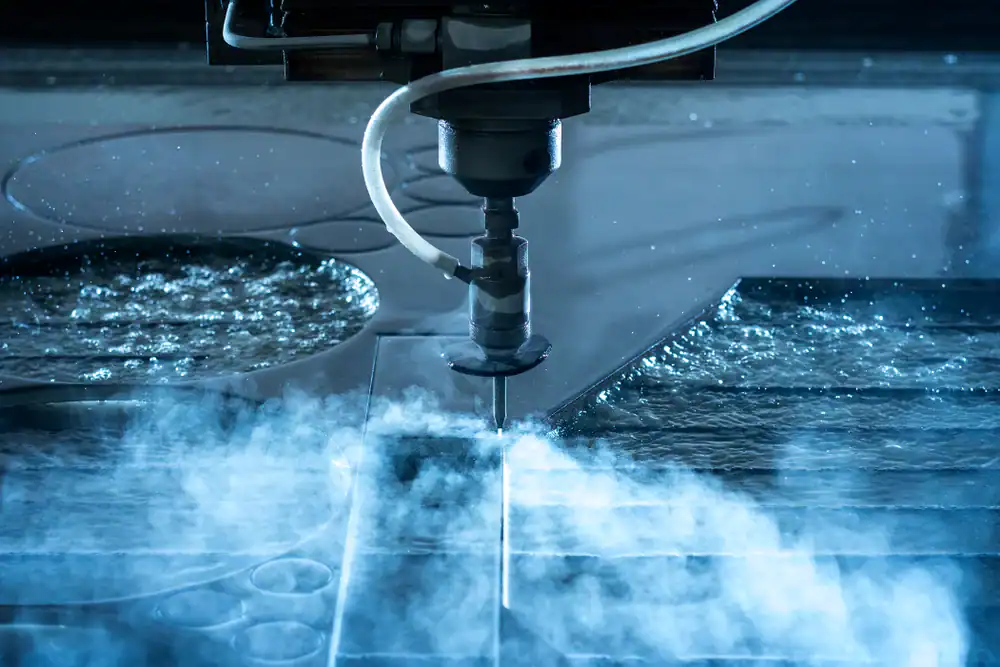
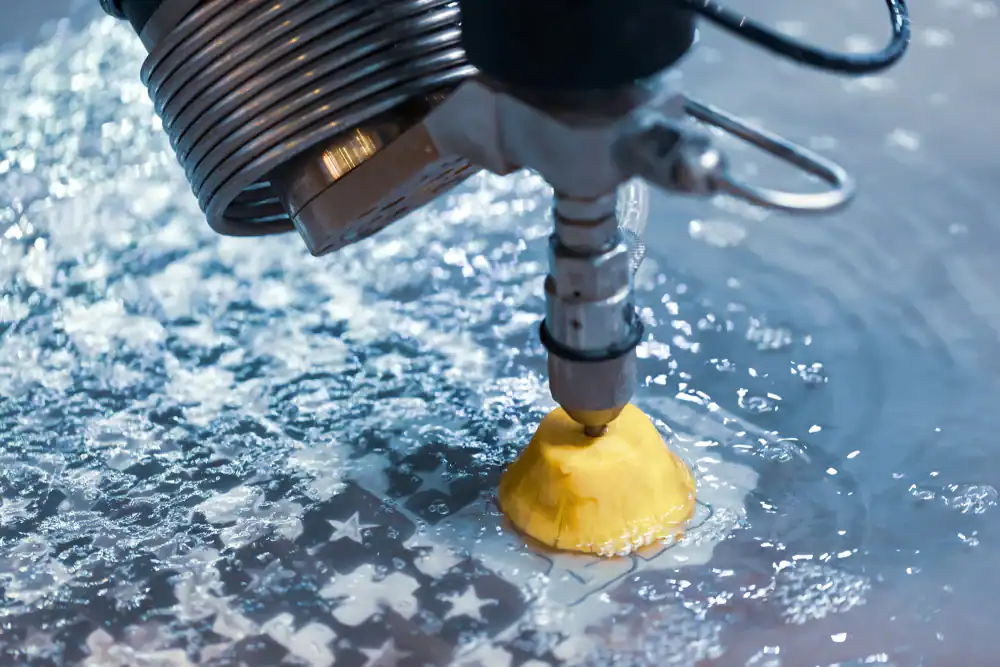
CNC glass waterjet cutting in Miller Place, NY eliminates those problems entirely. The process uses high-pressure water mixed with fine abrasive particles to cut through glass without generating any heat. No thermal stress means no cracking, no warping, and no weakened edges that fail later.
You get clean cuts on complex curves, tight inside corners, and intricate patterns that would be impossible with traditional scoring and breaking methods. The cutting kerf averages just 0.035 inches, which means you’re wasting less material and getting higher accuracy on every piece. Whether you’re cutting 3mm architectural panels or 200mm thick industrial glass, the results stay consistent.
We bring industrial-grade waterjet cutting technology to Miller Place’s professional and commercial market. We’re equipped with custom-built 90,000 psi pump systems and multi-axis CNC machines that transform your digital designs into precision-cut glass components.
Our in-house design team reviews every CAD file before cutting begins. We catch potential issues early, adjust toolpaths for optimal results, and make sure your project runs right the first time. That matters in Miller Place, where the professional community expects quality work and doesn’t have time for do-overs.
You’re working with a team that understands both the engineering precision and the real-world fabrication challenges of custom glass waterjet cutting in Miller Place, NY. We’ve handled everything from residential architectural features to industrial components, and we know what it takes to deliver clean results on schedule.
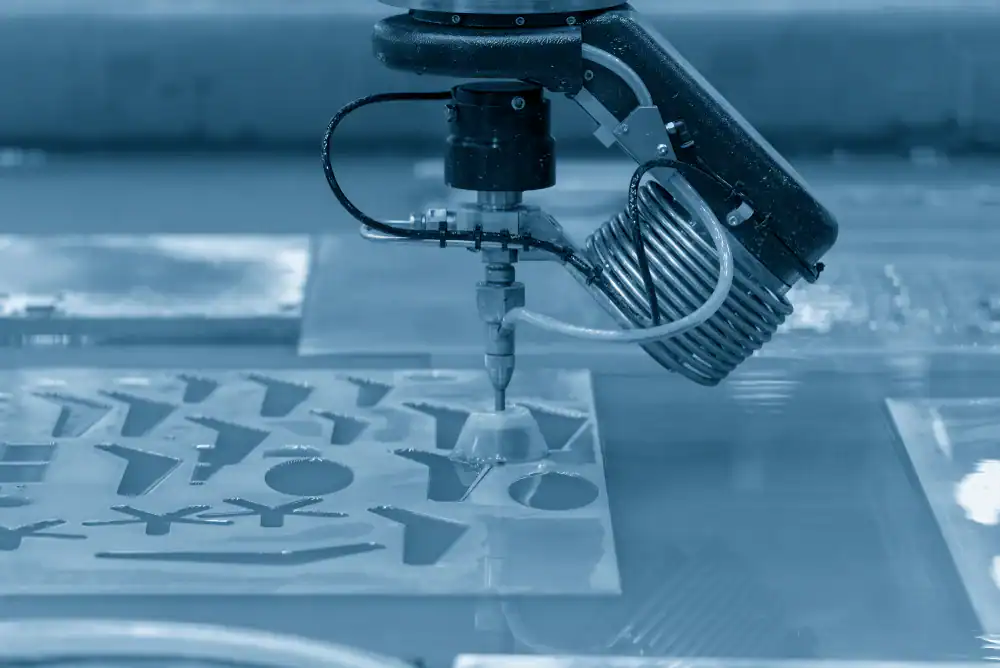
You start by sending us your design file. We accept CAD drawings, DXF files, or even detailed sketches if that’s what you’re working from. Our design team reviews the file to verify dimensions, check for any geometry that might cause issues, and optimize the cutting path for your specific glass type and thickness.
Once the file is approved, we load your glass material onto the cutting bed. For production runs, we can stack multiple panels and cut them simultaneously, giving you identical results across every piece. The waterjet system follows the programmed path with micron-level accuracy, cutting completely through the material or creating surface etching depending on your specifications.
After cutting, the edges come off the machine clean enough for most applications without additional finishing. If your project requires polished edges or specific edge treatments, we handle that too. You receive finished components that are ready to install, with no surprise defects showing up later because of hidden thermal damage.
The entire process for industrial glass waterjet cutting in Miller Place typically runs faster than traditional methods once we account for setup time, reduced waste, and eliminated secondary operations. You’re not paying for multiple vendors or managing a complex supply chain.
Ready to get started?
You get access to cutting capabilities that handle everything from standard float glass to laminated ballistic glass without changing tooling or setup. The same machine that cuts delicate 3mm panels for residential projects can cut through 7-inch thick industrial glass for commercial applications.
The cold cutting process preserves your material properties completely. There’s no heat-affected zone, no temper loss, and no structural changes to the glass. That matters for architectural glass waterjet cutting in Miller Place, NY, where building codes and engineering specifications don’t leave room for compromised materials.
You also get significantly less waste. The narrow cutting kerf means more usable pieces from each sheet, and the reduced breakage rate means fewer rejected parts. For Miller Place’s professional market, where project budgets are scrutinized and material costs matter, that efficiency translates directly to better project economics.
The environmental aspect is straightforward too. The process uses recyclable water and produces no toxic emissions or chemical waste. For commercial projects in Miller Place where environmental compliance and corporate responsibility matter, waterjet cutting offers a cleaner alternative to traditional methods.
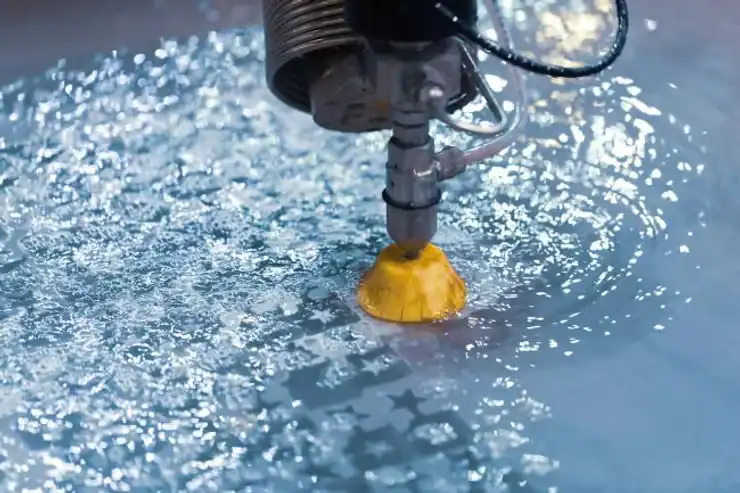
Waterjet systems cut virtually any glass type without limitation. Standard float glass, tempered glass, laminated glass, low-iron glass, textured glass, mirrored glass, and even specialized materials like laminated ballistic glass all cut cleanly with the same equipment.
The key advantage is that you don’t need different tooling or cutting methods for different glass types. Traditional cutting requires different tools, techniques, and skill levels depending on whether you’re working with annealed or tempered glass. Waterjet cutting uses the same high-pressure water stream regardless of the material, which means consistent results across your entire project even when you’re mixing glass types.
Thickness capacity runs from delicate thin materials up to 200mm thick industrial glass. That range covers everything from decorative residential panels to heavy-duty commercial applications. The cutting quality stays consistent across that entire thickness range because the process doesn’t rely on mechanical stress or thermal properties that vary with material thickness.
Traditional glass cutting scores the surface and then breaks the material along that score line. That works fine for straight cuts and simple shapes, but it’s limited by the material’s natural fracture properties. You can’t make tight inside corners, complex curves, or intricate patterns because the glass won’t break cleanly in those directions.
Waterjet cutting removes that limitation entirely. The high-pressure stream cuts through the material rather than relying on controlled breaking, which means you can create any shape your design requires. Inside corners, tight radiuses, and complex organic shapes all cut with the same precision as straight lines.
The other major difference is heat. Traditional methods like laser cutting or grinding generate significant heat that creates thermal stress in the glass. That stress can cause immediate cracking or create weakened areas that fail later. Waterjet cutting is a cold process that never heats the material, so you avoid all thermal stress and the failures that come with it. The edges come off the machine clean and stable, without the micro-fractures that traditional methods leave behind.
Yes, waterjet systems cut glass up to 200mm (approximately 7.9 inches) thick, which covers the full range of commercial and industrial applications. Most architectural projects use glass in the 6mm to 25mm range, and waterjet handles those thicknesses easily with consistent edge quality throughout the cut depth.
For thicker industrial glass, the cutting speed slows down but the quality remains high. You’re not fighting the material or dealing with the edge quality degradation that happens with mechanical cutting methods on thick stock. The waterjet stream maintains the same cutting kerf width and edge finish whether you’re cutting 6mm or 60mm material.
The ability to stack multiple panels during cutting becomes especially valuable for commercial projects with multiple identical pieces. You can stack several panels and cut them all simultaneously, which multiplies your production speed while guaranteeing that every piece matches exactly. That’s critical for architectural installations where panels need to align precisely and any dimensional variation creates installation problems.
Turnaround time depends on project complexity, material thickness, and current production schedule, but most projects move faster with waterjet cutting than traditional methods once you account for the complete process. Simple cuts on standard thickness glass often complete within a few days from file approval to finished parts.
More complex projects with intricate patterns, thick materials, or large quantities take longer, but you’re still saving time compared to traditional methods that require multiple operations. With waterjet cutting, you’re getting finished edges in a single pass rather than cutting, grinding, and polishing through separate steps with different equipment.
The design review process at the front end actually speeds up your overall timeline. We catch potential issues before cutting begins, which eliminates the delays that happen when problems show up mid-production. You’re not dealing with rejected parts, rework, or the schedule disruption that comes with discovering that your design doesn’t work with traditional cutting methods. The time invested in proper file preparation pays back in reliable production and on-time delivery.
Waterjet cutting handles both scenarios efficiently because there’s no expensive tooling to create for each job. Traditional manufacturing methods often require custom jigs, fixtures, or tooling that only makes economic sense for large production runs. Waterjet systems cut directly from your digital file, so the setup cost for one piece is nearly identical to the setup cost for a hundred pieces.
For one-off custom work, that means you can get precision cuts on complex designs without paying for tooling that you’ll never use again. Architects and designers working on unique residential or commercial projects get the same cutting quality and capabilities as high-volume manufacturers, just in smaller quantities.
Production runs benefit from the stacking capability and the consistency of CNC-controlled cutting. You can stack multiple glass panels and cut them simultaneously, with each piece coming out identical to the last. The digital control means there’s no variation from operator skill or fatigue, and no quality drift over the course of a long production run. Whether you need one custom piece or a thousand identical components, the process adapts to your project requirements without compromise.
The most helpful information includes your design file (CAD, DXF, or detailed drawings with dimensions), the type and thickness of glass you’re using, the quantity of pieces you need, and your timeline. The more specific you can be about your requirements, the more accurate the quote will be.
If you’re still in the design phase and haven’t finalized all the details, that’s fine too. We can work from preliminary drawings to give you budget estimates and provide feedback on design elements that might affect cost or feasibility. Sometimes small design adjustments can significantly improve manufacturability without compromising your vision, and it’s better to have those conversations early.
Edge finish requirements matter for quoting too. If you need polished edges, specific edge profiles, or additional finishing work beyond the standard waterjet cut edge, let us know upfront. Most applications work fine with the clean edge that comes directly off the waterjet, but some projects require additional treatment. Being clear about your expectations from the start helps us quote accurately and deliver exactly what you need without surprises.
Useful Links
Other Services we provide in Miller Place