Hear from Our Customers
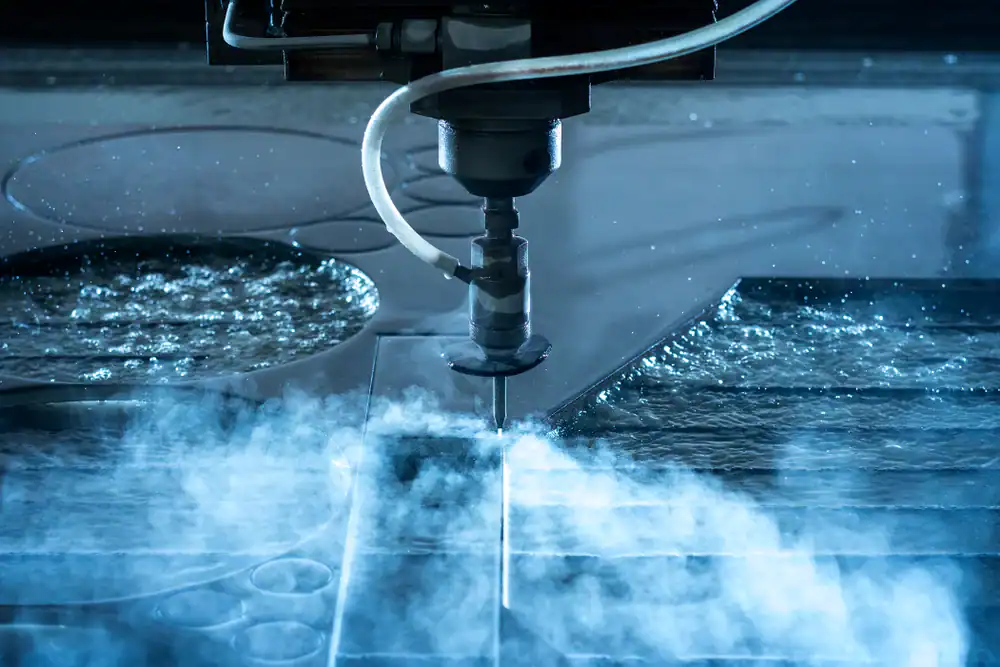
Traditional glass cutting methods generate heat. That heat creates stress points, micro-cracks, and edge damage that compromise your material before you even install it. When you’re working with expensive architectural glass or custom residential pieces, that’s not just frustrating—it’s costly.
Waterjet cutting eliminates that problem entirely. No heat means no thermal stress, no warping, and no compromised edges. The cold-cutting process preserves the structural integrity of your glass from the first cut to final installation.
You get clean edges that require minimal finishing work. Complex curves and intricate patterns that would take hours with traditional scoring methods happen in a fraction of the time. And because the cutting stream is omnidirectional and controlled by CNC precision, you’re not limited to simple shapes or straight lines—if you can design it, we can cut it.
The result is less material waste, faster project timelines, and glass components that meet your exact specifications without the stress of wondering if they’ll crack during cutting.
We serve the Mount Sinai construction and design community with precision waterjet cutting for projects that demand accuracy. We work directly with architects, general contractors, interior designers, and custom home builders who need glass fabrication that matches their specifications the first time.
Mount Sinai’s commercial real estate market includes over 245,000 square feet of commercial space across varied property types, and the area’s active construction environment means deadlines matter. We understand that your glass cutting service needs to keep pace with your project schedule, not slow it down.
Our facility handles everything from single custom pieces for residential renovations to production runs for commercial installations. We provide material consultation and design services because we know that sometimes the challenge isn’t just cutting the glass—it’s figuring out the best approach for your specific application.
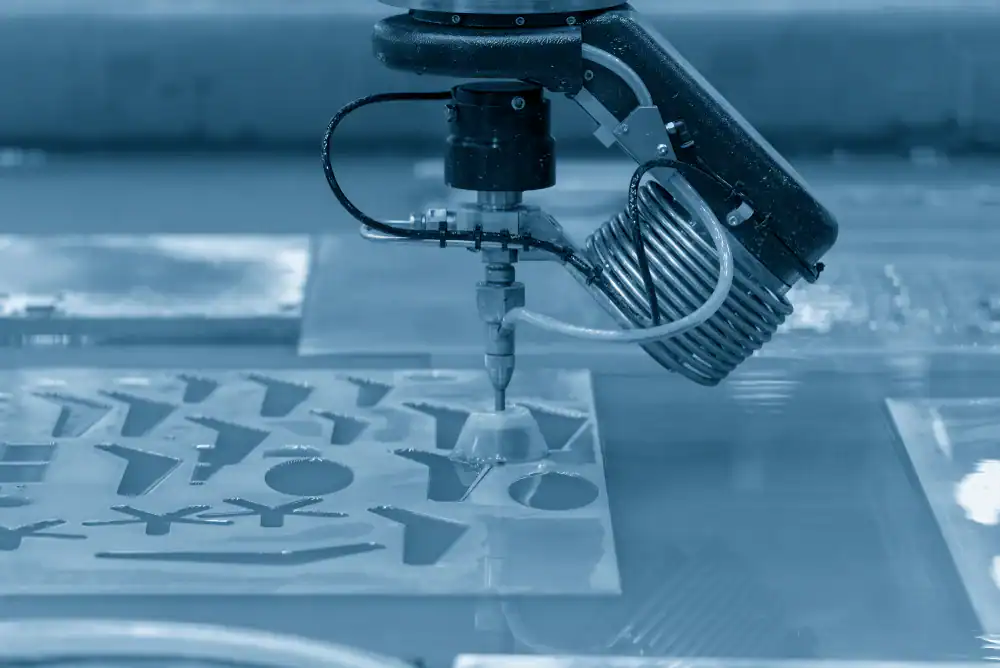
The process starts with your design specifications. Whether you’re providing CAD files, technical drawings, or working with us to develop the design, we translate your vision into cutting parameters that our CNC waterjet system can execute with precision.
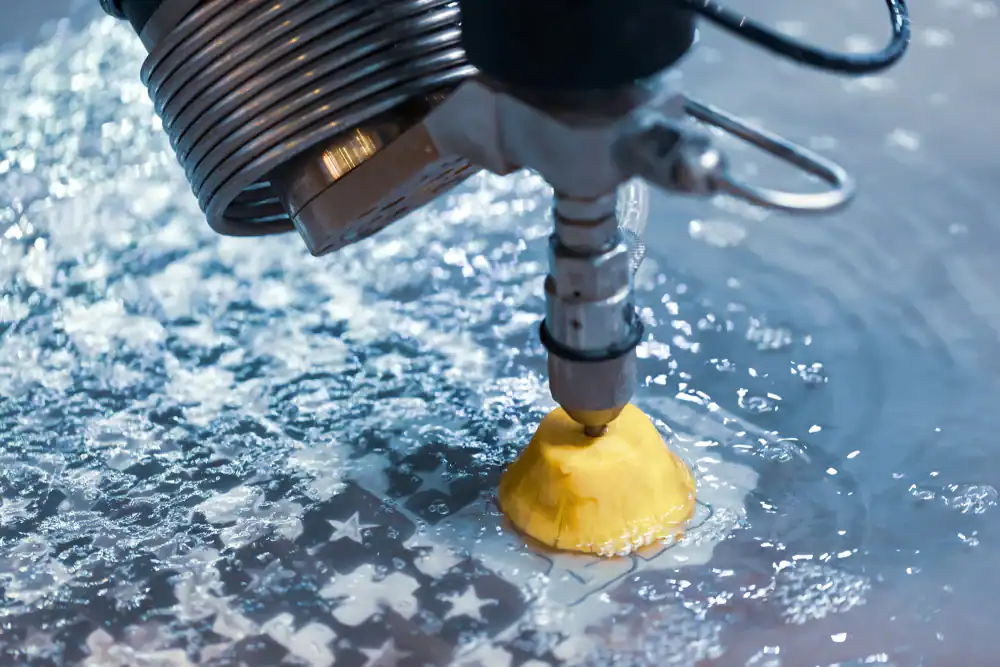
Once programming is complete, your glass is positioned and secured. The waterjet cutting head uses a high-pressure stream of water mixed with fine abrasive particles to cut through the glass along your specified path. Because the stream is computer-controlled, it maintains consistent pressure and follows complex curves with the same accuracy as straight cuts. The cutting happens at room temperature—no torches, no lasers, no heat buildup.
During cutting, the waterjet stream removes material without creating the stress fractures you’d see with scoring and breaking methods. Intricate interior cuts, tight radius corners, and detailed edge work all happen in a single setup. There’s no need to flip, reposition, or transfer your glass between different tools or stations.
After cutting, edges come off the machine smooth and clean. Depending on your application, they may need minimal finishing or be ready for tempering and installation as-is. You receive glass components that fit your project specifications without the chipping, cracking, or edge damage that derails timelines and budgets.
Ready to get started?
Architectural glass waterjet cutting in Mount Sinai, NY means you can specify complex shapes for feature walls, custom panels, decorative installations, and structural elements without worrying about cutting limitations. The process handles everything from standard float glass to specialty materials, maintaining edge quality across different thicknesses and compositions.
For residential glass cutting services, homeowners and renovation contractors get access to the same precision technology used in commercial applications. Custom shower enclosures, decorative glass partitions, kitchen backsplashes with intricate patterns—projects that would be prohibitively expensive or technically difficult with traditional methods become feasible.
Industrial applications benefit from the speed and repeatability of CNC glass waterjet cutting. Production runs maintain consistent quality across hundreds of pieces. Complex assemblies with multiple glass components fit together properly because each piece is cut to the same exacting tolerances. There’s no cumulative error from manual processes or tool wear.
The Mount Sinai area’s mix of residential development and commercial construction creates demand for both one-off custom work and larger production runs. We handle that range because the waterjet process scales efficiently—the same precision that cuts a single decorative panel applies to cutting fifty identical pieces for a commercial installation. You’re not choosing between custom capability and production efficiency.
Glass cracks during cutting when internal stresses exceed the material’s strength. Traditional methods create these stresses in two ways: thermal shock from heat-based cutting, and mechanical stress from scoring and breaking techniques.
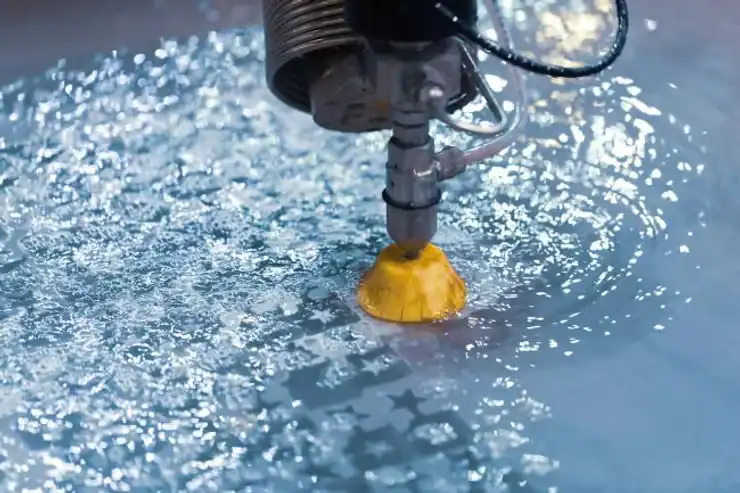
Waterjet cutting eliminates both stress sources. The process uses a high-pressure stream of water and abrasive particles that erodes material away rather than fracturing it. Because there’s no heat generation, there’s no thermal expansion, no localized hot spots, and no rapid cooling that would create stress points in the glass structure.
The cutting action itself is also fundamentally different. Instead of scoring a line and applying breaking pressure—which relies on controlled crack propagation—the waterjet simply removes material along the cut path. The surrounding glass experiences minimal mechanical stress because you’re not forcing a fracture to travel in a specific direction.
This matters most when you’re cutting complex shapes, working near edges, or dealing with tempered or specialty glass that’s particularly sensitive to stress. The waterjet process maintains consistent cutting pressure and follows your programmed path without creating the stress concentrations that lead to unexpected cracks or edge chips.
Waterjet cutting excels when your project involves complex shapes, tight tolerances, or expensive materials where you can’t afford cutting failures. Architectural applications like custom glass panels, decorative screens, intricate inlays, and feature wall components benefit from the ability to cut detailed patterns that would be extremely difficult with traditional methods.
Residential projects including custom shower enclosures, glass countertops, decorative partitions, and artistic installations get the precision needed for proper fit and finish. When you’re installing glass in a specific space with fixed dimensions, the accuracy of waterjet cutting means pieces fit correctly the first time without field modifications.
Industrial and commercial applications that require multiple identical pieces see advantages in consistency and repeatability. The CNC programming ensures that piece fifty is cut to exactly the same specifications as piece one. This matters for assemblies, replacement parts, and any application where components need to be interchangeable.
Projects involving thick glass, laminated glass, or specialty materials also benefit because the waterjet process doesn’t care about material hardness or thickness the way mechanical cutting methods do. The cutting parameters adjust for different materials, but the fundamental process remains effective across a wide range of glass types and thicknesses.
The speed advantage depends on what you’re cutting. For simple straight cuts on standard glass, traditional scoring methods might actually be faster for a single piece. But that’s rarely the full picture of what your project needs.
Waterjet cutting becomes significantly faster when you factor in complex shapes, multiple interior cuts, or detailed edge work. A curved cut that might take thirty minutes of careful scoring, breaking, and grinding with traditional methods happens in a few minutes with waterjet. Interior cutouts that require drilling starter holes and multiple tool changes happen in a single continuous cutting operation.
The real time savings show up in reduced finishing work and fewer failed pieces. Waterjet edges come off the machine clean enough that they often need minimal additional treatment. You’re not spending time grinding, polishing, or smoothing rough edges. And because the process doesn’t create thermal or mechanical stress, your failure rate drops dramatically—you’re not remaking pieces that cracked during cutting.
For production runs, the CNC automation means you’re not paying for skilled labor to manually score and break each piece. The machine runs the programmed cut path consistently while your team handles setup and material management. That efficiency compounds across larger orders where traditional methods would require significant hands-on cutting time for each individual piece.
Yes, and that’s one of the key advantages of the waterjet process. The cutting mechanism—high-pressure water and abrasive particles eroding material—works effectively across a wide thickness range. Thin decorative glass down to a few millimeters and structural glass several inches thick both cut successfully with appropriate parameter adjustments.
Thin glass benefits because there’s no mechanical pressure that might cause flexing or breakage. The waterjet stream removes material without applying the kind of force that would stress thin, delicate pieces. This makes intricate patterns in thin glass feasible without the high failure rates you’d see with traditional methods.
Thick glass cuts successfully because the waterjet stream maintains cutting power through the entire depth of material. Unlike mechanical tools that might struggle with thick sections or heat-based methods that create temperature gradients through thick material, the waterjet simply takes longer to erode through the additional thickness. The cut quality remains consistent from top surface to bottom.
The practical limitation is usually cutting time rather than capability. Thicker material requires more passes or slower cutting speeds to fully penetrate, which affects project timelines and costs. But when you need thick glass cut to complex shapes, waterjet is often the only practical method that delivers both the precision and edge quality your application requires.
Standard waterjet cutting maintains tolerances within ±0.1mm for most glass applications. That’s tight enough for architectural installations where panels need to fit precisely, assemblies where multiple glass components interface, and decorative work where pattern alignment matters.
For context, ±0.1mm means that a cut specified at 500mm could measure anywhere from 499.9mm to 500.1mm. In practical terms, that’s imperceptible in most installations and tighter than what traditional glass cutting methods typically achieve, especially on complex curves or detailed shapes.
Achieving these tolerances requires proper machine calibration, appropriate cutting parameters for your specific glass type and thickness, and correct fixturing to prevent material movement during cutting. The CNC control system manages the cutting path, but the physical setup determines whether you actually hit those tolerance targets consistently.
Some applications need even tighter tolerances. Fine decorative work, precision assemblies, or applications with critical fit requirements might specify ±0.05mm or tighter. This is achievable with waterjet cutting but requires additional process control, potentially slower cutting speeds, and verification of machine capability. When your project has specific tolerance requirements, discuss them upfront so the cutting parameters and quality control procedures can be adjusted accordingly.
Waterjet cutting works on annealed glass before tempering, but it cannot cut glass that’s already been tempered. The tempering process creates internal stresses that give the glass its strength—any attempt to cut tempered glass causes it to shatter completely. If your project requires tempered glass, the waterjet cutting happens first, then the cut pieces go through the tempering process.
This sequencing matters for project planning. Your glass needs to be cut to final dimensions and edge work completed before tempering because no modifications are possible afterward. That means design changes after tempering require starting over with new annealed glass, cutting, and re-tempering.
Laminated glass presents a different situation. Waterjet cutting can successfully cut through laminated glass assemblies—cutting through both glass layers and the interlayer material in a single operation. The process doesn’t delaminate the layers or create edge separation the way some cutting methods do. However, the interlayer material and overall thickness affect cutting parameters and speed.
For some laminated applications, it makes more sense to cut the individual glass layers before lamination, especially if you’re working with complex shapes or very thick laminates. The optimal approach depends on your specific project requirements, the laminate construction, and how the edges will be finished. This is where material consultation before cutting helps avoid process issues that would compromise your finished product.
Useful Links
Other Services we provide in Mount Sinai