Hear from Our Customers
You don’t have time for do-overs. When glass cracks halfway through a custom job, you’re not just losing material—you’re losing days, budget, and credibility with your own clients.
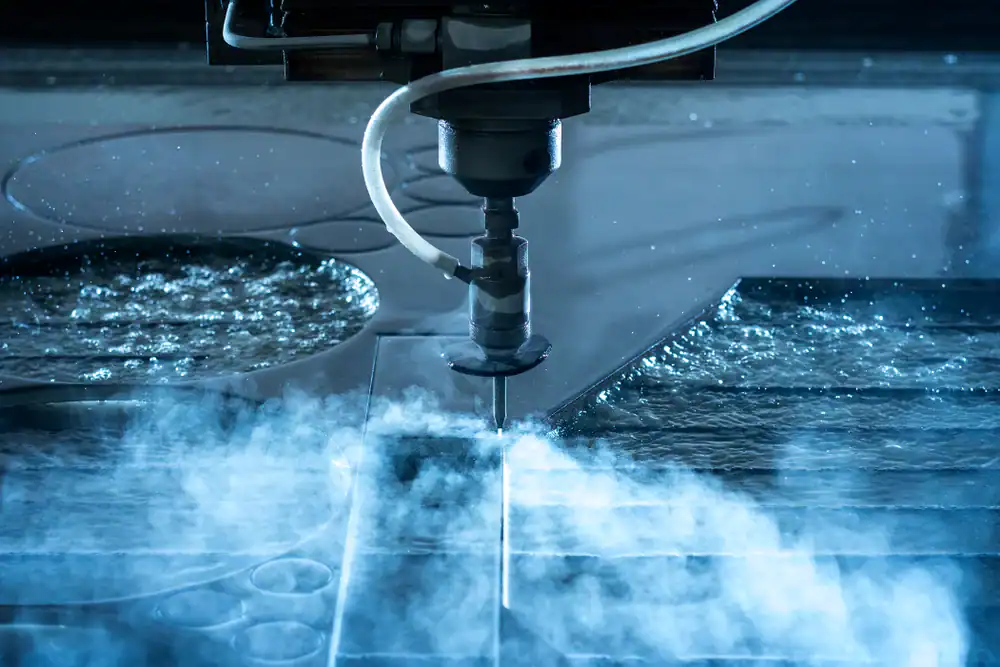
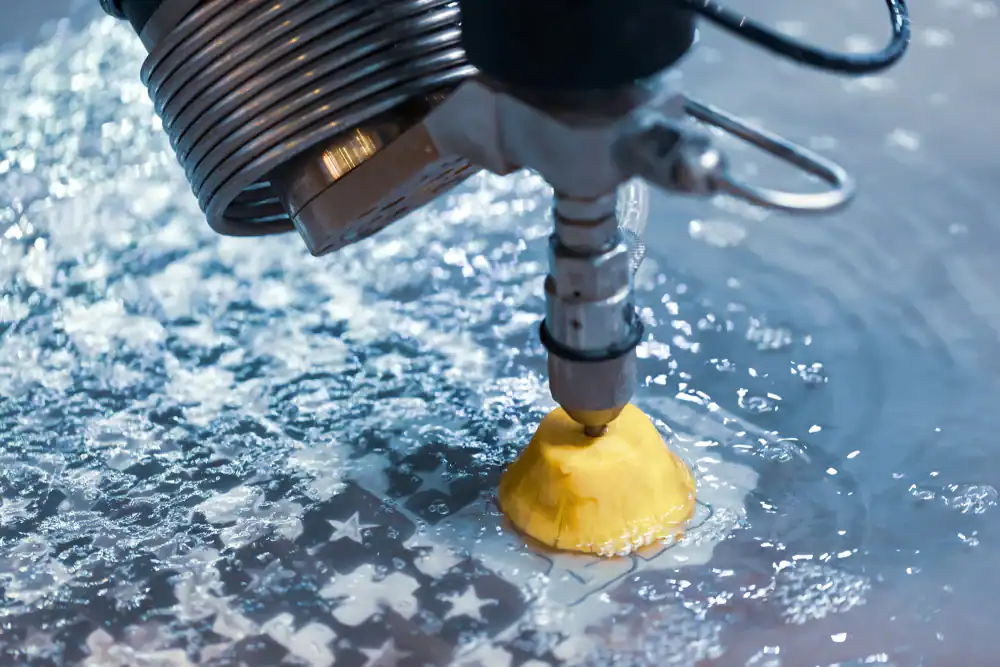
Waterjet cutting removes that risk. The process uses high-pressure water mixed with fine abrasive to cut through glass without generating heat. No thermal stress means no warping, no micro-fractures forming along the cut line, and no delamination if you’re working with laminated glass.
Our CNC system follows your CAD file to the tenth of a millimeter. Curves, tight corners, intricate patterns—it handles them the same way it handles straight cuts. You send the design, and it comes back exactly as drawn, with clean edges that don’t need additional grinding or polishing unless your specs call for it.
If you’re fabricating architectural panels, custom mirrors, decorative glass installations, or precision components for industrial applications in North Amityville, NY, this is how you avoid the callbacks.
Tri-State Waterjet has been serving manufacturers, contractors, and fabricators across New York, New Jersey, Pennsylvania, and Connecticut for years. We’re not new to this, and we’re not learning on your material.
Our shop handles everything from one-off custom pieces to full production runs. If you’re in North Amityville, NY or anywhere on Long Island, NY, you’re working with a team that understands the local construction and manufacturing landscape—the timelines, the standards, the expectations.
We’ve cut glass for storefronts, high-end residential installations, industrial equipment panels, and art pieces that required tolerances most shops won’t even quote. Our equipment is maintained daily. Our operators know how to adjust feed rates for different glass types. And if there’s an issue with your file or your material, we’ll tell you before we start cutting.
You send us your design file—DXF, DWG, or most CAD formats work. If you don’t have a file yet, we can create one based on your drawings or specs. Our team reviews it for any potential issues: tight radiuses that might need adjustment, piercing points that could be repositioned to avoid weak spots, nesting opportunities to reduce waste.
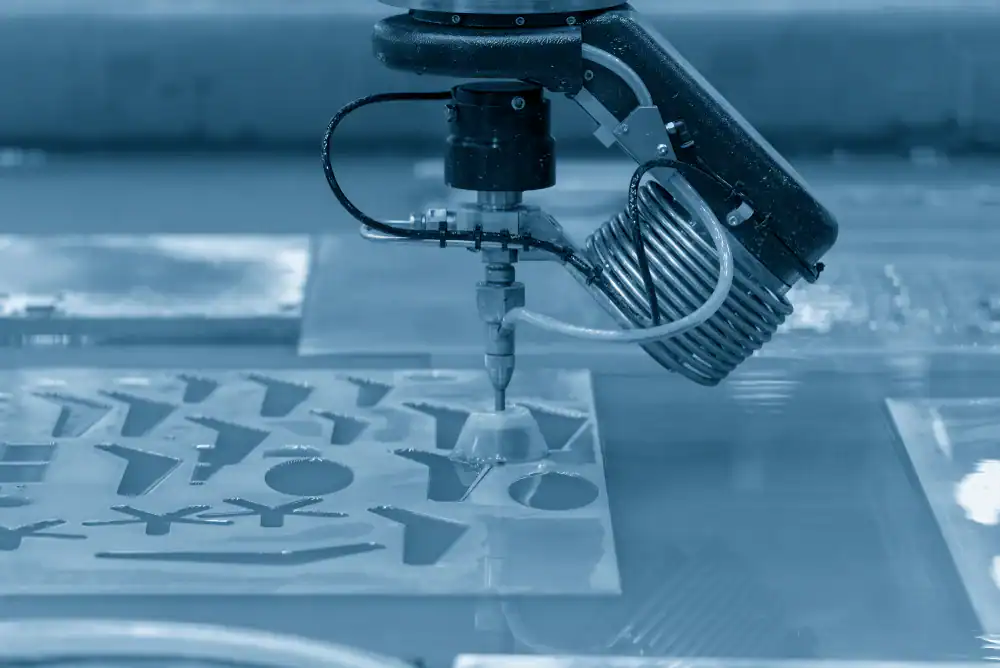
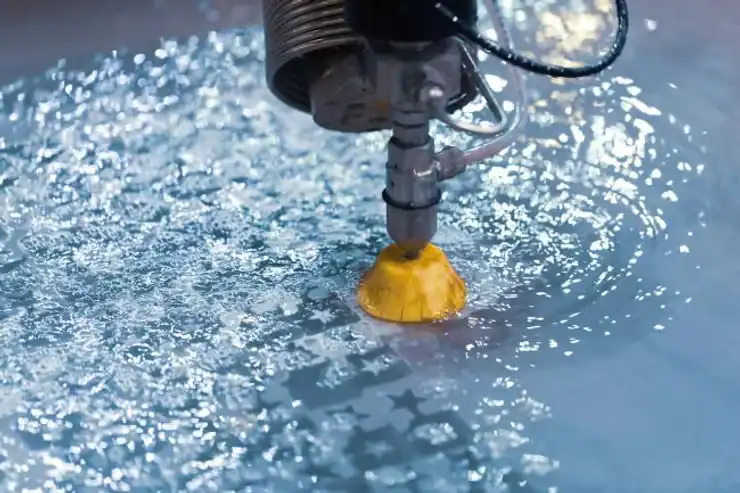
Once the file is approved, we load your glass onto the cutting table. The waterjet nozzle positions itself, and our CNC system takes over. A high-pressure stream of water mixed with garnet abrasive cuts through the glass along the programmed path. The process is cold—no heat-affected zones, no temper loss, no burned edges.
For thicker glass or tighter tolerances, we adjust pressure and feed rate. For laminated glass, we control the abrasive flow to avoid separating layers. The machine runs until the cut is complete, and the part comes off the table ready for installation or assembly.
You get exactly what you specified. If it’s a prototype, we can tweak the file and recut quickly. If it’s a production run, every piece matches the first.
Ready to get started?
Every job includes file review and optimization before we cut. We’re looking at your design to make sure it’s going to cut cleanly and hold up in the real world. If something looks off, we’ll flag it.
You get access to our full range of glass cutting capabilities: architectural glass for facades and interior panels, custom residential glass cutting services in North Amityville, NY for mirrors and decorative elements, and industrial components that need to meet specific tolerances for equipment assembly or protective covers.
The North Amityville area has a strong mix of commercial construction, residential renovation, and light manufacturing. We’ve worked with contractors installing custom glass in retail spaces along Sunrise Highway, fabricators supplying architectural firms in the broader Long Island, NY market, and manufacturers who need precision glass parts for electronics housings or machinery panels.
We also handle secondary services if you need them—edge polishing, drilling, countersinking. Most jobs don’t require it because the waterjet edge quality is already clean, but the option is there. Turnaround depends on complexity and queue, but we’re typically faster than traditional glass cutting methods because there’s no tool setup or multi-step machining.
Tempered glass is tricky. Once it’s been heat-treated, cutting it will cause it to shatter—that’s true for waterjet, saw, or any other method. The tempering process locks internal stresses into the glass, and any cut releases those stresses all at once.
If you need a tempered part, we cut it first, then you send it out for tempering. Most glass tempering shops are set up for that workflow.
Laminated glass is a different story. Waterjet handles it well because there’s no heat to melt the interlayer or cause delamination. We adjust the abrasive flow and pressure to cut through both glass layers and the plastic or resin between them cleanly. You won’t see separation or bubbling along the cut edge like you sometimes get with blade cutting or routing.
Our CNC waterjet system holds tolerances to ±0.005 inches on most glass cuts. That’s tight enough for parts that need to fit into frames, align with other panels, or mate with mechanical components.
The kerf width—the actual width of the cut—is around 0.030 to 0.040 inches depending on the nozzle and abrasive we’re using. That’s narrower than most saw blades, which means less material waste and the ability to cut closer to edges or between features.
For comparison, traditional glass cutting tools might get you within a sixteenth of an inch if the operator is experienced and the glass cooperates. Waterjet removes the variability. The machine follows the programmed path exactly, and it doesn’t drift or wander like a hand tool can. If your design has tight curves, small holes, or intricate interior cutouts, waterjet is often the only method that will hit your specs without cracking the glass.
We routinely cut glass up to 3 inches thick. Anything beyond that starts to require longer cut times and specialized setups, but it’s possible if the project calls for it.
Thicker glass takes more time because the waterjet stream has to penetrate deeper, and we often slow the feed rate to maintain cut quality through the full thickness. But there’s no practical upper limit like you’d hit with a saw blade or scoring tool.
The advantage with thick glass is that waterjet doesn’t create the internal stress fractures that can show up days or weeks after cutting with mechanical methods. The cold cutting process means the glass structure stays intact. If you’re cutting thick architectural glass for load-bearing panels or heavy decorative elements in North Amityville, NY, that structural integrity matters.
The edges come off the table clean but not polished. They’re smooth enough for most industrial and architectural applications where the edge will be framed or sealed. You won’t see chipping or micro-cracks along the cut line like you sometimes get with scoring and breaking.
If you need a polished edge for aesthetic reasons—exposed edges on glass shelving, tabletops, or decorative panels—we can add that as a secondary process. Most clients who need polished edges are in the residential or high-end commercial space where the glass is visible and needs a finished look.
For industrial components, protective covers, or parts that will be gasketed or mounted, the waterjet edge is usually fine as-is. It’s square, it’s consistent, and it doesn’t have burrs or rough spots that would interfere with seals or cause handling issues during assembly.
Laser cutting generates heat, and glass doesn’t handle heat well. You’ll often see micro-fractures, edge chipping, or thermal stress that weakens the part. Some types of glass can be laser cut, but the results are inconsistent and the risk of breakage is high.
Waterjet is a cold process. No heat means no thermal expansion, no internal stress, and no change to the glass structure. The cut quality is predictable, and the failure rate is dramatically lower.
Laser also struggles with thicker glass because the beam loses focus as it penetrates deeper. Waterjet pressure doesn’t drop off the same way—it cuts through 2 inches of glass as reliably as it cuts through a quarter inch. If you’re doing custom glass waterjet cutting in North Amityville, NY for architectural or industrial projects, waterjet gives you more material flexibility and better edge quality than laser can deliver on glass.
We prefer DXF or DWG files because they import cleanly into our CAM software. Most CAD programs can export to those formats. If you’re working in another format—AI, PDF, or even a clean JPG—we can usually convert it, though vector files are always better than raster.
If you don’t have a digital file, we can create one. Send us a dimensioned sketch, a paper template, or even a physical sample if you have one. Our team will draft it in CAD and send it back for approval before we cut.
The more detail you provide upfront, the faster we can turn the job around. If there are specific tolerances, edge requirements, or features that need to align with other components, call those out. We’d rather ask questions on the front end than recut a part because a dimension was unclear.
Useful Links
Other Services we provide in North Amityville