Hear from Our Customers
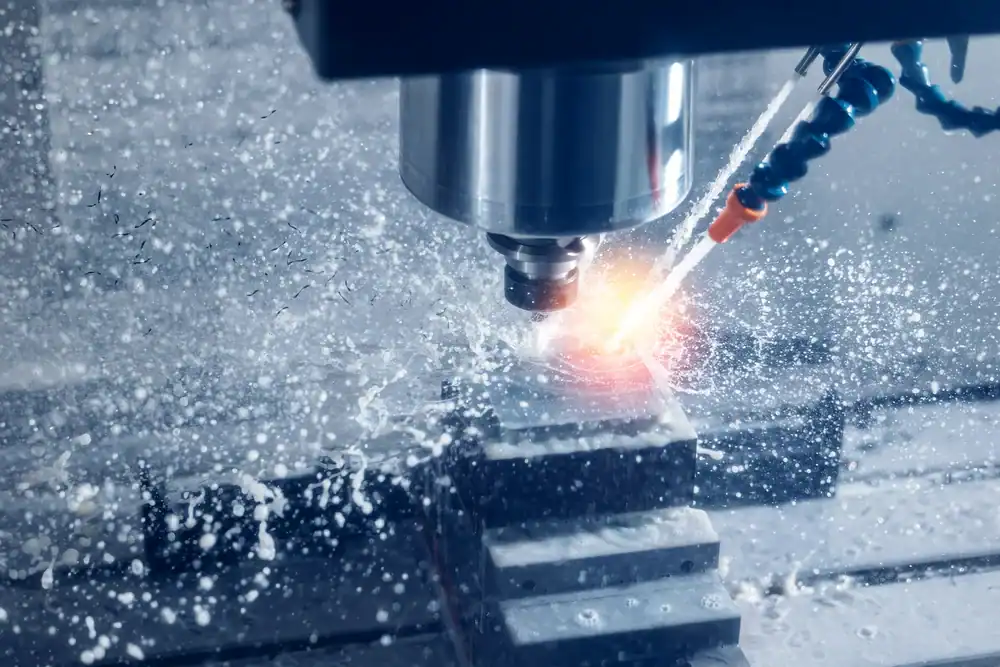
Traditional glass cutting leaves you dealing with microcracks, thermal stress, and edges that need extensive finishing work. You’re stuck with limitations on shapes, constant material waste, and the nagging worry that your glass will crack during handling or installation.
CNC glass waterjet cutting in North Babylon, NY eliminates those problems entirely. The process uses high-pressure water to cut glass down to 0.01mm precision without generating heat, which means no thermal stress and no structural weakness. You get clean, smooth edges that require minimal finishing, and the ability to cut shapes that would be impossible with traditional scoring methods.
Your material waste drops significantly because the narrow cutting stream removes less material and allows tighter nesting of parts. Complex curves, tight radiuses, interior cutouts—all handled in a single setup without multiple operations or the risk of breakage between steps.
We serve North Babylon and the broader Long Island, NY market with advanced CAD-driven waterjet cutting that turns your concepts into production-ready components. We work with architects, fabricators, and builders who need precision glass cutting for everything from decorative installations to structural elements.
North Babylon’s mix of commercial development and residential renovation creates steady demand for custom glass work that meets tight specifications. We’ve built our operation around computer-numeric-control systems that deliver the tolerances your projects require, whether you’re producing architectural glass waterjet cutting in North Babylon, NY for a commercial facade or custom residential glass cutting services for a high-end interior.
You’re not getting a shop that treats every job the same. You’re working with a team that understands material behavior, design constraints, and the difference between a prototype and a production run.
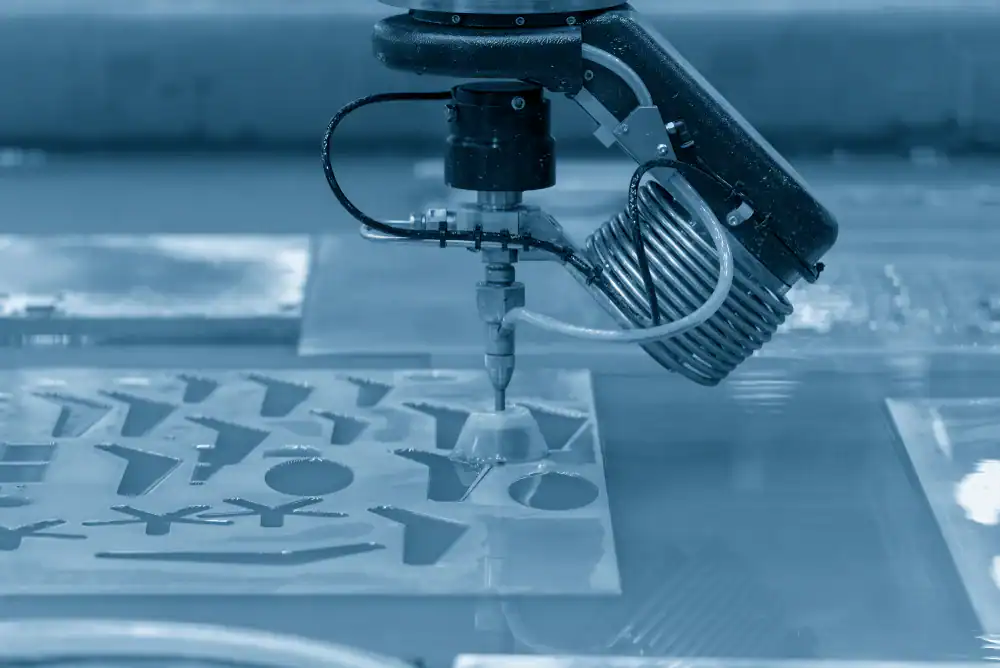
You start by sending us your design file or working with our team to develop the CAD specifications. We review the design for material efficiency and cutting feasibility, flagging any potential issues before we start cutting. This front-end work prevents costly mistakes and material waste.
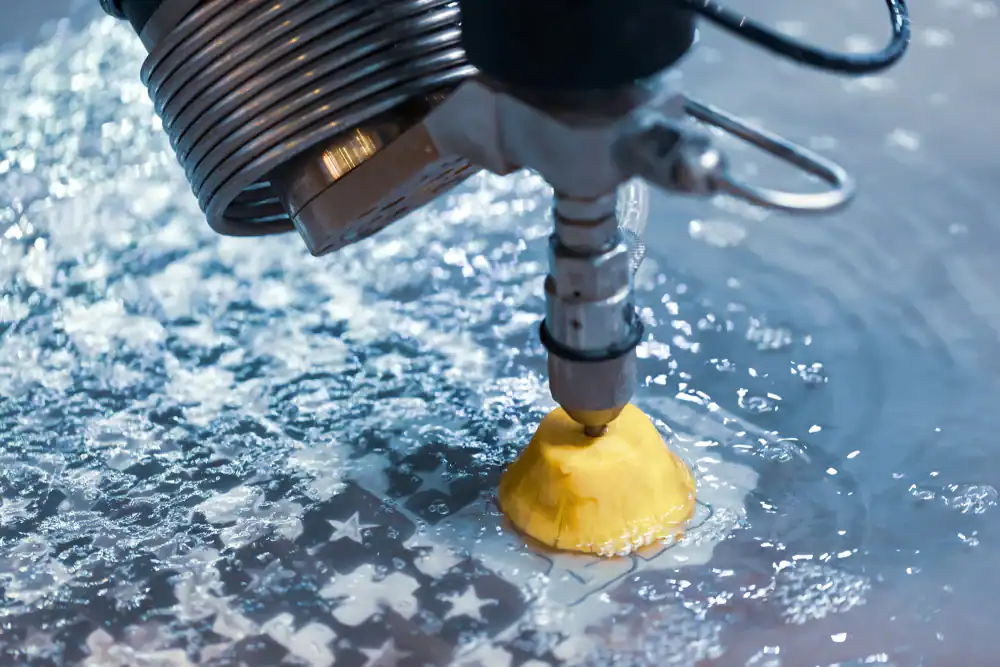
Once the design is finalized, we program the CNC waterjet system with your exact specifications. The machine positions the glass and begins cutting using an ultra-high-pressure water stream mixed with fine abrasive particles. The omnidirectional cutting head follows the programmed path with precision down to fractions of a millimeter, maintaining consistent speed and pressure throughout the cut.
Because there’s no heat involved, the glass doesn’t experience thermal expansion or stress. The cutting action is gentle enough to prevent chipping and cracking, even on intricate details and tight inside corners. You get parts that come off the machine ready for installation or assembly, with minimal secondary finishing required.
For production runs, we optimize the cutting pattern to maximize material usage and minimize cycle time. Whether you need one custom piece or a thousand identical parts, the process remains consistent and repeatable.
Ready to get started?
Every industrial glass waterjet cutting in North Babylon, NY project includes CAD design review and optimization to ensure your parts cut efficiently and meet specifications. We work with various glass types and thicknesses, from standard float glass to specialty materials, adjusting cutting parameters for each material’s characteristics.
You get access to our CNC waterjet systems that handle complex geometries traditional methods can’t touch. Interior cutouts, compound curves, sharp angles, decorative patterns—the technology doesn’t limit your design options. Long Island, NY’s architectural market increasingly demands custom glass elements for both commercial and residential applications, and waterjet cutting delivers the precision those projects require.
Material handling and quality control are built into the process. We secure glass properly to prevent movement during cutting, and inspect finished parts to verify they meet your dimensional requirements. For projects requiring multiple identical parts, we maintain cutting programs for future reorders, ensuring consistency across production runs.
The North Babylon location gives you quick access to precision glass cutting without shipping materials across the region. You save time on logistics and get faster turnaround on both prototypes and production work.
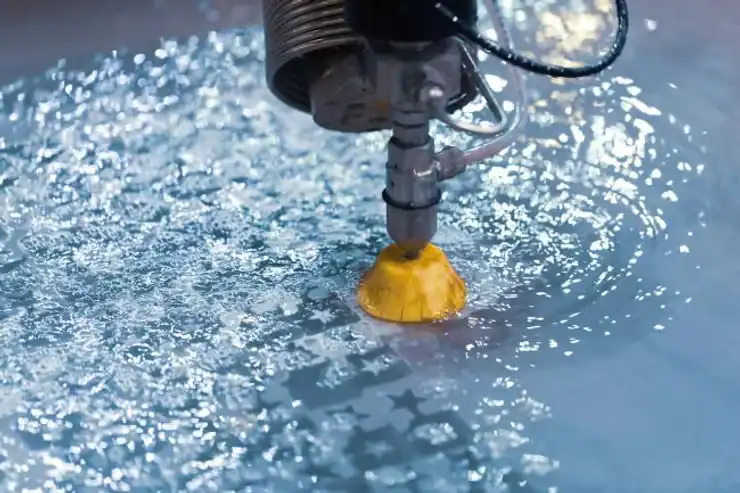
Waterjet systems cut virtually any glass type, including standard float glass, tempered glass (before tempering), laminated glass, low-iron glass, and specialty architectural glass. The process works across different thicknesses, from thin decorative glass to thick structural panels.
The key limitation is that glass must be cut before tempering, since the tempering process creates internal stresses that cause the glass to shatter if cut afterward. If you need tempered glass, we cut it to your specifications first, then you send it for tempering.
Different glass types require different cutting parameters. Thicker glass needs adjusted pressure and speed settings, while specialty coatings or treatments may require modified abrasive selection. We adjust the process based on your specific material to ensure clean cuts without delamination or edge damage.
Traditional glass cutting uses a scoring wheel to create a controlled fracture line, then breaks the glass along that score. This works fine for straight cuts and simple shapes, but it creates microcracks along the edge and limits you to relatively simple geometries. You can’t cut tight inside radiuses, complex curves, or interior holes without multiple operations and significant breakage risk.
Waterjet cutting removes material rather than fracturing it, which means you get smooth edges without microcracks or residual stress. The glass is stronger and less prone to breakage during handling and installation. You can cut any shape the design requires in a single operation, including features that are impossible with scoring methods.
Speed is another major difference. While manual scoring requires careful technique and multiple steps for complex parts, CNC waterjet cutting runs continuously once programmed. For production runs or intricate designs, waterjet cutting is significantly faster and produces more consistent results across multiple parts.
Simple cuts on standard glass typically take a few days from design approval to finished parts. Complex designs or specialty materials may require additional time for programming and testing, especially if it’s a new design that needs verification before production.
Production runs move faster once the initial setup is complete. The first piece takes time for programming and setup, but subsequent identical parts run quickly. If you’re ordering fifty identical panels, the per-piece time drops significantly compared to custom one-offs.
Timeline also depends on material availability. If you’re supplying the glass, we can start as soon as it arrives and the design is finalized. If we’re sourcing specialty glass, add time for material procurement. Rush jobs are possible when scheduling allows, but standard turnaround gives us time to optimize the cutting program and ensure quality results.
Waterjet cutting produces edges that are significantly smoother than traditional scoring methods, but whether they need finishing depends on your application and aesthetic requirements. For many industrial and architectural applications, the edges come off the machine ready to use.
If you need polished edges for decorative work or safety reasons, the waterjet-cut edge provides an excellent starting point. Because there are no microcracks or stress fractures, the edge polishes more easily and consistently than traditionally cut glass. You’re removing less material during finishing, which saves time and reduces the risk of edge damage.
For applications where edges will be framed, sealed, or otherwise concealed, waterjet-cut edges typically need no additional work. The smooth, clean cut integrates directly into your assembly process. We can discuss your specific finishing requirements during design review to ensure the cutting process aligns with your final specifications.
Interior features are exactly where waterjet cutting excels. The process cuts holes, notches, slots, and complex interior cutouts that would be extremely difficult or impossible with traditional methods. The cutting head pierces the glass at the starting point and follows the programmed path for interior features just as precisely as it cuts the exterior profile.
You can specify multiple holes of different sizes, notches for hardware or mounting systems, and decorative interior cutouts all in the same operation. The system maintains consistent edge quality on interior features just as it does on outside edges, with no chipping or cracking around holes and cutouts.
This capability is particularly valuable for architectural glass that needs mounting holes, lighting fixtures that require specific cutouts, or decorative panels with intricate interior patterns. We program all features into the cutting path, and the machine executes them in the most efficient sequence to minimize cutting time while maintaining precision across every detail.
The waterjet stream is extremely narrow, which allows us to cut very small features and thin materials accurately. Minimum feature size depends more on the glass’s structural integrity than the cutting capability—thin glass or very small parts may not have enough strength to withstand handling, even though the cutting process itself is gentle.
For thickness, we cut glass from a few millimeters up to several inches thick. Thicker glass requires adjusted cutting parameters and slower speeds to maintain edge quality, but the process remains viable across a wide thickness range. The precision holds regardless of thickness, maintaining tolerances down to fractions of a millimeter.
Minimum part size is typically limited by how securely we can hold the glass during cutting and how safely you can handle the finished piece. Very small parts can be cut as part of a larger sheet and separated afterward, or we can discuss fixturing options for tiny components that need individual cutting. The technology itself isn’t the limiting factor—material handling and structural integrity determine practical minimums for your specific application.
Useful Links
Other Services we provide in North Babylon