Hear from Our Customers
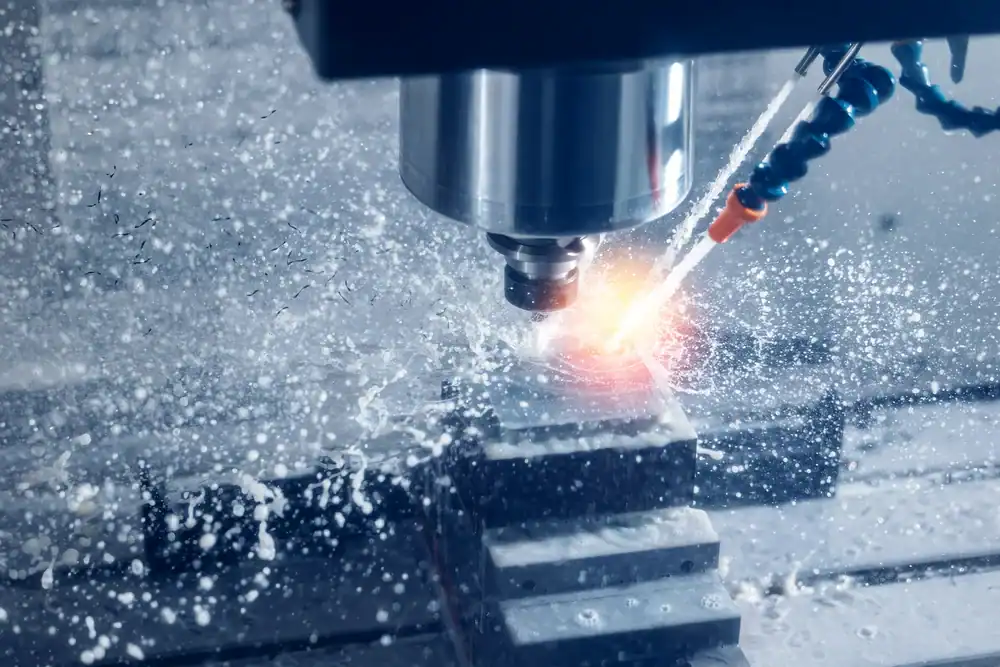
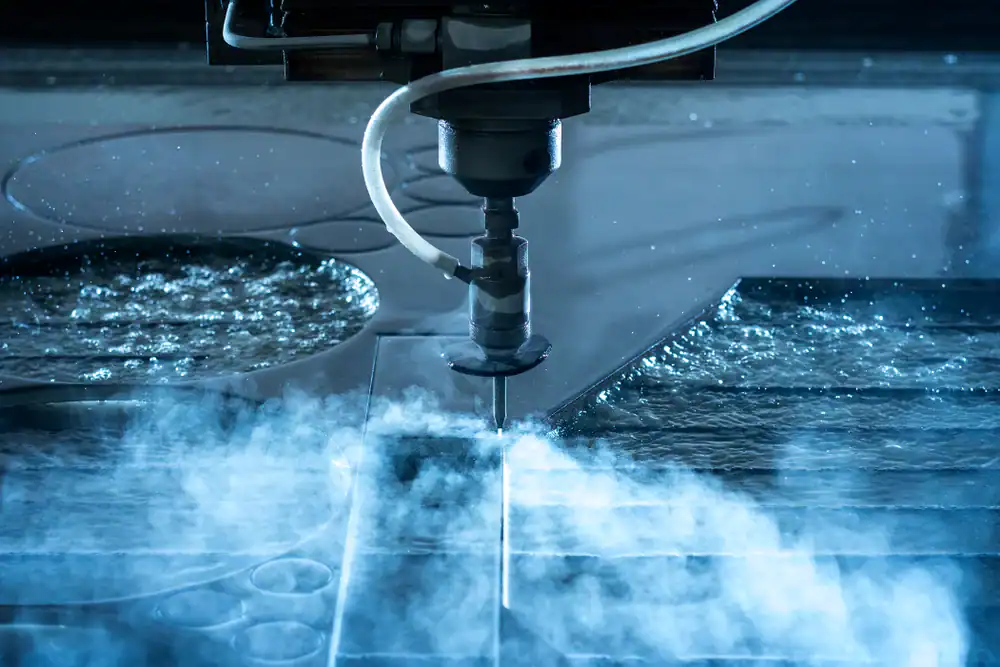
Traditional glass cutting methods create problems you don’t have time for. Diamond wheels and scoring tools generate heat that causes microfractures. Those cracks might not show up immediately, but they compromise structural integrity and lead to failures down the line.
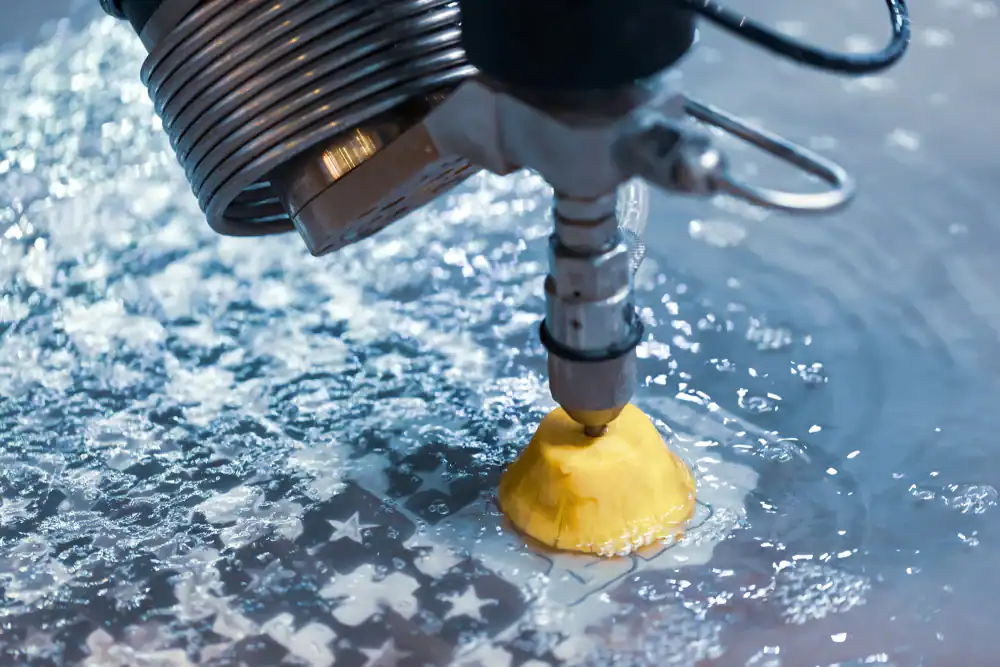
Waterjet cutting uses high-pressure water mixed with fine abrasive to cut through glass without generating heat. That means no thermal stress, no heat-affected zones, and no delamination in laminated glass. You get clean, smooth edges that often don’t require secondary finishing.
The process handles everything from 4mm residential glass to 200mm architectural panels. Complex curves, interior cutouts, and intricate patterns that would be impossible or cost-prohibitive with traditional methods become straightforward. CNC control means every cut is repeatable within +/- 0.1mm tolerance, so your pieces fit right the first time.
We provide precision waterjet cutting, custom design consultation, and material guidance for architects, contractors, and designers throughout North Bay Shore, NY. We work with you from concept through completion, bringing technical drawings and unique visions into physical reality.
North Bay Shore’s construction and manufacturing sectors have seen significant growth, with employment in these industries up 16% recently. That growth means more architectural glass installations, more custom residential projects, and more demand for precision fabrication. We’re equipped to meet that demand with CNC-controlled waterjet systems that handle both high-volume production runs and one-off custom pieces.
You’re working with a team that understands material properties, cutting parameters, and how to optimize both for your specific application. Whether you’re specifying glass for a commercial facade or need custom shapes for interior design work, we have the equipment and experience to execute it correctly.
You start by sending us your design files or specifications. CAD drawings work best, but we can also work from templates, samples, or detailed measurements. If you’re still in the design phase, we’ll consult on what’s feasible and how to optimize your design for waterjet cutting.
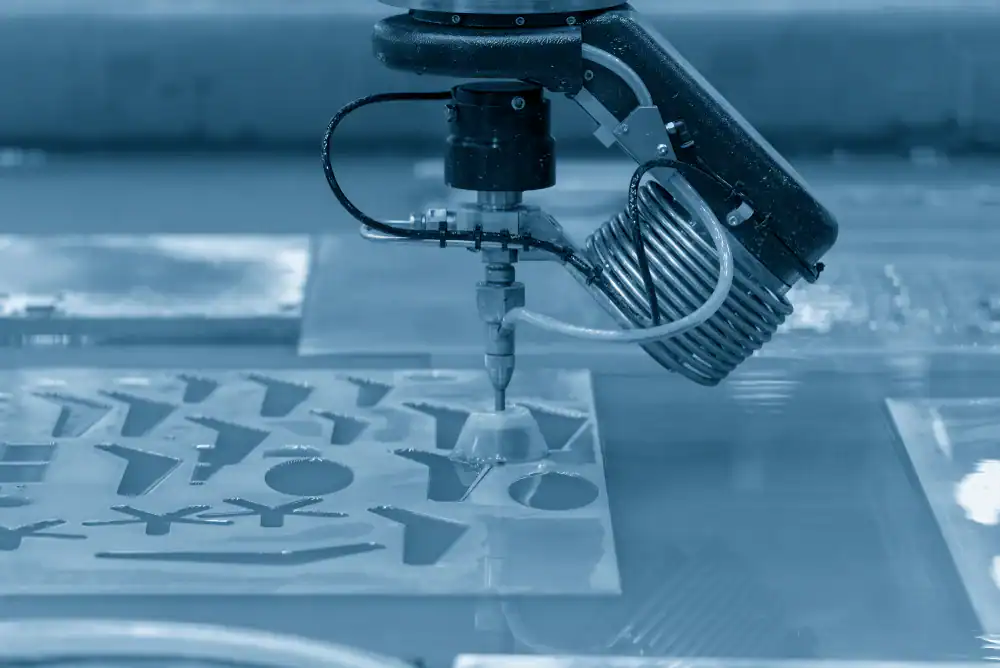
Once we have your specs, we program the CNC system with your exact dimensions and cutting path. The glass is secured to the cutting bed, and the waterjet head—operating at 3,600 to 4,000 bar of pressure—follows the programmed path. Cutting speeds range from 600 to 3,000 mm per minute depending on glass thickness and complexity.
The waterjet stream is a mixture of ultra-high-pressure water and fine garnet abrasive. It cuts through the glass without applying significant force or generating heat. For laminated glass, this is critical—traditional methods risk separating the layers, but waterjet cutting keeps everything intact.
After cutting, most pieces come off the table ready to install. The edges have a smooth, satin finish that’s often acceptable as-is. If your application requires polished edges, that’s a quick secondary process, but you’re not dealing with the chipping, grinding, or extensive finishing that other cutting methods require.
Ready to get started?
You get precision that traditional methods can’t match. Architectural glass panels for North Bay Shore’s commercial buildings need to fit exactly—waterjet cutting delivers that accuracy without the thermal stress that weakens the material. The process works with tempered glass, laminated glass, laminated ballistic glass, and standard annealed glass.
For residential projects, you’re looking at custom shower enclosures, glass countertops, decorative panels, and specialty windows. The ability to create curves, notches, and cutouts means your design isn’t limited by cutting technology. Interior designers working on North Bay Shore’s higher-end homes—where median property values hit $492,200—need that flexibility.
Industrial applications include automotive glass components, aerospace parts, and manufacturing equipment. The process is environmentally clean with no toxic emissions and no chemical coolants. Material waste is minimal because the cutting path is optimized digitally before any physical cutting begins.
You also get speed. What might take days with traditional layout, scoring, and breaking methods happens in hours with CNC waterjet cutting. For contractors managing tight schedules on North Bay Shore construction projects, that turnaround matters.
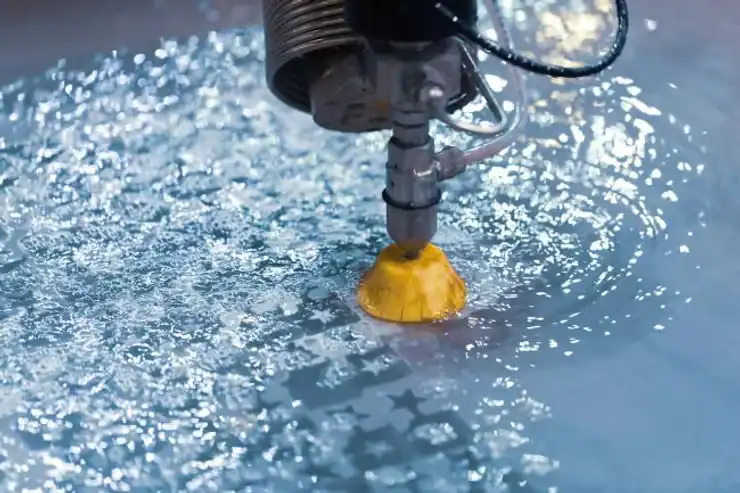
Waterjet cutting handles virtually every type of glass you’ll encounter in architectural, residential, or industrial applications. That includes annealed glass, tempered glass, laminated glass, laminated ballistic glass, low-iron glass, and specialty coated glass.
The key advantage is that the process doesn’t generate heat, so it won’t compromise tempered glass or cause delamination in laminated materials. Traditional cutting methods apply focused heat or mechanical stress that can cause tempered glass to shatter or separate the bonding layers in laminated glass. Waterjet cutting avoids both problems.
Thickness isn’t a limiting factor the way it is with scoring tools or diamond wheels. The system cuts glass from 4mm up to 200mm thick with the same precision. For North Bay Shore projects requiring thick architectural glass or multi-layer ballistic glass, that capability is essential.
CNC waterjet systems deliver cutting accuracy within +/- 0.1mm. That level of precision means your glass pieces fit correctly the first time, without field adjustments or gaps that compromise the installation.
The CNC control follows your exact design file, so complex curves, tight radiuses, and intricate interior cutouts are all executed with the same accuracy as straight cuts. If you’re creating custom architectural features or decorative glass elements, you’re not limited by what’s physically possible to cut—you’re limited only by what you can design.
Repeatability is just as important as accuracy. If you need multiple identical pieces for a project, every single one will match within that 0.1mm tolerance. For contractors installing glass panels across a building facade or designers specifying matching elements throughout a space, that consistency eliminates fit-up problems and installation delays.
Waterjet cutting produces a smooth, satin-finish edge that’s often acceptable as the final finish, depending on your application. The edge quality is significantly better than what you get from scoring and breaking methods, which leave sharp, uneven edges that require extensive grinding and polishing.
For applications where the edge will be framed, sealed, or otherwise concealed, waterjet-cut edges typically don’t need any additional work. You’re looking at a clean break line without chipping, microfractures, or the stepped edge pattern that scoring tools create.
If your project requires polished or beveled edges for aesthetic reasons—like frameless shower enclosures or glass tabletops—that’s a straightforward secondary process. But you’re starting from a much better baseline than traditional cutting methods provide, which means less time and cost spent on edge finishing. For many North Bay Shore residential glass cutting services projects, the as-cut edge quality is exactly what’s needed.
Turnaround depends on project complexity, glass thickness, and current production schedule, but waterjet cutting is significantly faster than traditional methods. Simple cuts on standard-thickness glass can often be completed same-day or next-day. More complex projects with intricate patterns or thick material typically take a few days.
The actual cutting process is fast—600 to 3,000 mm per minute depending on thickness and detail level. What takes time is programming the CNC path, securing the material, and quality-checking the finished pieces. But that’s still much faster than laying out patterns, scoring, breaking, and finishing edges with traditional methods.
For contractors managing construction schedules, the speed advantage matters. If you’re waiting on custom glass pieces to complete an installation, getting them in days instead of weeks keeps your project on track. We’ll give you a realistic timeline when you submit your specs, and we communicate clearly if anything changes.
Waterjet cutting typically costs more per linear foot than simple straight cuts with a scoring tool. But that’s not the right comparison, because waterjet cutting delivers capabilities that traditional methods can’t match at any price.
For complex shapes, curves, and interior cutouts, traditional methods require expensive custom tooling, multiple setups, and significant labor time—if they can produce the shape at all. Waterjet cutting handles those complexities as easily as straight cuts, with no tooling costs and minimal setup time. When you factor in reduced material waste, eliminated secondary finishing, and fewer rejected pieces, the total project cost is often lower.
You’re also paying for precision and reliability. A piece that fits correctly the first time saves money compared to pieces that need field modifications or cause installation delays. For North Bay Shore industrial glass waterjet cutting projects where downtime is expensive, that reliability has real value. We’ll quote your specific project based on material, complexity, and quantity so you can make an informed decision.
Yes, and this is one of waterjet cutting’s biggest advantages over traditional methods. Laminated glass consists of two or more glass layers bonded with a polymer interlayer. Traditional cutting methods that generate heat or apply significant mechanical force can cause the layers to separate or the interlayer to delaminate.
Waterjet cutting applies minimal force and generates zero heat, so the bonding between layers remains intact. The cut goes cleanly through all layers simultaneously without stressing the interlayer material. This makes waterjet cutting the preferred method for laminated safety glass, laminated ballistic glass, and specialty laminated products.
For North Bay Shore architectural projects requiring safety glass in commercial buildings or residential applications where laminated glass provides security and sound dampening, waterjet cutting delivers clean results without compromising the material’s protective properties. The structural integrity and safety performance you’re specifying remains intact through the cutting process.
Useful Links
Other Services we provide in North Bay Shore