Hear from Our Customers
You know the frustration. You spec a piece, wait for the cut, and it shows up a sixteenth off. Now you’re shimming, adjusting, or ordering again.
CNC glass waterjet cutting in North Hempstead eliminates that problem. The process holds tolerances down to a few tenths of a millimeter, which means your panels fit during installation without gaps, without misalignment, and without the extra labor costs that come from fixing someone else’s imprecision.
This matters most when you’re working with double glazing units, frameless glass applications, or structural installations where a slight error compromises integrity. The waterjet doesn’t guess. It cuts exactly where the program tells it to, every time, on any thickness or type of glass you’re working with.
You get smooth edges that don’t need additional finishing. You get complex interior cuts that don’t fracture during separation. You get the piece you actually ordered.
We serve architects, contractors, and fabricators across North Hempstead who need custom glass waterjet cutting that doesn’t compromise. This area has serious construction activity—over 2,800 people work in construction here, and projects range from high-end residential builds in Manhasset to commercial work near Great Neck’s Northwell Health campus.
Those projects demand precision. When you’re installing glass for The Americana Manhasset or working on a custom home where the median value sits well above state average, you can’t show up with parts that don’t fit.
We handle industrial glass waterjet cutting for manufacturers, architectural glass waterjet cutting for designers pushing boundaries, and residential glass cutting services for contractors who need it done right the first time. North Hempstead’s market expects quality, and we’re set up to deliver it.
You send us your specs—drawings, measurements, material type. If you’re not sure what’s possible, we’ll walk through it with you before you commit.
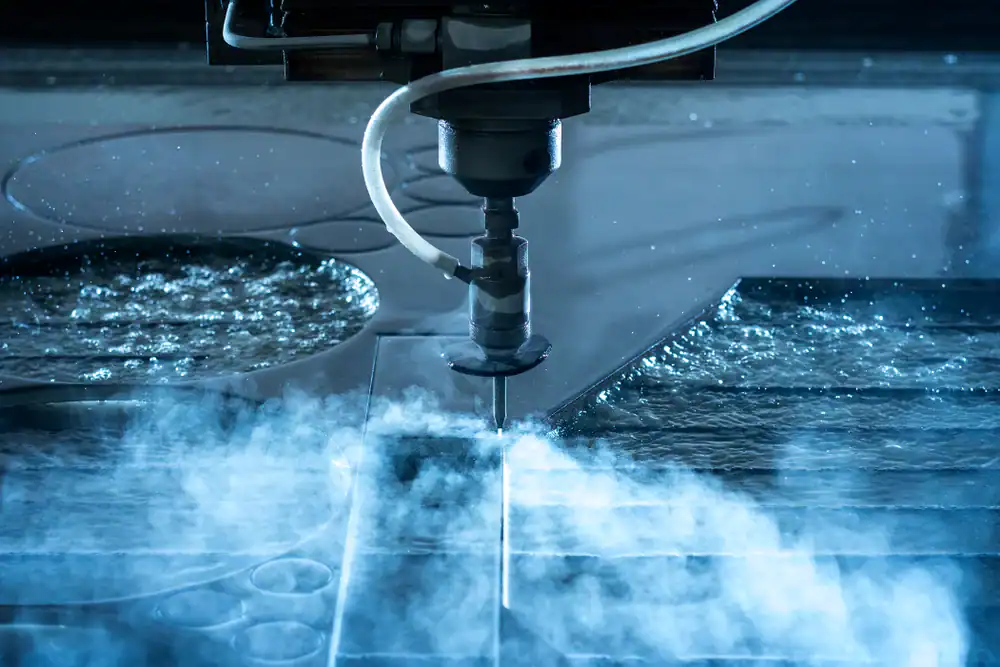
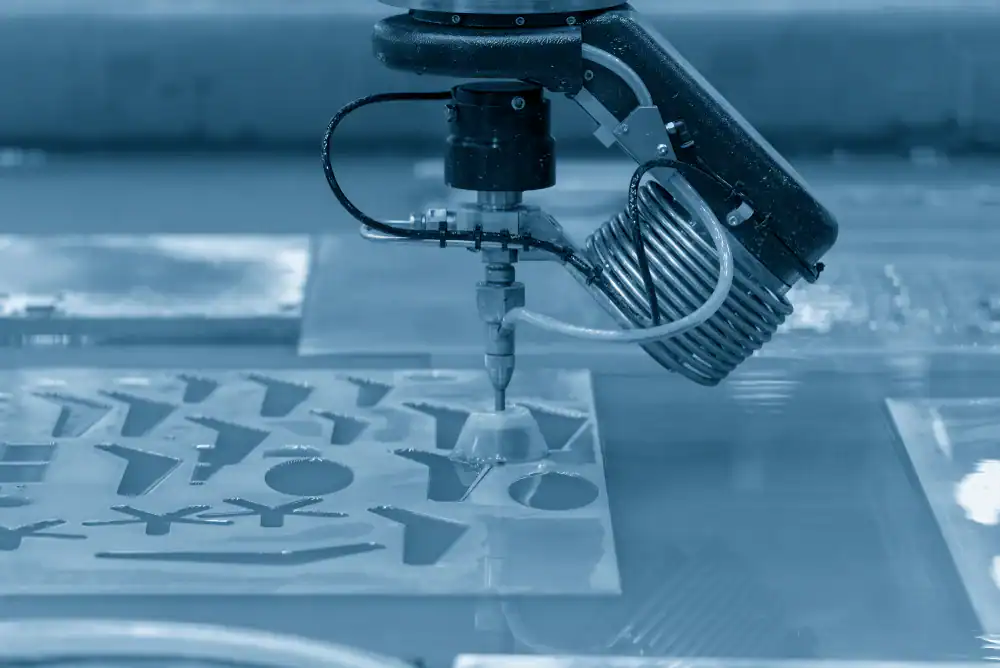
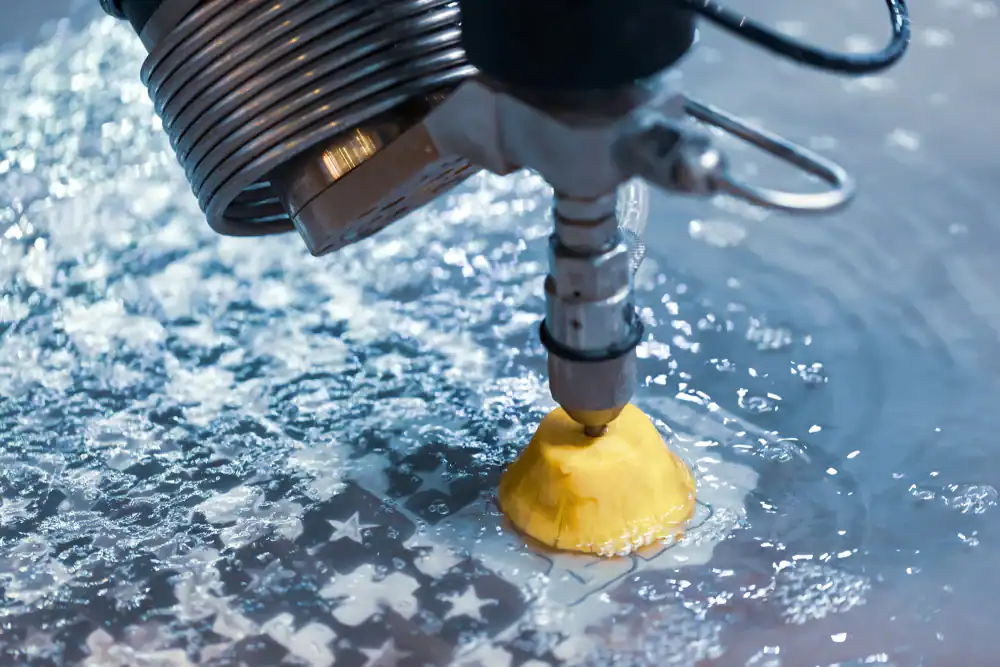
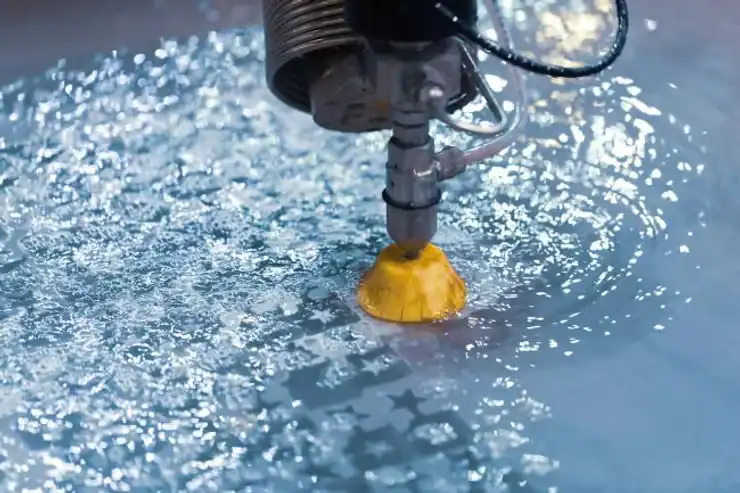
We program the CNC system based on your exact requirements. The waterjet uses a high-pressure stream mixed with abrasive garnet to cut through the glass without generating heat, which means no thermal stress and no cracks forming in the material.
For complex shapes, the multi-axis system handles interior cuts and intricate patterns that would fracture with traditional score-and-break methods. If you need multiple identical pieces, we can stack panels and cut them simultaneously, which speeds up production without sacrificing accuracy.
Once the cutting’s done, the edges come out smooth—no sharp fragments, no additional grinding needed in most cases. You receive pieces that are ready to install, sized correctly, and cut to the tolerances your project actually requires.
The process works for tempered glass, laminated glass, thick architectural panels, and delicate decorative pieces. No heat-affected zones. No pattern limitations. Just the cuts you need.
Ready to get started?
Precision matters more in North Hempstead than in a lot of markets. The construction and design work happening here—whether it’s high-end residential projects or commercial builds tied to the area’s healthcare and retail sectors—doesn’t leave room for sloppy fabrication.
With architectural glass waterjet cutting in North Hempstead, you’re getting cuts that hold tolerances tight enough for frameless glass installations and structural applications. The process handles any glass type: low-iron, textured, mirrored, laminated, even tempered glass that would shatter if you tried to score it.
You’re also getting versatility. Need curved cuts for a custom shower enclosure? Interior cutouts for hardware? Intricate patterns for decorative panels? The waterjet handles all of it without switching tools or methods.
The narrow kerf width means less wasted material, which matters when you’re working with expensive glass. And because there’s no heat involved, you’re not introducing stresses that could cause the glass to fail later during installation or under load.
For contractors and fabricators working in North Hempstead’s competitive market, this translates to fewer callbacks, faster installs, and clients who aren’t dealing with fit issues after the fact.
No, and here’s why that matters. Tempered glass can’t be cut after it’s been tempered—any attempt to score or cut it will cause it to shatter into small granules. That’s by design; the tempering process puts the glass under internal stress to make it stronger.
If you need a tempered glass piece with custom cuts, the cutting has to happen before tempering. We cut the glass to your exact specifications using the waterjet, and then the piece goes through the tempering process afterward.
This is critical for projects that require both safety glass and custom shapes—things like glass doors, balustrades, or automotive applications. You can’t retrofit tempered glass in the field, so getting the cuts right before tempering is the only option. The waterjet’s precision ensures that when the glass comes back from tempering, it still fits exactly where it needs to go.
Waterjet cutting holds tolerances in the range of a few tenths of a millimeter. Traditional score-and-break methods don’t come close to that, especially on complex cuts.
With traditional cutting, you score the glass and apply pressure to break it along the line. That works fine for straight cuts on simple shapes, but it’s inconsistent. The break follows the score maybe two-thirds of the way, then it starts to look like broken glass. You’re dealing with wonky breaks a quarter of the time, and complex interior cuts often fracture the whole piece when you try to separate the scrap.
The waterjet doesn’t rely on controlled breaking. It cuts exactly where it’s programmed to cut, whether that’s a straight line, a tight radius, or an intricate pattern with interior voids. The edge quality is clean, the dimensions are exact, and you’re not gambling on whether the break will cooperate. For installations where fit matters—frameless systems, double glazing units, structural glass—that precision is the difference between a clean install and a problem.
Any project where precision, complexity, or edge quality matters. That covers a lot of ground.
Architectural projects—custom shower enclosures, glass partitions, storefronts, balustrades—benefit because the cuts fit right during installation and the edges don’t need extensive finishing. Decorative glass work benefits because the waterjet can handle intricate patterns and delicate materials without cracking them.
Industrial applications—glass components for electronics, automotive glass, aerospace parts—benefit because the process doesn’t introduce heat or micro-cracks that could compromise performance. And residential projects benefit when you’re working with high-end materials or complex shapes that traditional methods would waste or damage.
In North Hempstead specifically, we see a lot of demand from contractors working on upscale residential builds and commercial projects where the client expects flawless execution. The waterjet handles thick architectural glass for modern designs, custom cuts for historic renovations, and everything in between. If your project has tight tolerances or complex geometry, waterjet cutting is usually the right call.
The edges come out smooth in most cases, which is one of the main advantages. You’re not dealing with the sharp, jagged edges that come from breaking glass along a score line.
When the waterjet cuts through glass, it produces a clean edge that’s safe to handle and aesthetically finished. For most applications—architectural glass, decorative panels, structural installations—no additional edge treatment is needed. The edge quality is good enough to install as-is.
There are situations where you might want additional finishing, like polishing for a specific aesthetic or seaming for certain types of installations, but that’s a design choice, not a necessity to fix a rough cut. Compare that to traditional methods, where you’re often grinding or polishing edges just to make them safe and presentable.
This saves time and cost. You’re not paying for additional finishing labor, and the glass is ready to install faster. For projects with tight deadlines or budgets, that efficiency adds up.
Yes, through a process called stacking. We place multiple glass panels on top of one another and cut them simultaneously with the waterjet. This significantly increases production speed when you need identical pieces.
Stacking works well for projects that require multiple units of the same design—think glass panels for a storefront, repeated decorative elements, or production runs for manufacturing applications. Instead of cutting each piece individually, we cut through the entire stack in one pass.
The precision holds across all layers, so each piece comes out identical. This is particularly useful for contractors and fabricators working on larger projects in North Hempstead where you need consistency across multiple installations. You get faster turnaround without sacrificing accuracy, and the cost per piece drops when you’re producing in volume.
There are limits based on total thickness and material type, but for most applications, stacking is a practical way to scale production while maintaining the quality you’d get from individual cuts.
Heat. Laser cutting generates significant heat, which creates thermal stress in glass. That stress can cause cracks, either immediately or later when the glass is installed and subjected to temperature changes or structural loads.
Waterjet cutting is a cold process. There’s no heat-affected zone, no risk of thermal stress, and no chance of micro-cracks forming from temperature gradients. This is especially important for thick glass pieces, which are more susceptible to cracking from uneven heating.
Laser cutting also has limitations on the types and thicknesses of glass it can handle effectively. Waterjet cutting works on any glass type—tempered, laminated, low-iron, textured, mirrored—and any thickness, without changing the process or compromising results.
For projects in North Hempstead where you’re working with high-value materials or applications where structural integrity matters, the waterjet’s cold cutting process eliminates risks that other methods introduce. You’re not gambling on whether the glass will develop stress cracks down the line. It’s cut clean, stays stable, and performs as expected.
Useful Links
Other Services we provide in North Hempstead