Hear from Our Customers
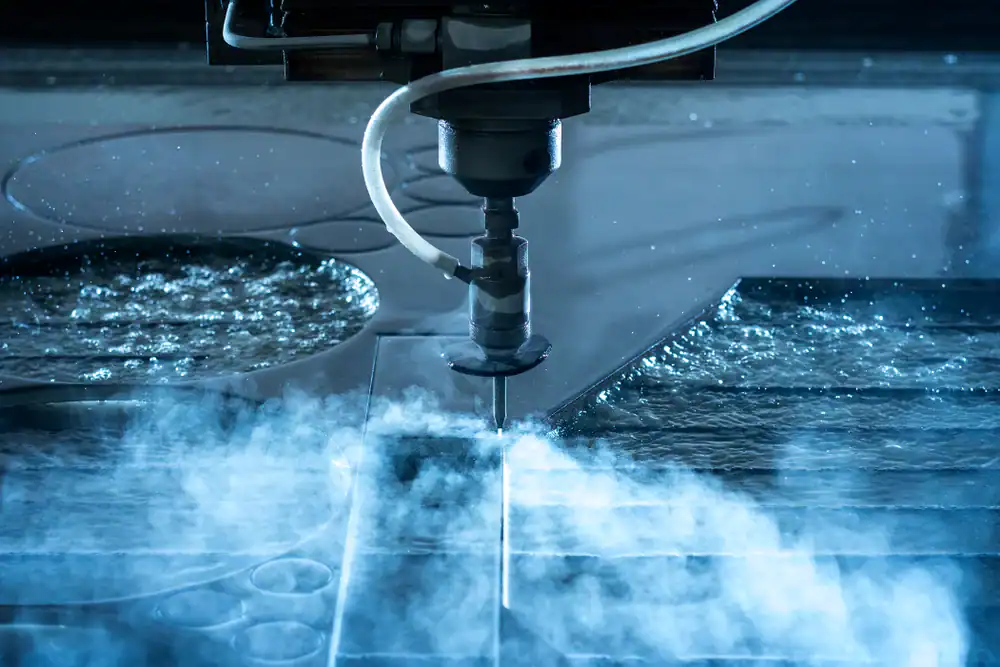
You’ve probably dealt with this before. You send your glass project out, and what comes back is rough. Edges that need rework. Dimensions that are close but not quite there. Maybe even cracked pieces because someone applied too much heat or pressure.
Waterjet cutting eliminates that frustration. The process uses high-pressure water to cut through glass without generating heat, which means no thermal stress and no structural compromise. You get clean edges on complex shapes that traditional cutting methods simply can’t handle.
This matters when you’re working on architectural installations in North New Hyde Park, NY where precision isn’t optional. A shower enclosure that’s off by even a few millimeters creates problems during installation. Decorative glass panels with intricate patterns need accuracy that won’t show up with scoring and snapping methods.
CNC control means your CAD file translates directly to the cutting path. What you design is what you get, whether that’s a simple rectangle or a complex curved pattern with interior cutouts.
We operate a Flow Mach 500 CNC waterjet system designed specifically for precision work. We’re based in West Islip and serve the North New Hyde Park, NY area with glass cutting services for contractors, architects, fabricators, and designers who need accuracy.
The equipment matters because older or poorly maintained waterjet systems produce inconsistent results. Our system maintains tight tolerances across the entire cutting bed, which means the first piece and the last piece in a production run match exactly.
North New Hyde Park has a mix of commercial construction and high-end residential projects that demand quality glass work. You’re probably familiar with the area’s architectural standards—they’re high. We work with that reality every day, cutting glass for projects where “close enough” isn’t acceptable.
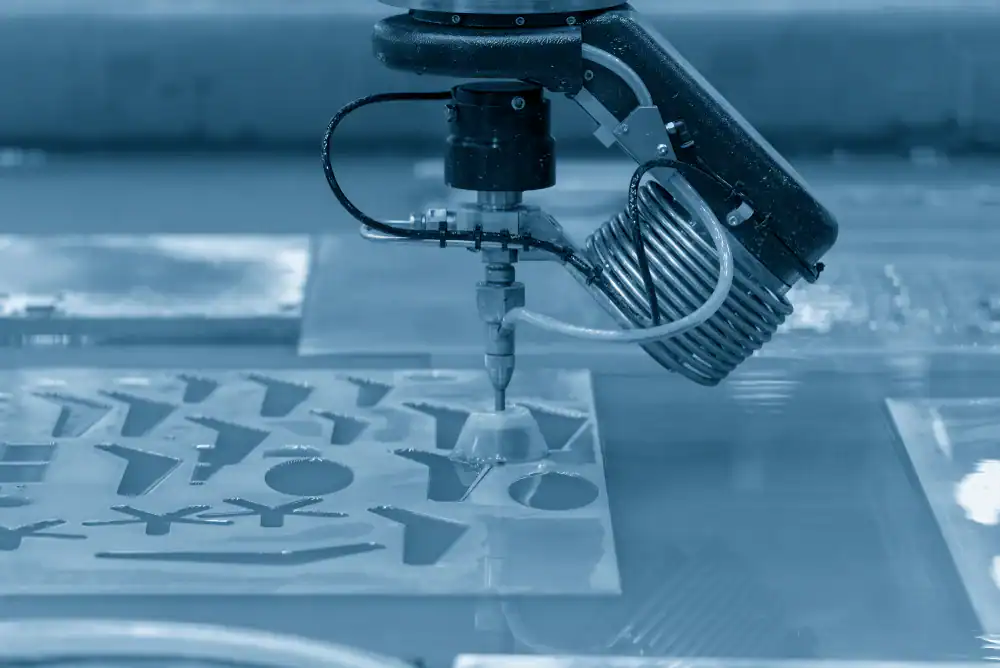
You start by sending us your design file or specifications. CAD files work best, but we can work from detailed drawings if that’s what you have. Our design team reviews everything to catch potential issues before cutting begins—things like interior corners that are too tight or dimensions that might cause structural problems.
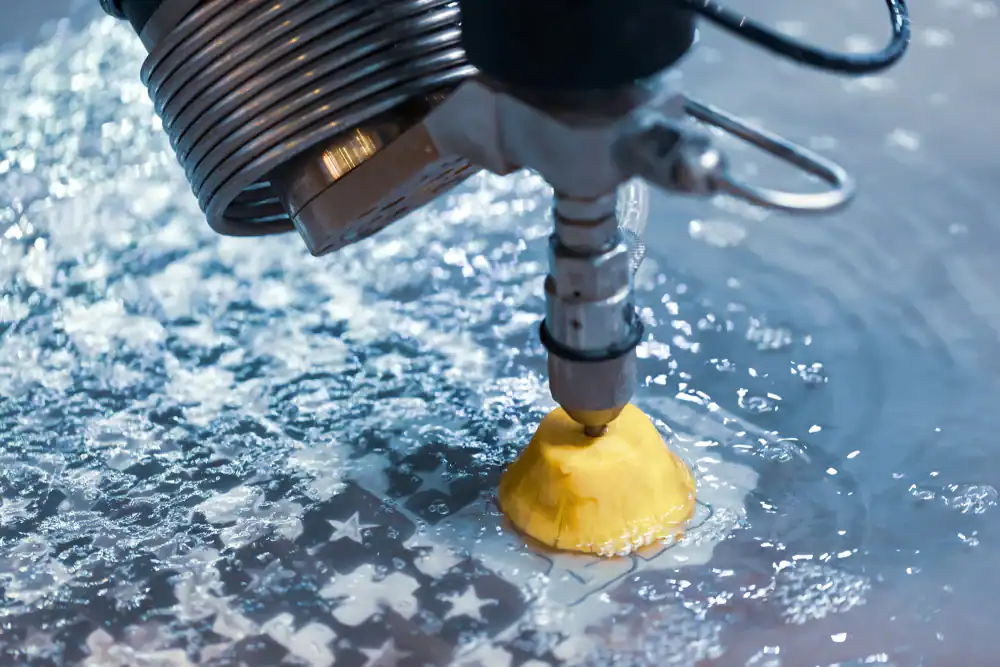
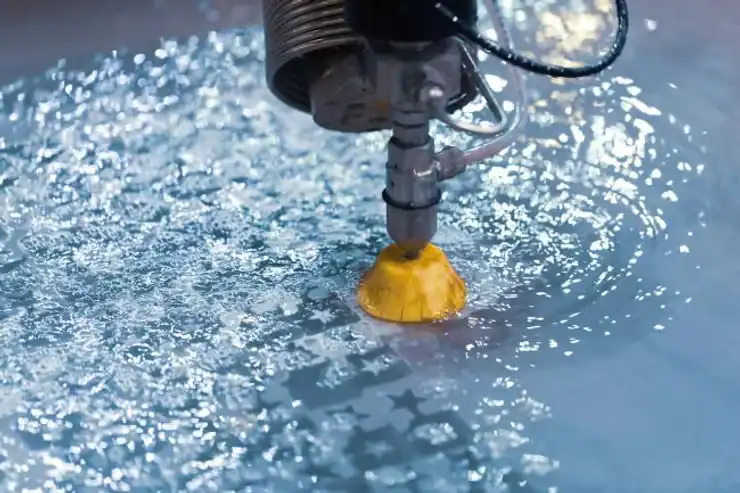
Once the design is confirmed, we load your glass onto the cutting bed and secure it properly. The waterjet system uses a high-pressure stream of water mixed with abrasive garnet to cut through the material. Pressure reaches around 60,000 PSI, but there’s no heat generation, so the glass doesn’t experience thermal shock.
The CNC system follows your design path exactly. For thicker glass or more intricate cuts, we adjust the cutting speed to maintain edge quality. The process is relatively fast—much faster than traditional methods for complex shapes—but we don’t rush it. Speed matters less than accuracy.
After cutting, we inspect each piece to verify it matches specifications. Most waterjet-cut glass needs minimal edge finishing, but we can discuss your specific requirements for edge treatment during the design phase.
Ready to get started?
Custom glass waterjet cutting in North New Hyde Park, NY means you can specify exactly what you need. Thickness isn’t a limiting factor—we cut thin decorative glass and thick structural panels with the same precision. Shape complexity doesn’t add cost the way it does with traditional methods, so intricate designs don’t blow your budget.
You get design consultation included. This isn’t upselling—it’s practical. We’ve seen what works and what doesn’t in glass cutting, and we’ll tell you if your design has issues before we start cutting. That saves you material costs and time.
For architectural projects in North New Hyde Park, residential glass cutting services often involve custom shower enclosures, glass railings, or decorative panels for high-end homes. Commercial work tends toward storefront glass, office partitions, or artistic installations. Industrial glass waterjet cutting North New Hyde Park projects might include custom glass components for manufacturing or specialty applications.
The area’s building standards are strict, and inspectors know quality work when they see it. Waterjet cutting produces results that pass inspection because the cuts are clean and the dimensions are exact. You’re not explaining why something is slightly off or trying to make adjustments on-site.
Waterjet cutting works on annealed glass, but tempered glass is a different situation. Once glass is tempered, cutting it causes the entire piece to shatter—that’s just the physics of tempered glass. The tempering process puts the glass under internal stress, and any cut releases that stress all at once.
If you need tempered glass, we cut it first, then you send it out for tempering. Most glass projects follow this sequence: cut, finish edges if needed, then temper. We can work with you on sizing and design to account for the slight size changes that happen during tempering.
Laminated glass can be cut with waterjet, but it requires specific techniques. The laminate layer between glass sheets responds differently to the waterjet stream than the glass itself. We adjust pressure and cutting speed to handle laminated materials, though results depend on the laminate type and thickness. For critical laminated glass projects, we typically run a test cut first to verify the process works with your specific material.
Traditional glass cutting uses a scoring tool to create a weak line in the glass, then applies pressure to break along that line. This works fine for straight cuts and simple curves, but it has real limitations with complex shapes.
Interior cutouts are difficult with traditional methods. Cutting a circle or rectangle out of the middle of a glass panel requires multiple scores and careful breaking, and the risk of cracking increases significantly. Waterjet cutting handles interior cutouts as easily as edge cuts because the stream cuts all the way through the material in one pass.
Tight curves and intricate patterns are where waterjet really separates from traditional methods. Scoring and breaking can’t follow a complex curved path with any reliability. You end up with rough edges that need extensive grinding and polishing, and even then, the results often look hand-cut rather than precision-machined. CNC waterjet cutting North New Hyde Park follows your exact design path, so a tight radius curve comes out as smooth as a straight line.
Our Flow Mach 500 system handles glass up to about 6 inches thick, though most architectural and commercial projects use glass between 1/4 inch and 1 inch thick. Thicker glass takes longer to cut because the waterjet stream needs more time to penetrate all the way through the material.
The real question isn’t usually about maximum thickness—it’s about whether thicker glass makes sense for your application. Glass over 1 inch thick gets heavy fast, which creates handling and installation challenges. A 2-inch thick glass panel might sound impressive, but it weighs enough that you need special mounting hardware and installation procedures.
For most North New Hyde Park, NY projects, standard architectural glass thicknesses work fine. Shower enclosures typically use 3/8 or 1/2 inch glass. Table tops might go to 3/4 inch for a substantial look. Decorative panels can be thinner, sometimes down to 1/8 inch, depending on how they’re mounted and supported. We can cut any of these thicknesses with the same precision, so thickness becomes a design choice rather than a technical limitation.
Waterjet cutting costs more per linear foot than simple straight cuts with traditional methods. If you need basic rectangles, traditional cutting is cheaper. But that cost comparison changes quickly when your design gets more complex.
Traditional methods charge more for complexity because difficult cuts take more time, create more waste, and have higher failure rates. A complex curved cut might require multiple attempts, and you’re paying for the material that gets scrapped. Waterjet cutting charges the same rate whether the cut is straight or curved, simple or intricate.
For custom glass waterjet cutting North New Hyde Park projects, you’re also paying for accuracy. A piece that’s cut wrong costs you twice—once for the initial cutting and again for the replacement. Waterjet cutting’s precision reduces that risk significantly. Most of our clients find that the total project cost is competitive or lower than traditional methods once you factor in reduced waste, fewer remakes, and less on-site adjustment time.
We quote projects based on cutting time, material, and complexity. Send us your specifications and we’ll give you a clear number. No hidden fees, no surprises when you pick up your glass.
Waterjet cutting produces a slightly frosted edge finish that’s smooth to the touch but not polished. For many applications, this edge finish works fine as-is, especially if the edge will be hidden in a frame or mounting channel.
If you need polished edges—for table tops, shelving, or anywhere the edge is visible and meant to be touched—we can discuss edge finishing options. Some clients handle polishing themselves or send pieces to a glass finishing shop. Others prefer we coordinate that step so everything arrives ready to install.
The edge quality from waterjet cutting is consistent and clean, without the chips or micro-cracks that sometimes happen with traditional cutting methods. This matters for structural integrity. Small edge defects can become stress points that lead to cracking later, especially in glass that experiences temperature changes or physical stress during use.
For architectural glass waterjet cutting North New Hyde Park projects where edges will be exposed, we recommend specifying your edge finish requirements upfront. That way we can plan the full process and give you an accurate timeline and cost for the complete job, not just the cutting portion.
Simple cuts on standard glass can be done in a day or two once we have your material and confirmed design. Complex projects with multiple pieces, intricate patterns, or special materials take longer—usually a week to ten days from design approval to finished pieces.
The timeline depends on several factors. Design complexity affects cutting time directly. A simple rectangular piece might take 10 minutes to cut, while an intricate decorative panel with multiple interior cutouts could take several hours. We’re not rushing the process because speed creates mistakes.
Material availability matters too. If you’re supplying the glass, we start once it arrives and we’ve verified it matches specifications. If we’re sourcing the material, add a few days for procurement. Some specialty glass types aren’t stocked locally and require ordering from suppliers outside the North New Hyde Park area.
We give you a realistic timeline when you approve the design. If your project has a hard deadline, tell us upfront. We can often accommodate rush work, but that requires knowing about the timeline pressure before we schedule the job. Last-minute rushes create problems for everyone, and we’d rather plan properly than scramble and potentially compromise quality.
Useful Links
Other Services we provide in North New Hyde Park