Hear from Our Customers
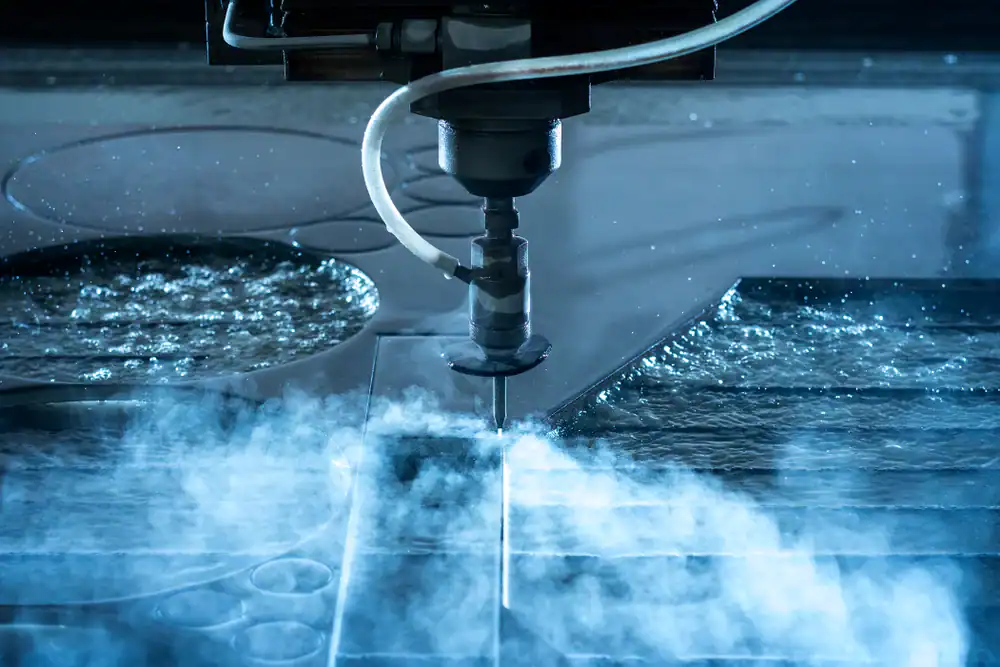
You’re looking at glass that needs to fit within framing systems down to the millimeter. Hardware mounting points that can’t be off by even a fraction. Complex curves or interior cutouts that traditional methods can’t handle without risking the entire piece.
Our custom glass waterjet cutting in North Valley Stream gives you precision within ±0.1mm across different thicknesses. That’s the difference between a perfect fit and starting over. The waterjet stream cuts through optical glass, quartz, borosilicate, and fused silica without introducing heat that warps edges or creates internal stress fractures.
Your architectural installations, custom shower enclosures, or specialized manufacturing components get clean cuts that require minimal finishing work. No chipping along cut lines. No microfractures that compromise structural integrity. Just accurate dimensions that match your specifications because the cutting process is controlled by CNC programming, not human steadiness with a scoring tool.
The edge quality coming off our waterjet table often eliminates secondary polishing operations entirely. You’re not paying for extra finishing steps or dealing with extended timelines while edges get refinished. The part comes off the table ready for installation or assembly.
We’ve been handling industrial glass waterjet cutting in North Valley Stream and across Long Island, NY for over twenty years. We work with architects specifying custom glass features for commercial builds, contractors managing tight installation schedules, and manufacturers who need consistent tolerances across production runs.
North Valley Stream’s professional workforce—82.7% in administrative and technical roles—means you understand the difference between adequate and precise. Your projects don’t have room for “close enough.” When you’re coordinating with multiple trades on a commercial installation or managing client expectations on a custom residential job, the glass components need to show up correct.
We’ve cut glass for medical device manufacturers, marine applications, aviation components, and architectural features throughout Nassau County. Our equipment runs at 40,000 to 60,000 PSI depending on your glass type and thickness. That pressure control prevents the microfractures that turn into failures down the line.
You send us your design specifications—CAD files work best, but we can work from accurate drawings with dimensions. We review the design against the glass type you’re using because different materials have different cutting parameters. Tempered glass can’t be cut after tempering, so we confirm you’re working with annealed glass for any fabrication work.
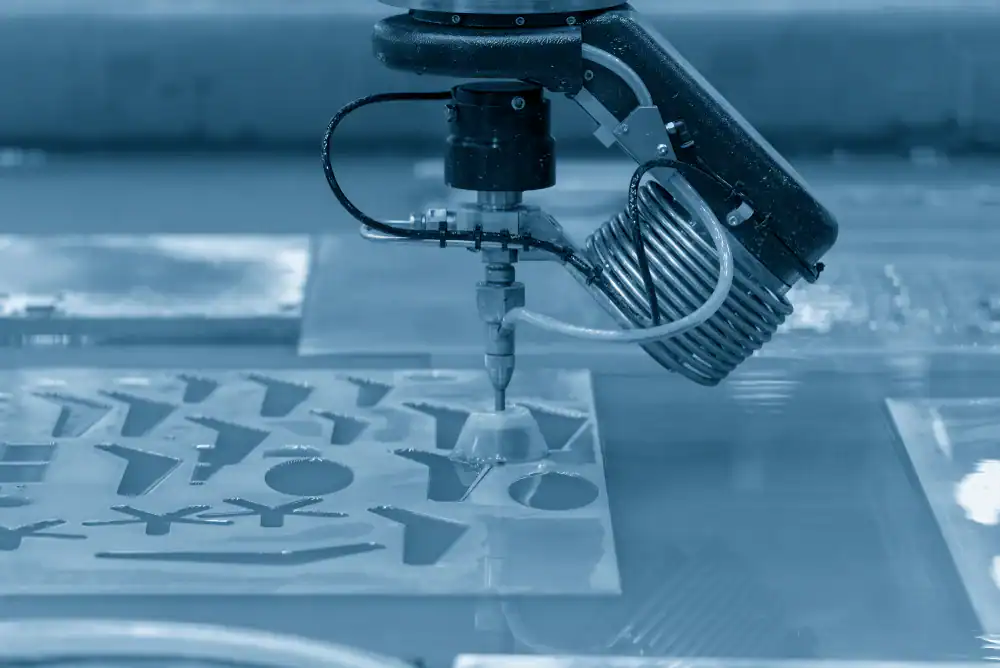
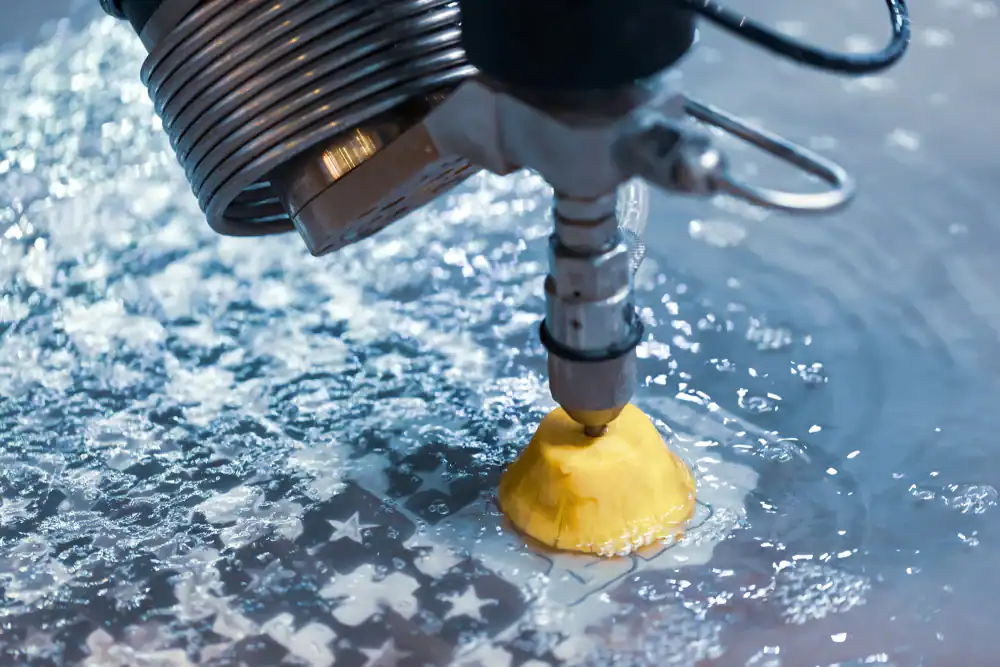
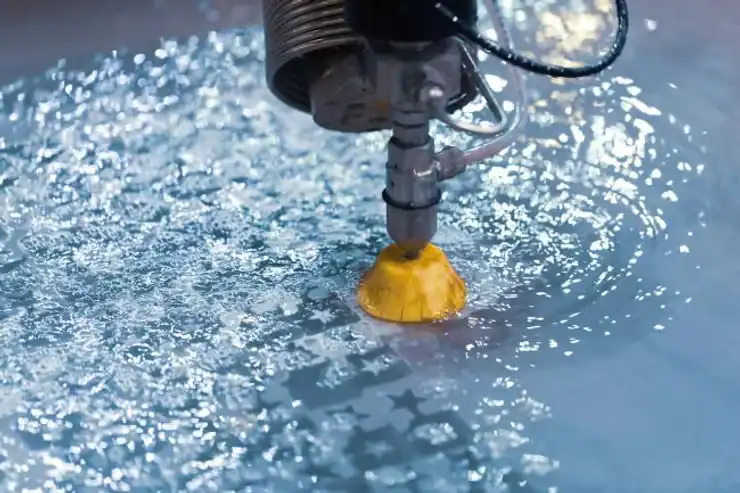
Once the design is confirmed, we program the CNC waterjet system with your exact specifications. The cutting head maintains consistent pressure and abrasive flow throughout the cut. For architectural glass waterjet cutting in North Valley Stream, this means your decorative patterns or structural cutouts maintain the same edge quality from start to finish, even on complex geometries.
The waterjet cuts your pieces while you’re managing other aspects of your project. No need to supervise the process or make adjustments. The CNC system follows the programmed path with repeatability that matters when you’re cutting multiple identical pieces or need parts to be interchangeable.
After cutting, we inspect dimensions and edges. If your project requires it, we can coordinate delivery timing with your installation schedule. Being local to North Valley Stream means we’re not shipping fragile glass across the country and hoping it survives transit. You can pick up directly or we can deliver when you’re ready to install.
Ready to get started?
Our residential glass cutting services in North Valley Stream cover everything from custom shower enclosures to decorative glass panels for home renovations. You get design consultation upfront—we’ll tell you if your planned design works with the glass type you’ve selected or if adjustments would improve structural integrity or reduce costs.
The cutting process itself handles straight cuts, curves, interior holes, and complex shapes in a single setup. You’re not moving the glass between different tools or processes, which reduces handling damage risk. For North Valley Stream homeowners working with designers on custom installations, this means your one-of-a-kind glass features get fabricated exactly as drawn.
Material options include standard glass types plus specialty materials like borosilicate for applications requiring thermal resistance or optical glass for projects where clarity matters. North Valley Stream’s higher-than-average household income ($137,103 median) often correlates with custom home features that demand these premium materials and the precision to fabricate them correctly.
We work with your timeline. Waterjet cutting is faster than traditional glass cutting methods, but we’re realistic about scheduling. You’ll know when your pieces will be ready, and we build in quality control time so nothing leaves here that doesn’t meet the specifications you approved.
No, and you shouldn’t trust anyone who says they can. Tempered glass has internal stresses created during the tempering process that give it strength. Any attempt to cut, drill, or grind tempered glass causes immediate failure—the entire piece shatters.
All fabrication work has to happen before tempering. If you need a tempered glass piece with custom cuts or holes, we cut it in the annealed state first, then it goes to tempering. This is why design planning matters upfront. Changes after tempering aren’t possible.
Some projects don’t require tempering at all. If your application allows annealed glass and you need custom fabrication, waterjet cutting gives you the shapes and features you need without the tempering step. We can walk through whether your specific project requires tempered glass or if annealed glass meets your structural and safety requirements.
We hold tolerances within ±0.1mm, which translates to about ±0.004 inches. For context, that’s tighter than the gap you’d want in most framing systems. This precision level stays consistent across different glass thicknesses and throughout the entire cut path.
That accuracy matters when you’re installing glass into metal frames with specific rabbet dimensions or when hardware mounting holes need to align with pre-drilled holes in other materials. Being off by even a millimeter on a shower door hinge location means the door doesn’t hang correctly.
The CNC programming eliminates the variability you get with manual cutting methods. The same design file produces identical parts every time, which matters for projects requiring multiple pieces or when you need replacement parts months after the original installation. We keep your design files so reordering exact duplicates doesn’t require starting the design process over.
We regularly cut optical glass, quartz, borosilicate, fused silica, and standard float glass. Each material has different hardness and brittleness characteristics that affect cutting parameters, but the waterjet process handles all of them without heat-related issues.
Borosilicate works well for applications with thermal cycling because it resists thermal shock. Quartz and fused silica are common in scientific and medical applications where chemical resistance or optical properties matter. Optical glass requires careful handling to maintain surface quality, and the waterjet’s cold cutting process prevents the surface damage that heat-based cutting methods can cause.
Thickness ranges from thin specialty glass up to several inches, depending on the material. Thicker glass requires higher water pressure and slower cutting speeds to maintain edge quality, but the process scales across the thickness range. If you’re working with an unusual glass type or thickness, we can run test cuts to verify results before cutting your actual project pieces.
Traditional glass cutting uses scoring and breaking, which works fine for straight lines and simple curves. Complex shapes, tight radius curves, or interior cutouts become difficult or impossible because you can’t control the break path precisely on intricate geometries.
Waterjet cutting follows programmed paths regardless of complexity. An intricate decorative pattern takes longer to cut than a simple rectangle, but the process doesn’t get more difficult or risky. The cutting stream doesn’t care if it’s following a straight line or a complex curve—it removes material along the programmed path with the same precision.
Interior cutouts are straightforward with waterjet. The cutting head pierces through the glass at the starting point and follows the interior path, then moves to the next feature. With traditional methods, you’d need to drill access points and use different tools for interior cuts versus perimeter cuts. Waterjet handles everything in one setup, which reduces handling and repositioning that can lead to breakage.
Most waterjet-cut glass edges are smooth enough to use as-is, especially for applications where the edge will be captured in a frame or channel. The edge quality depends on cutting speed and abrasive flow rate—we adjust these parameters based on whether you need a functional edge or a polished edge.
For exposed edges where aesthetics matter, like the open edge of a glass shelf or tabletop, you might want additional polishing. But the waterjet edge starts much smoother than a scored-and-broken edge, so the polishing process is faster and removes less material. You’re refining an already-smooth edge rather than trying to eliminate chips and rough spots.
Some projects specify seamed edges, where we just remove the sharp arris so the edge is safe to handle but not polished smooth. Others need fully polished edges with a specific finish level. We can handle seaming in-house, and for projects requiring polished edges, we work with finishing partners who specialize in glass edge work. The key advantage is that the waterjet edge gives them a consistent starting point across all pieces.
Waterjet cutting is a cold process—no heat enters the material. Heat is what causes thermal stress and cracking in glass, especially near cut edges. The water stream stays cool throughout the cut, and the abrasive particles do the actual material removal without generating significant heat.
We control water pressure based on glass type and thickness. Too much pressure can cause edge chipping on brittle materials; too little pressure slows the cut and can create rougher edges. The CNC system maintains consistent pressure throughout the cut, so edge quality doesn’t vary from the beginning to the end of a long cut path.
The glass sits on a support table during cutting, which prevents flexing that could cause stress fractures. For larger pieces, we ensure adequate support across the entire surface. The cutting process itself doesn’t create the internal stresses that lead to delayed cracking—the glass comes off the table in a relaxed state, not stressed from heat or mechanical force.
Useful Links
Other Services we provide in North Valley Stream