Hear from Our Customers
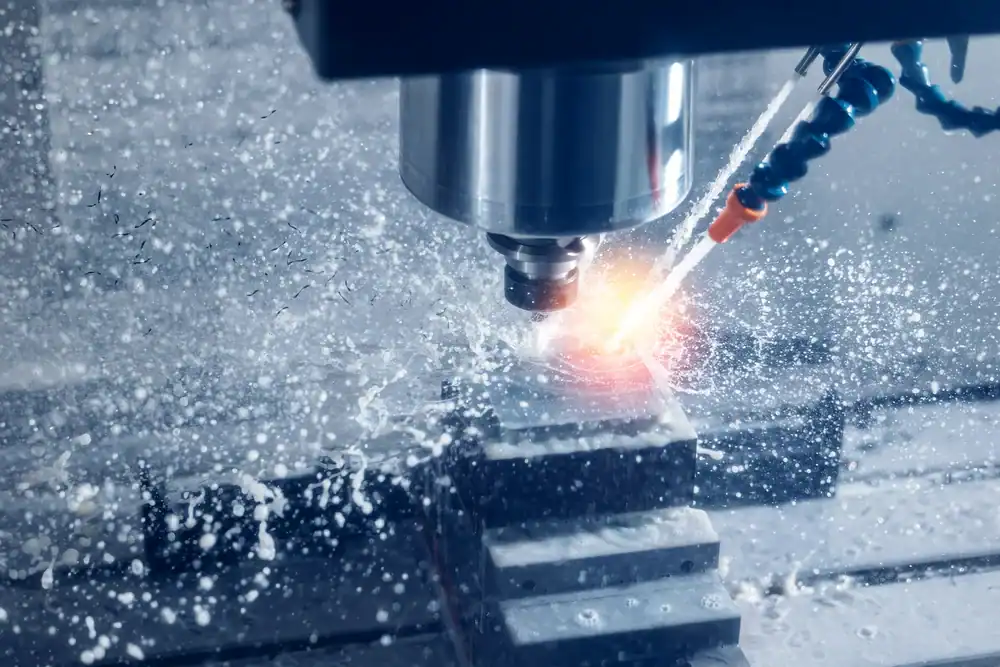
Traditional glass cutting creates problems you can’t always see. Scoring wheels leave micro-cracks. Thermal cutting methods introduce stress fractures. Both require additional grinding, polishing, and finishing—which means more time, more cost, and more risk of breakage.
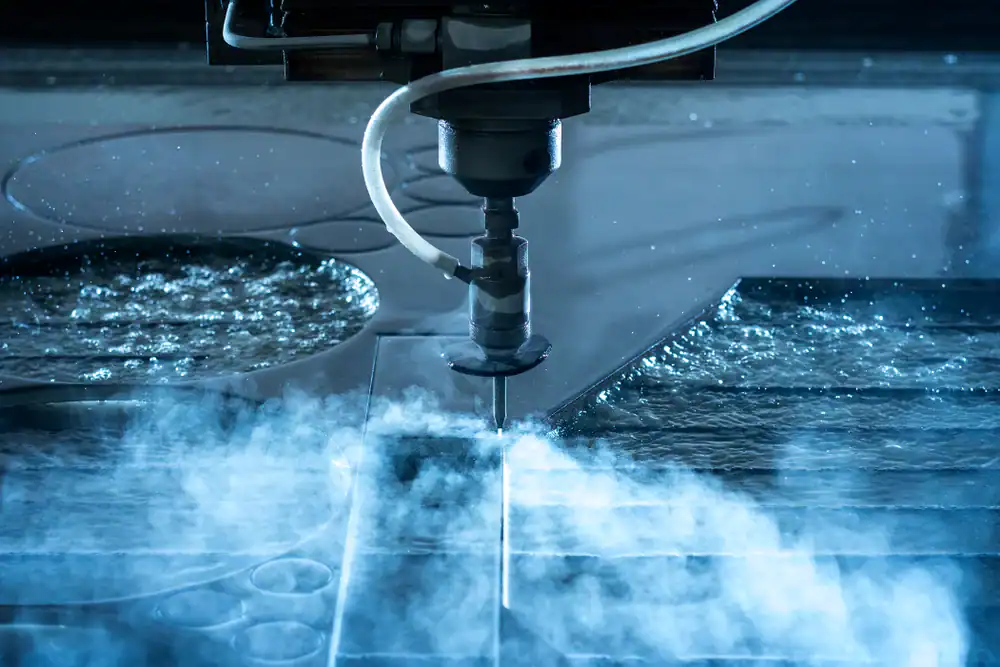
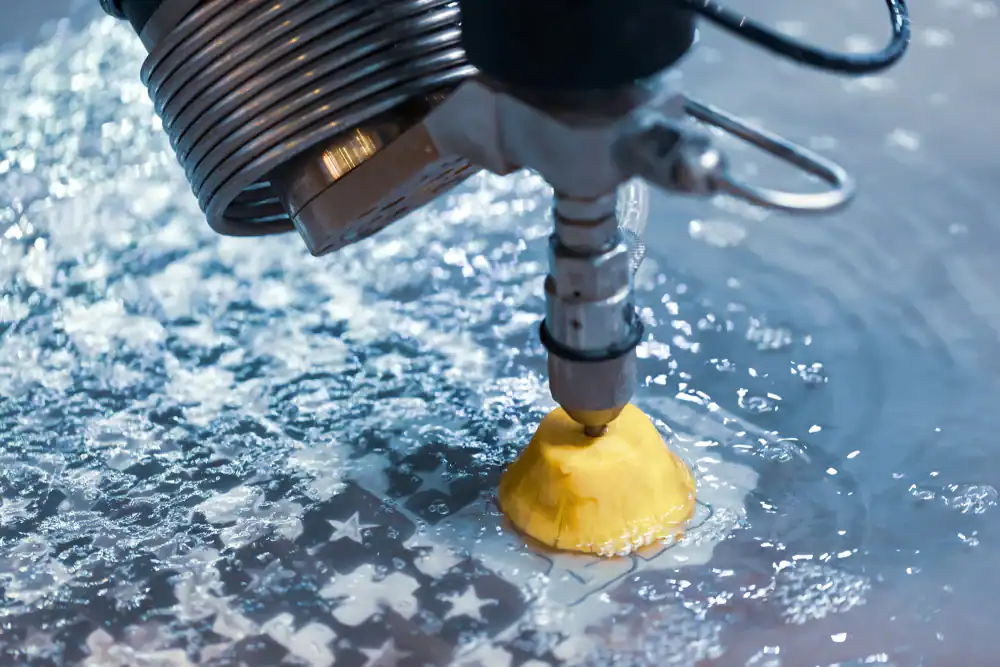
Waterjet cutting eliminates those issues entirely. The process uses high-pressure water mixed with fine abrasive to cut through glass without generating heat or physical contact. That means no thermal stress, no chipping along the cut line, and no need for secondary finishing in most cases.
You get edges that are clean and perpendicular. Cuts that follow your design exactly, even when the pattern is complex. And material that hasn’t been compromised by the cutting process itself.
For architects working on custom installations in Oyster Bay, NY, that precision matters. For contractors managing tight timelines, it means fewer delays. For homeowners investing in custom glass features, it means the finished product actually matches what you approved.
We serve Oyster Bay, NY and the surrounding Long Island, NY area with CNC waterjet cutting technology designed for precision work. We handle architectural glass, residential projects, and industrial applications—anything that requires cuts traditional methods can’t deliver without damage.
Oyster Bay has a long history of quality glass work. Companies here have been serving the community for decades, and that standard matters. We’re not trying to be the cheapest option. We’re here for projects where accuracy, edge quality, and material integrity actually matter.
Our equipment cuts to tolerances most shops can’t match. Our process doesn’t create the waste or rework that comes with older cutting methods. And because we’re local, you’re not waiting weeks for a shop three states away to fit you into their schedule.
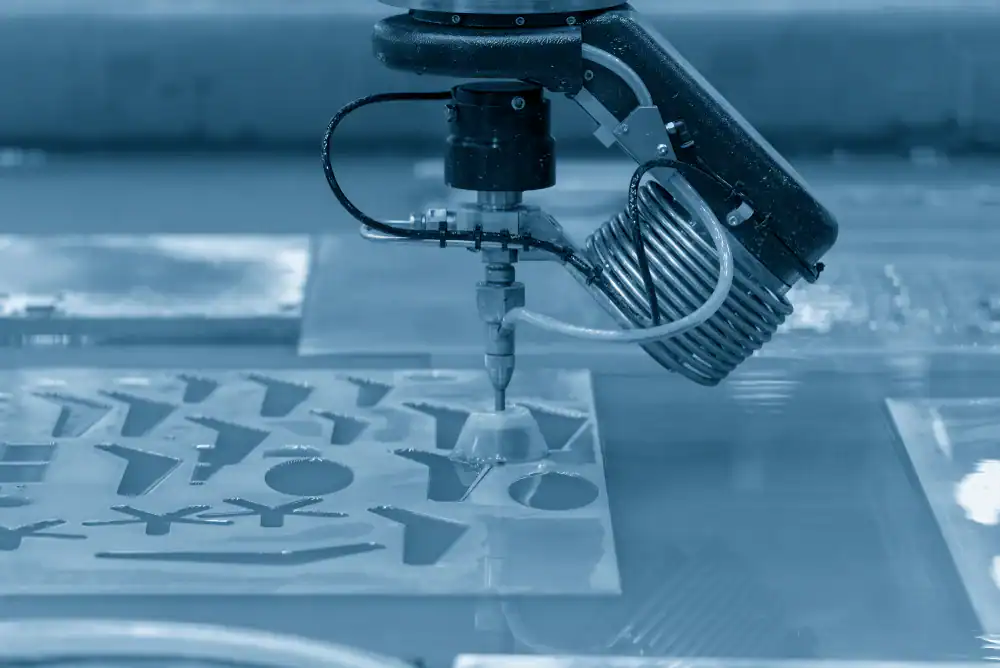
You send us your design specs—CAD files, drawings, measurements, whatever format works for you. If you’re not sure what’s possible, we’ll talk through it. Some designs that seem complicated are actually straightforward with waterjet cutting. Others need small adjustments to work with the material properties of glass.
Once the design is confirmed, we program the CNC system. The waterjet head follows your exact pattern, cutting through the glass with a stream of water and abrasive particles. Pressure stays consistent throughout the cut, which is critical—inconsistent pressure is what causes edge chipping and break-line failures in other methods.
The cutting happens fast compared to traditional techniques. No heat builds up, so there’s no risk of thermal shock or warping. The glass doesn’t need to be clamped aggressively, which reduces the chance of stress fractures. And because the kerf (the width of the cut) is so narrow, material waste stays minimal.
After cutting, most pieces are ready to use. There’s no grinding step, no polishing required to fix rough edges. If your project has specific finishing requirements, we handle that too. But in many cases, what comes off the waterjet table is what gets installed.
Ready to get started?
Residential projects in Oyster Bay, NY often involve custom glass for kitchen backsplashes, shower enclosures, tabletops, or decorative panels. Waterjet cutting handles intricate patterns, cutouts for fixtures, and edge details that would be risky or impossible with traditional scoring methods.
Commercial and architectural work requires even tighter tolerances. Storefronts, office partitions, decorative installations—these projects don’t have room for error. A piece that’s off by even a few millimeters creates installation problems, and glass that’s been stressed during cutting can fail unexpectedly down the line.
Industrial applications demand both precision and durability. Equipment housings, protective barriers, custom components—waterjet cutting delivers clean edges and accurate dimensions without introducing weaknesses into the material.
The process works across different glass types: tempered, laminated, specialty architectural glass. Thickness isn’t a limiting factor the way it is with other methods. And because there’s no heat involved, coatings and treatments on the glass surface stay intact.
Traditional glass cutting uses scoring tools that create a controlled fracture line. You score the surface, then apply pressure to break the glass along that line. It works for straight cuts and simple shapes, but it creates micro-cracks along the edge and residual stress in the material.
Thermal cutting methods use heat to melt or fracture the glass. That introduces thermal stress, which can cause warping or delayed breakage. The edges usually need significant grinding and polishing afterward.
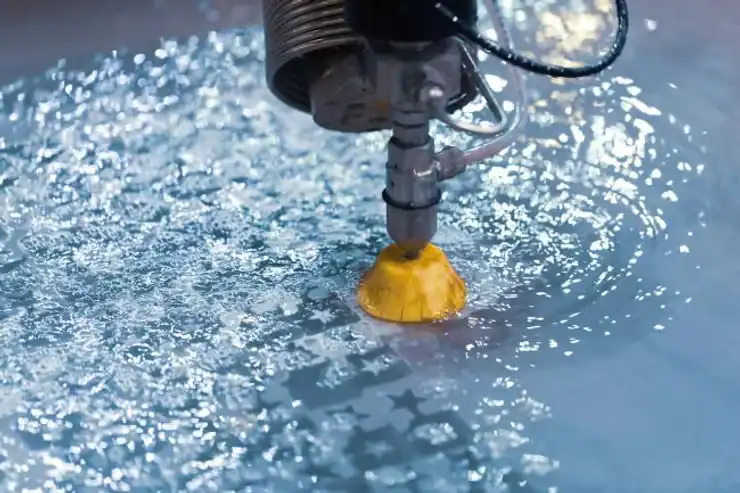
Waterjet cutting doesn’t score or heat the glass. High-pressure water mixed with fine abrasive particles erodes the material in a precise, controlled path. There’s no mechanical stress, no thermal shock, and no fracturing. The edge comes out clean and perpendicular without secondary processing in most cases. For complex shapes, intricate cutouts, or projects where edge quality matters, waterjet cutting eliminates the problems other methods create.
Yes. Waterjet cutting works across a wide range of glass thicknesses, from thin decorative panels to thick structural glass. Traditional methods struggle with thicker material because the scoring and breaking process becomes unpredictable. Thermal methods risk cracking thicker glass due to uneven heat distribution.
Waterjet cutting doesn’t rely on fracturing or melting, so thickness isn’t a limiting factor. The cutting stream erodes through the material at a consistent rate regardless of how thick it is. That makes it ideal for architectural projects that use heavy glass for structural or safety reasons.
Specialty glass—coated, laminated, tempered—also cuts cleanly with waterjet technology. Coatings stay intact because there’s no heat to damage them. Laminated glass doesn’t delaminate because there’s no mechanical stress pulling the layers apart. Tempered glass requires careful handling, but the process itself doesn’t introduce the kind of stress that causes spontaneous breakage later.
CNC waterjet cutting delivers precision down to 0.01mm. That level of accuracy matters when you’re working with tight tolerances for architectural installations, custom fixtures, or components that need to fit together exactly.
The CNC system controls the cutting head’s position and the water pressure throughout the entire cut. That consistency is what traditional hand-guided methods can’t match. There’s no operator variance, no drift as the cut progresses, and no guesswork about whether the piece will match your specifications.
For projects in Oyster Bay, NY where installation timelines are tight and rework isn’t an option, that precision eliminates a major risk factor. Pieces arrive ready to install. They fit the first time. And you’re not dealing with edge quality issues that show up under certain lighting or require additional finishing work on-site.
Waterjet cutting produces minimal material waste compared to other methods. The cutting stream is extremely narrow—typically less than a millimeter wide—so very little glass is lost to the kerf. That matters when you’re working with expensive specialty glass or trying to maximize yield from each sheet.
The process itself is environmentally friendly. There are no harmful emissions, no toxic fumes, and no chemical byproducts. The abrasive material used in the water stream is inert and can be filtered out and disposed of safely. The water gets recycled through the system.
For contractors and property owners in Oyster Bay, NY managing projects with environmental considerations or waste disposal restrictions, waterjet cutting simplifies compliance. You’re not generating hazardous waste that requires special handling. The glass scraps can be recycled through standard channels. And because the cutting process is so efficient, you’re not ordering excess material to account for high waste rates.
Cutting time depends on the complexity of your design and the thickness of the glass, but waterjet cutting is significantly faster than traditional methods for anything beyond simple straight cuts. A complex architectural pattern that would take hours to cut by hand might take minutes on a CNC waterjet system.
The speed advantage comes from automation and consistency. Once the design is programmed, the machine executes it without breaks, adjustments, or the slowdowns that come with manual processes. There’s no stopping to change tools, no repositioning the material multiple times, and no secondary grinding or polishing for most applications.
Turnaround time for projects in Oyster Bay, NY also benefits from local service. You’re not shipping glass across the country and waiting for it to work through a distant shop’s backlog. We handle the design consultation, cutting, and any finishing work right here, which keeps your project moving forward instead of stalled in transit or queued behind out-of-state jobs.
Any project where precision, edge quality, or complex shapes matter. Architectural installations with custom patterns, intricate cutouts, or tight fit requirements. Residential renovations that need glass cut to match existing fixtures or unusual dimensions. Commercial storefronts and office spaces where the glass is a design feature, not just a functional element.
Industrial applications include equipment housings, protective barriers, custom components for machinery, and specialty panels that need to meet specific performance standards. Waterjet cutting handles all of these without the limitations of traditional methods.
The process also works well for projects that combine glass with other materials. If you’re creating an installation that uses glass alongside metal, stone, or acrylic, waterjet cutting can handle all of those materials with the same equipment. That means consistent precision across different components and fewer coordination headaches when everything needs to fit together perfectly.
Useful Links
Other Services we provide in Oyster Bay