Hear from Our Customers
Your panels fit during installation. No gaps from undersized cuts. No rework from misaligned edges. No callbacks because the tolerances were off.
When you’re working with architectural glass for facades or custom interior features, a quarter-millimeter matters. Traditional cutting methods leave micro-cracks and residual stress in the material. Those imperfections show up later—during transport, installation, or worse, after the client takes possession.
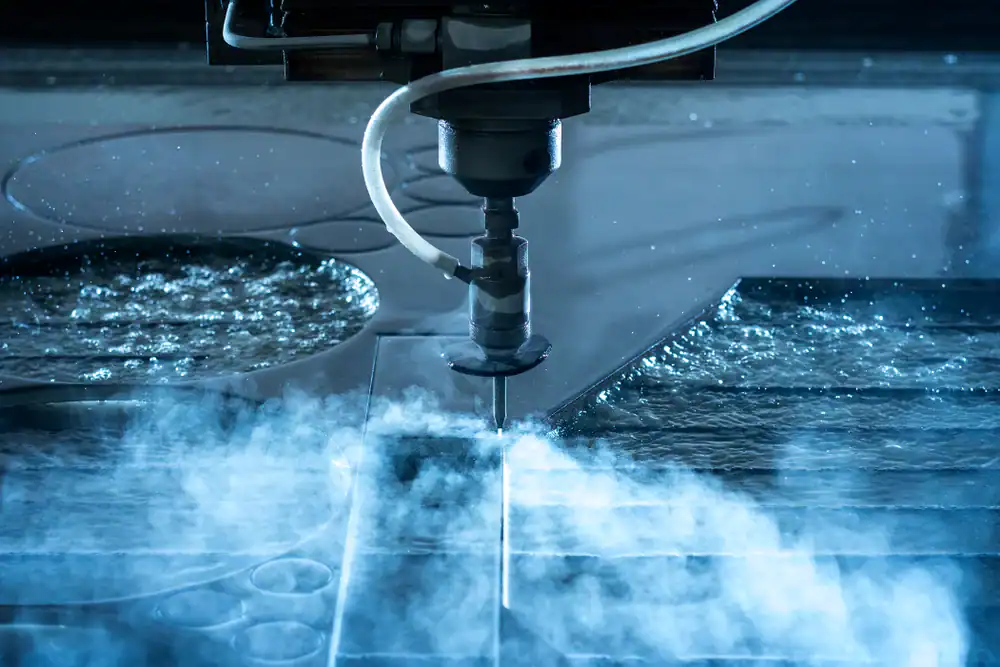
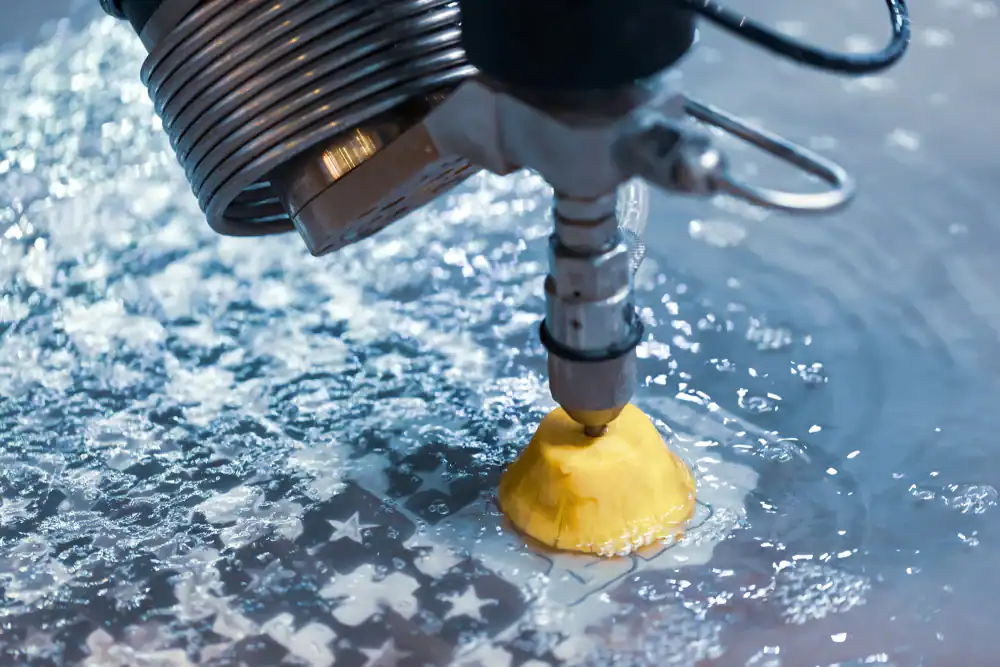
CNC glass waterjet cutting in Riverhead eliminates that risk entirely. The process uses high-pressure water and fine abrasive to cut through glass without generating heat. No thermal stress. No heat-affected zones. No cracking from temperature gradients, especially critical when you’re cutting thicker glass pieces.
You get cuts accurate to within 0.1mm. Edges come out smooth enough that secondary finishing is rarely needed. Complex curves and intricate patterns that would require multiple setups with mechanical tools get handled in a single pass.
Less waste means lower material costs. Faster cutting means you meet deadlines without rushing. Clean edges mean your installers aren’t dealing with chips or uneven surfaces that compromise the final fit.
We operate from West Islip, serving the broader Long Island area including Riverhead with precision waterjet cutting and material consultation. Our focus stays on architects, designers, and contractors who need glass cut right the first time.
Riverhead’s mix of commercial development and residential growth creates steady demand for custom glass work. From storefronts along East Main Street to residential projects in newer developments, the need for precision glass fabrication continues to expand.
We handle industrial glass waterjet cutting for manufacturers, architectural glass for building projects, and custom residential work. Our ISO 9001:2015-certified facility can produce single units or runs up to 100,000 pieces, depending on your project scope and timeline.
You send us your design specifications—CAD files, drawings, or detailed measurements. We review them for feasibility and discuss any adjustments that might improve the cut quality or reduce costs.
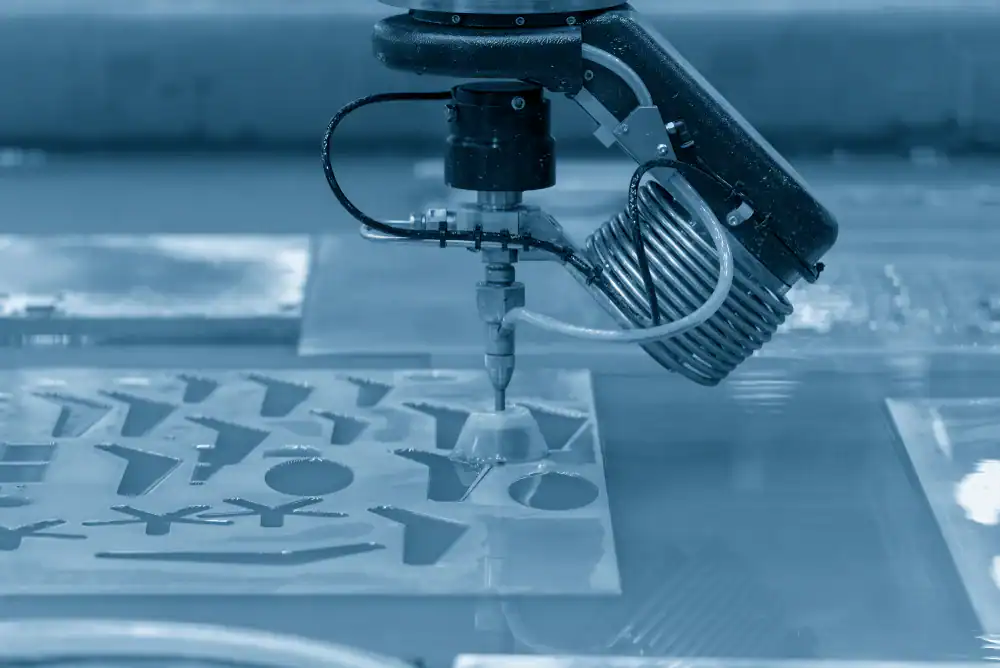
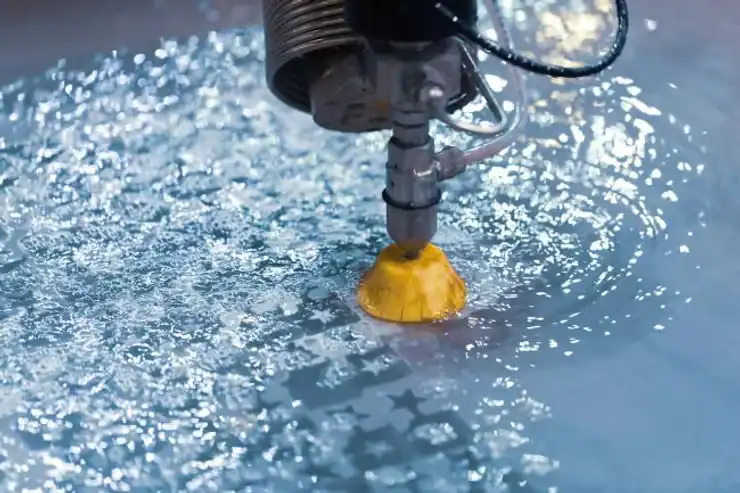
Once the design is confirmed, we program the CNC waterjet system with your exact specifications. The machine uses a stream of water mixed with fine abrasive particles, forced through a small nozzle at extremely high pressure. This stream cuts through the glass with precision while the CNC system controls the path.
The cutting head follows your design exactly, handling straight lines, tight curves, and complex patterns without changing tools or setups. Because there’s no heat involved, the glass maintains its structural integrity throughout the entire process. Thicker pieces don’t develop internal stress. Thin pieces don’t crack from thermal shock.
After cutting, we inspect each piece to verify it meets your specifications. Edge quality is checked. Dimensions are confirmed. Any secondary finishing—if needed—gets handled before the glass leaves our facility.
You receive glass that’s ready for your next step, whether that’s installation, further fabrication, or delivery to your client. The pieces fit together as designed because the cuts were made with CNC accuracy, not estimated by hand or eye.
Ready to get started?
Material consultation comes first. Different glass types respond differently to cutting. Tempered glass, laminated glass, thick architectural panels—each has specific requirements. We discuss what you’re working with and recommend the best approach for your application.
Design review ensures your specifications will produce the results you need. Sometimes a small adjustment to a curve radius or edge detail makes the difference between a good cut and a perfect one. We catch those details before cutting begins.
The actual cutting process handles glass up to 12 inches thick, though most architectural and residential projects use thinner material. Our system maintains accuracy across the full thickness range. Complex shapes, tight inside corners, intricate patterns—the CNC system executes them all with the same precision.
Riverhead’s construction market includes everything from commercial renovations in the downtown area to new residential builds in expanding neighborhoods. That variety means glass needs range widely. Custom shower enclosures. Storefront panels. Decorative interior partitions. Architectural features for modern homes. Each application has different requirements for thickness, edge finish, and dimensional accuracy.
We work with contractors managing multi-unit projects and homeowners tackling single custom installations. Production runs scale to match your needs. Rush timelines get accommodated when your project schedule demands it.
Yes, and that’s where waterjet cutting outperforms traditional methods significantly. The CNC-controlled cutting head follows your programmed path exactly, handling tight radius curves and intricate patterns that would be difficult or impossible with mechanical scoring tools.
Traditional glass cutting relies on scoring and breaking, which works fine for straight lines and gentle curves. But when your design includes asymmetric patterns, sharp direction changes, or decorative details with small radii, mechanical methods start failing. The glass either doesn’t break cleanly along the score line, or micro-cracks develop that compromise the piece.
Waterjet cutting doesn’t depend on controlled breaking. The high-pressure stream simply removes material along the programmed path. Inside corners, outside curves, even complete cutouts within the glass panel—all get executed with the same precision. Your design translates directly from the CAD file to the finished piece without simplification or compromise.
Edge quality comes down to how the glass is separated. Mechanical cutting scores the surface and then applies force to break the glass along that score line. That breaking action creates chips, micro-cracks, and edges that aren’t perfectly perpendicular to the surface.
Waterjet cutting removes material through erosion, not fracture. The stream of water and abrasive gradually wears away the glass along the cut path. There’s no sudden stress, no breaking force, no propagation of cracks from a score line.
The result is an edge that’s smooth and clean, typically requiring minimal or no secondary grinding and polishing. For applications where the edge will be visible—glass tabletops, display cases, architectural features—this edge quality saves time and produces a better finished product. Even when edges will be hidden in frames or gaskets, the lack of chips and micro-cracks means stronger, more reliable installations.
Our system handles glass up to 12 inches thick while maintaining the same precision standards we achieve with thinner material. The cutting accuracy stays within 0.1mm regardless of thickness.
Thicker glass presents specific challenges with traditional cutting methods. Temperature gradients during thermal cutting create internal stress that can cause cracking, especially in pieces over an inch thick. Mechanical scoring and breaking becomes increasingly difficult as thickness increases, and the risk of the break wandering off the score line goes up substantially.
Waterjet cutting eliminates both issues. No heat means no thermal stress, even in the thickest architectural panels. The cutting stream penetrates the full thickness of the material uniformly, so the cut path stays true from top surface to bottom surface. Your 6-inch thick glass panel gets the same dimensional accuracy as a quarter-inch piece.
Most architectural and residential projects use glass between quarter-inch and two inches thick. But when your design calls for substantial thickness—structural glass floors, heavy-duty partitions, or specialized industrial applications—the capability exists without sacrificing precision.
The waterjet stream is extremely narrow—we typically use a 0.005 or 0.007 inch orifice. That narrow kerf means less material gets removed with each cut, which becomes significant when you’re nesting multiple pieces on a single sheet of glass.
CNC programming allows us to optimize the layout before cutting begins. We can arrange your pieces to maximize the usable area of each glass sheet, minimizing the scrap left over. The software calculates the most efficient arrangement, accounting for the spacing needed between pieces and the approach paths for the cutting head.
Because the cuts are accurate the first time, you’re not dealing with rejected pieces that need to be recut. A panel that’s even slightly undersized is unusable for its intended opening. Oversize pieces require trimming, which adds time and creates more waste. Dimensional accuracy within 0.1mm means your pieces fit as designed, eliminating the waste that comes from rework.
For projects using expensive specialty glass—low-iron architectural glass, colored or textured varieties, laminated or treated materials—waste reduction directly impacts your project budget. Better material utilization means you’re buying less glass to produce the same number of finished pieces.
Turnaround depends on project complexity, glass thickness, and current production schedule, but most custom glass waterjet cutting projects in Riverhead complete within one to two weeks from design approval to finished pieces.
Simple cuts on standard thickness glass—straight edges, basic shapes, smaller quantities—often finish faster. Complex designs with intricate details, thicker material that requires slower cutting speeds, or larger production runs naturally take more time.
Rush timelines can be accommodated when your project schedule demands it. Construction delays happen. Installation dates get moved up. Client timelines compress. We’ve handled expedited projects that needed to ship in days rather than weeks.
The key to meeting tight deadlines is early communication. When we review your design specifications upfront, we can identify any factors that might extend production time and discuss options for streamlining the process. Sometimes a small design modification significantly reduces cutting time without compromising the final appearance. Other times, scheduling your project during a lighter production period means faster completion.
We also coordinate delivery or pickup timing to match your installation schedule. Glass sitting in storage is glass at risk of damage. Better to have it arrive when you’re ready to install it.
Yes, and we understand that multi-site projects have specific coordination requirements. Each location might need different glass specifications. Installation schedules vary by site. Quantities need to be managed so you’re not storing excess material between installations.
We handle the production scheduling to match your site-by-site timeline. If you’re managing a phased development where buildings come online sequentially, we can stage the glass cutting to align with each phase. That keeps your material costs spread across the project timeline rather than requiring full payment upfront for glass you won’t install for months.
For contractors working across Long Island, including Riverhead and surrounding areas, we coordinate delivery to match your installation crews’ schedules. Glass delivered too early sits in storage where it’s vulnerable to damage. Glass delivered late holds up your installation and pushes your schedule back.
We also maintain consistent specifications across multiple orders. When you’re installing matching storefronts across several retail locations, or repeating a glass feature in multiple residential units, consistency matters. The pieces need to match from first installation to last. CNC cutting ensures that dimensional accuracy and edge finish stay uniform across the entire production run, whether that’s ten pieces or ten thousand.
Useful Links
Other Services we provide in Riverhead