Hear from Our Customers
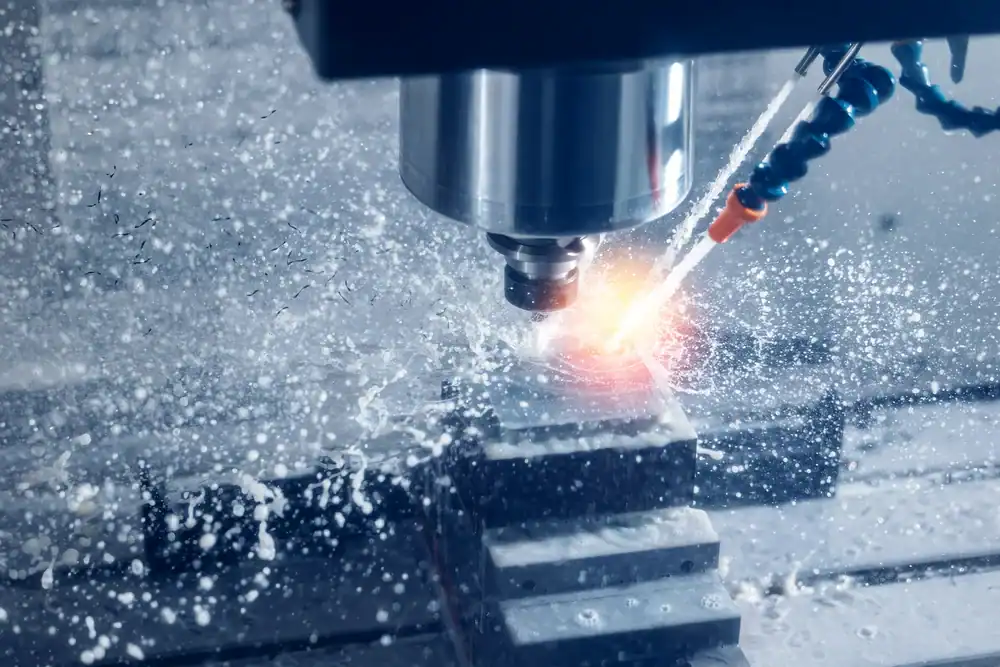
Traditional glass cutting tools crack edges, limit your design options, and waste material. You’re left managing chipped surfaces, redoing work, or settling for simpler shapes because the equipment can’t handle complexity.
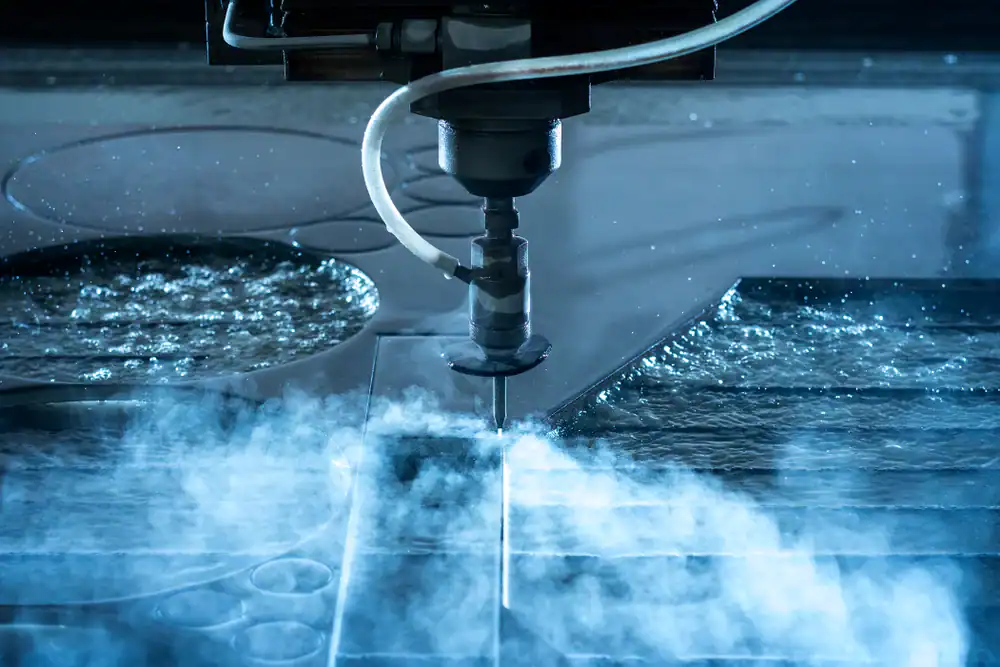
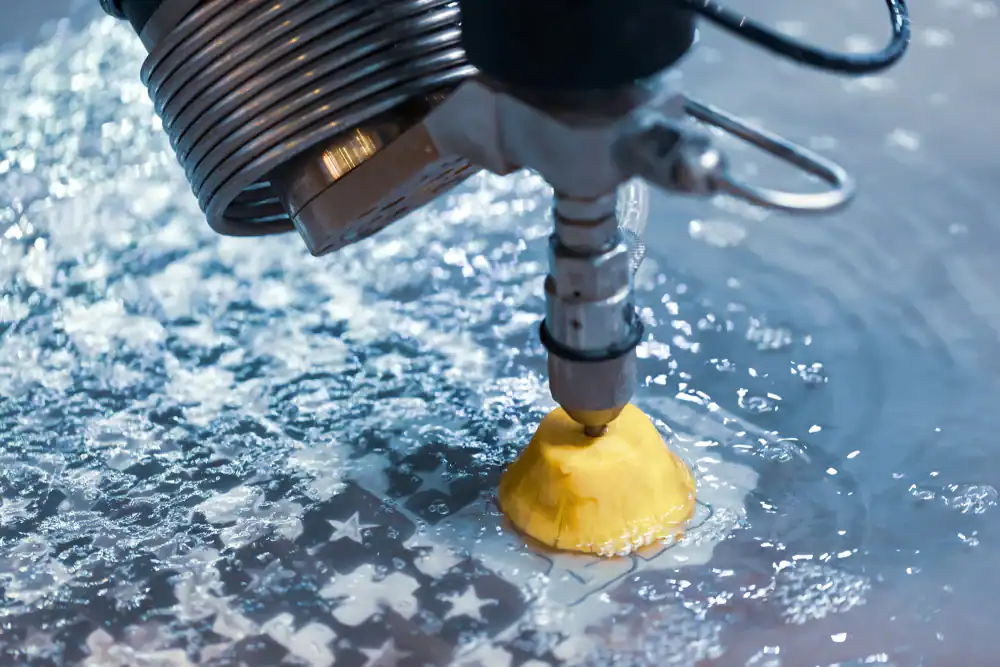
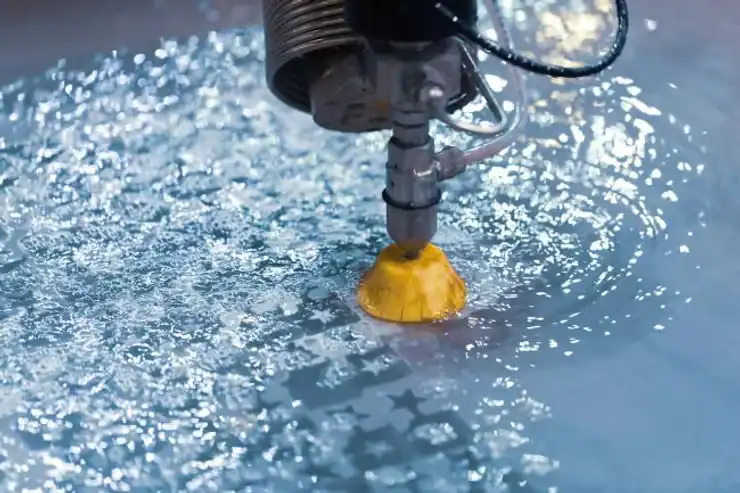
Waterjet cutting removes those constraints entirely. The process uses high-pressure water mixed with fine abrasive particles to cut through glass without generating heat. That means no thermal stress, no micro-cracks forming along cut lines, and no risk of shattering during fabrication.
You get precision down to ±0.1mm. Curves, angles, intricate patterns—all executed cleanly in a single pass. The edges come out smooth enough that you’ll often skip secondary finishing work. Less time fixing mistakes, less material thrown away, and faster project completion from start to finish.
If you’re working on architectural installations, custom residential glass features, or commercial storefront designs in Rockville Centre, NY, this level of control changes what’s possible. You’re not limited by what a blade or scoring tool can physically accomplish. The design you envision is the design you get.
We operate in Rockville Centre, NY, serving Nassau County contractors, architects, glass fabricators, and commercial builders who need precision cutting without the limitations of traditional methods. We run CNC-controlled waterjet systems designed specifically for glass and other brittle materials.
Rockville Centre’s commercial real estate market and residential renovation activity create steady demand for custom glass work. Storefronts along Sunrise Highway, office build-outs in nearby business districts, and high-end home projects across the South Shore all require fabricators who can deliver tight tolerances and clean finishes.
We handle both one-off custom pieces and production runs. You bring us the specs, we program the cut path, and the machine executes it with repeatability you can count on for every subsequent piece.
You start by sending us your design file—CAD drawings, DXF files, or even detailed sketches work. We review the specs to confirm material type, thickness, and any edge finish requirements. If there are tolerance concerns or design elements that might affect cutting efficiency, we’ll flag them before we start.
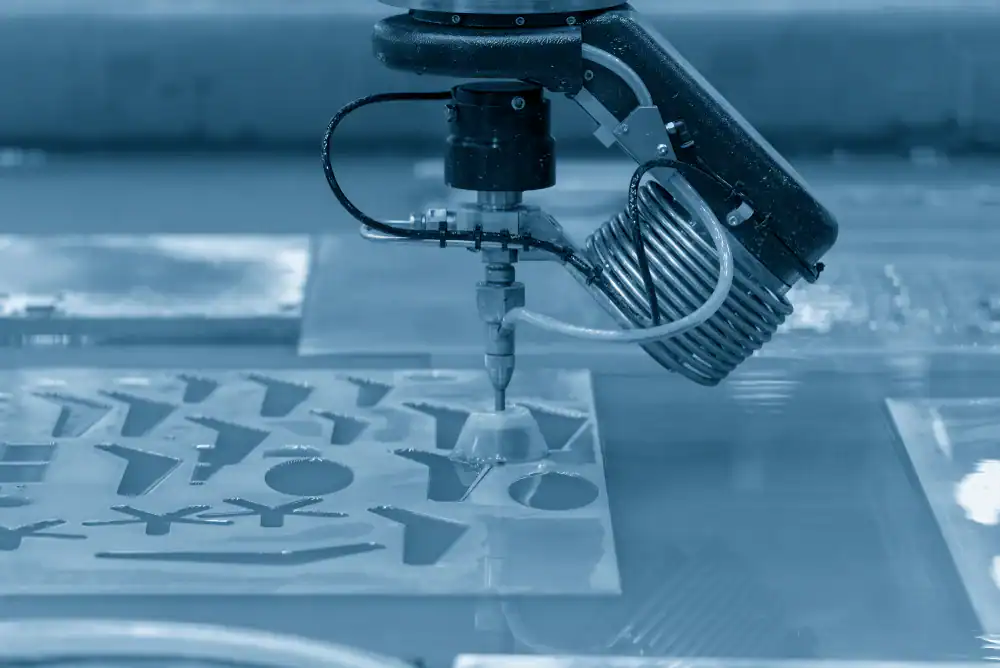
Once the file is finalized, we load it into the CNC system and secure your glass on the cutting bed. The waterjet nozzle moves along the programmed path, mixing water with garnet abrasive at pressures up to 60,000 PSI. The stream cuts through the glass in a controlled, continuous motion.
Because there’s no heat involved, the glass doesn’t expand, contract, or develop internal stress during cutting. That’s critical for tempered or laminated glass, where even minor temperature changes can compromise structural integrity. The process also eliminates dust and sharp fragments, keeping the work area cleaner and safer than traditional methods.
After cutting, we inspect edges for quality and dimensional accuracy. Most pieces are ready to install immediately. If you need polished edges or specific finish work, we can coordinate that as well, but the waterjet process typically delivers edges clean enough for direct use in architectural and commercial applications.
Ready to get started?
We cut standard float glass, tempered glass, laminated safety glass, and specialty architectural glass used in commercial and residential projects throughout Rockville Centre, NY. Thickness ranges from 3mm up to 50mm depending on material type and project requirements.
For architectural applications, that means custom panels for interior partitions, decorative inlays, signage substrates, and exterior facade elements. Commercial contractors use our services for storefront glass with integrated branding cuts, office dividers with frosted pattern details, and lobby installations requiring precise dimensional matching.
Residential projects include custom mirrors, glass tabletops, shower enclosures with non-standard dimensions, and decorative glass features for kitchens and bathrooms. Nassau County’s housing stock includes many older homes undergoing renovation, where standard-sized glass panels don’t fit original openings. Waterjet cutting lets you match existing dimensions exactly without forcing structural modifications.
We also handle industrial glass cutting for manufacturers and fabrication shops in the area. If you’re producing glass components for electronics, automotive applications, or machinery, the CNC process delivers the repeatability and edge quality you need for assembly and integration. Long Island, NY’s manufacturing sector—particularly in aerospace and advanced materials—relies on precision glass cutting for prototypes and production runs.
No, and you shouldn’t cut tempered glass after it’s been tempered. The tempering process creates internal stress that’s carefully balanced across the entire piece. Any cut, drill, or edge modification breaks that balance and causes the glass to shatter immediately.
If you need a specific shape in tempered glass, the cutting has to happen before tempering. You cut the glass to final dimensions using waterjet or traditional methods, finish the edges, drill any holes, and then send it through the tempering process. Once it’s tempered, the shape is locked in.
That’s why accurate measurements and design planning matter upfront. If you’re working on a commercial storefront or architectural installation in Rockville Centre, NY that requires tempered safety glass, we’ll cut the glass to your exact specs first. Then it goes to tempering. No changes possible after that point, so getting dimensions right the first time is critical.
Laser cutting generates heat, which creates thermal stress in glass. That stress leads to micro-cracks along the cut edge, even if you don’t see them immediately. Over time, those micro-cracks can propagate, weakening the glass and increasing the risk of failure under load or temperature changes.
Waterjet cutting is a cold process. No heat means no thermal stress and no micro-cracking. The abrasive stream mechanically erodes the material, leaving edges that are structurally sound and stable. For architectural and commercial glass applications where safety and longevity matter, that’s a significant advantage.
Lasers also struggle with thicker glass and reflective coatings. Waterjet systems handle both without issue. If you’re cutting laminated glass with multiple layers, waterjet maintains clean edges through each layer and the interlayer material. Laser cutting can delaminate or burn the interlayer, compromising the bond and creating weak points in the finished piece.
Our equipment handles glass up to 50mm thick, though practical limits depend on material type and edge quality requirements. Standard architectural glass in the 6mm to 19mm range cuts quickly with excellent edge finish. Thicker specialty glass takes longer but still delivers clean results.
For most commercial and residential projects in Rockville Centre, NY, you’re working with glass between 6mm and 12mm. Shower enclosures, tabletops, and interior partitions typically fall in that range. Thicker glass shows up in structural applications, exterior installations, or custom furniture pieces where weight and impact resistance matter.
Cut speed decreases as thickness increases, but quality remains consistent. A 6mm piece might cut at 300mm per minute, while 25mm glass drops to 50mm per minute. We adjust abrasive flow rate, water pressure, and nozzle traverse speed to match material thickness and maintain edge quality throughout the cut.
Edge finish depends on cutting speed and abrasive settings. For most applications, waterjet edges are smooth enough to use as-is. You’ll see a slightly frosted appearance rather than the polished clarity of a finished edge, but there are no sharp burrs or rough spots that would catch on skin or materials.
If you need optically clear edges for display cases, glass shelving, or high-end architectural features, we can slow the cutting speed and adjust abrasive flow to improve finish quality. That adds time but reduces or eliminates secondary polishing work. For many commercial installations in Rockville Centre, NY, the standard waterjet edge is acceptable because it’s hidden in a frame or gasket system.
When polished edges are required, the waterjet cut provides a clean starting point. Traditional grinding and polishing processes work faster on waterjet-cut glass because there’s no heat-affected zone or micro-cracking to address. You’re just refining the surface texture, not repairing damage from the cutting process.
Laminated glass has two or more layers bonded with a plastic interlayer, usually PVB or EVA. The challenge is cutting through both glass layers and the interlayer without delamination or edge chipping. Waterjet handles this better than mechanical cutting because there’s no vibration or impact force to separate the layers.
We adjust water pressure and abrasive flow to match the laminate construction. Too much pressure can force water between the layers and cause delamination. Too little pressure leaves rough edges or incomplete cuts through the interlayer. The CNC system maintains consistent parameters throughout the cut, so edge quality stays uniform around the entire piece.
After cutting, we inspect the edge to confirm the interlayer is cleanly cut and fully bonded to both glass layers. For safety glass used in commercial storefronts, automotive applications, or architectural installations around Rockville Centre, NY, maintaining that bond integrity is critical. If the interlayer separates from the glass, the laminate loses its safety properties and won’t perform as designed under impact or stress.
DXF and DWG files from AutoCAD or similar CAD programs work best. These vector formats contain precise dimensional data and layer information that imports directly into our CNC system. We can also work with AI files from Adobe Illustrator, though you’ll want to confirm all shapes are converted to outlines and dimensions are accurate.
If you don’t have CAD files, send us a detailed drawing with dimensions marked clearly. We can recreate the design in our system and send you a proof for approval before cutting. For complex shapes or intricate patterns, a physical template works too—we’ll trace it and convert it to a digital cut path.
The key is accuracy. Glass cutting doesn’t allow for trial and error the way wood or metal fabrication might. Once we cut the piece, that’s the final shape. If you’re working on architectural glass for a commercial project in Rockville Centre, NY, double-check all measurements against the actual installation site before sending files. Field dimensions often differ from architectural drawings, and catching those discrepancies before cutting saves time and material costs.
Useful Links
Other Services we provide in Rockville Centre