Hear from Our Customers
Your glass arrives cut exactly to spec. No thermal stress cracks from lasers. No chipped edges from scoring wheels. No design limitations because the tool can’t handle curves.
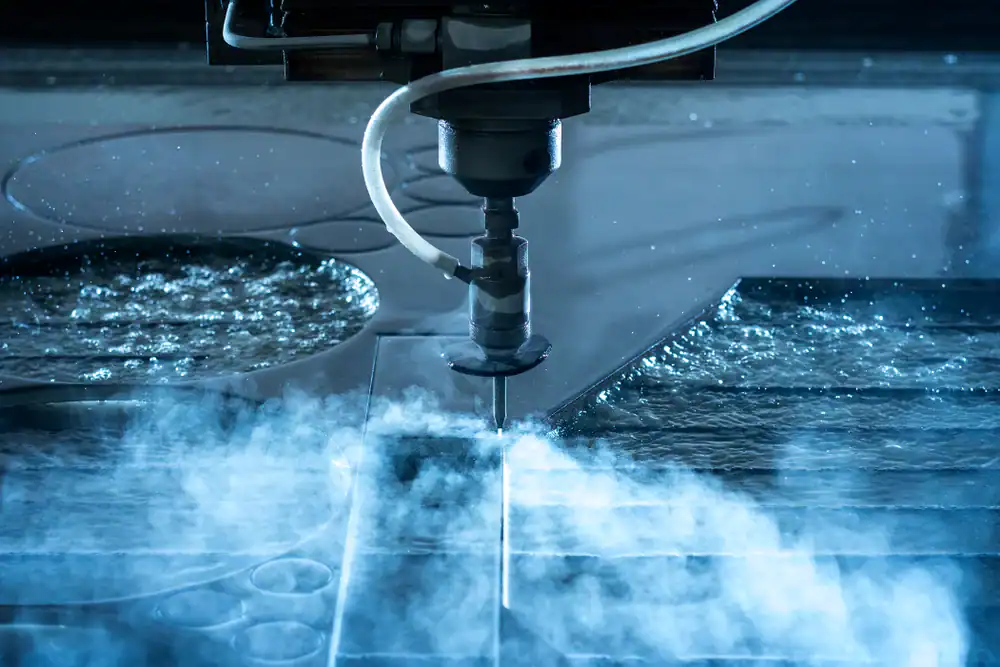
Waterjet cuts glass using high-pressure water and fine abrasive—no heat, no contact stress, just a narrow stream that follows your CAD file down to 0.1mm. That means intricate patterns, tight inside corners, and thickness up to several inches, all without the secondary grinding and polishing that eats up your timeline.
You’re not dealing with scrap rates from cracked pieces or rework from rough edges. The cut quality is clean enough that most projects go straight to installation or assembly. That’s fewer steps between your design file and your finished product, which matters when you’re working against a deadline or a budget that doesn’t have room for waste.
We operate right here in Ronkonkoma, NY, serving architects, contractors, manufacturers, and fabricators across Long Island, NY and the surrounding area. We run CNC waterjet systems built for precision glass work—not general-purpose machines trying to do everything.
You’re working with people who understand the difference between cutting tempered glass for a storefront and laminated glass for an interior partition. We’ve handled architectural glass waterjet cutting in Ronkonkoma, NY for commercial builds, custom residential projects, and industrial components that need to fit the first time.
Being local means faster turnaround and the ability to talk through your project before you commit. You’re not shipping glass across the country and hoping it arrives intact.
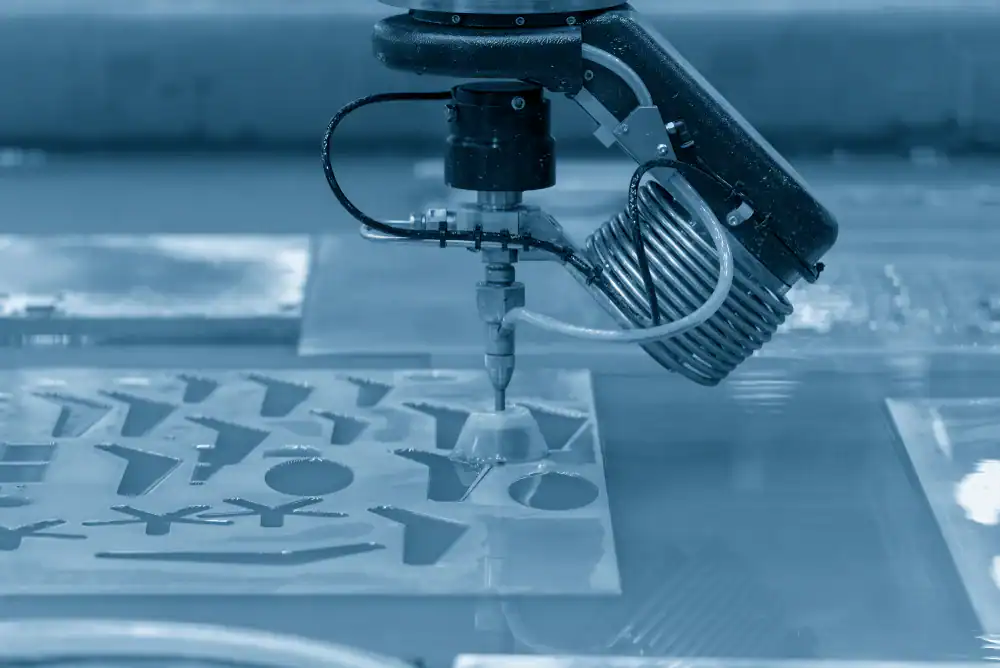
You send us your design file—DXF, DWG, or even a detailed sketch if that’s what you’re working from. We review it for any potential issues with the material or the cut path, then program the CNC system to follow your specs.
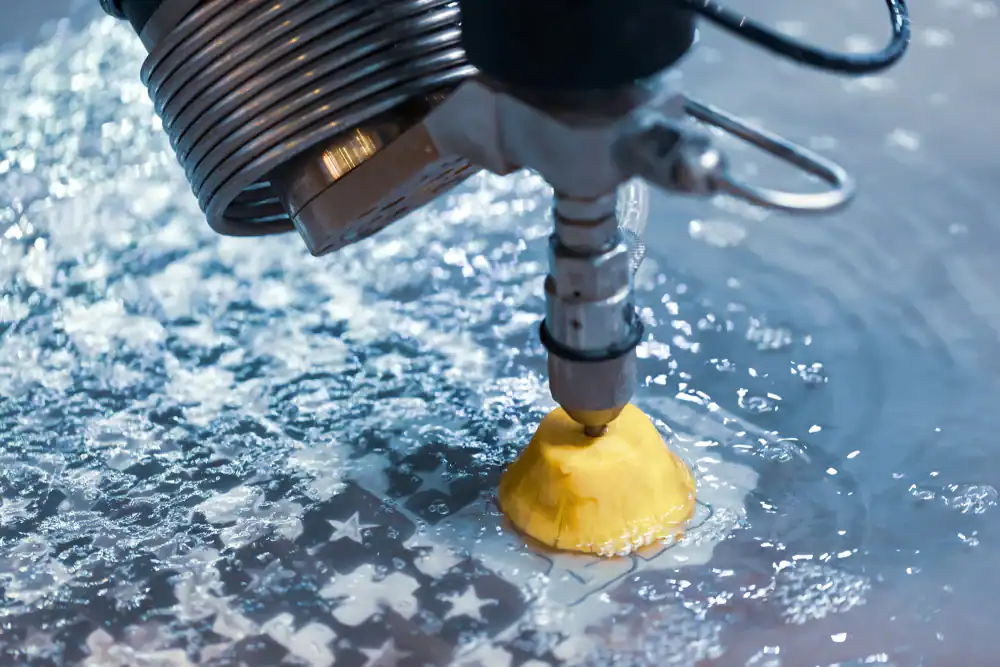
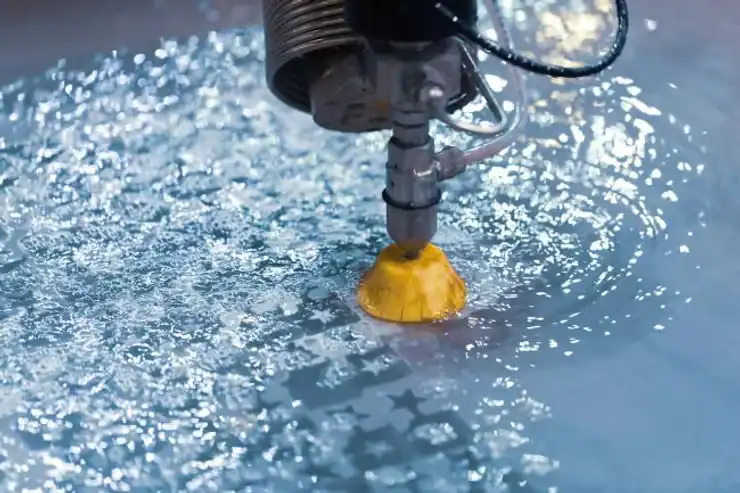
The glass gets secured on the cutting table. The waterjet nozzle positions itself and starts the cut using a high-pressure stream mixed with garnet abrasive. The stream is narrow—around 0.03 inches—so there’s minimal material removal and tight nesting if you’re cutting multiple pieces from one sheet.
Because there’s no heat, the glass doesn’t expand, contract, or develop microfractures. The edges come out smooth and clean. Once the cutting finishes, we inspect dimensions and edge quality, then prep your pieces for pickup or delivery. Most projects don’t need additional edge work unless you’re specifying polished edges for aesthetic reasons.
Ready to get started?
We cut annealed, tempered, and laminated glass for architectural projects—storefronts, partitions, facades, and custom interior elements. Industrial clients use us for glass components in machinery, equipment housings, and display panels. If you’re in automotive or marine work, we handle windshields, windows, and custom glass parts that need exact fitment.
Ronkonkoma sits in the middle of a busy commercial and industrial corridor on Long Island, NY. That means a lot of construction, renovation, and manufacturing work that requires precision glass cutting. You’re not waiting weeks for a shop in another state to fit you into their schedule.
Residential glass cutting services in Ronkonkoma, NY are also part of what we do—custom shower enclosures, tabletops, shelving, and decorative panels. The process is the same whether you’re ordering one piece or a production run. You get the same cut quality and the same attention to making sure your dimensions are right.
Waterjet works well with annealed and laminated glass. Tempered glass is trickier—it can’t be cut after tempering because the internal stress causes it to shatter. You need to cut tempered glass before it goes through the tempering process.
If you’re working with tempered glass, the sequence matters. We cut the annealed glass to your specs, then you send it out for tempering. If you’ve already got tempered glass and need modifications, that’s not something waterjet or any other cutting method can do without breaking it.
Laminated glass cuts fine with waterjet. The abrasive stream goes through both layers and the interlayer without delaminating or cracking. You just need to account for the thickness and make sure the laminate is compatible with abrasive cutting, which most standard laminates are.
CNC glass waterjet cutting in Ronkonkoma, NY typically holds tolerances around ±0.1mm, which is tight enough for most architectural and industrial applications. That level of precision means parts fit together without gaps, panels align correctly, and you’re not dealing with mismatched dimensions during installation.
The accuracy depends on a few factors—material thickness, cut speed, and nozzle condition. Thicker glass requires slower cutting to maintain edge quality, but the precision stays consistent. The CNC system follows your design file exactly, so if your file is accurate, the cut will be too.
For projects that need even tighter tolerances, we can adjust feed rates and make multiple passes. But most jobs don’t require that. Standard waterjet precision is already better than manual cutting methods and comparable to laser cutting, without the heat issues that lasers create in glass.
Waterjet systems can cut glass up to 12 inches thick, though most architectural and industrial projects use glass between 1/4 inch and 2 inches. Thicker glass just takes longer to cut because the abrasive stream needs more time to penetrate the full depth.
The cut quality stays consistent regardless of thickness. You’re not dealing with rough edges on thick glass or chipping on thin glass. The process is the same—the stream goes straight through, following the programmed path.
If you’re working with thicker glass for structural applications or specialty projects, waterjet handles it without the cracking risk that comes with mechanical cutting tools. The lack of physical contact means no stress fractures, even on heavy glass that would be difficult to score and snap manually.
Most edges come off the waterjet smooth enough for direct use, especially if the glass is going into a frame or gasket system where the edge won’t be visible or touched. The abrasive stream creates a matte finish that’s clean but not polished.
If you need polished edges for aesthetic reasons—like exposed edges on a tabletop or shelf—you’ll want additional finishing. That’s a separate process, but the waterjet cut gives you a good starting point. The edge is already straight and free of chips, so polishing goes faster than it would after a rough mechanical cut.
For industrial glass waterjet cutting in Ronkonkoma, NY, edge finish usually isn’t a concern. The parts are going into assemblies where function matters more than appearance. But if your project does need polished edges, we can discuss options or you can handle finishing separately after cutting.
Turnaround depends on complexity and volume. A few simple cuts on standard glass can be done in a day or two. Intricate patterns with tight tolerances or large production runs take longer—usually a week or less for most projects.
Custom glass waterjet cutting in Ronkonkoma, NY moves faster than outsourcing to a distant shop because there’s no long shipping time on either end. You drop off material or we source it locally, we cut it, and you pick it up or we deliver it. No waiting for cross-country freight.
If you’re on a tight deadline, let us know upfront. We can often prioritize rush jobs, especially if it’s a smaller order. The actual cutting time is fast—waterjet is quicker than manual methods—but programming, setup, and quality checks add time to the overall process. Most clients find the timeline reasonable compared to other precision cutting options.
DXF and DWG files work best because they’re standard CAD formats that import directly into our CNC system. If you’re working with a designer or architect, they can usually export those formats from whatever software they’re using.
If you don’t have a CAD file, we can work from detailed drawings with exact dimensions. It takes a bit longer because we need to create the cut path manually, but it’s doable. The more precise your specs, the better—callouts for curves, radii, hole sizes, and edge requirements help us program the job correctly the first time.
PDF files with accurate dimensions can work too, though vector-based files are cleaner. If you’re not sure what you have or what we need, send over what you’ve got and we’ll let you know if it’s usable or if we need something different. We’d rather clarify upfront than cut something wrong because the file wasn’t clear.
Useful Links
Other Services we provide in Ronkonkoma