Hear from Our Customers
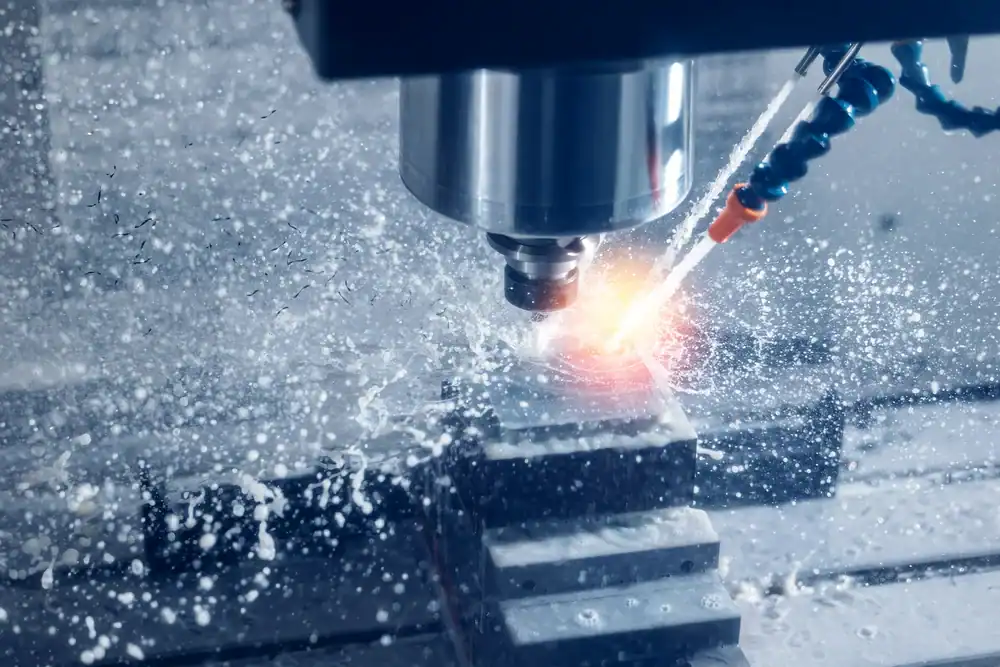
When your project calls for intricate curves, tight tolerances, or unusual glass thicknesses, traditional cutting methods fall short. You’re left dealing with chipped edges, thermal cracks, or being told your design isn’t possible.
Glass waterjet cutting in Saint James, NY changes that equation completely. We use high-pressure water mixed with fine abrasive particles to cut through glass without generating heat. That means no thermal stress zones, no micro-fractures forming along cut lines, and no limitations on shape complexity.
You get accuracy within 0.1mm across the entire cut. Edge quality comes out smooth enough that most projects need little to no secondary finishing. Whether you’re working with optical glass for a medical device, architectural panels for a building facade, or custom shapes for an art installation, the cut matches your specifications exactly.
The speed matters too. Projects move faster than traditional scoring and breaking methods, and you’re not wasting material on failed attempts or design compromises.
We’ve been serving architects, contractors, and manufacturers across Long Island, NY for over 20 years. Our ISO 9001:2015-certified facility in the region handles everything from single prototypes to production runs of 100,000 units.
Saint James sits in a corridor with strong architectural and manufacturing activity. You need a glass cutting partner who understands tight project timelines and can deliver precision work consistently. Our CNC glass waterjet cutting equipment handles materials from standard float glass to specialized optical glass, quartz, borosilicate, and fused silica.
We work directly with your specs—no guessing, no approximations. You send drawings, we cut to those exact dimensions, and you receive parts ready for your next production step.
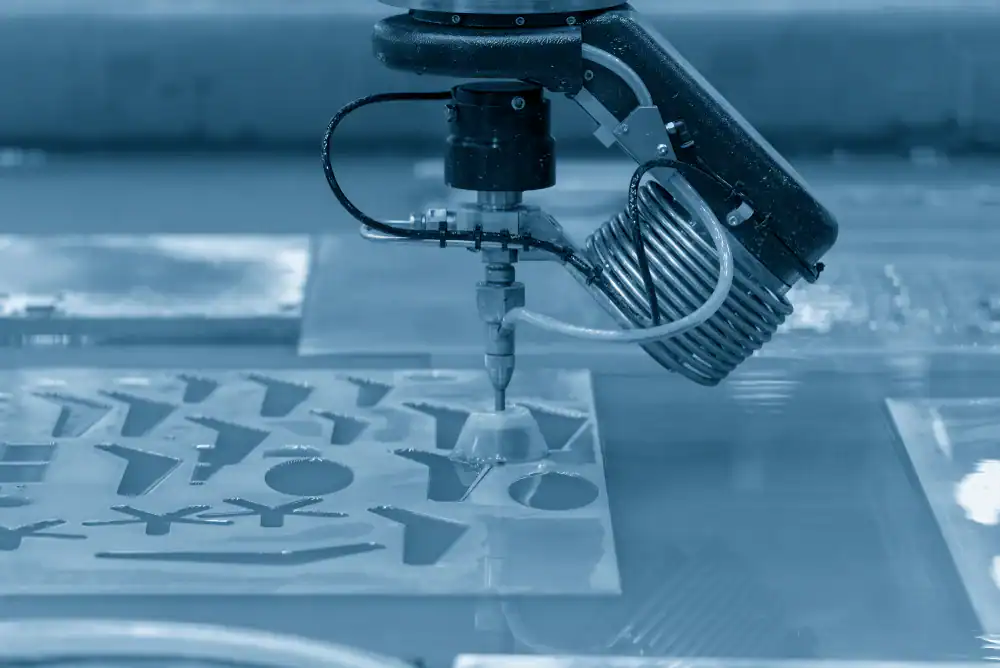
You start by sending us your design files—CAD drawings, DXF files, or detailed specifications work fine. We review dimensions and material requirements to confirm feasibility and identify any potential issues before cutting begins.
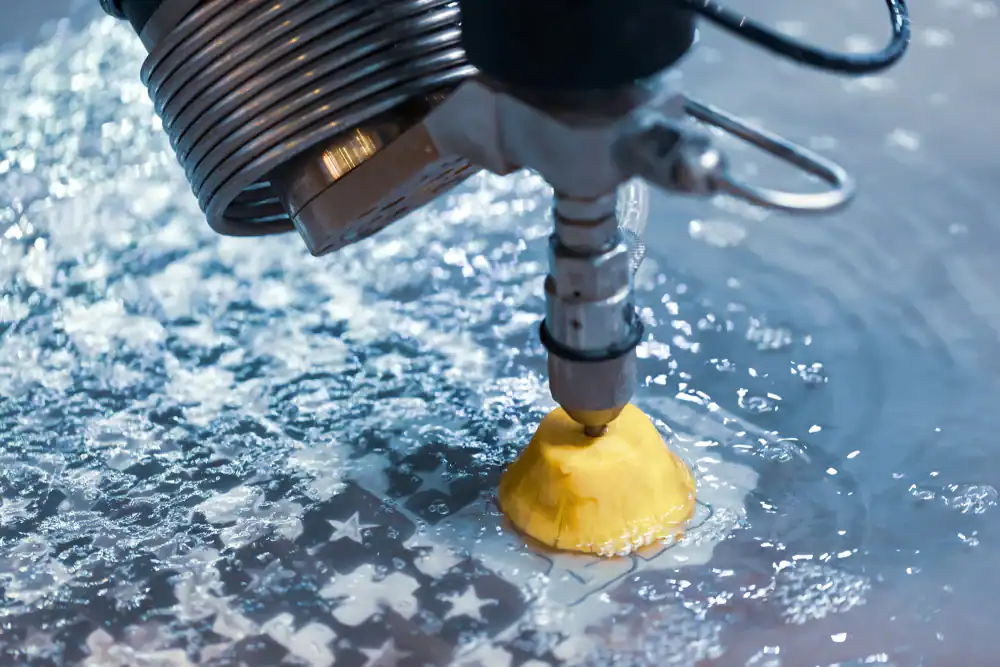
Next, we program the CNC waterjet system with your exact specifications. The machine positions your glass material, and the cutting head follows the programmed path with pinpoint accuracy. High-pressure water mixed with garnet abrasive cuts through the glass in a cold process—no heat, no burning, no melting.
The omnidirectional cutting stream handles curves, angles, and intricate interior cutouts without repositioning the material. Complex shapes that would require multiple setups with traditional methods get completed in a single run.
After cutting, we inspect dimensions and edge quality against your specifications. Most projects are ready to ship at this point since waterjet cutting produces clean edges right off the machine. If your application requires it, we can coordinate additional finishing services, but the majority of architectural glass waterjet cutting projects in Saint James, NY don’t need extra edge work.
Ready to get started?
The process handles glass from 0.01mm up to 9 inches thick. You’re not limited by material type either—float glass, tempered glass, laminated glass, optical glass, quartz, borosilicate, and specialty glass materials all cut cleanly.
Design complexity doesn’t add cost or difficulty. Interior cutouts, radius corners, intricate patterns, and asymmetric shapes all process the same way. You get the same precision on cut number one as you do on cut number 10,000.
Long Island, NY’s architectural market has been growing, particularly in commercial and high-end residential projects around Saint James and neighboring communities. That growth means more demand for custom glass elements—storefronts with unique shapes, residential installations with curved glass features, and commercial buildings incorporating complex facade designs. Our industrial glass waterjet cutting in Saint James, NY supports these projects with the precision and turnaround times contractors actually need.
Material waste stays minimal since the cutting stream is narrow and the process doesn’t require large clamp areas or safety margins for heat expansion. You pay for the glass you use, not the glass that gets scrapped due to process limitations.
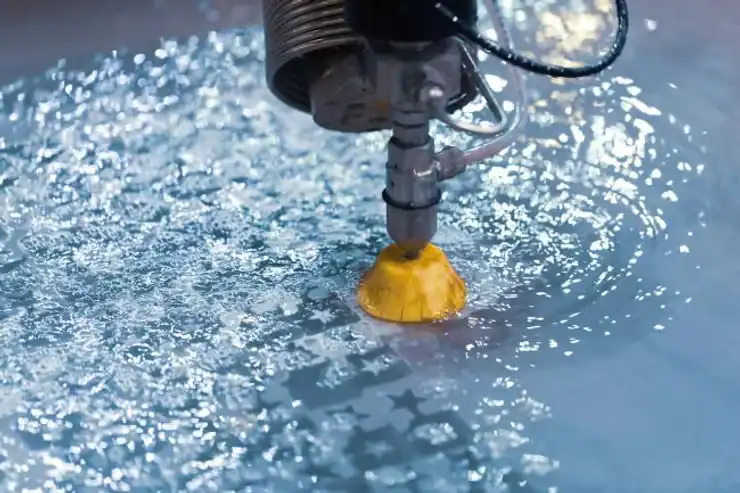
Waterjet systems cut virtually every glass type used in commercial and industrial applications. Standard float glass, tempered glass, and laminated safety glass all process without issues. Specialty materials like optical glass, quartz, borosilicate, and fused silica cut just as cleanly.
The key advantage is that the cold cutting process works regardless of the glass’s thermal properties. Materials that would crack or shatter under laser cutting or traditional scoring methods stay intact throughout the waterjet process. Thickness ranges from ultra-thin 0.01mm glass used in electronics up to 9-inch thick architectural or industrial glass.
If you’re working with coated glass, mirrored glass, or glass with embedded materials, waterjet cutting handles those too. The process doesn’t generate heat that could damage coatings or cause delamination in composite materials.
Our CNC glass waterjet cutting in Saint James, NY maintains accuracy within 0.1mm across the entire cut path. Traditional scoring and breaking methods can’t match that precision, especially on complex curves or intricate interior cutouts.
The difference becomes obvious when you’re working with parts that need to fit together or interface with other components. A 0.1mm tolerance means your glass panels align correctly, your mounting holes line up with hardware, and your curved sections match the intended radius exactly.
Repeatability matters just as much as initial accuracy. When you’re producing multiple identical pieces, waterjet cutting delivers consistent dimensions from the first part to the last. The CNC programming eliminates human variation, and the cutting process itself doesn’t wear down tools or drift over time like mechanical cutting methods do.
Most custom glass waterjet cutting projects come off the machine with edges smooth enough to use immediately. The cutting process produces a clean edge that’s far superior to scored and broken glass or saw-cut edges.
Whether you need additional finishing depends on your specific application. Architectural installations where edges will be visible might benefit from light polishing, but structural applications, embedded panels, and most industrial uses work fine with the as-cut edge quality. Medical and optical applications sometimes require polished edges for light transmission or safety reasons.
The edge quality also stays consistent across the entire cut length. You don’t get rough spots at corners or along curves where traditional methods struggle. Interior cutouts and complex shapes maintain the same smooth edge as straight cuts, which eliminates a major finishing headache on intricate designs.
Cutting speed depends on glass thickness and design complexity, but waterjet processing is significantly faster than traditional methods for anything beyond simple straight cuts. A complex architectural panel that might take hours to cut, smooth, and finish using conventional techniques often processes in a fraction of that time on our waterjet system.
Simple cuts in thinner glass happen quickly—often just minutes per piece. Thicker materials or highly intricate designs take longer, but you’re still looking at efficient processing times compared to alternative methods. The bigger time savings often come from eliminating secondary operations. When you don’t need extensive edge finishing or multiple setups for complex shapes, your total project timeline shrinks considerably.
For production runs, the speed advantage compounds. The CNC system runs continuously once programmed, and setup time between identical pieces is essentially zero. Whether you need five pieces or five hundred, the per-unit time stays consistent.
Waterjet cutting works on tempered glass, but there’s an important sequence issue to understand. Glass needs to be cut before tempering, not after. The tempering process puts glass under internal stress that makes it stronger but also means any cutting or drilling after tempering will cause the entire piece to shatter.
The correct workflow is to waterjet cut the glass to final dimensions and complete any hole drilling or edge work, then send the cut pieces for tempering if your application requires it. This approach gives you the design flexibility of waterjet cutting combined with the strength and safety properties of tempered glass.
If you’re working with laminated safety glass, waterjet cutting handles that material in its finished state without issues. The cutting stream goes through both glass layers and the laminate interlayer cleanly, maintaining the integrity of the laminated assembly.
Our industrial glass waterjet cutting equipment in Saint James, NY handles glass up to 9 inches thick. That covers the vast majority of architectural, industrial, and specialty glass applications you’ll encounter.
Thicker glass takes longer to cut since the waterjet stream needs to penetrate deeper, but the process remains effective and maintains accuracy throughout the material thickness. You don’t see the taper or accuracy loss that occurs with some other cutting methods on thick materials.
Most projects fall well below the 9-inch maximum. Standard architectural glass ranges from 1/4 inch to 1 inch thick. Industrial applications might use 2 to 4-inch thick glass for pressure vessels, viewing ports, or protective barriers. Specialty optical applications sometimes require thicker sections, and waterjet cutting handles those without the cracking risk that comes with mechanical cutting methods.
Useful Links
Other Services we provide in Saint James