Hear from Our Customers
You need glass cut right the first time. No chipping along the edges. No cracks from heat stress. No wasted material because the tolerances were off.
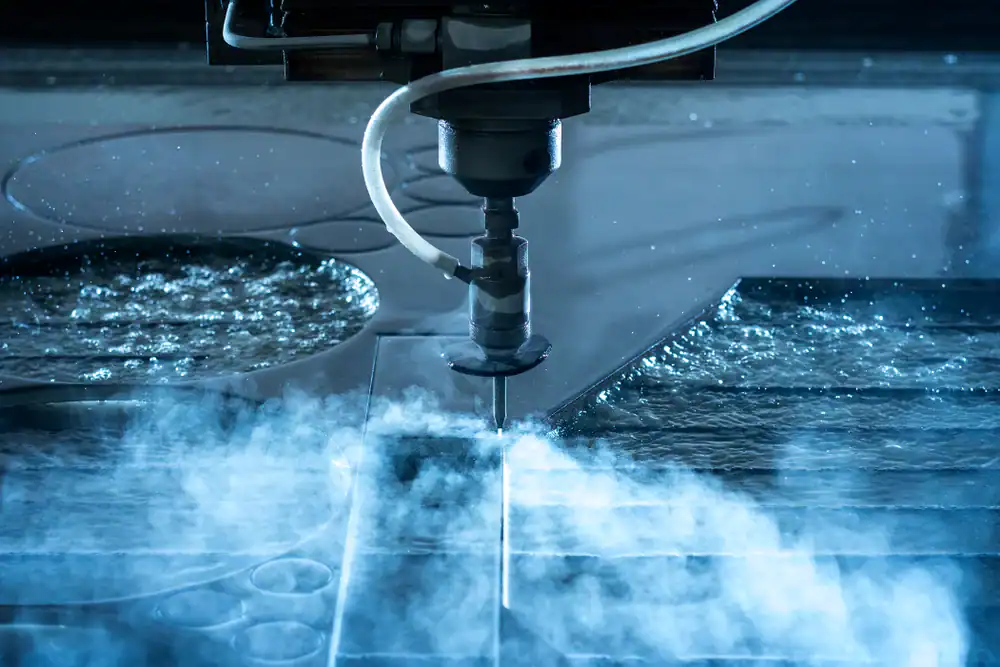
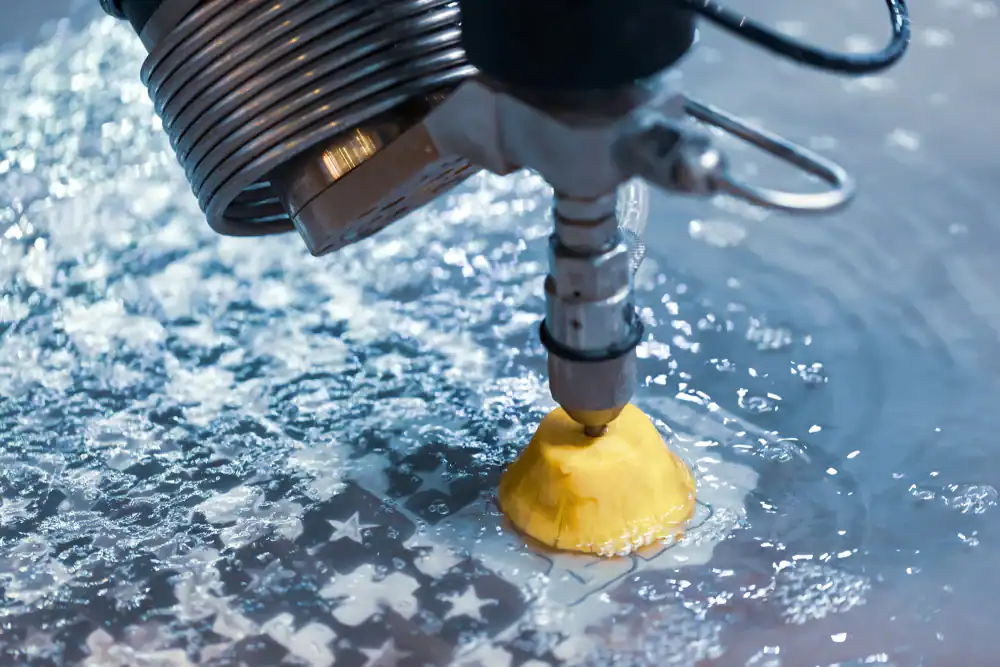
Waterjet cutting handles what traditional methods can’t. Intricate curves. Tight inside corners. Patterns that would shatter under a scoring wheel or crack under a laser’s heat. The process uses high-pressure water mixed with fine abrasive to cut through glass without ever touching it with a blade or generating thermal stress.
That means you get clean cuts on the first pass. Edge quality that needs minimal finishing. And the ability to work with glass thicknesses from delicate 3mm panels up to heavy 50mm architectural pieces. Whether you’re spec’ing custom glass for a commercial storefront, designing residential features, or fabricating industrial components, the cut quality stays consistent.
We serve architects, contractors, designers, and fabricators throughout Sayville and Long Island, NY with precision waterjet cutting and custom design consultation. We work with the marine industry, construction firms, manufacturing operations, and custom glass projects that require accuracy you can measure in fractions of a millimeter.
Sayville’s proximity to both commercial construction in the greater Long Island, NY area and the marine industry along the coast means projects here demand versatility. One day it’s architectural glass panels for a commercial renovation. The next it’s custom-cut marine glass or industrial components. Our CNC waterjet systems handle that range without compromising on precision or turnaround time.
You’re working with a team that understands the difference between a tolerance that works and one that causes problems during installation.
You start by sending us your design specs—CAD files, technical drawings, or even sketches if you’re still working through the concept. We review the design for feasibility, flag any potential issues with the geometry or material choice, and provide input on how to optimize the cuts for your specific glass type and thickness.
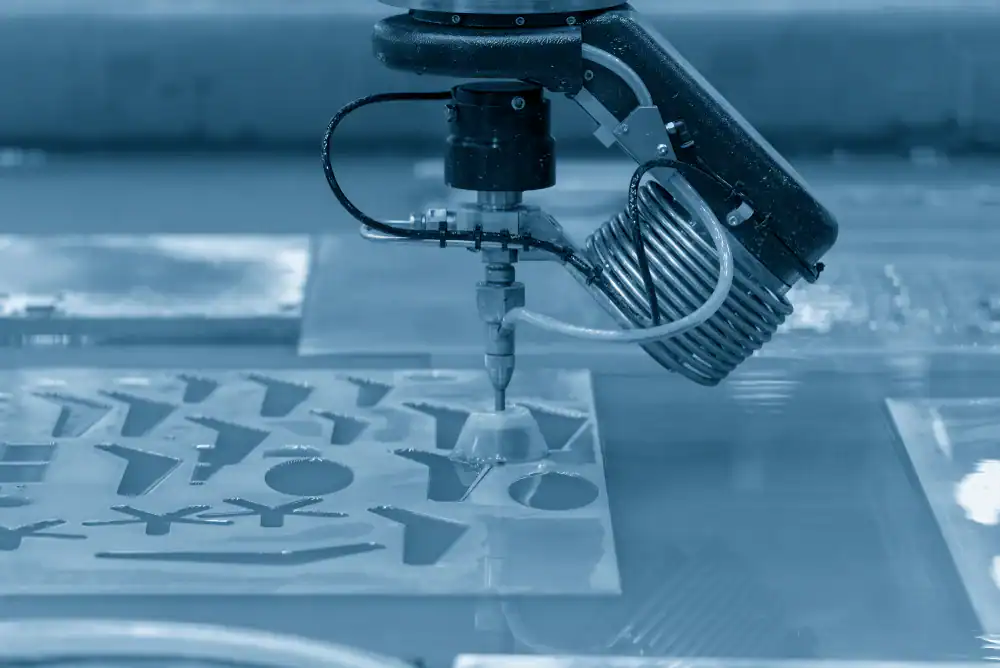
Once the design is locked in, we program the CNC waterjet system with your exact specifications. The machine uses a high-pressure stream of water mixed with garnet abrasive to cut through the glass with precision down to ±0.1mm. No heat. No mechanical stress. Just controlled erosion that follows your design path exactly.
During the cut, the waterjet moves along the programmed route while the glass stays secured to the cutting bed. The process is fast compared to traditional methods, but we’re not rushing—it’s about maintaining that edge quality and dimensional accuracy throughout the entire cut. After cutting, we inspect each piece to confirm it matches your specs, then prepare it for delivery or pickup.
Ready to get started?
You get cuts that handle complexity traditional methods can’t touch. Sharp internal corners. Intricate patterns. Curves that flow without faceting. All without the risk of thermal fracturing that comes with laser cutting or the chipping you’d see from mechanical scoring and breaking.
The process works across different glass types—tempered, laminated, annealed, low-iron, textured. Thickness range covers everything from thin decorative panels to heavy structural glass. And because there’s no heat-affected zone, the material properties of your glass stay intact right up to the cut edge.
For projects in Sayville and throughout Long Island, NY, that versatility matters. Residential work might need custom shower enclosures, decorative glass partitions, or unique window shapes for historic renovations. Commercial and architectural projects often require storefront glass with specific cutouts, decorative panels with intricate designs, or structural glass components with tight tolerances. Industrial applications need precision parts for equipment, machinery guards, or specialized manufacturing components.
Material waste stays minimal because the waterjet cutting path is narrow—typically under 1mm. You’re not losing inches of expensive glass to wide saw kerfs or breaking out large sections to rough-cut a shape.
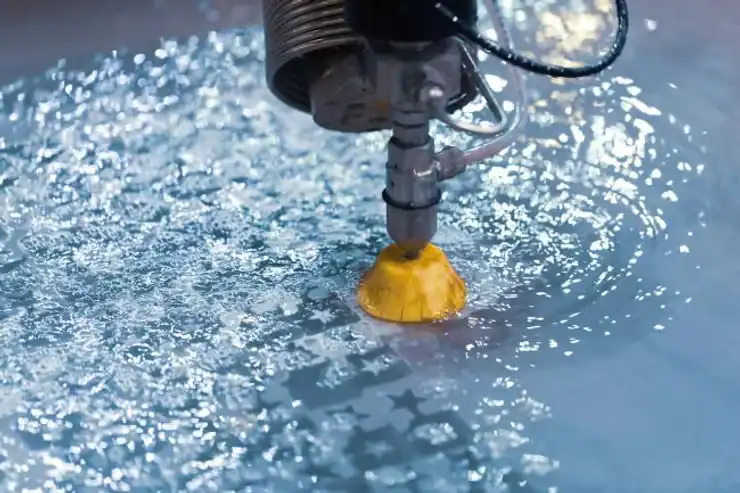
Waterjet cutting works with virtually every glass type you’d specify for a project. Annealed glass cuts cleanly across any thickness. Tempered glass can be cut, but only before the tempering process—once it’s been heat-treated, cutting it will cause it to shatter, so you need to waterjet cut first, then send it for tempering.
Laminated glass cuts well because there’s no heat to affect the interlayer. Low-iron glass, which is popular for high-end architectural and display applications, cuts just as precisely as standard glass. Textured or patterned glass handles the process without issue. Even specialty glass like borosilicate or quartz can be waterjet cut when your project calls for it.
The key limitation isn’t the glass type—it’s the thickness and the complexity of the cut. Most commercial waterjet systems handle glass from 3mm up to 50mm comfortably. Thicker pieces are possible but may require adjusted cutting parameters. If you’re not sure whether your specific glass will work, send us the specs and we’ll tell you exactly what’s feasible.
Laser cutting generates heat. That’s the fundamental difference, and it creates real problems when you’re working with glass. The thermal stress from a laser can cause micro-fractures along the cut edge, and in some cases, it leads to immediate cracking or shattering—especially with thicker glass or complex cut patterns.
Waterjet cutting is a cold process. No heat means no thermal stress, no risk of heat-induced cracking, and no change to the material properties of the glass near the cut edge. You get a clean edge that’s smooth and requires minimal finishing. The risk of breakage during cutting drops significantly.
Laser cutting can be faster on thin materials with simple geometry, but once you’re dealing with intricate shapes, tight inside corners, or thicker glass, waterjet becomes the more reliable option. It also handles a wider range of glass thicknesses without needing to change equipment or processes. For architectural and industrial applications where precision and material integrity matter, waterjet cutting is the safer choice.
Turnaround depends on the complexity of your design, the thickness of the glass, and how many pieces you need cut. Simple shapes in standard thicknesses can often be completed within a few days. More intricate designs with tight tolerances or thicker glass may take longer because the cutting speed slows down to maintain precision.
Production runs with multiple identical pieces are generally faster per piece than one-off custom cuts because the setup and programming time gets distributed across the entire run. If you’re working on a project with a hard deadline, let us know upfront—we can often adjust the schedule to accommodate time-sensitive work.
The other factor is material availability. If you’re supplying the glass, turnaround starts once we receive it and verify it matches the specs. If we’re sourcing the material, add time for procurement. Either way, we’ll give you a realistic timeline before we start so you can plan your project schedule accordingly.
Yes. That’s one of the main reasons architects and designers choose waterjet cutting for custom glass work. The CNC system follows your design path with precision down to ±0.1mm, which is tight enough for most architectural applications. Sharp internal corners, intricate curves, complex patterns—waterjet handles them without the geometric limitations you’d hit with traditional cutting methods.
If your design includes features like narrow slots, small radius curves, or detailed decorative patterns, waterjet cutting maintains consistency across the entire piece. There’s no need to simplify the design to accommodate the cutting process. You can spec what the project actually needs, not what’s easiest to fabricate.
For architectural projects in Sayville and across Long Island, NY, that capability matters when you’re working with custom storefronts, decorative partitions, or unique design elements that define a space. The cuts stay accurate whether you’re doing a single prototype or a full production run. And because the process is CNC-controlled, repeatability is built in—piece ten looks identical to piece one.
The edge quality from waterjet cutting is significantly better than what you’d get from mechanical cutting methods. Most cuts come off the machine with a smooth edge that needs little to no additional finishing, depending on your application and aesthetic requirements.
For industrial components or parts that won’t be visible, the as-cut edge is often acceptable without any further work. For architectural glass or applications where the edge will be seen or touched, light polishing or seaming may be specified—but you’re starting from a much better baseline than you would with a scored and broken edge.
The smoothness of the edge depends partly on cutting speed. Slower cuts generally produce smoother edges because the abrasive has more time to erode the material evenly. We adjust the parameters based on your edge quality requirements and the glass thickness. If your project has specific finish standards, let us know during the quoting process so we can account for any additional edge work in the timeline and cost.
Waterjet cutting typically costs more per linear foot than simple straight cuts done with a scoring wheel. But that’s not the whole picture. Traditional methods can’t handle complex shapes, tight tolerances, or intricate designs without significantly increasing labor time, material waste, and breakage risk.
When you factor in the reduced waste, fewer broken pieces, and the ability to cut complex geometry in a single pass, waterjet often ends up being more cost-effective for anything beyond basic rectangular cuts. You’re also eliminating secondary operations—no need for additional grinding, smoothing, or reworking edges that chipped during cutting.
For custom architectural glass, industrial components, or any project where precision matters, the cost difference becomes an investment in quality and reliability. You get the design you actually want, cut accurately the first time, with minimal risk of material loss. The price reflects the technology, the precision, and the expertise required to execute complex cuts without damaging expensive glass materials.
Useful Links
Other Services we provide in Sayville