Hear from Our Customers
You’re not looking for close enough. You need glass cut to exact dimensions with clean edges that don’t require hours of finishing work. That’s what waterjet cutting delivers.
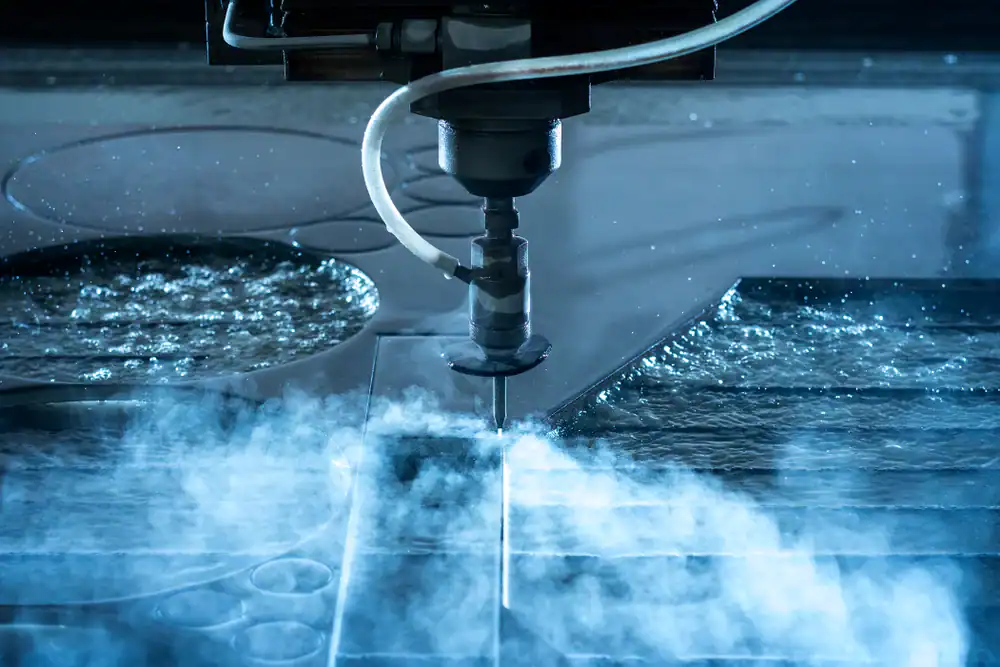
Traditional glass cutting methods generate heat. Heat creates stress. Stress leads to cracks, chips, and wasted material. Waterjet cutting uses high-pressure water and abrasive to slice through glass without ever raising the temperature. No thermal stress means no micro-fractures waiting to become bigger problems down the line.
Whether you’re an architect specifying custom panels for a renovation project, a contractor working on a tight timeline, or a homeowner with a specific vision, you get shapes that fit the first time. Curves, angles, intricate patterns—the CNC system handles complexity that would be nearly impossible to achieve by hand. And because the process is digitally controlled, every piece matches perfectly when you need multiples.
We operate out of West Islip, positioned to serve Stony Brook and the surrounding Suffolk County area with precision waterjet cutting services. We’re not a national chain sending your project to a facility three states away. Your glass gets cut locally by people who understand Long Island, NY’s architectural landscape and construction timelines.
Stony Brook’s mix of historic homes and modern development creates unique demands. Renovation projects in older properties often require custom glass pieces to match original specifications. New construction and commercial spaces need architectural glass that meets contemporary design standards. We handle both, along with industrial applications that require tight tolerances and consistent repeatability.
You work directly with our team from consultation through completion. We discuss your project requirements, review material options, and provide realistic timelines based on actual capacity—not optimistic guesses designed to win the bid.
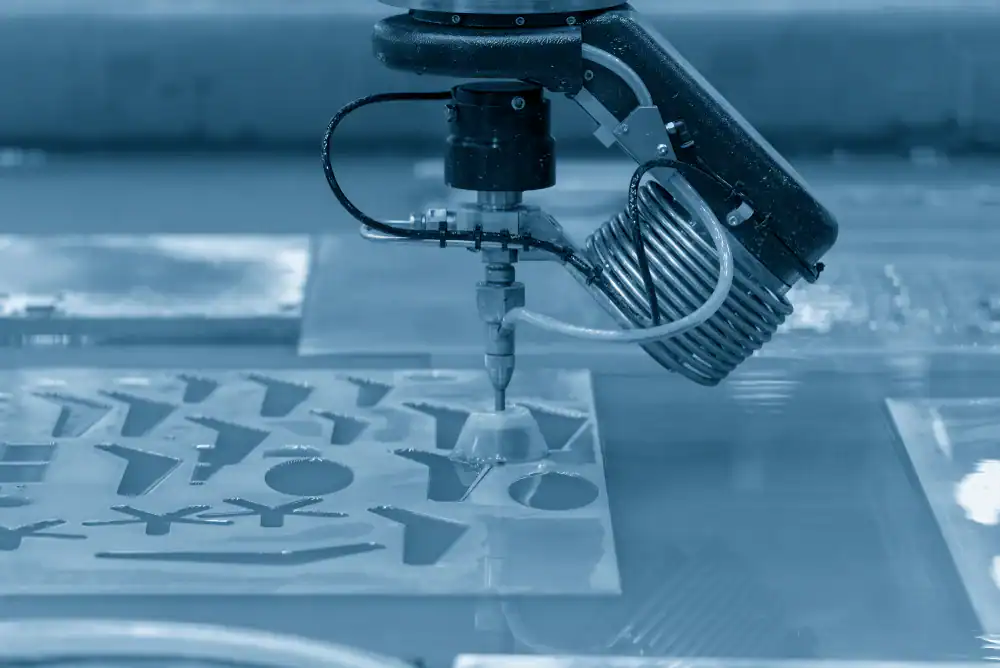
The process starts with your design. If you have CAD files, we use those directly. If you’re working from sketches or measurements, we’ll help translate that into the digital format our CNC system requires. This step matters because precision starts before the cutting begins.
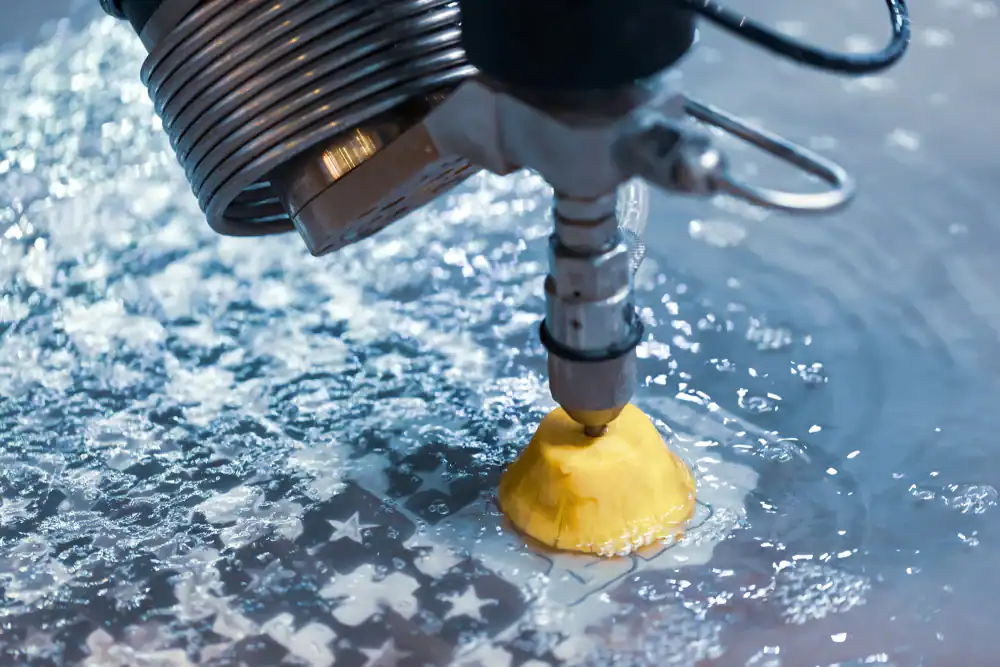
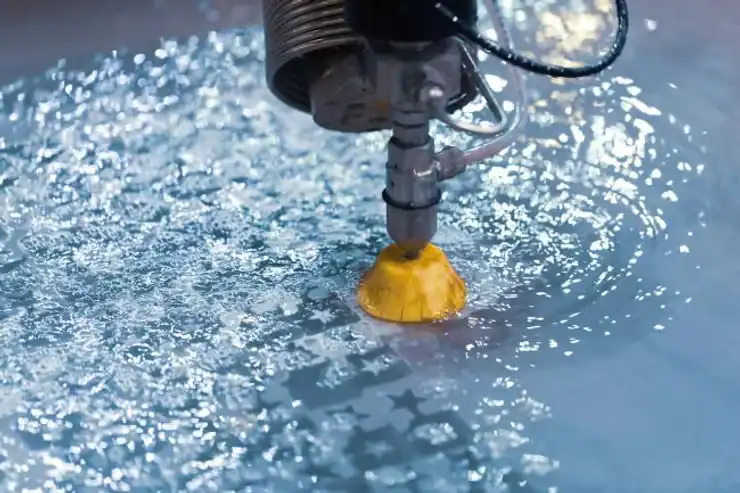
Once the design is programmed, your glass goes onto the cutting bed. The waterjet head moves along the programmed path, using a focused stream of water mixed with fine abrasive particles. The stream cuts through the glass at speeds that would seem impossible if you watched traditional scoring and breaking methods. But there’s no vibration, no heat buildup, and no operator fatigue affecting accuracy on the tenth piece versus the first.
After cutting, edges come off the machine smooth and clean. Depending on your application, you might need additional finishing, but the waterjet process minimizes that work significantly compared to other methods. You’re not spending extra time and money grinding down rough edges or polishing out imperfections. For most projects, what comes off the machine is ready to install.
Ready to get started?
Material consultation comes first. Not all glass performs the same under waterjet cutting, and your application determines which type makes sense. We’ll discuss thickness requirements, edge finish expectations, and whether you need tempered, laminated, or standard annealed glass. This conversation happens before you commit to material purchases.
The cutting itself handles complexity that stops other methods cold. Interior design elements with organic curves, architectural panels with precise mounting holes, custom shower enclosures with notches for fixtures—these aren’t special requests that require extra setup time. The CNC system processes complex geometry as easily as straight cuts.
Stony Brook’s construction and renovation market runs on deadlines. University projects, hospital facility updates, and residential work all operate on schedules that don’t accommodate delays. Our waterjet equipment runs production pieces quickly once programming is complete. You get consistent results whether you need one prototype piece or fifty identical panels. And because we’re local to Long Island, NY, logistics stay simple. No cross-country shipping windows or coordination with distant facilities.
For industrial applications, repeatability matters as much as initial accuracy. The digital files that guide our CNC equipment don’t drift or fatigue. Part fifty matches part one with the same micron-level precision, which matters when you’re manufacturing components that need to fit together or meet specific tolerances for equipment integration.
Waterjet cutting handles virtually every glass type you’ll encounter in architectural, residential, or industrial applications. Annealed glass, tempered glass, laminated glass, low-iron glass, and specialty materials all cut cleanly with the waterjet process.
Tempered glass requires special consideration because it can’t be cut after the tempering process. You’ll need to provide final dimensions before tempering, and we cut the glass in its annealed state. Then it goes to tempering with all holes, notches, and edge details already in place. This sequencing matters for projects like shower enclosures or glass railings where tempered glass is required by code.
Laminated glass, which sandwiches a plastic interlayer between two glass sheets, cuts without delaminating. The waterjet stream slices through all layers simultaneously, maintaining the bond integrity. This makes it viable for security applications or areas where you need both impact resistance and custom shapes.
Thickness ranges from thin 3mm panels up to thick architectural glass exceeding an inch. The waterjet pressure adjusts based on material thickness, maintaining cut quality across the range. Thicker glass takes longer to cut, but the edge quality remains consistent.
Traditional glass cutting uses a scoring tool to create a controlled fracture line, then breaks the glass along that score. It works fine for straight cuts and simple shapes, but complexity introduces problems. Tight curves, sharp internal angles, and intricate patterns either become impossible or require extensive hand-finishing that drives up labor costs and introduces inconsistency.
Waterjet cutting doesn’t rely on fracture mechanics. The abrasive stream removes material directly, which means geometry doesn’t limit what’s possible. You can cut radiuses that would shatter under traditional scoring methods. Internal cutouts, like holes for hardware or fixtures, happen in the same setup as the perimeter cut without repositioning the glass or switching tools.
Edge quality differs significantly. Scored and broken glass produces edges that need grinding and polishing to achieve a finished appearance. Waterjet edges come off smooth enough for many applications without additional treatment. When you do need polished edges for aesthetic reasons, you’re starting from a much better baseline, which reduces finishing time.
The other major difference shows up in material waste. Traditional cutting requires approach room and often leaves unusable remnants because of how the fracture propagates. Waterjet cutting follows the programmed path precisely, maximizing usable material from each sheet. For expensive specialty glass, that waste reduction adds up quickly.
Architectural glass waterjet cutting in Stony Brook, NY handles detail work that would be impractical or impossible with conventional methods. The CNC-controlled cutting head moves along programmed paths with micron-level accuracy, which means your CAD design translates directly to the finished piece without interpretation or approximation.
Organic curves, geometric patterns, company logos, decorative elements—the waterjet system processes these as data points, not as challenges requiring specialized tooling or manual skill. If you can draw it in a design program, we can cut it. This opens up options for custom architectural features that differentiate your project without requiring custom tooling or extended lead times.
Interior designers working on Stony Brook projects often specify glass elements that serve as focal points—reception desk panels, partition walls, decorative screens. These pieces need to match renderings exactly because they’re visible design elements, not hidden structural components. The digital precision of waterjet cutting delivers that consistency.
The process also handles mixed operations in a single setup. A decorative panel might need a complex perimeter cut, several mounting holes, and internal cutouts for lighting or other features. All of that happens in one programming sequence without moving the glass between different machines or processes. Fewer handoffs mean fewer opportunities for dimensional drift or damage.
Turnaround depends on project complexity, current production schedule, and material availability. Simple cuts from stock glass materials often complete within a few days. Complex architectural pieces or projects requiring specialty glass take longer, typically one to two weeks from approved design to finished parts.
The programming phase moves quickly once we have final CAD files or approved drawings. Our CNC system imports standard file formats directly, and simple geometry requires minimal setup time. Complex designs with intricate details need more careful programming to optimize cut paths and ensure quality, but we’re talking hours, not days.
Actual cutting time varies with material thickness and design complexity. Thicker glass requires slower cutting speeds to maintain edge quality. Intricate patterns with lots of direction changes take longer than simple perimeter cuts. But waterjet cutting is still faster than traditional methods for anything beyond basic shapes, and the speed stays consistent across production runs.
Material sourcing can be the longest variable in the timeline. Common glass types and thicknesses are readily available through our suppliers. Specialty materials, custom tints, or unusual thicknesses might require ordering, which adds lead time. We’ll tell you upfront if material availability will impact your schedule so you can plan accordingly. For Stony Brook projects with firm deadlines, early communication about material needs keeps everything on track.
Residential glass cutting services in Stony Brook, NY and industrial applications both benefit from waterjet precision, though the requirements differ. Residential projects typically prioritize aesthetics and fit—custom shower enclosures, tabletops, shelving, decorative elements. Industrial work focuses on dimensional accuracy, repeatability, and material properties for functional applications.
For residential work, you’re often dealing with one-off custom pieces that need to fit specific spaces in existing homes. Measurements matter because there’s no adjusting the opening if the glass doesn’t fit. Waterjet cutting delivers the accuracy needed to get it right the first time, which saves you from reordering and delays. The clean edges also reduce finishing work, which matters when you’re trying to keep project costs reasonable.
Industrial applications might involve glass components for equipment, protective shields, viewing windows, or technical assemblies. These pieces often need to meet specific tolerances and perform consistently across production runs. The CNC control provides that repeatability—part one hundred matches part one with the same precision. Digital files also make reordering straightforward since the exact specifications are saved and ready to run again.
Both markets benefit from the material flexibility waterjet cutting offers. Residential projects might use decorative glass with specific aesthetic properties. Industrial applications might require technical glass with particular optical, thermal, or chemical resistance characteristics. The waterjet process handles this range without requiring different equipment or specialized tooling for each material type.
Waterjet cutting eliminates the main failure points of other glass fabrication methods. No heat means no thermal stress or micro-fractures. No mechanical force means no vibration-induced damage. No tooling contact means no surface scratching or contamination. You get clean cuts through the entire thickness of the material with edges that are ready to use.
The flexibility matters when you’re working on projects where design changes happen. Traditional cutting methods might require new tooling or setup for design revisions. With waterjet cutting, changes happen in the digital file, and the machine executes the new design without physical modifications to equipment. This keeps revision costs reasonable and timelines manageable when architects or designers refine specifications during the project.
For Stony Brook’s mix of renovation and new construction work, the ability to handle both standard and custom requirements from the same equipment streamlines the process. You’re not coordinating between multiple fabricators with different capabilities. One conversation, one timeline, one quality standard across your glass cutting needs.
The local aspect also matters more than it might seem. Glass is fragile and shipping introduces risk. Working with a Long Island, NY-based waterjet cutting service means shorter transport distances, simpler logistics, and easier coordination if you need to inspect pieces before installation. When problems do come up—and they do on every construction project—having your fabricator a reasonable drive away instead of across the country makes resolution faster and less complicated.
Useful Links
Other Services we provide in Stony Brook