Hear from Our Customers
You’re not looking for another vendor who “does glass.” You need someone who can cut intricate shapes to exact tolerances without cracking the material or burning through your timeline.
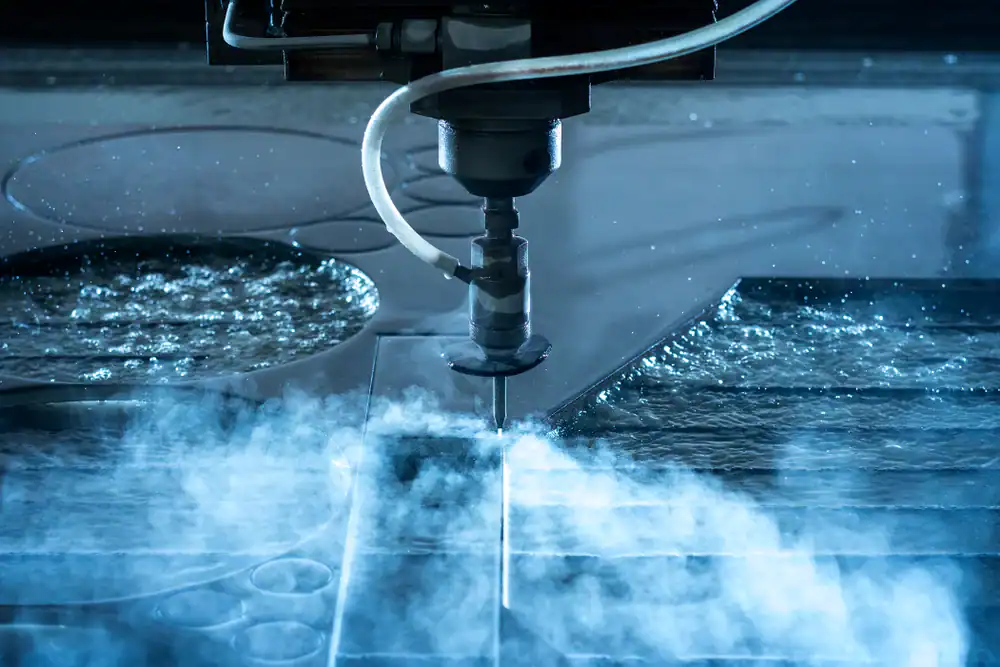
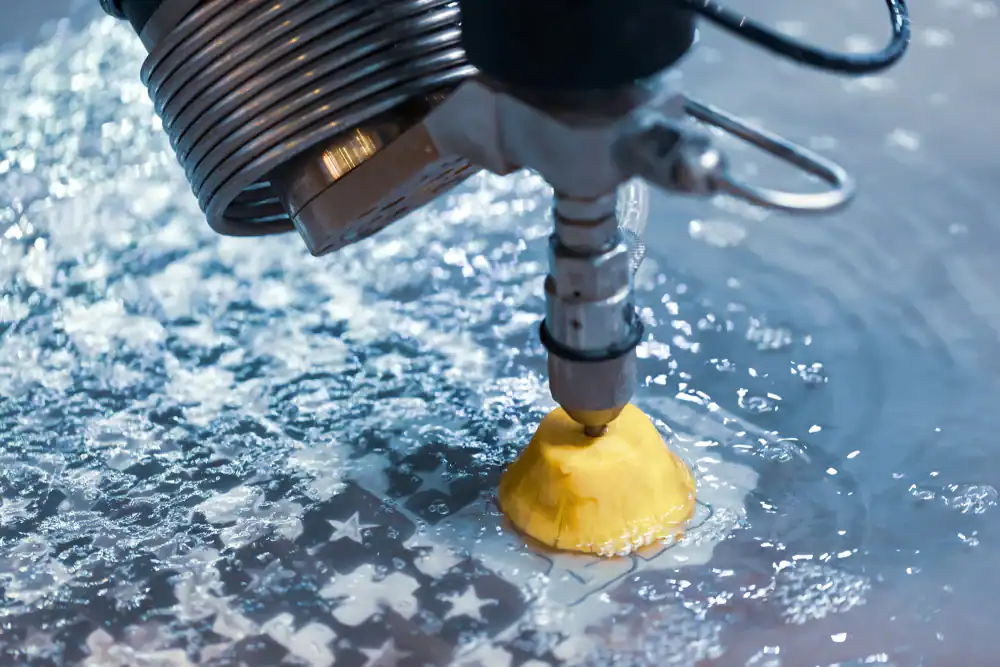
Waterjet cutting handles that. The process uses high-pressure water mixed with fine abrasive to slice through glass of any thickness—no heat, no distortion, no secondary finishing in most cases. What you get is a smooth, satin edge that’s ready for installation the moment it arrives.
That means fewer delays on your end. No waiting for additional polishing or edge work. No surprises when the pieces don’t fit because the cuts weren’t precise enough. Whether you’re an architect specifying custom glass waterjet cutting in Syosset, NY for a facade project or a contractor managing a tight construction schedule, the outcome is the same: parts that fit right the first time.
We’ve been serving architects, designers, contractors, and manufacturers in Syosset, NY with precision waterjet cutting, custom design services, and material consultation. We’re not new to this, and we’re not figuring it out as we go.
Our CNC waterjet equipment handles everything from thin decorative glass to thick structural panels. We work with float glass, acrylic, laminated glass, and specialty materials that other shops turn away. If you’re working on a residential glass cutting project in Syosset, NY or managing a large-scale commercial installation, you’re dealing with the same challenge: finding someone who understands the material and delivers what they promise.
We bring your concepts to completion with accuracy and consistency. That’s what keeps architects coming back when they need architectural glass waterjet cutting in Syosset, NY—and what contractors rely on when deadlines aren’t negotiable.
You send us your design file—CAD, DXF, or even a detailed sketch if that’s what you’re working from. We review it, confirm dimensions and tolerances, and flag anything that might cause issues down the line. That conversation happens before we cut, not after.
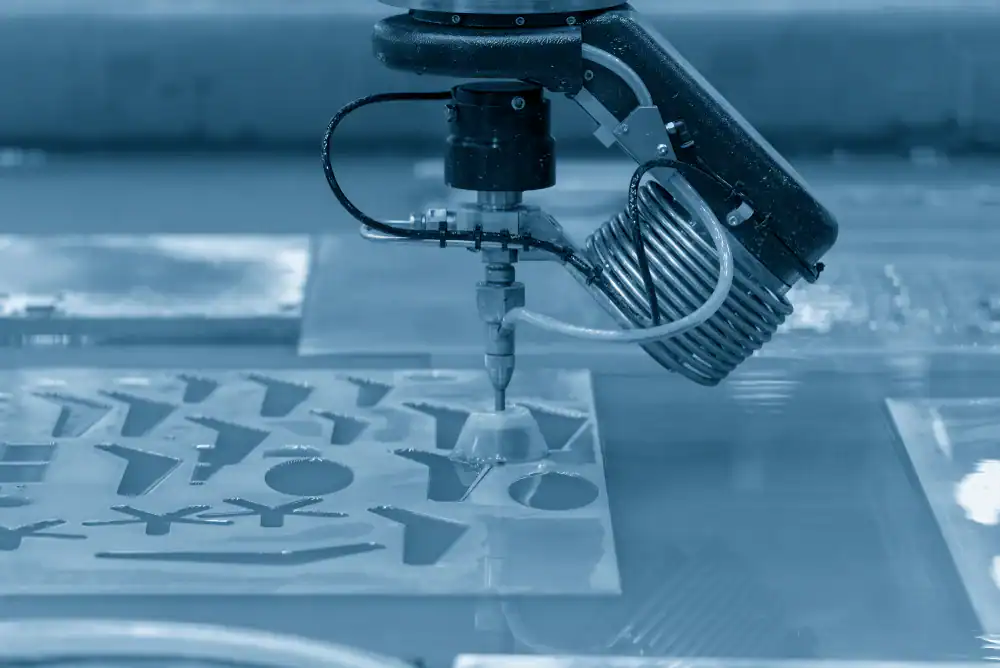
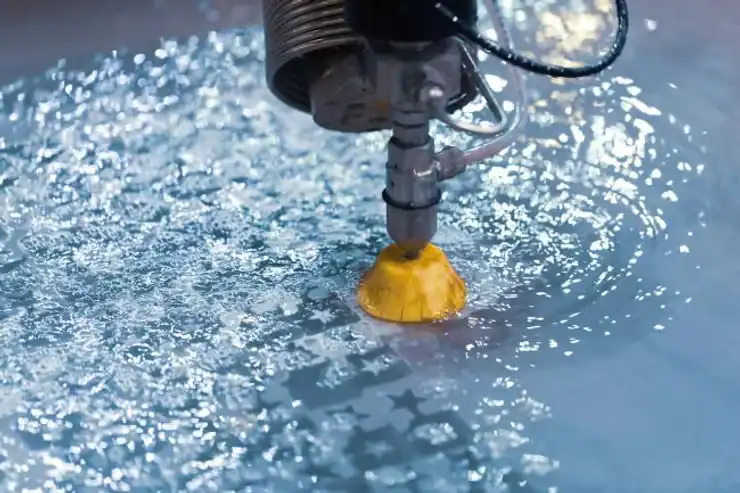
Once the file is dialed in, we load your glass onto our CNC waterjet system. The machine follows your design with a cutting stream that’s less than a tenth of an inch wide, which means minimal material waste and maximum precision. There’s no heat involved, so there’s no risk of thermal cracks or warping—even on complex curves or tight inside corners.
After cutting, we inspect every piece to make sure it matches your specs. In most cases, the edges come off the machine ready to use. If your project requires additional finishing or fabrication, we handle that too. Then your glass ships out, packaged to protect it in transit, and arrives ready for installation.
Ready to get started?
When you work with us for glass waterjet cutting in Syosset, NY, you’re getting more than just a cut. You’re getting a process built around precision, material knowledge, and realistic timelines.
We cut glass up to 12 inches thick using high-pressure waterjet technology powered between 60,000 and 90,000 PSI. That includes standard float glass, tempered glass, laminated glass, acrylic, and specialty architectural glass. Our multi-axis CNC systems handle 2D cuts, 3D shaping, and surface etching without cutting all the way through—useful for decorative panels, signage, and custom interior elements.
Syosset’s design and construction community increasingly demands sustainable practices, and waterjet cutting aligns with that. The process produces no toxic emissions, no hazardous waste, and uses no chemical coolants. Material waste is minimal thanks to the narrow cutting stream, and because most cuts don’t require secondary finishing, you’re saving time and resources on both ends.
Whether you’re outfitting a commercial building with custom glass panels, fabricating components for an industrial application, or creating one-off residential pieces, the technology adapts. You get the shapes you need, cut to the tolerances you specify, without the limitations that come with traditional scoring and breaking methods.
Yes. That’s one of the main reasons to use waterjet over traditional methods.
Our CNC waterjet systems are built to follow intricate design paths—tight curves, sharp angles, interior cutouts, whatever your design calls for. The cutting stream is extremely narrow, which gives us the control needed to execute complex geometries without cracking or chipping the material. Traditional glass cutting methods rely on scoring and breaking, which limits you to straight lines and gentle curves. Waterjet doesn’t have that limitation.
If you’re designing custom architectural features, decorative installations, or precision components for industrial use, you need a process that can keep up with your design intent. Waterjet does that. We’ve cut everything from ornate interior partitions to geometric facade panels, and the process handles it all without compromising edge quality or dimensional accuracy.
In most cases, no. The edges come off the machine with a smooth, satin finish that’s ready to use.
Waterjet cutting produces a clean edge because the abrasive stream does the work gradually and precisely. You’re not dealing with the micro-fractures or chipping that come from mechanical cutting methods. The result is an edge that’s smooth to the touch and visually clean—no sharp points, no jagged sections.
There are situations where additional finishing makes sense. If you need a polished, crystal-clear edge for a high-end decorative piece, we can handle that. But for the majority of architectural and industrial applications, the edge quality straight from the waterjet is more than sufficient. That saves you time and cost, because you’re not paying for secondary processes that don’t add functional value to your project.
We cut any type of glass you’re working with—float glass, acrylic, laminated, tempered, even ballistic glass.
The waterjet process doesn’t rely on heat, so it won’t cause thermal stress or alter the properties of specialty glass. That’s critical when you’re working with materials that are engineered for specific performance characteristics. Tempered glass, for example, can’t be cut after tempering with traditional methods—but waterjet handles it without issue when cut beforehand to your specs.
Thickness isn’t a limiting factor either. We’ve successfully cut glass up to 12 inches thick using high-pressure systems. Whether you’re specifying thin decorative panels for an interior project or thick structural glass for a building envelope, the process adapts. And because waterjet works on such a wide range of materials, you can use the same fabrication partner for glass, stone, metal, and composites if your project involves multiple materials.
Waterjet cutting delivers tolerances within a few tenths of a millimeter. That’s tighter than what you’ll get from traditional scoring and breaking, and it’s consistent across every piece.
Precision matters when you’re working on projects where fit and alignment are non-negotiable. Architectural installations, for example, don’t leave room for guesswork—panels need to fit exactly as designed, or you’re dealing with gaps, misalignment, and costly rework. CNC waterjet systems eliminate that risk because the machine follows your digital file with extreme accuracy.
The other advantage is repeatability. If you need 50 identical pieces, or 500, every cut matches the original specs. There’s no drift or variation from piece to piece, which is a common problem with manual cutting methods. That consistency is what makes waterjet the go-to choice for both custom one-offs and production runs where quality can’t vary.
No. Waterjet is a cold-cutting process, which means there’s no heat-affected zone and no thermal stress that could cause cracking.
Glass is brittle, and traditional cutting methods that generate heat or mechanical stress increase the risk of fractures. Waterjet avoids both. The high-pressure water and abrasive stream cuts through the material gradually, without shocking it or creating weak points. That’s why it works so well for intricate cuts and delicate materials that would crack under other methods.
The process also eliminates edge chipping, which is a common issue with saw cutting or mechanical scoring. You’re left with a clean cut and structurally sound edges, which is especially important for load-bearing applications or pieces that will be installed in high-visibility areas. If you’ve had problems with cracking or edge damage using other fabrication methods, waterjet solves that.
Turnaround depends on the complexity of your design, the type of glass, and the quantity you need—but we work with your timeline, not against it.
Simple cuts on standard glass can often be completed within a few days. More complex projects involving intricate shapes, thick materials, or large quantities take longer, but we give you a realistic timeline upfront so you can plan accordingly. Rush jobs are possible when the schedule demands it, and we’ll tell you honestly whether we can meet your deadline before you commit.
What slows most projects down isn’t the cutting—it’s the back-and-forth on design specs or waiting for material to arrive. That’s why we review your files early and confirm all the details before we start. If there’s an issue with your design or a tolerance that’s going to cause problems during installation, we catch it in the planning stage. That keeps your project moving and eliminates surprises that blow your schedule.
Useful Links
Other Services we provide in Syosset