Hear from Our Customers
You need glass cut right the first time. No chipping. No cracking. No heat damage that weakens the material or throws off your specs.
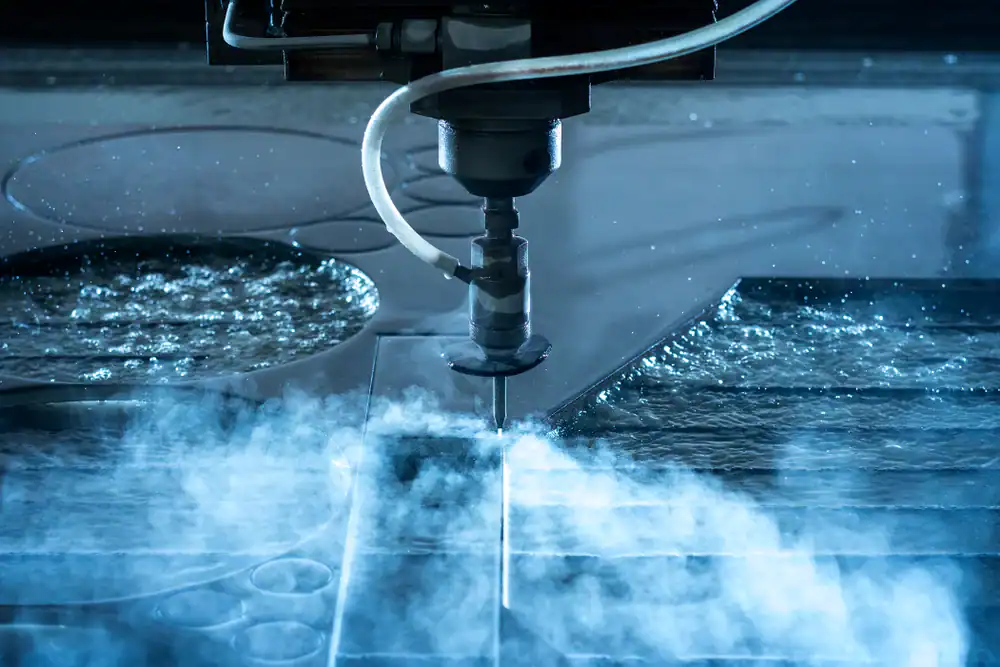
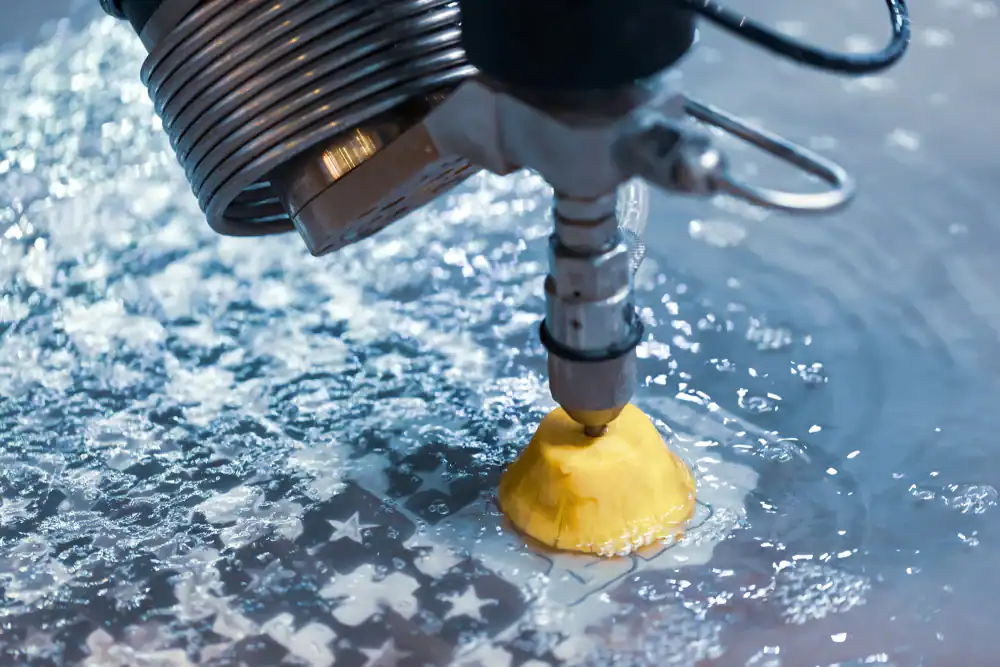
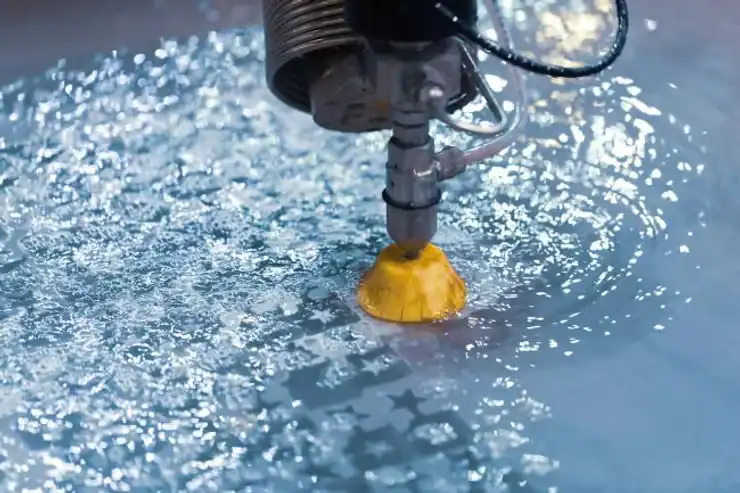
Waterjet cutting uses high-pressure water mixed with fine abrasive to slice through glass without generating heat. That means the structure stays intact, the edges come out smooth, and you’re not dealing with thermal stress fractures that show up later. For architectural glass waterjet cutting in Valley Stream, NY, that’s the difference between a clean install and a callback.
The process handles everything from standard window glass to laminated ballistic glass, up to 12 inches thick. Intricate curves, tight inside corners, custom shapes—it all gets cut with the same setup. You’re not switching tools or methods based on thickness or complexity. And because the kerf is so narrow, material waste drops significantly compared to traditional scoring and breaking methods.
We serve architects, designers, contractors, and fabricators across Valley Stream, NY and the broader Long Island, NY metro. We handle custom glass waterjet cutting in Valley Stream, NY from concept through completion—no handoffs, no confusion about who’s responsible.
Our facility in nearby West Islip runs multi-axis CNC waterjet systems capable of 3D cuts, surface etching, and full-thickness penetration. We work directly with your drawings or help develop them if you’re still in the design phase. You get material consultation, accurate lead times, and cuts that match your specifications.
Valley Stream’s mix of commercial build-outs, residential renovations, and industrial projects means tight schedules and high standards. We’ve built our process around that reality.
You send us your design file—DXF, DWG, or even a sketch if that’s where you’re starting. We review it for feasibility, flag any potential issues with tolerances or material choice, and confirm dimensions. If you’re working with laminated glass, tempered glass, or specialty substrates, we’ll talk through how the material behaves under the waterjet and adjust parameters accordingly.
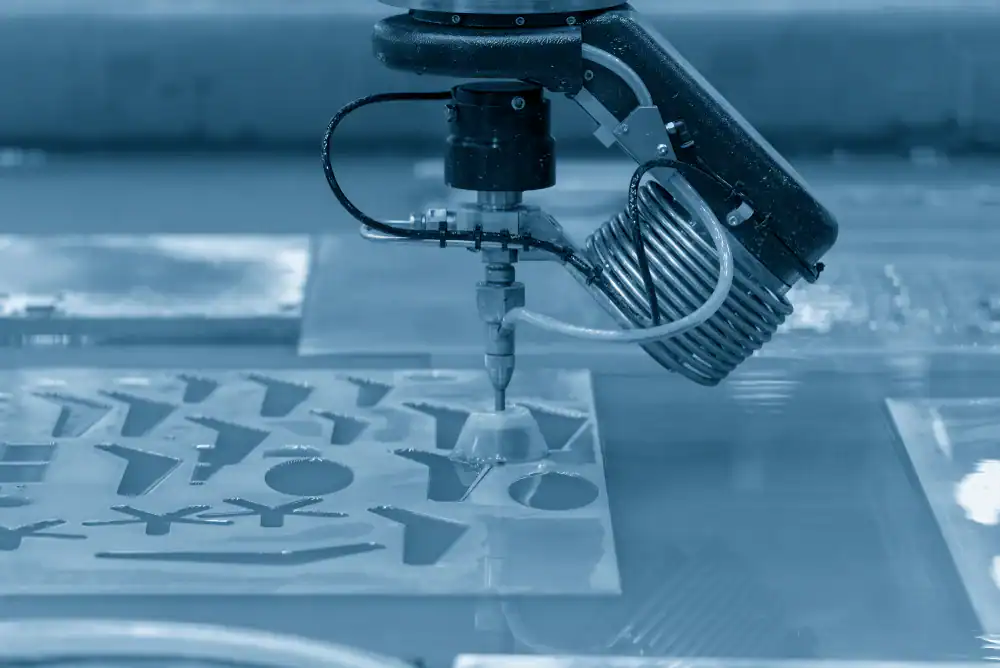
Once the file is dialed in, we load it into the CNC system and secure your glass on the cutting bed. The waterjet nozzle follows the programmed path with precision down to thousandths of an inch. Water pressure ranges from 60,000 to 90,000 PSI depending on thickness and material type. The abrasive stream cuts through without vibration, heat, or mechanical force that could cause micro-fractures.
After cutting, edges come off the table smooth and clean. There’s no need for grinding, polishing, or deburring in most applications. You get glass that’s ready to install or move into the next phase of fabrication. For residential glass cutting services in Valley Stream, NY or large-scale industrial runs, the process stays consistent.
Ready to get started?
Every project includes material consultation before we start. Glass behaves differently depending on composition, thickness, and tempering. We’ll tell you what works, what doesn’t, and why—so you’re not guessing or learning the hard way on your dime.
You also get design support if your file needs adjustments for manufacturability. Sharp internal corners, for example, aren’t possible with waterjet cutting—the stream has a radius. We’ll suggest alternatives that maintain your design intent without compromising the cut. For architectural glass waterjet cutting in Valley Stream, NY, that kind of upfront collaboration prevents expensive surprises.
Valley Stream sits in a high-density area where building codes are strict and project timelines are tight. We account for that. Lead times are quoted accurately based on current queue and material availability. Rush jobs get handled when possible, but we won’t promise what we can’t deliver. The goal is to get you precision-cut glass when you need it, not excuses about why it’s late.
Tempered glass can’t be cut after the tempering process—it’s designed to shatter if you try. Any cuts, holes, or edge work have to happen before tempering. If you’re working with tempered glass, we’ll cut it in its annealed state, then you send it out for tempering.
Laminated glass, on the other hand, cuts beautifully with waterjet. The process slices through both the glass layers and the interlayer without delamination or edge separation. We’ve cut laminated ballistic glass, automotive-grade laminate, and standard safety glass with zero issues. The key is controlling pressure and abrasive flow to avoid blowout on the exit side.
If you’re not sure what type of glass you’re working with, bring us a sample or the product spec sheet. We’ll identify it and tell you whether waterjet is the right method or if you need a different approach.
We’ve successfully cut glass up to 12 inches thick using high-pressure pumps in the 60,000 to 90,000 PSI range. Thickness affects cut speed, not quality. Thicker material takes longer because the waterjet stream needs more dwell time to penetrate fully, but the edge finish stays consistent.
For most architectural and industrial applications, you’re looking at glass between 1/4 inch and 2 inches thick. At those ranges, edge quality is excellent—smooth enough that secondary finishing isn’t necessary unless you’re going for a specific aesthetic like polished or beveled edges.
The narrow kerf of the waterjet (around .020 to .040 inches depending on nozzle size) means minimal material removal and tight tolerances. If you’re cutting intricate patterns or shapes where edge quality directly impacts fit and finish, waterjet delivers better results than scoring, sawing, or laser cutting.
Standard projects typically run 3 to 7 business days from file approval to finished cuts, depending on material availability and current production load. If we have your glass type in stock or you’re supplying the material, that speeds things up. Custom or specialty glass that we need to source adds time on the front end.
Rush jobs can be accommodated when the schedule allows. We’ve turned around same-day cuts for contractors dealing with last-minute changes or damaged pieces that need replacement. That’s not guaranteed, but if you’re in a bind, call us and we’ll tell you what’s possible.
For larger production runs—say, 50+ pieces of the same cut—we’ll provide a more detailed timeline based on machine availability and any secondary operations like edge polishing or drilling. The goal is to give you an honest answer upfront, not an optimistic guess that falls apart later.
We work from CAD files (DXF, DWG), PDFs with dimensions, or even hand sketches if that’s where you’re starting. If your file is print-ready, we’ll load it directly into the CNC system and run a simulation to check for any toolpath issues. If it needs adjustments, we’ll mark it up and send it back for approval before cutting.
If you’re early in the design phase and don’t have finished drawings yet, we can help develop them. Bring us your concept, dimensions, and material specs, and we’ll create a cut file that works. We’ll also flag anything that might cause problems—like tolerances that are too tight for the material or features that won’t hold up structurally.
For architects and designers working on custom installations in Valley Stream, NY, this kind of collaboration saves time and prevents costly mistakes. You’re not guessing whether your design is manufacturable—we’ll tell you before we make the first cut.
Laser cutting generates heat, which creates thermal stress in glass. That stress can cause micro-fractures, edge chipping, or even catastrophic failure during cutting. For thin glass (under 1/8 inch), lasers can work if parameters are dialed in perfectly. For anything thicker or more complex, the risk isn’t worth it.
Waterjet cutting uses no heat. The abrasive stream mechanically erodes the material without changing its structure or introducing stress. That means no heat-affected zones, no discoloration, and no weakened edges that fail under load. You also get better edge quality—smooth and clean without the need for post-processing.
Waterjet also handles a wider range of glass types and thicknesses. Laminated glass, coated glass, and ultra-thick architectural panels that would crack or shatter under a laser cut cleanly with waterjet. If you’re comparing methods for a specific project, the question isn’t really which is better—it’s which one won’t ruin your material.
Waterjet cutting can’t produce perfectly sharp inside corners because the cutting stream has a radius—typically between .010 and .020 inches depending on nozzle size. If your design calls for a 90-degree inside corner, the actual result will have a small radius in that corner. For most applications, that’s not an issue, but if it matters for fit or aesthetics, we’ll work with you to adjust the design.
Small radii and curves are no problem. The CNC system can follow complex paths with high accuracy, so organic shapes, tight arcs, and intricate patterns all cut cleanly. We’ve done everything from decorative art panels with fine detail to precision components for electronics manufacturing.
If you’re designing something with critical inside corners, let us review the file early. We’ll suggest alternatives—like slightly radiused corners or relief cuts—that maintain your design intent without compromising the cut. That’s especially important for structural or load-bearing applications where stress concentrations matter.
Useful Links
Other Services we provide in Valley Stream