Hear from Our Customers
Traditional glass cutting leaves you dealing with chipped edges, micro-cracks from heat, and shapes that just aren’t possible with a wheel. You end up paying for extra finishing work, dealing with breakage during install, or compromising on your design entirely.
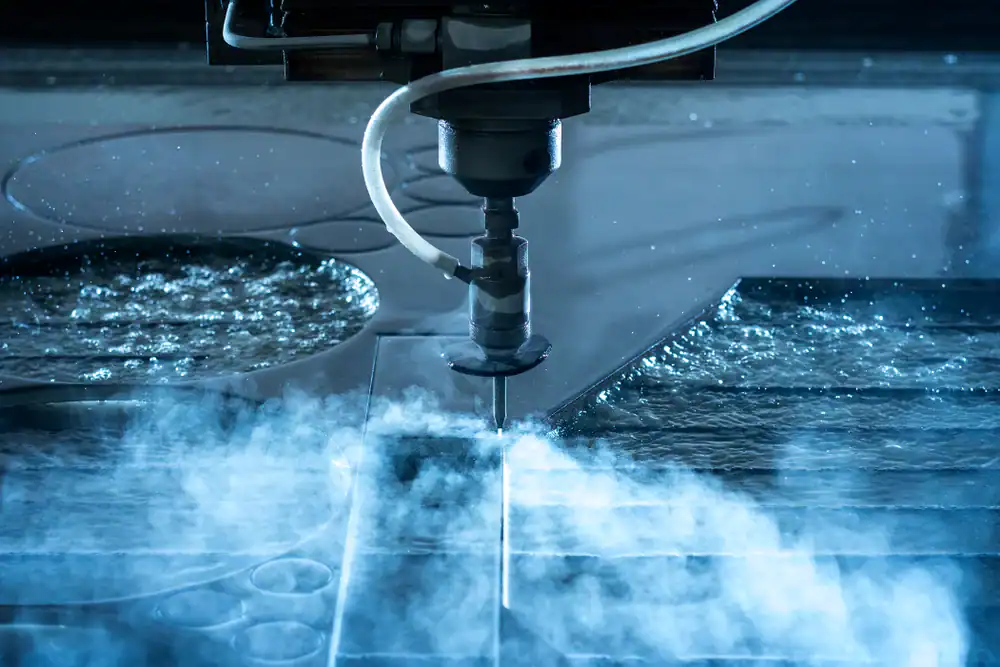
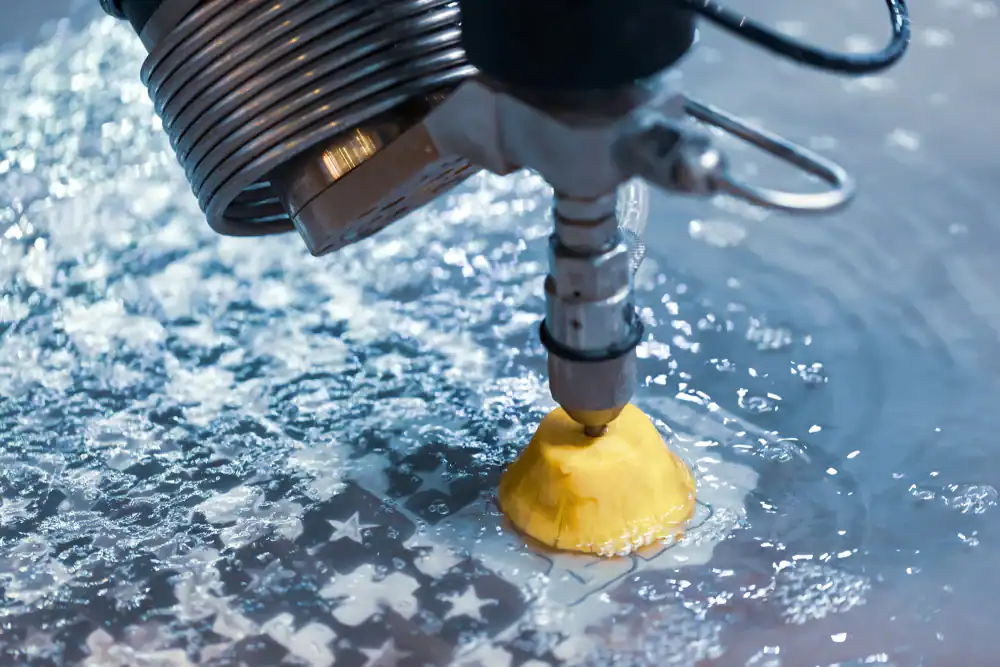
Waterjet cutting removes those problems. The process uses high-pressure water and fine abrasive to cut through glass without generating heat, which means no thermal stress and no structural damage. You get clean edges that need minimal finishing, intricate patterns that would be impossible otherwise, and material that maintains its full strength.
Whether you’re working on architectural installations in Wantagh, NY, custom residential projects, or industrial components that need to fit exactly right the first time, you’re looking at cuts measured in fractions of a millimeter. That’s the difference between a part that works and one that doesn’t.
We operate out of West Islip, serving contractors, architects, and manufacturers across Long Island, NY and the broader tri-state area. We’re not new to this—our team understands the specific demands of projects in Wantagh, NY, from commercial builds along Sunrise Highway to custom residential work in the surrounding Nassau County neighborhoods.
We run CNC-controlled waterjet systems that handle everything from thin decorative glass to thick structural pieces. Our equipment doesn’t care how complex your design is—it follows the program exactly, every time.
You’re working with people who know the difference between a prototype that needs to be perfect and a production run that needs to be consistent. We handle both.
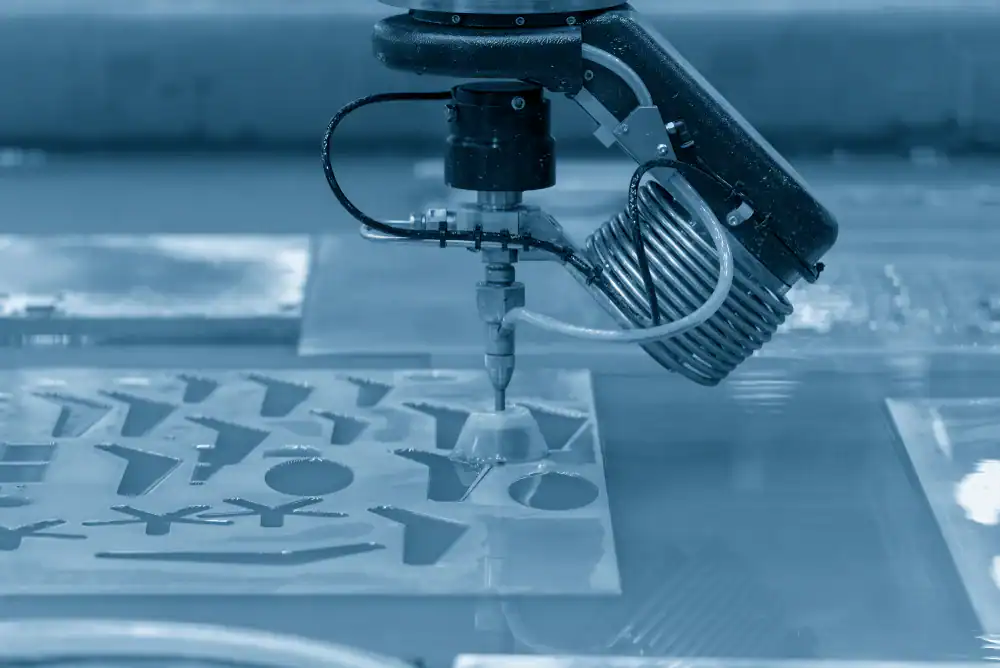
You send us your design file or specifications—CAD drawings work best, but we can work with what you have. If you’re not sure about feasibility, we’ll tell you upfront what’s possible and what isn’t.
We program the CNC system based on your exact requirements. The waterjet uses a stream of water mixed with fine abrasive garnet, pressurized up to 60,000 PSI, to cut through the glass. Because there’s no heat involved, there’s no warping, no micro-fractures, and no change to the material properties. The kerf width—the amount of material removed by the cut—is minimal, which means less waste and the ability to nest parts efficiently.
Once cutting is complete, you get parts with edges that are smooth and perpendicular. Depending on your application, they might be ready to install as-is, or they might need minor finishing. Either way, you’re not dealing with the chipping and secondary processing that comes with traditional methods.
Turnaround depends on complexity and volume, but we’re set up to handle everything from single custom pieces to high-volume production runs for industrial glass waterjet cutting in Wantagh, NY.
Ready to get started?
You get precision that traditional cutting can’t match—tolerances within a few tenths of a millimeter. That matters when you’re fitting glass into metal frames, creating interlocking components, or working with designs where even small variations cause problems.
You get versatility across glass types. Float glass, tempered glass, laminated glass, acrylic—the waterjet handles them all without changing the fundamental process. Thickness isn’t a limiting factor the way it is with scoring and breaking methods.
For architectural glass waterjet cutting in Wantagh, NY, this means you can execute designs that would otherwise require multiple fabrication methods or wouldn’t be possible at all. Curved cuts, sharp internal corners, intricate patterns for decorative installations—all achievable with the same equipment and process.
You also get material efficiency. The narrow kerf means less waste, and the ability to nest parts closely on a sheet reduces your material costs. For residential glass cutting services, that efficiency translates directly to better pricing on custom work without sacrificing quality.
The environmental aspect is straightforward: no toxic fumes, no chemical coolants, and water that’s filtered and reused. If you’re working on LEED-certified projects or just prefer cleaner processes, that matters.
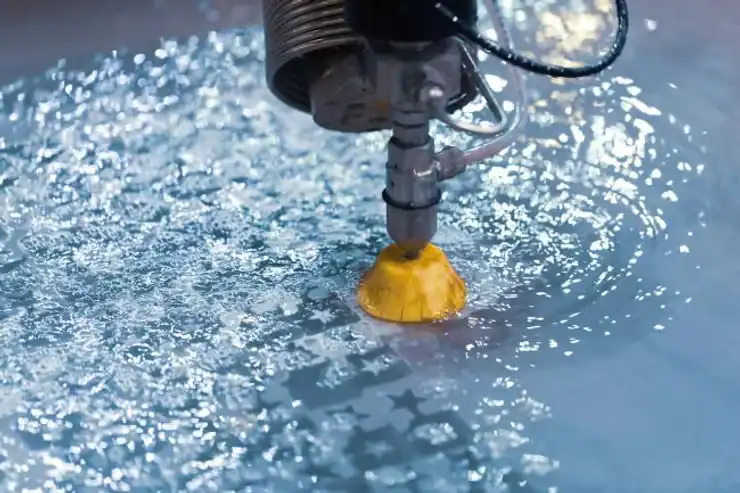
Waterjet cutting handles virtually every glass type you’ll encounter in construction, manufacturing, or design work. Float glass, tempered glass, laminated safety glass, acrylic, and specialty architectural glass all cut cleanly without the limitations of traditional methods.
The key difference is that waterjet doesn’t rely on scoring and breaking, which means glass that’s too thick, too brittle, or too valuable to risk with conventional cutting becomes manageable. Tempered glass, which shatters if you try to cut it after tempering, needs to be cut before the tempering process—but waterjet gives you the precision to do that accurately.
For custom glass waterjet cutting in Wantagh, NY, this means you’re not limited by material choice. If your project calls for thick structural glass, delicate decorative panels, or anything in between, the process adapts without requiring different equipment or techniques.
Laser cutting uses focused heat to melt or vaporize material, which creates problems with glass. You get thermal stress, micro-cracking, and edge quality issues that require extensive finishing. The heat-affected zone around the cut can weaken the glass, and you’re limited in the thickness you can cut effectively.
Waterjet cutting is a cold process. There’s no heat, which means no thermal stress and no structural changes to the glass. The edges come out smooth and perpendicular without the melted appearance or weakness that comes from laser cutting.
For industrial glass waterjet cutting in Wantagh, NY, this matters when you need parts that maintain their full strength and don’t require secondary processing to be usable. Waterjet also handles thicker glass more effectively and doesn’t create the fumes or require the ventilation systems that laser cutting does. If you’re comparing options, waterjet gives you better edge quality, less finishing work, and no heat-related defects.
Waterjet systems can cut glass up to several inches thick, though practical limits depend on the specific material and application. For most architectural and industrial applications, you’re looking at anywhere from thin 3mm decorative glass up to 2-inch structural glass without issue.
The process doesn’t change based on thickness the way traditional cutting does. Thicker material takes longer to cut because the waterjet stream needs more time to penetrate, but the quality and precision remain consistent. You’re not dealing with the exponential difficulty increase that comes with trying to score and break thick glass.
For architectural glass waterjet cutting in Wantagh, NY, this capability means you can spec thicker glass for structural or safety applications without worrying about fabrication limitations. The same equipment and process that handles thin decorative work also handles heavy structural components, which simplifies your supply chain and ensures consistent quality across different elements of the same project.
CNC waterjet cutting delivers tolerances in the range of ±0.003 to ±0.005 inches, depending on material thickness and cutting parameters. That’s precise enough for parts that need to fit together exactly, components that interface with metal frames, or any application where dimensional accuracy directly affects function.
The CNC control means the machine follows your design file exactly, with repeatability that manual or semi-automated processes can’t match. If you’re running production parts, the first piece and the hundredth piece will be identical within those tolerance ranges.
For CNC glass waterjet cutting in Wantagh, NY, this precision matters when you’re working on projects where fit and finish are critical. Glass panels that need to align perfectly, components with mounting holes that must line up with existing hardware, or decorative elements where symmetry is visible—all benefit from the accuracy that CNC waterjet provides. You’re not dealing with cumulative errors or variations between parts.
Waterjet-cut edges come off the machine smooth and perpendicular, which is already better than what you get from traditional scoring and breaking. For many applications—especially where edges won’t be visible or will be captured in frames—no additional finishing is needed.
If you need polished edges for aesthetic reasons or specific applications, waterjet-cut glass requires less finishing work than traditionally cut glass. You’re starting with a clean, chip-free edge instead of one that needs grinding to remove irregularities and micro-cracks. That reduces finishing time and cost.
For residential glass cutting services in Wantagh, NY, this means faster turnaround and lower costs on custom work. A decorative glass panel with exposed edges might need polishing, but the waterjet process gets you most of the way there. Industrial or architectural applications where edges are hidden or protected often use the parts as-cut, which eliminates an entire fabrication step and the associated time and expense.
Turnaround depends on project complexity, material availability, and current production schedule, but simple custom cuts can often be completed within a few days. More complex projects with intricate patterns, multiple parts, or specific material requirements might take one to two weeks.
Production runs benefit from the efficiency of CNC automation. Once the program is set up and proven, the machine can run parts consistently with minimal supervision. High-volume orders get faster per-piece turnaround than one-off custom work because setup time is amortized across the entire run.
For custom glass waterjet cutting in Wantagh, NY, local proximity helps with turnaround. You’re not dealing with cross-country shipping delays, and if there are questions about the design or material, we can address them quickly. Rush work is sometimes possible depending on schedule—if you have a tight deadline, it’s worth asking. We’ll tell you honestly whether we can meet it or not.
Useful Links
Other Services we provide in Wantagh