Hear from Our Customers
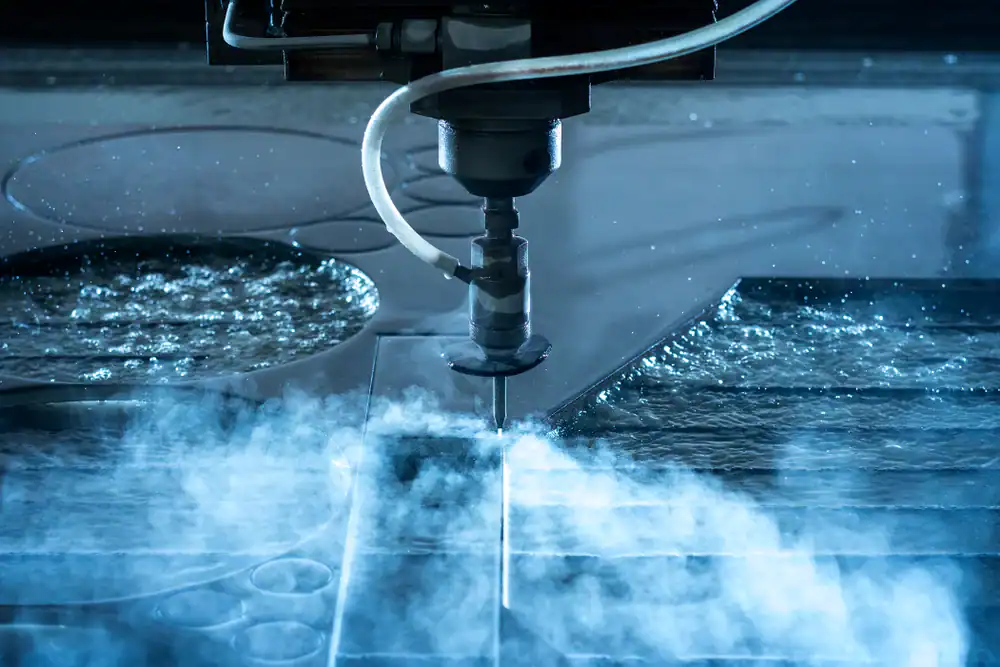
Traditional glass cutting has limits. Sharp corners crack. Thick pieces shatter. Complex curves become compromises.
Waterjet cutting removes those constraints. You get beveled edges, precise holes for hardware, architectural curves, and decorative patterns that hand tools can’t touch. The stream is thin enough to follow nearly any design, and because there’s no heat involved, your glass won’t stress, warp, or develop microfractures that show up later.
If you’re working on a storefront in Wyandanch, custom residential glass panels, or industrial components that need to fit the first time, this process handles it. The edge quality is smooth enough that most projects skip secondary polishing entirely. Less waste, faster timelines, and results that match your specs down to a tenth of a millimeter.
We work with architects, contractors, fabricators, and designers across Suffolk County who need glass cut to exact specifications. We’re based locally and handle everything from single custom pieces to full production runs.
Wyandanch sits in a growing corridor with commercial development picking up and residential projects expanding through initiatives like Wyandanch Rising. That means more demand for precision glass work—facades, partitions, decorative installations, and structural elements that require accuracy you can’t get from standard cutting methods.
We don’t outsource the cutting or the consultation. You work directly with people who understand the material, the equipment, and what it takes to get your project right the first time.
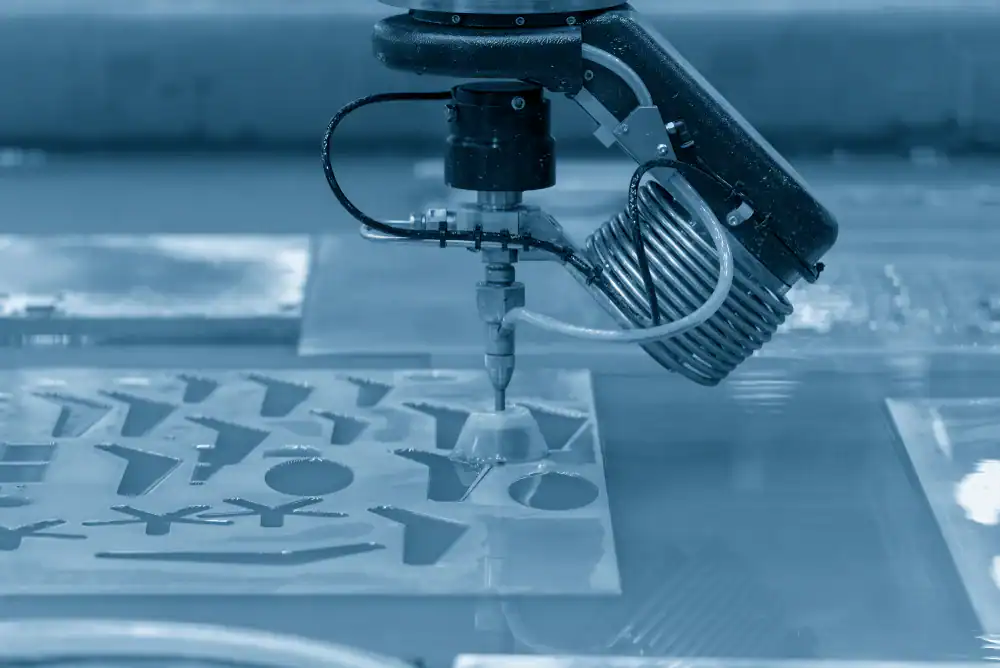
You send us your design specs—CAD files, drawings, or measurements. We review the glass type, thickness, and cut complexity to confirm feasibility and recommend any adjustments that’ll improve the outcome.
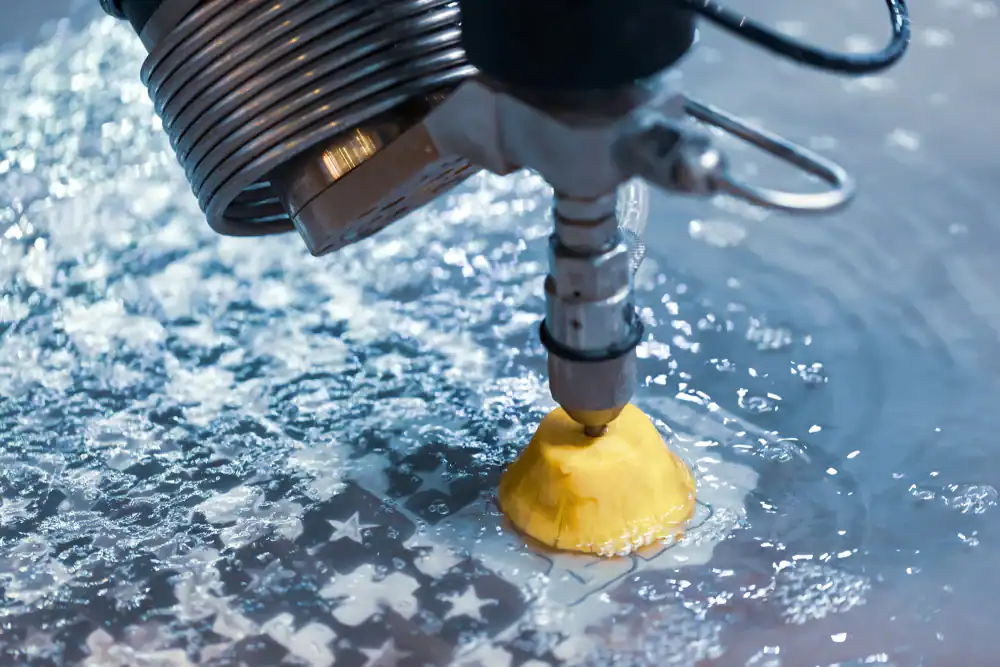
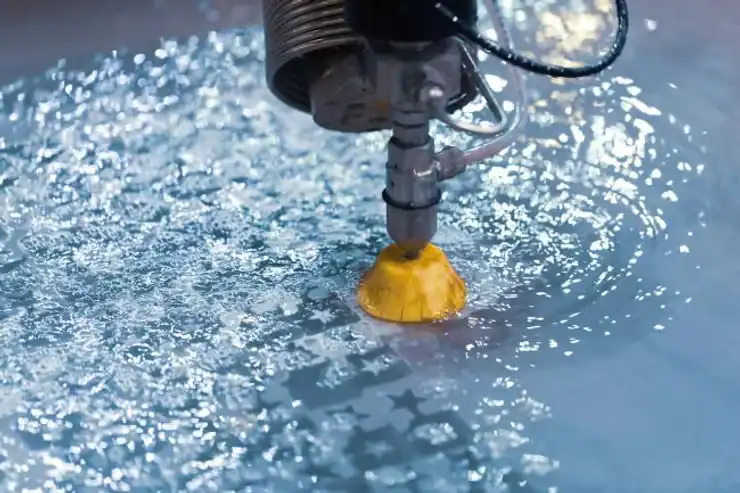
Once the design is locked, we program the CNC waterjet system. The machine uses a high-pressure stream mixed with fine abrasive garnet to cut through the glass with precision that stays within tolerances of ±0.1mm. No blades. No heat. Just water pressure doing the work.
The cutting happens fast compared to traditional methods, but we don’t rush quality. After the cuts are complete, we inspect edges and dimensions to make sure everything matches your specs. Then your glass is prepped for pickup or delivery, ready to install without additional finishing in most cases.
Ready to get started?
This process works for glass up to 12 inches thick. That covers most architectural panels, custom tabletops, decorative installations, and industrial applications. You’re not limited to straight cuts—curves, angles, interior cutouts, and intricate patterns are all on the table.
Because Wyandanch has a mix of residential renovations and commercial builds, we see requests for everything from custom shower enclosures to storefront glass with logo cutouts. The versatility matters when you’re trying to match a specific design vision or fit glass into an existing structure that wasn’t built to standard dimensions.
The waterjet process also reduces material waste. The kerf width—the amount of material removed during cutting—is narrow, so you’re not losing significant glass to the cut itself. That keeps costs down, especially on larger projects or expensive glass types. And because the edges come out smooth, you skip the time and expense of additional polishing or grinding in most situations.
Tempered glass can’t be cut after it’s been tempered. The tempering process puts the glass under internal stress, and any attempt to cut it—waterjet or otherwise—causes it to shatter immediately. If you need a specific shape, the glass has to be cut first, then sent out for tempering.
Laminated glass is a different story. Waterjet cutting can handle it, but the process requires more care. The layers can separate or delaminate if the pressure isn’t controlled properly, so it’s not as straightforward as cutting standard annealed glass. We adjust settings based on the laminate type and thickness to minimize that risk.
If you’re not sure what type of glass you’re working with or whether it can be cut after treatment, bring us the specs before you order the material. We’d rather help you avoid a costly mistake upfront than tell you after the fact that it won’t work.
Tolerances typically land within ±0.1mm, which is tight enough for fine mosaics, engraved patterns, and architectural details that need to align perfectly. The CNC system follows your design file exactly, so if the file is accurate, the cut will be too.
The limiting factor is usually the design itself, not the equipment. If you’re trying to cut features that are too small or too close together, the glass may not hold up structurally even if the machine can technically make the cut. We’ll flag those issues during the design review so you can adjust before we start cutting.
For projects in Wyandanch where glass needs to fit into existing frameworks—like historic building renovations or custom installations—that level of precision means fewer on-site adjustments. You’re not shimming or trimming to make things fit. It just works.
Laser cutting uses focused heat to melt or vaporize material, which creates a heat-affected zone. For glass, that means potential thermal stress, microcracks, and a higher risk of breakage—especially with thicker pieces. The edges can also come out rougher and require more finishing work.
Waterjet cutting is a cold process. No heat means no thermal stress, no warping, and no risk of heat-induced cracks. The edges come out smoother, and you can cut thicker glass without the structural concerns that come with laser methods.
Laser cutting can be faster for certain materials, but for glass—especially architectural or custom glass in Wyandanch projects—waterjet is the safer, cleaner option. You’re not trading speed for quality or risking material failure halfway through a job.
Pricing depends on glass type, thickness, design complexity, and project size. Waterjet cutting typically costs more per cut than basic straight cuts with a scoring tool, but you’re paying for capabilities that traditional methods can’t deliver.
The real cost comparison comes down to waste and rework. Traditional cutting methods often result in more material waste, especially on complex shapes, and the edges usually need additional grinding or polishing. Waterjet cutting minimizes waste with a narrow kerf and delivers finished edges in one pass, which saves labor and material costs downstream.
For industrial or architectural projects in Wyandanch where precision matters and mistakes are expensive, the upfront cost difference is usually offset by fewer errors, less waste, and faster turnaround. You’re also avoiding the cost of replacing glass that cracks during cutting or installation because the edges weren’t clean enough.
All cutting happens at our facility. The waterjet system requires a controlled environment, a stable surface, and access to high-pressure water and abrasive materials. It’s not a portable setup.
You can deliver glass to us, or we can coordinate pickup if you’re sourcing material locally in Wyandanch or elsewhere in Suffolk County. Once cutting is complete, we can arrange delivery to your job site or shop, depending on the project size and timeline.
Cutting off-site actually works in your favor. We’re set up to handle the mess, manage the equipment, and control quality in a way that’s not possible in the field. You get the finished pieces ready to install without dealing with the logistics of running a CNC waterjet system on a construction site.
Annealed glass is the most straightforward. It cuts cleanly, handles intricate designs well, and doesn’t have the internal stresses that cause problems with other glass types. Most architectural, decorative, and custom residential glass falls into this category.
Laminated glass works but requires adjustments to pressure and speed to avoid delamination. Thicker laminated pieces take longer and need more careful handling, but the results are solid if the settings are dialed in correctly.
Specialty glass—like textured, frosted, or low-iron glass—also cuts well with waterjet. The process doesn’t care about surface treatments or coatings the way some cutting methods do. As long as the glass itself is structurally sound and not pre-tempered, waterjet cutting can handle it without compromising the finish or integrity.
Useful Links
Other Services we provide in Wyandanch