Hear from Our Customers
You’re working with expensive material. The last thing you need is cracking from heat stress, chipped edges that need rework, or a fabricator who can’t handle complex geometry.
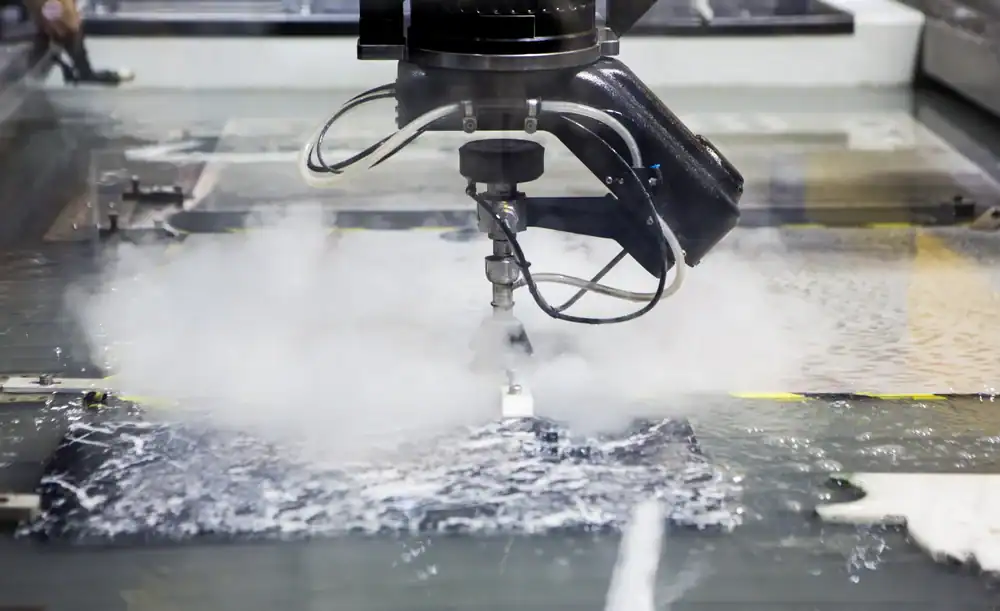
Waterjet cutting uses high-pressure water and fine abrasive to cut marble without generating heat. That means no thermal cracks, no surface damage, and no structural compromise. You get clean edges on the first pass, whether you’re cutting straight lines for countertops or intricate medallion patterns for lobby floors.
The technology handles what traditional saws can’t. Curved reception desks, waterfall edges cut at precise 45-degree angles, custom inlays with tight tolerances. If you can design it, we can execute it without the guesswork or the waste.
We’ve been serving architects, contractors, and fabricators across Bellmore, NY and the surrounding tri-state area for over a decade. We’re not new to this, and we’re not learning on your material.
Our CNC marble cutting equipment delivers accuracy within 0.1 to 0.2 millimeters. That level of precision matters when you’re matching veining patterns, creating seamless joints, or installing custom pieces where fit isn’t negotiable. Bellmore’s mix of historic renovations and modern commercial builds demands that kind of consistency, and we’ve built our reputation on delivering it.
You’re not getting a sales pitch here. You’re getting straight answers about what’s possible, what timeline makes sense, and what your material can handle.
You send us your design file or template. We review it for any potential issues with the material, veining, or structural integrity. If something won’t work, we tell you before we start cutting.
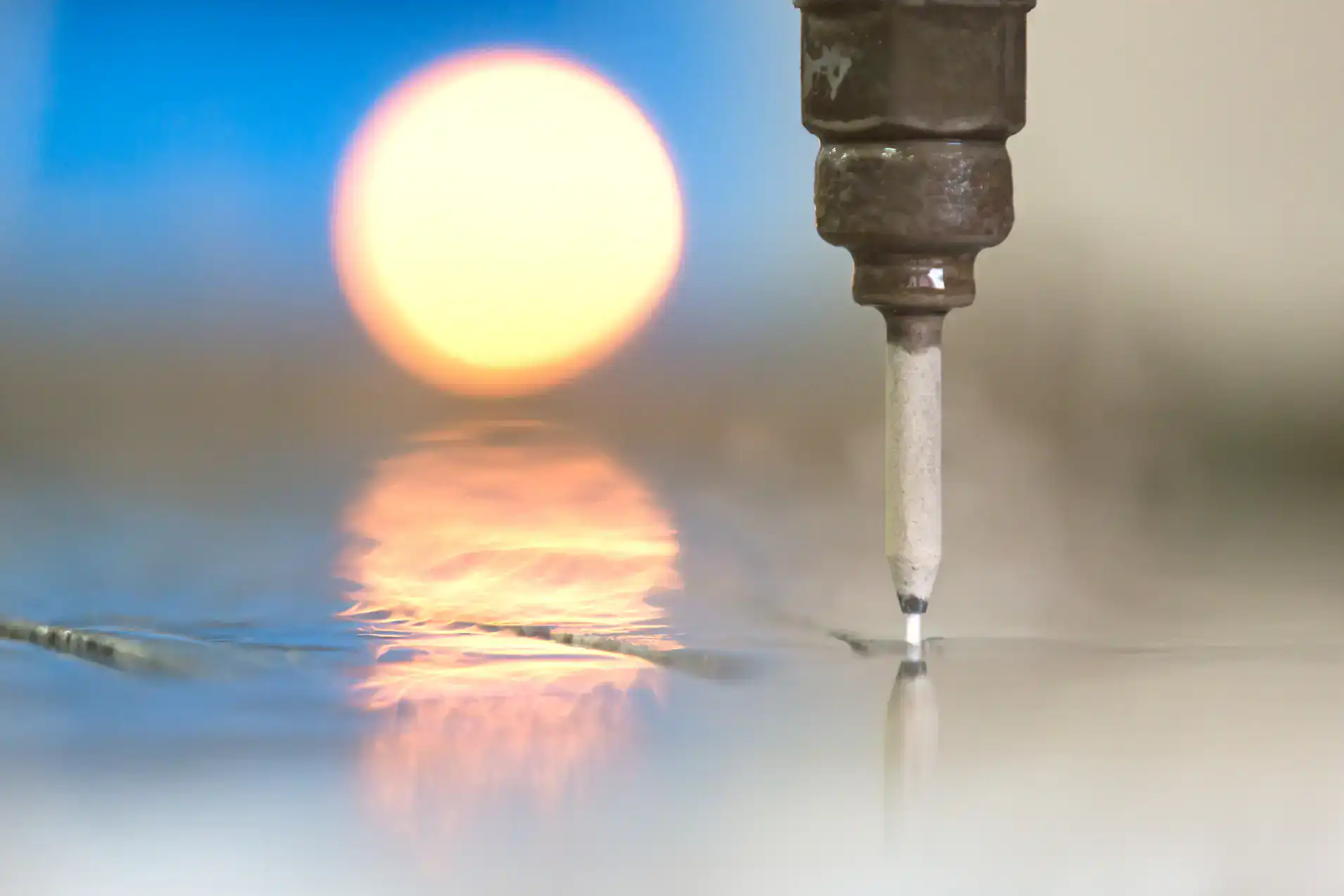
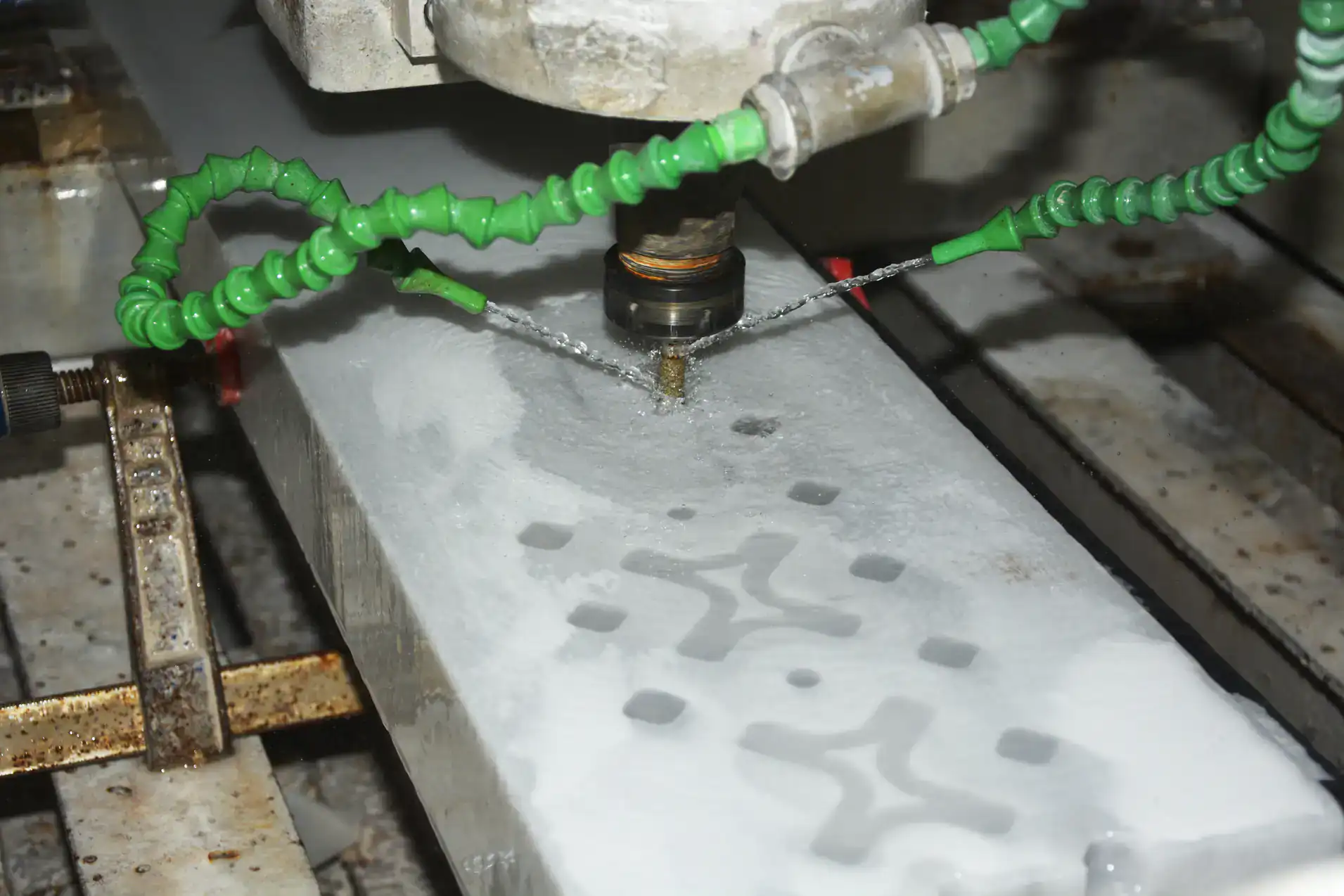
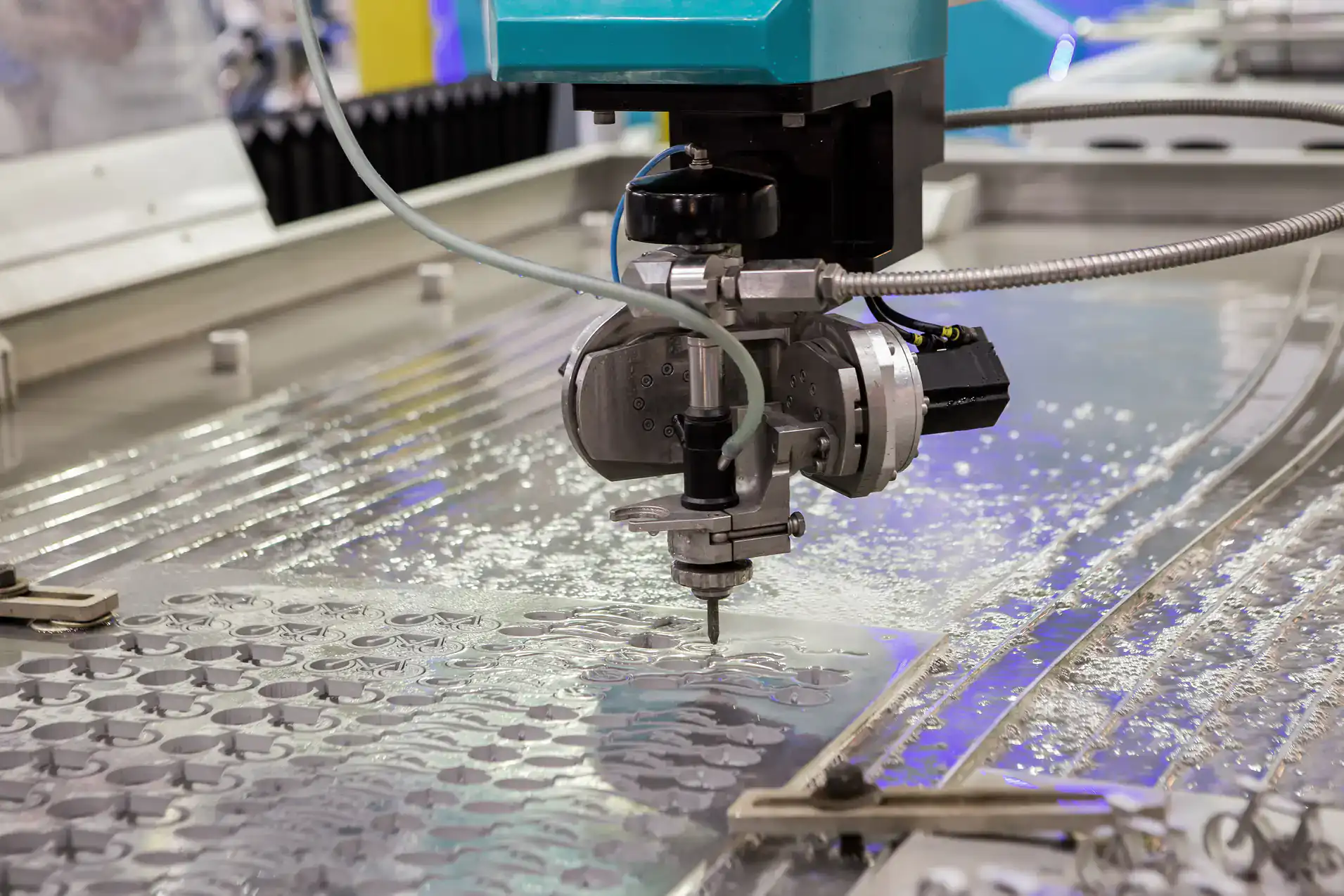
Once the design is confirmed, we program our CNC waterjet system with your exact specifications. The cutting head directs a high-pressure stream of water mixed with fine garnet abrasive through the marble. There’s no blade contact, no heat generation, and no vibration that could cause micro-fractures.
The process is precise enough for corporate logos, detailed enough for decorative borders, and clean enough that most edges need minimal finishing. After cutting, we inspect each piece to ensure it meets the tolerances you specified. Then it’s ready for installation or further fabrication, depending on your project needs.
Ready to get started?
Custom marble waterjet cutting in Bellmore, NY means you’re not limited to standard shapes or simple cuts. We handle everything from basic countertop cutouts to complex architectural installations that require multiple pieces to align perfectly.
The technology accommodates various marble types and thicknesses without adjustment headaches. Whether you’re working with Carrara, Calacatta, or darker stones with unpredictable veining, the waterjet adapts. You also avoid the dust issue that comes with traditional cutting methods, which matters when you’re working in occupied buildings or restoration projects with strict containment requirements.
Bellmore’s commercial corridor along Sunrise Highway and the residential neighborhoods surrounding Newbridge Road Park see steady demand for custom stonework. From restaurant renovations requiring durable, precisely cut bar tops to homeowners installing waterfall countertops in kitchen remodels, the need for accurate marble fabrication doesn’t slow down. We’re set up to handle both one-off custom pieces and larger commercial runs without sacrificing the detail work that makes or breaks high-end installations.
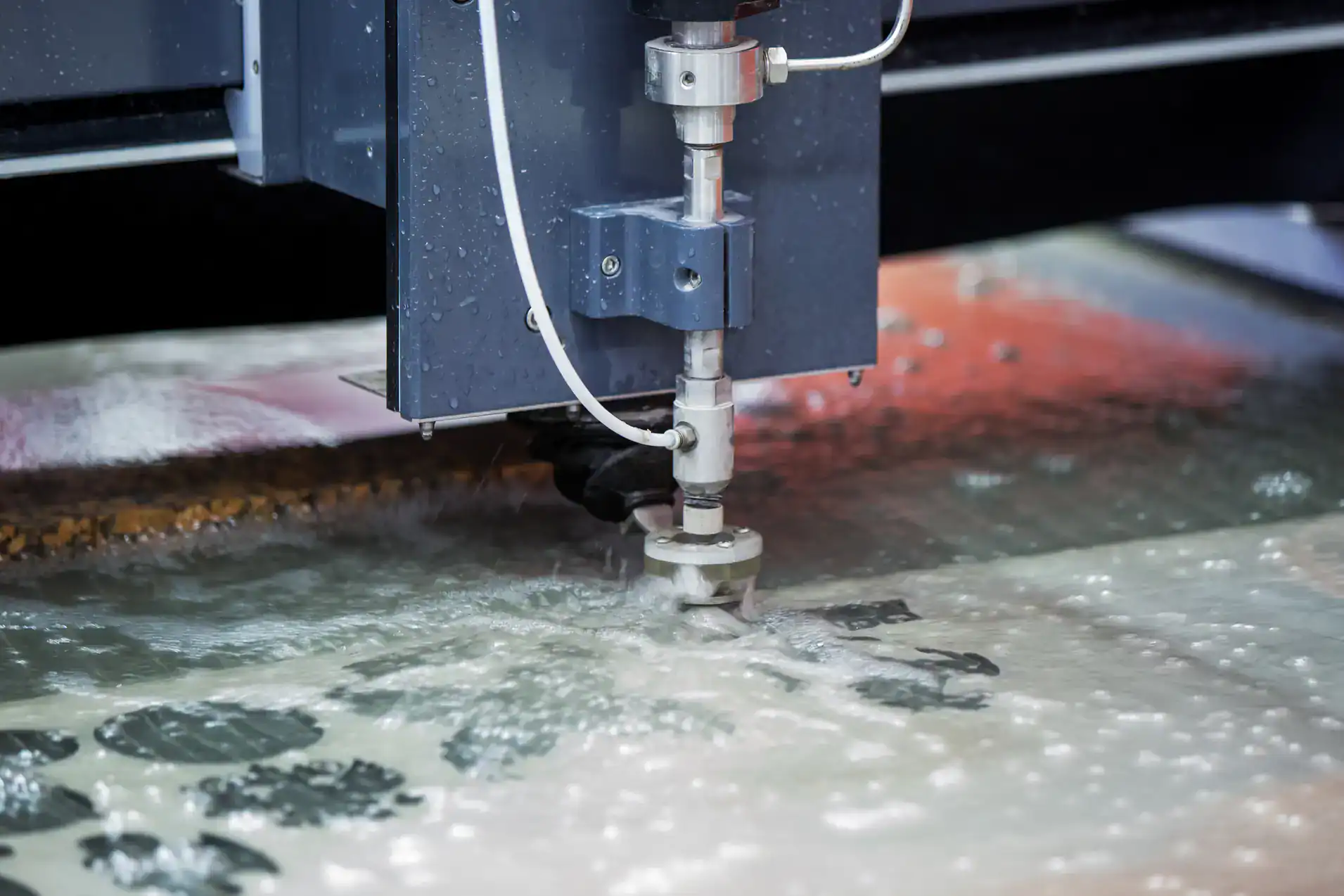
No. Waterjet cutting is a cold-cutting process, meaning there’s no heat generated during the cut. Heat is what causes thermal stress and cracking in marble, especially along existing veins or natural fissures in the stone.
Traditional saw blades create friction, which generates heat and can cause the marble to expand unevenly. That’s when you see chips, cracks, or structural failure. With waterjet cutting, the high-pressure water and abrasive do the work without any temperature change to the material.
That said, marble quality matters. If the stone already has weak veining or hidden fractures, those can still present issues regardless of cutting method. We inspect material before cutting and flag any concerns we see. But the cutting process itself won’t introduce new stress or damage to structurally sound marble.
Our CNC marble cutting system operates with accuracy between 0.1 and 0.2 millimeters. To put that in perspective, that’s about the thickness of two sheets of paper. For most architectural and design applications, that level of precision is more than sufficient.
This matters when you’re doing inlay work, matching multiple pieces for a seamless installation, or cutting components that need to fit together without gaps. You’re not dealing with the variability that comes from manual cutting or even standard CNC routers that aren’t designed for stone.
The precision also means less material waste. Tighter tolerances allow us to nest cuts more efficiently on the slab, which can save you money on material costs. And because the cuts are so clean, you typically don’t need extensive edge finishing or polishing afterward, which speeds up your overall project timeline.
If you can draw it or model it digitally, we can cut it. Waterjet handles everything from straight cuts and basic shapes to intricate patterns, curves, and detailed inlays that would be nearly impossible with traditional methods.
Common applications include custom countertops with integrated drainage channels, decorative medallions for entryways, corporate logos for lobby installations, geometric wall patterns, and waterfall edges that require precise 45-degree miters. We’ve also cut custom shower surrounds, fireplace surrounds with detailed borders, and furniture components like tabletops with inlaid designs.
The limitation isn’t usually the cutting technology—it’s the marble itself. Some designs might not be structurally sound depending on vein placement or stone thickness. We review every design file before cutting and provide feedback if we see potential issues. But from a pure capability standpoint, the waterjet can execute complex geometry that other cutting methods simply can’t handle.
It depends on the complexity of the design and the thickness of the marble. A simple countertop with standard cutouts might take a few hours. An intricate medallion pattern or detailed inlay work can take significantly longer because the cutting head moves more slowly through complex curves and fine details.
Thicker marble also requires more passes and slower cutting speeds to maintain edge quality. A 2-inch thick slab takes longer to cut than 3/4-inch material, even for the same design. But that extra time ensures you get clean edges without delamination or chipping.
We provide timeline estimates once we review your design file and know the material specs. Rush jobs are sometimes possible depending on our schedule, but realistic timelines usually mean better results. Most projects are completed within a few days to a week from approval, though larger commercial installations with multiple components may take longer.
We cut marble, granite, limestone, travertine, slate, soapstone, and engineered stone. The waterjet process works across all stone types because it’s not relying on blade hardness or material-specific tooling. It’s just high-pressure water and abrasive doing the work.
Each stone type has its own characteristics that affect cutting approach. Granite is denser and takes longer to cut than marble. Limestone and travertine are softer and cut faster but require careful handling to avoid surface pitting. Engineered stone cuts cleanly but can be harder on abrasive consumption because of the resin content.
If you’re working on a project that combines multiple stone types—say, a marble countertop with granite accents or a mixed-material floor installation—we can handle all the cutting in one place. That keeps your fabrication consistent and your timeline simpler, rather than coordinating with multiple vendors for different materials.
The biggest difference is heat. Traditional saws use rotating blades that create friction and heat, which can cause thermal stress in marble. That’s especially problematic with stones that have pronounced veining or color variations, where different densities expand at different rates. Waterjet cutting eliminates that risk entirely.
Edge quality is another major difference. Saw blades can leave rough edges that require significant polishing and finishing. Waterjet cuts produce smooth edges right off the machine, which reduces your post-processing time and labor costs. You’re also not dealing with blade deflection or wandering cuts that can happen with thicker materials on traditional saws.
Then there’s design flexibility. Saws are limited to straight cuts or gentle curves. Waterjet handles tight radiuses, sharp angles, and intricate interior cutouts without multiple setups or tool changes. For complex custom work, there’s really no comparison—waterjet gives you capabilities that traditional methods just can’t match.
Useful Links
Other Services we provide in Bellmore