
Hear from Our Customers
You’re looking at marble that costs real money. The last thing you need is micro-cracks from heat, wasted material from imprecise cuts, or design limitations because your fabricator’s equipment can’t handle intricate patterns.
Precision marble waterjet cutting in Copiague, NY changes that equation completely. You get cuts accurate to ±0.005 inches—tight enough that pieces fit the first time, every time. No heat means your marble’s structural integrity stays intact, and the natural veining you paid for doesn’t get discolored or warped.
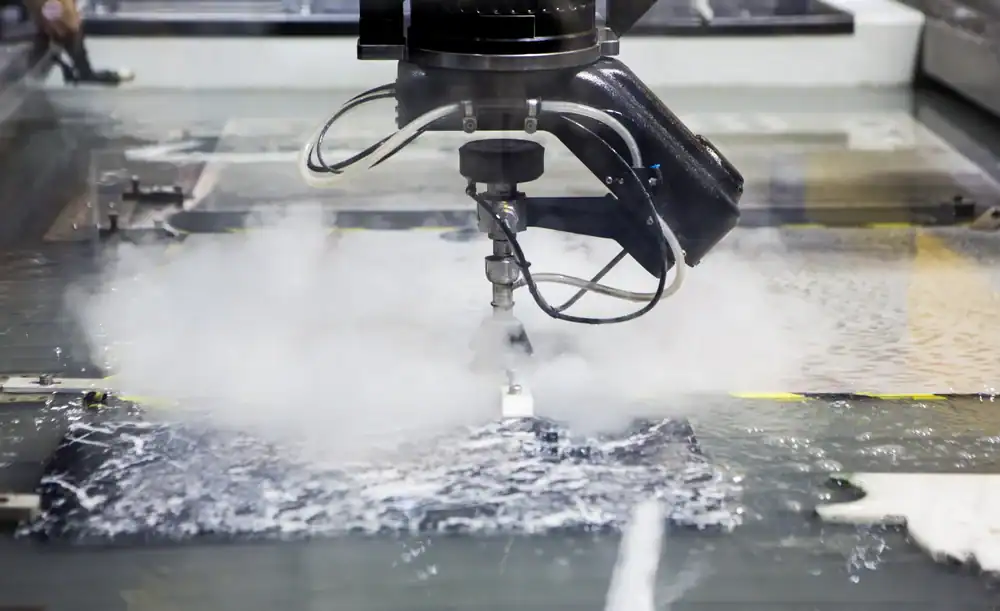
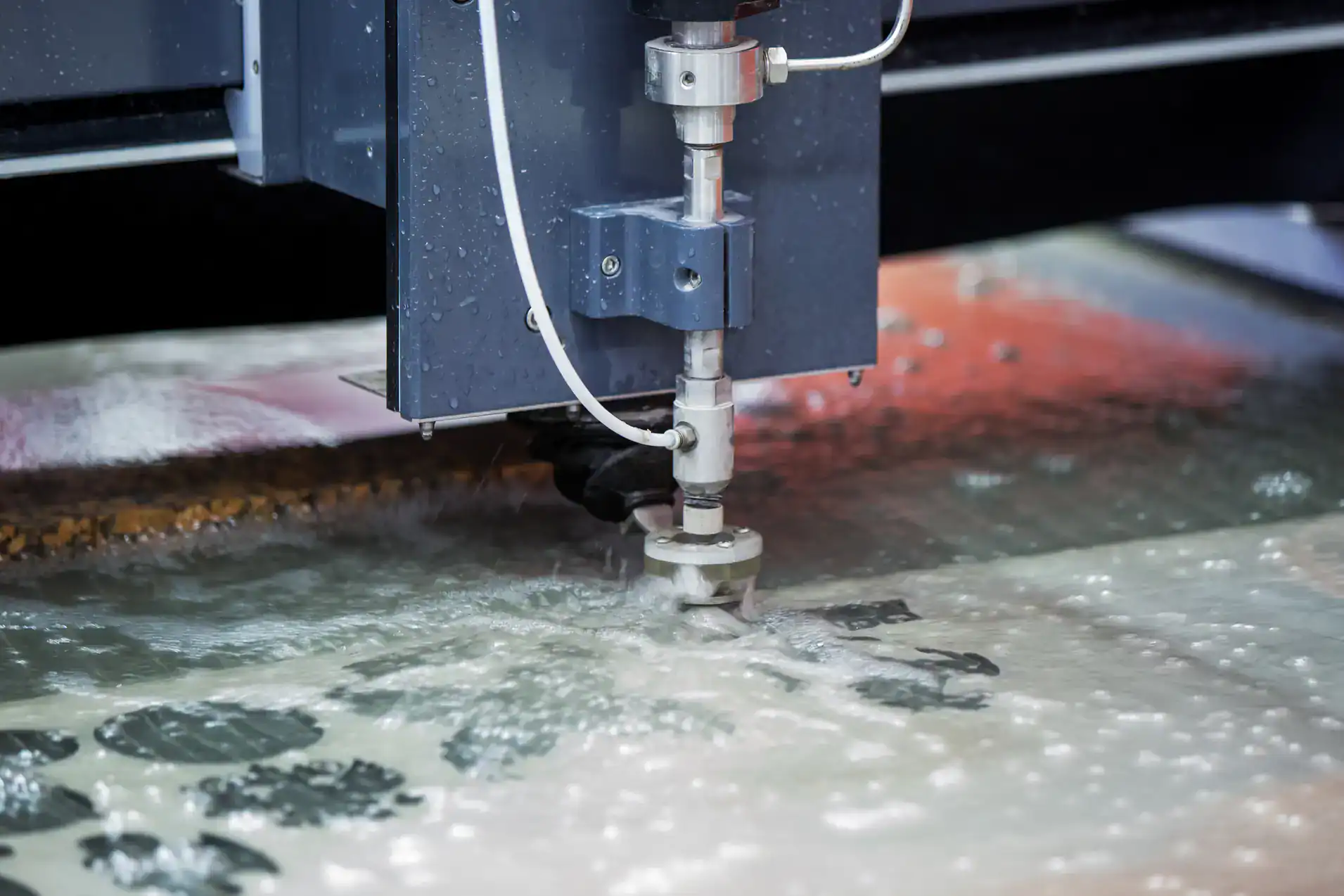
The process uses a high-pressure stream—up to 60,000 PSI—mixed with fine abrasive particles. It cuts through marble without generating heat, which means no thermal stress and no hidden fractures that show up later. The kerf width is significantly narrower than blade cutting, so you’re losing less material to the cut itself. That’s up to 30% less waste on your project, which matters when you’re working with premium stone.
Edge quality comes out smooth enough that secondary polishing is often unnecessary. That’s time saved and labor costs reduced. And because there’s no physical tool making contact with the stone, there’s no vibration, no chipping, and no dust clouds filling your workspace.
We operate with one clear focus—delivering industrial marble waterjet cutting in Copiague, NY that meets the standards high-end residential and commercial projects actually require. We’re not experimenting with your material or learning on your dime.
The Copiague area has established stone fabricators, some with decades of experience. What’s been missing is advanced waterjet capability that handles complex designs without compromising the stone. That’s where we come in.
We’ve invested in the technology because we’ve seen what happens when marble projects go wrong—cracked slabs, misaligned inlays, designs that get simplified because the equipment can’t execute them. You don’t have to settle for that anymore.
You start by sending us your design file or specifications. If you’re working with an architect or designer, we can take CAD files directly. If you’ve got a sketch or template, we’ll work from that.
Once we have your design, we program the waterjet system to follow the exact cutting path. This is CNC marble cutting in Copiague, NY—computer-controlled precision that repeats accurately across multiple pieces if you need matching components.
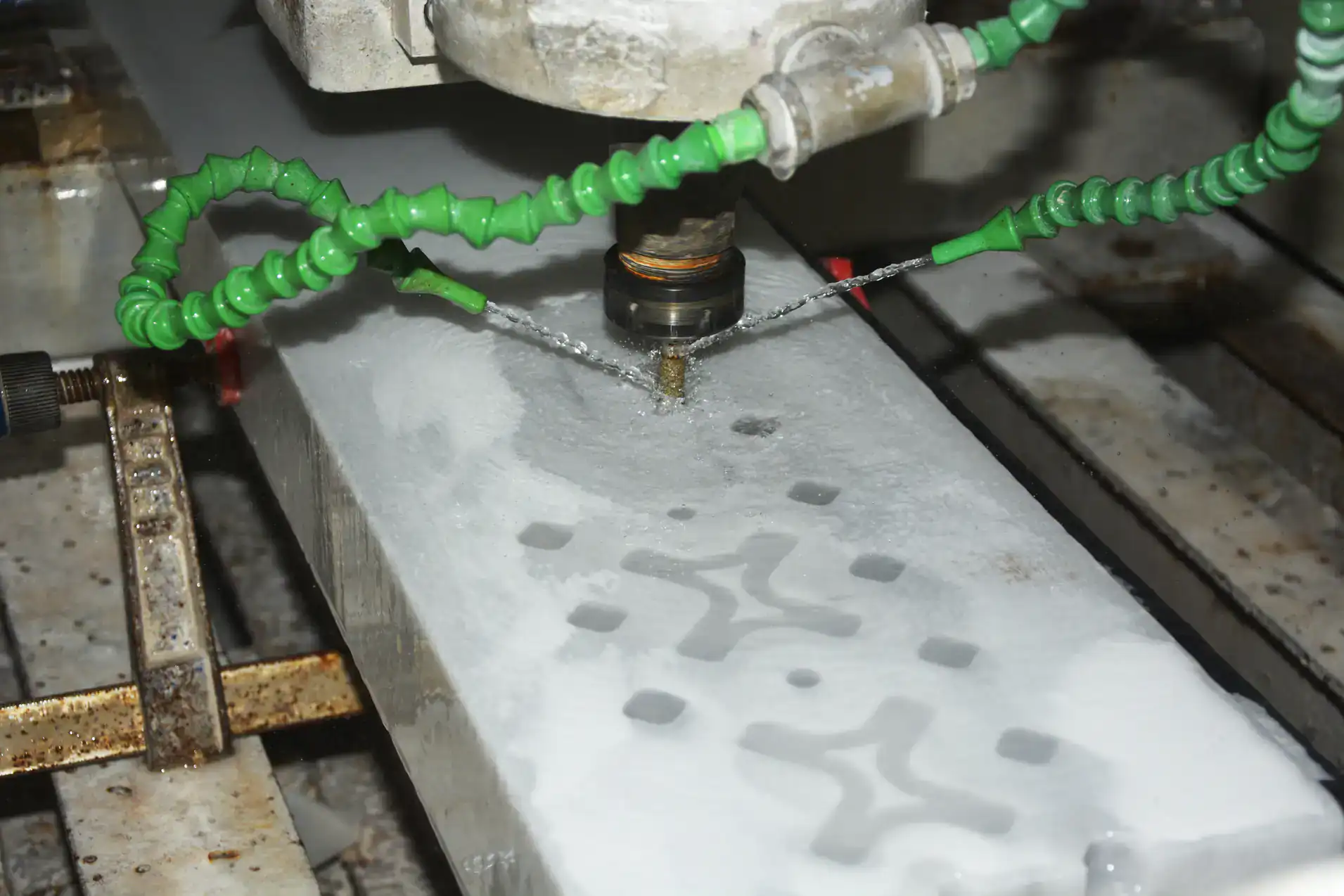
The cutting itself happens with a focused stream of water and garnet abrasive. Pressure ranges from 60,000 to 90,000 PSI depending on the thickness and complexity. The stream is thin—about the width of a human hair at the nozzle—so you’re getting clean lines without excess material removal.
For straight cuts on slabs, the process is fast. For intricate patterns—medallions, inlays, curved edges, custom shapes—it takes longer, but the waterjet handles it without switching tools or setups. One system, one setup, complete cut. No secondary operations unless you want additional finishing.
After cutting, we inspect dimensions and edges. If your project requires polishing or additional fabrication, we can coordinate that. Otherwise, your pieces are ready for installation.
Ready to get started?
Custom marble waterjet cutting in Copiague, NY means you’re not limited by what a saw can do. Circular patterns, tight radius curves, complex inlays, through-cuts for plumbing or electrical—if you can draw it, we can cut it.
Material thickness isn’t a limiting factor either. We cut marble up to 12 inches thick at full speed, and thicker if your project requires it. That matters for countertop edges, architectural features, or structural elements where you need substantial stone.
The local market has seen demand for custom residential work—waterfall countertops, book-matched slabs, intricate backsplashes. Copiague homeowners investing in marble want unique installations, not cookie-cutter patterns. Waterjet technology makes that possible without the cost penalties you’d expect from custom fabrication.
For commercial projects, precision matters even more. Lobby floors with inlaid designs, feature walls with repeating patterns, exterior cladding that needs to align perfectly—these applications require accuracy that traditional methods struggle to deliver consistently. Waterjet cutting handles them as standard work, not special requests.
The cutting itself may cost more per linear foot, but that’s not the full picture. You need to factor in material waste, labor for secondary finishing, and the cost of mistakes.
Traditional blade cutting removes more material with each pass—wider kerf means more waste. On a high-end marble slab, that waste adds up quickly. Waterjet cutting reduces waste by up to 30%, which directly offsets the cutting cost when you’re working with expensive stone.
Then there’s finishing. Saw-cut edges need polishing, grinding, and smoothing. Waterjet edges often come out smooth enough to use as-is, or require minimal finishing. That’s labor hours you’re not paying for. When you add it all up, projects using waterjet cutting can see overall cost reductions of up to 25% compared to traditional methods—not because the cutting is cheaper, but because the entire process is more efficient.
Yes, and that’s precisely why waterjet technology has become standard for architectural marble work. The system follows computer-controlled paths with repeatable accuracy, so complex designs aren’t a problem—they’re just another program.
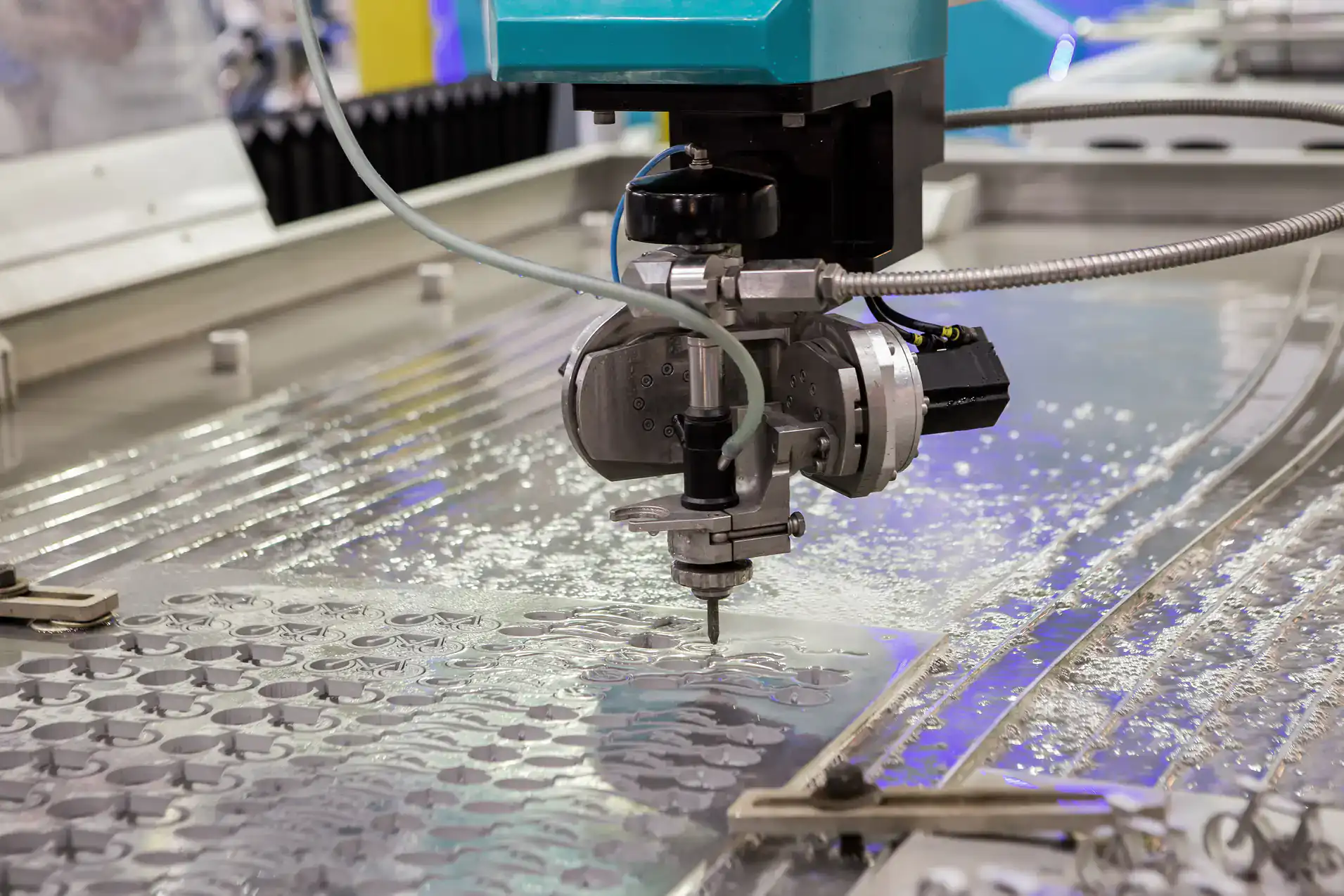
Circular medallions, interlocking geometric patterns, organic curves, even reproducing historical designs for restoration work—waterjet handles all of it. There’s no tool changing, no repositioning, no limitations based on blade diameter or bit size. The cutting stream is narrow enough to create fine details while powerful enough to cut through thick marble.
Architectural Digest reported a 300% increase in waterjet-cut marble installations in high-end projects over the past five years. That’s not a trend—it’s designers and architects specifying waterjet because it’s the only method that can execute their vision without compromise. If you’re looking at inspiration photos and wondering if your fabricator can actually produce that design, waterjet cutting is likely how those pieces were made.
No. That’s the fundamental advantage of waterjet over thermal cutting methods. There’s no heat generated during the cut, which means no thermal stress, no discoloration, and no alteration to the stone’s chemical structure.
Laser and plasma cutting can reach temperatures that affect marble’s composition, leading to discoloration along cut edges or micro-fractures that compromise structural integrity. Blade cutting generates friction heat and vibration, which can cause chipping or cracking, especially near edges or in stone with natural fissures.
Waterjet cutting uses ambient temperature water and abrasive. The marble experiences no heat-affected zone, no thermal expansion, and no stress beyond the localized cutting action. Your stone’s natural veining, color, and structural properties remain unchanged. The Marble Institute of America specifically recommends waterjet cutting for preservation of material integrity in high-value installations—it’s the method that respects the stone you’re investing in.
It depends entirely on design complexity and material thickness, but waterjet is generally faster than you’d expect for custom work. Simple straight cuts on countertop slabs take minutes. Intricate patterns with curves and details take longer, but still process 40% faster than traditional methods attempting the same design.
A standard kitchen countertop with cutouts for sink and cooktop might take a few hours total, including setup and quality checks. A decorative floor medallion with intricate inlay work could take a full day or more, depending on size and detail level. Waterfall countertops—where the stone continues down the cabinet side—are completed two to three times faster with waterjet than with conventional cutting and joining methods.
The real time savings shows up in reduced finishing work and fewer remakes. When cuts are accurate the first time and edges don’t need extensive polishing, your overall project timeline shortens considerably. For projects with multiple identical pieces, the CNC programming means the second, third, and tenth piece cut just as accurately as the first, with no degradation in quality or speed.
CNC routers use rotating bits that make physical contact with the stone. Waterjet uses a pressurized stream with no tool contact. That fundamental difference changes everything about cut quality, design capability, and material stress.
Router bits generate heat from friction, create vibration, and wear down during cutting—which means cut quality can vary as the bit dulls. They’re limited by bit geometry, so tight inside corners require small bits that cut slowly and break easily. Complex curves need multiple tool changes. And the physical contact creates dust, chips, and potential for cracking in brittle stone.
Waterjet cutting eliminates all of those issues. No tool wear means consistent quality from first cut to last. No bit geometry limitations means you can cut any shape, any inside radius, without tool changes. No contact means no vibration, no chipping, and minimal dust. The cutting stream doesn’t dull or break—it just cuts, repeatedly and accurately, until your project is complete. For marble specifically, waterjet is the superior choice when precision and material preservation matter.
We serve both, because the technology doesn’t discriminate—it just cuts accurately regardless of project size. Residential customers working on kitchen remodels, bathroom upgrades, or custom flooring get the same precision and capabilities as commercial contractors installing lobby features or architectural cladding.
What matters isn’t the project size, it’s whether you need cuts that traditional methods can’t deliver reliably. If you’re a homeowner investing in book-matched marble countertops and you want the seams to align perfectly, that’s a waterjet job. If you’re a contractor installing a custom marble shower with curved niches and precise cutouts, that’s a waterjet job.
The Copiague area has seen growing demand for custom residential stonework—homeowners want unique installations that reflect personal style, not standard builder-grade materials. Waterjet cutting makes those custom designs achievable without custom pricing that puts them out of reach. Whether you’re fabricating one piece or a hundred, the process delivers the same accuracy and quality. Your project gets the attention it deserves, regardless of scale.
Useful Links
Other Services we provide in Copiague