Hear from Our Customers
Traditional cutting methods generate heat. That heat causes micro-cracks in marble, especially with intricate patterns or thin sections. You end up with material that looks fine until it doesn’t—then you’re replacing countertops or redoing inlays because the integrity wasn’t there from the start.
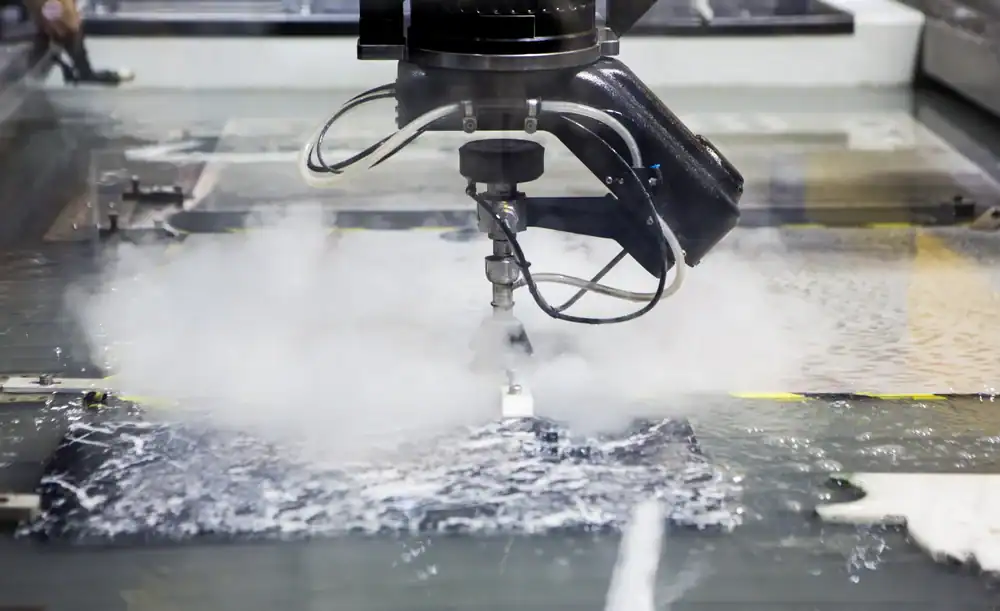
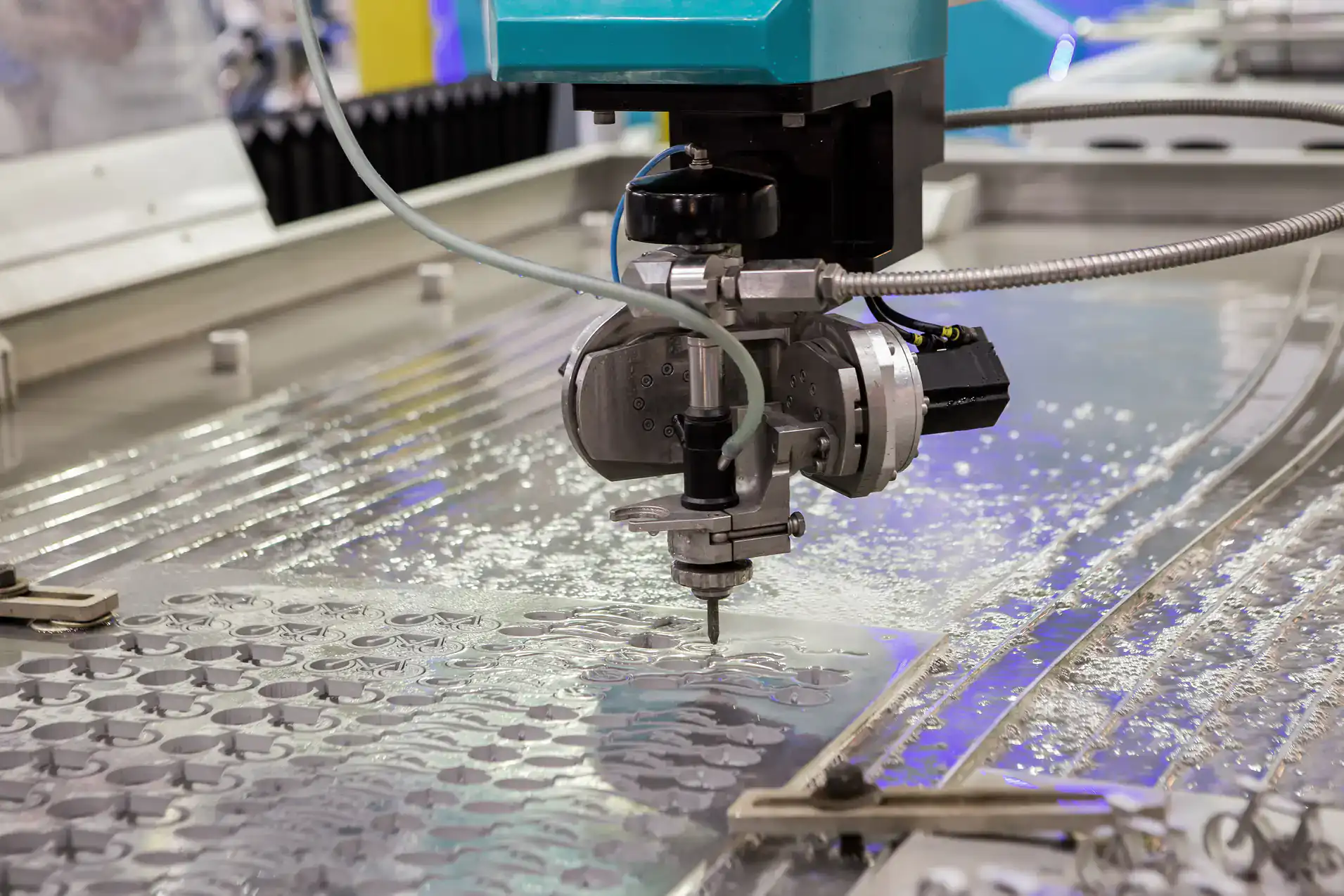
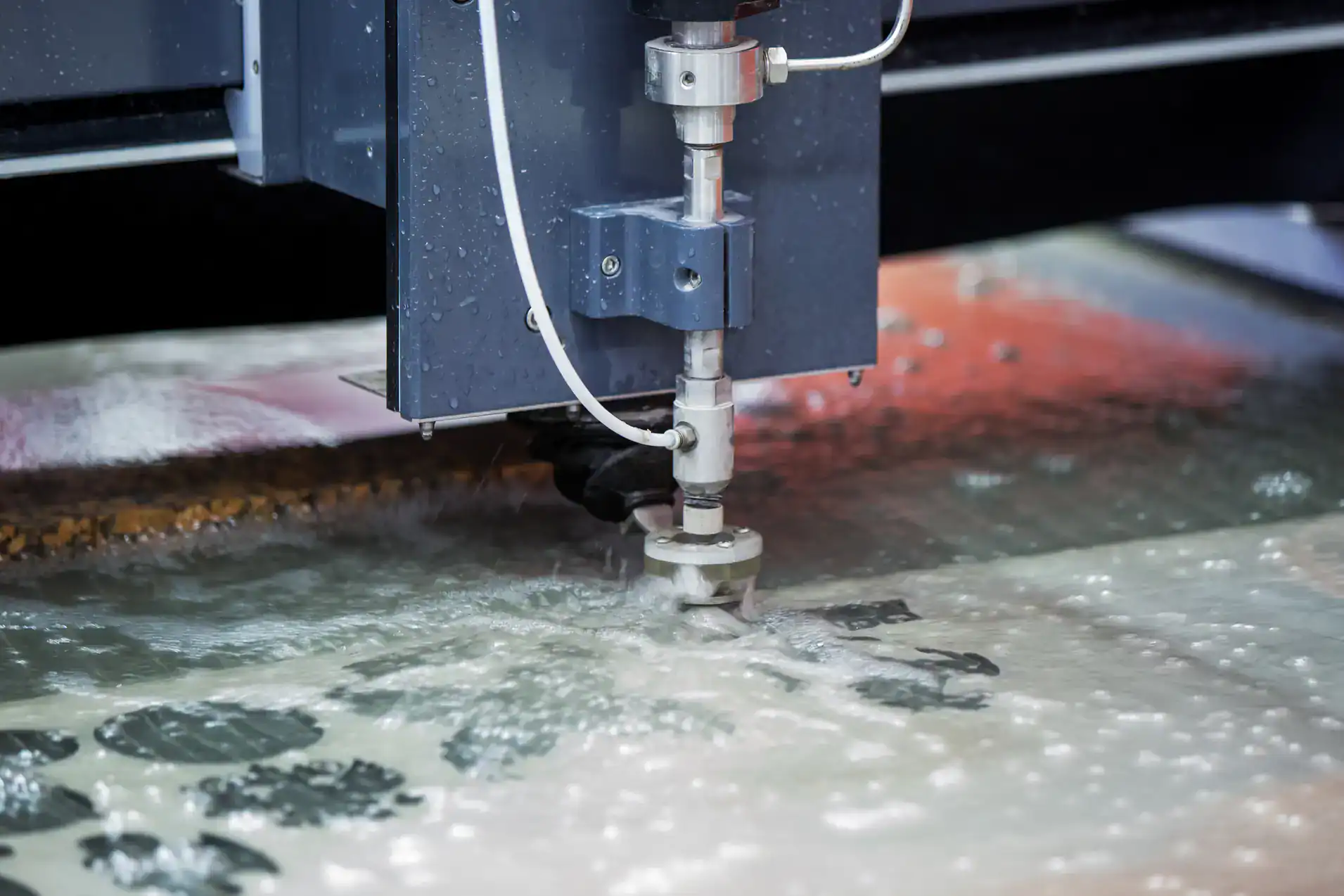
Waterjet cutting uses high-pressure water mixed with abrasive garnet to cut through marble without generating any heat. No thermal stress means no cracking, no warping, and no structural compromise. The edges come out smooth enough that most projects don’t need secondary finishing, which saves you time and labor costs.
You also get design freedom that traditional methods can’t match. Curves, tight radiuses, complex inlays, medallions—waterjet handles it all with accuracy within thousandths of an inch. If you’re doing high-end residential work in Dix Hills, where clients expect custom details and flawless execution, that precision matters. You’re not guessing or hoping the cut works out. You’re getting exactly what the design calls for, every time.
We’ve been doing this for over 40 years, serving contractors, designers, and fabricators across the tri-state area. Our background is in traditional machining, so we understand tolerances, material behavior, and what it takes to deliver work that holds up under scrutiny.
Dix Hills has a lot of high-end residential projects—estate homes, custom kitchens, luxury bathrooms. The expectations are high, and the materials are expensive. You need a shop that can handle complex cuts without wasting your marble or missing deadlines. That’s what we do. We assess your project, recommend the best approach, and produce cuts that fit right the first time.
You send us your design file—DXF, DWG, or even a detailed sketch if that’s what you’re working from. We review it to make sure the cut is feasible and that your material can handle the design without weak points or structural issues. If something looks risky, we’ll tell you before we start cutting.
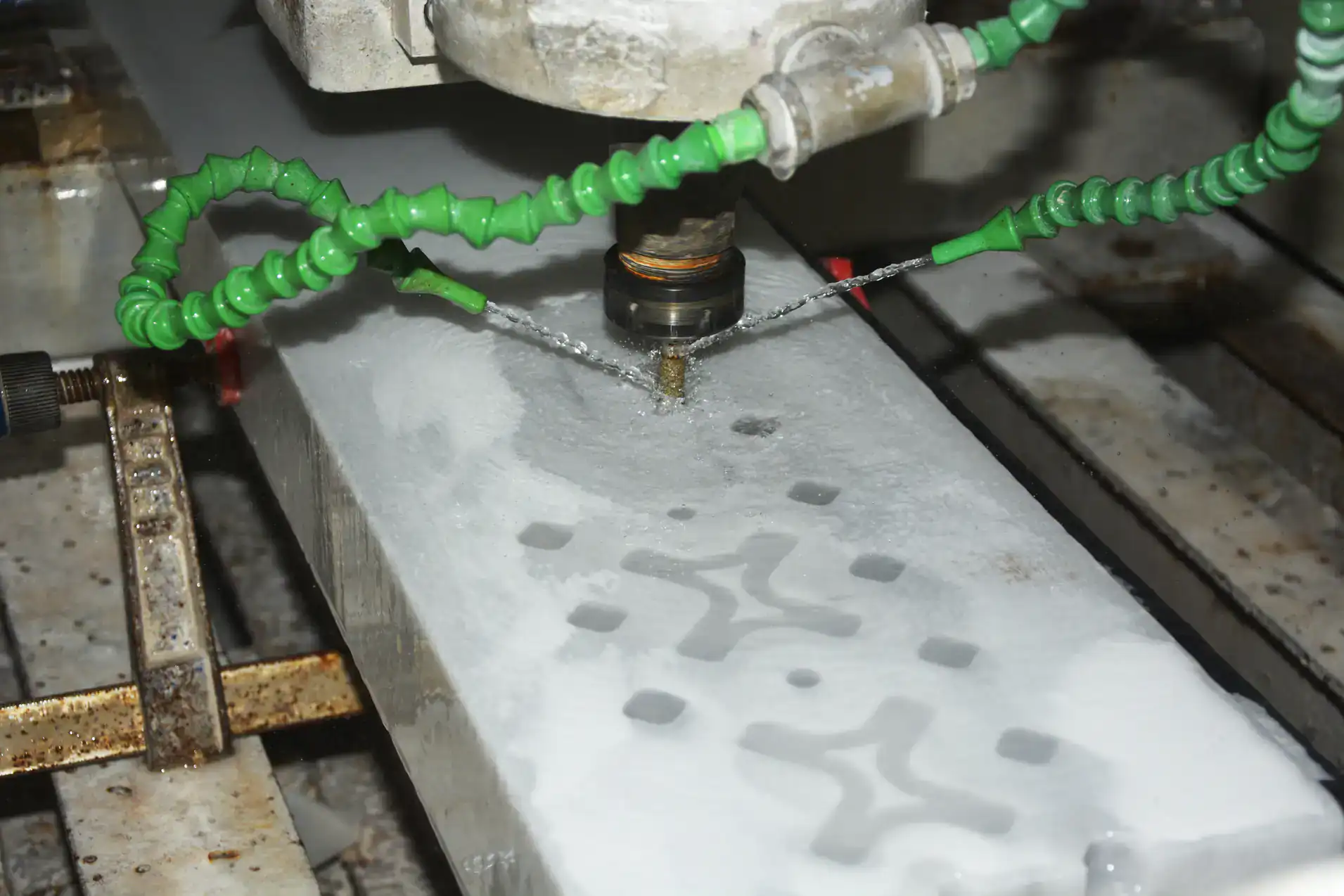
Once the file is approved, we load your marble onto the waterjet table and secure it. The CNC system follows your design with a high-pressure stream of water and garnet abrasive, cutting through the stone without applying heat or mechanical force that could cause cracking. The process is automated, so the accuracy stays consistent across the entire piece.
After cutting, we inspect the edges and dimensions to make sure everything matches your specs. Most cuts come off the table ready to install, but if you need additional finishing or beveling, we can handle that too. You get your marble back on schedule, cut exactly how you need it.
Ready to get started?
You get file review and design consultation before we cut anything. If your design has issues—tight corners that could crack, dimensions that don’t account for material thickness, or patterns that create weak points—we’ll catch it and suggest adjustments. That saves you from discovering problems after the marble is already cut.
The cutting itself is done on CNC-controlled waterjet equipment, which means repeatability and precision across multiple pieces. If you’re doing a large installation with matching sections, every piece will be identical. You’re not dealing with variation or hand-cut inconsistencies.
Dix Hills projects often involve imported marble or rare stone varieties that aren’t easy to replace. Waterjet cutting minimizes waste because the kerf—the width of the cut—is extremely narrow compared to saw blades. You get more usable material out of each slab, which matters when you’re working with expensive stone. We also handle thick slabs up to several inches, so whether you’re cutting countertops, wall panels, or structural elements, the process stays the same.
Yes. Waterjet cutting is one of the few methods that can handle tight curves, sharp angles, and detailed inlays without cracking the marble or requiring multiple tool changes. Traditional methods struggle with complex geometry because they rely on rotating blades or bits that have size limitations and generate heat.
With waterjet, the cutting stream is narrow—typically around 0.030 to 0.040 inches—so it can follow intricate paths without needing a large turning radius. That means you can cut medallions, decorative borders, or custom patterns that would be nearly impossible with a saw. The CNC control ensures that every curve and angle matches your design file exactly.
This is especially useful for high-end residential projects in Dix Hills, where clients want unique, custom details that set their homes apart. You’re not limited to straight cuts or simple shapes. If you can design it, waterjet can cut it.
No, waterjet cutting produces smooth edges that typically don’t require secondary finishing. The high-pressure water stream cuts cleanly through the marble without chipping or creating rough surfaces. You might see a slight texture from the abrasive, but it’s minimal and often acceptable for installations where the edge will be sealed or joined.
If you need a polished edge for visible surfaces—like countertop edges or decorative panels—that’s a separate finishing step, but it’s not required to fix damage from the cutting process. Traditional methods often leave rough, chipped edges that need significant grinding and polishing before they’re usable. Waterjet skips that problem entirely.
The lack of heat also means the marble’s surface stays intact. You won’t see discoloration, micro-cracks, or stress marks around the cut line. The stone looks and performs exactly as it should, which is critical when you’re working with high-value materials.
Waterjet cutting reduces material waste significantly compared to traditional methods. The kerf width—the amount of material removed during cutting—is typically 0.030 to 0.040 inches, which is much narrower than a saw blade. That means more of your marble slab ends up in usable pieces instead of turning into dust and scrap.
For projects using expensive or rare marble, that difference adds up quickly. If you’re cutting multiple pieces from a single slab, the tighter kerf allows for more efficient nesting of parts, so you can fit more cuts into the same material. Traditional cutting methods waste up to 30% more material in some cases, especially with complex shapes.
The precision of waterjet also means fewer mistakes. If a cut is off by even a small amount with traditional methods, you might have to scrap the piece and start over. Waterjet’s CNC accuracy reduces that risk, so you’re not losing material to errors or rework.
Waterjet cutting can handle marble slabs from thin veneers up to several inches thick. The process doesn’t rely on mechanical force or blade depth, so thickness isn’t a limiting factor the way it is with saws or routers. The high-pressure water stream cuts through the material regardless of how thick it is.
Thicker slabs do take longer to cut because the water stream needs more time to penetrate the full depth, but the quality and precision stay consistent. You’re not dealing with blade deflection, binding, or overheating that can happen with traditional methods on thick material.
This flexibility is useful for projects that involve a mix of material thicknesses—like combining standard countertops with thicker decorative elements or structural panels. You can cut everything with the same process and equipment, which simplifies logistics and ensures consistency across the project.
Cutting time depends on the complexity of the design and the thickness of the marble, but waterjet is generally faster than traditional methods for intricate work. Simple straight cuts might take only a few minutes per piece, while detailed patterns or thick slabs can take longer. The CNC automation means the machine runs continuously without needing operator adjustments, so the process is efficient.
For most residential projects—countertops, backsplashes, inlays—you’re looking at turnaround times measured in days, not weeks. Once we have your design file and material, cutting happens quickly. The bigger time factor is usually scheduling and material availability, not the cutting itself.
If you’re on a tight timeline, waterjet’s speed advantage becomes more obvious. Traditional methods require multiple setups, tool changes, and finishing steps that add time to the project. Waterjet handles the entire cut in one pass, so you’re not waiting for secondary operations to finish before you can move forward with installation.
Waterjet cutting has a higher per-hour operating cost because of the equipment, abrasive materials, and precision involved. But when you factor in material savings, reduced waste, faster turnaround, and the elimination of secondary finishing, the total project cost often ends up lower—especially for complex designs or expensive marble.
Traditional cutting might have a lower hourly rate, but you’re paying for extra labor to finish rough edges, higher material waste, and the risk of mistakes that require rework or replacement. Waterjet reduces or eliminates those costs. You’re also getting a level of precision and design flexibility that traditional methods can’t match, which has value if your project requires custom details or tight tolerances.
For high-end projects in Dix Hills, where the marble itself is a significant investment, the cost of cutting is a small percentage of the total material expense. Protecting that investment with a cutting method that won’t damage or waste the stone makes financial sense. You’re paying for accuracy, not just speed.
Useful Links
Other Services we provide in Dix Hills