Hear from Our Customers
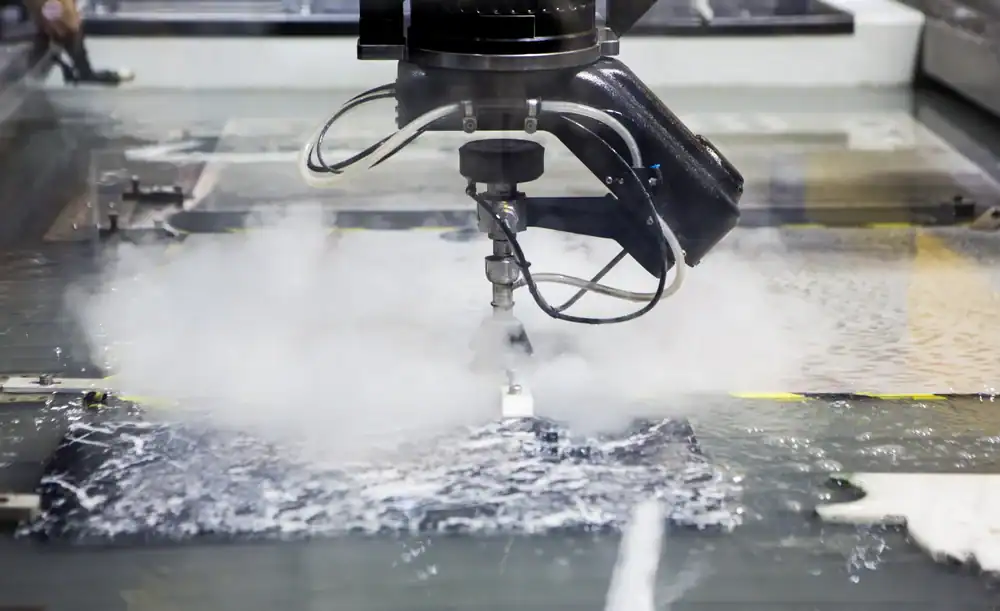
You’re working with expensive marble. The last thing you need is a cutting method that generates heat, creates microcracks, or turns half your material into dust.
Waterjet cutting uses high-pressure water mixed with fine abrasive to slice through marble without introducing any heat whatsoever. That means the stone’s natural veining stays perfect, the structural integrity remains untouched, and you’re not gambling with thermal stress that shows up weeks later as a crack.
The accuracy sits at ±0.005 inches. That’s tight enough for intricate inlays, perfect sink cutouts, and complex architectural details that need to fit together without gaps. If you’re specifying curved edges, detailed logos, or ornamental patterns that would be nearly impossible with a blade, this is how you get them done right the first time.
You also save material. The cutting stream is thinner than traditional blades, which means less marble gets wasted in the kerf. When you’re working with rare or high-cost stone, that difference adds up fast.
We operate out of West Islip, NY, and we’ve been serving architects, contractors, and fabricators across the tri-state area with CNC-controlled waterjet systems built for precision work. Franklin Square sits right in our service zone, and we understand the pace and standards that projects in this area demand.
We’re not a general fabrication shop trying to do everything. We focus on waterjet cutting because it’s the cleanest, most accurate method for working with materials like marble that don’t respond well to heat or vibration.
When you bring us a project, you’re working with people who know how to read technical drawings, handle delicate stone, and deliver cuts that meet your specs without requiring a second round of finishing. Franklin Square has a mix of residential renovations and commercial builds that need custom stonework—we’ve handled both, and we know what’s at stake when the material cost is high and the timeline is tight.
You send us your design file or technical drawing. CAD files work best, but we can work with most formats. If you need help translating a concept into something cuttable, we’ll walk you through that during the consultation.
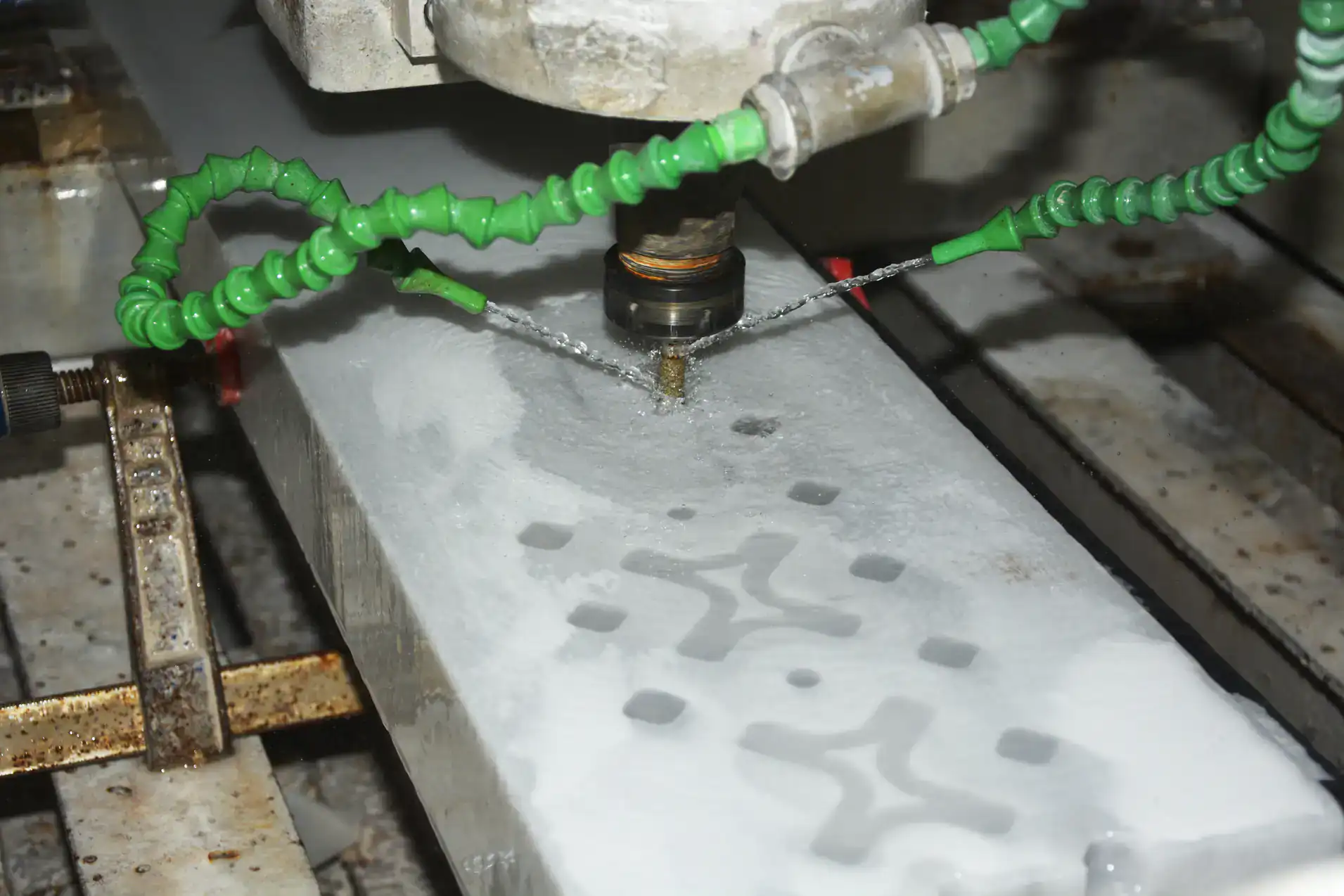
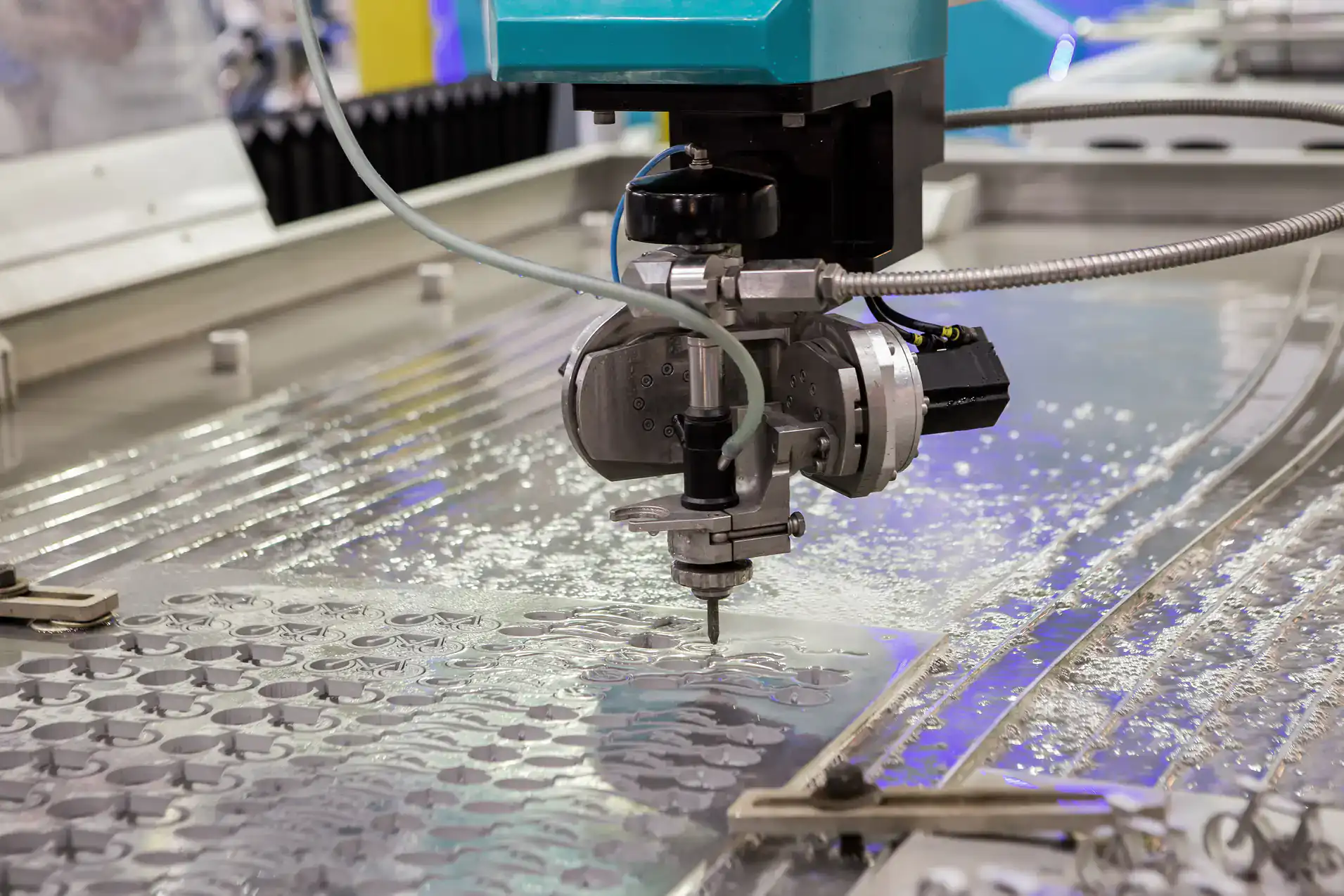
Once we have the design locked in, we program it into our CNC waterjet system. The machine uses a high-pressure stream—up to 60,000 PSI—mixed with garnet abrasive to cut through the marble. There’s no blade, no heat, and no vibration that could cause the stone to crack or chip.
The cutting happens in a contained tank. Water and abrasive slurry stay controlled, so there’s no silica dust in the air and no mess beyond the machine itself. Depending on thickness and complexity, most cuts finish faster than traditional methods, especially when you factor in the lack of secondary finishing.
After the cut, edges come out smooth. You might need light finishing depending on your application, but in most cases, the part is ready to install as-is. If you’re doing a multi-piece assembly, the precision means everything fits together without forcing or shimming.
Ready to get started?
Every project starts with a material consultation. We’ll talk through your marble type, thickness, and design requirements to make sure waterjet is the right fit and that your expectations align with what the process can deliver.
From there, you get CNC-controlled cutting with repeatable accuracy. If you need one piece or a hundred identical pieces, the machine delivers the same result every time. That consistency matters when you’re working on projects with tight tolerances or multi-phase installs.
Franklin Square projects often involve high-end residential work—custom countertops, fireplace surrounds, decorative wall panels—and commercial applications like lobby features or monument fabrication. Waterjet handles all of it without compromising the stone. You’re not dealing with heat discoloration, and you’re not losing material to excessive kerf width.
We also handle thick stock. Marble up to 12 inches thick cuts cleanly, which opens up options for structural elements, thick countertops, and dimensional signage that other methods struggle with. The process is environmentally contained, so there’s no airborne dust and the water recycles within the system.
Traditional cutting methods use diamond blades that generate friction and heat. Marble is sensitive to thermal stress, which means that heat can cause microcracks, discoloration, or even visible fractures that show up during or after the cut.
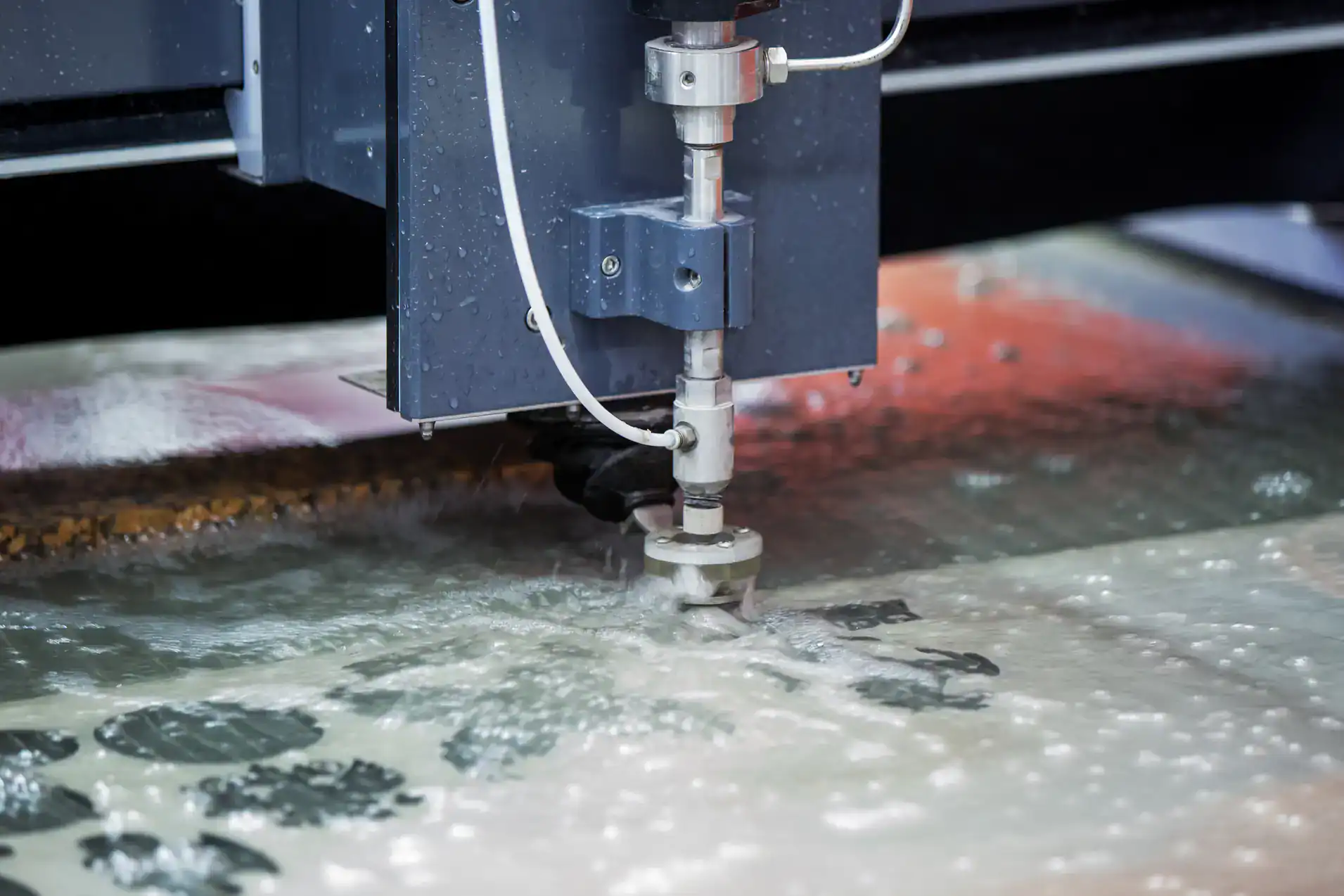
Waterjet cutting uses a high-pressure stream of water mixed with abrasive. There’s no blade contact, no friction, and zero heat introduced to the stone. The marble stays at ambient temperature throughout the entire process, which keeps its structural integrity intact and preserves the natural veining and color.
This also means you’re not dealing with the vibration that comes from blade cutting. Vibration can cause brittle stone to crack, especially near edges or in thinner sections. Waterjet is a cold, smooth process that eliminates both of those risks entirely.
Yes. The cutting stream is extremely narrow, which allows the machine to follow complex paths, tight inside corners, and detailed curves that would be impossible or impractical with a blade.
If you’re cutting decorative fretwork, custom logos, ornamental inlays, or architectural details with sharp angles and flowing lines, waterjet handles it without requiring multiple tool changes or setups. The CNC system follows your design file exactly, so what you draw is what you get.
This is especially useful for projects that involve marble mosaics, medallions, or any application where the visual detail is the entire point. You’re not limited by the radius of a blade or the skill level of a manual operator—the machine executes the design with consistent precision from start to finish.
Turnaround depends on the complexity of the design, the thickness of the marble, and how many pieces you need. Simple cuts on standard-thickness material can often be completed within a few days.
More intricate designs with multiple components or thicker stock may take longer, but waterjet is still faster than traditional methods when you account for the elimination of secondary finishing. You’re not spending extra time polishing edges or fixing heat damage, which speeds up the overall timeline.
We’ll give you a clear timeframe during the consultation once we review your design and material specs. If you’re working against a tight deadline, let us know upfront—we can often prioritize urgent projects or break the work into phases to keep your install schedule on track.
Waterjet cuts through virtually any type of marble, regardless of hardness, veining pattern, or color. It handles everything from soft Carrara to dense Calacatta without adjusting the fundamental process.
Thickness capacity goes up to 12 inches on most systems, with the ability to go thicker depending on the setup. Thicker material takes longer to cut, but the quality stays consistent. You won’t see taper or roughness on the bottom edge like you sometimes get with blade cutting on thick stock.
If you’re working with a particularly rare or expensive marble, waterjet is often the safest choice because it minimizes waste and eliminates the risk of ruining the slab with heat or cracking. We’ve cut everything from standard builder-grade marble to imported stone that costs thousands per square foot—the process handles it all.
Waterjet cutting produces significantly less waste than blade cutting. The kerf—the width of the cut—is much narrower, usually around 0.03 to 0.04 inches compared to 0.125 inches or more with a diamond blade.
That difference matters when you’re working with expensive marble. Less material turns into dust, which means you’re getting more usable stone out of every slab. If you’re cutting multiple pieces from a single slab, tighter kerf width also means you can nest parts closer together and maximize yield.
The waste that does get generated—water, abrasive, and stone particles—stays contained in the cutting tank. There’s no airborne silica dust, and the slurry can be filtered and disposed of properly. It’s a cleaner process overall, both in terms of material efficiency and environmental impact.
The most important thing is a clear design. CAD files work best because they translate directly into the CNC program, but we can also work from PDFs, sketches, or technical drawings. The more detail you provide upfront, the faster we can give you an accurate quote and timeline.
You’ll also want to know your marble type and thickness. If you haven’t sourced the material yet, we can consult on what will work best for your application. Some marbles are more prone to veining irregularities or natural fissures, and it helps to plan the cuts around those features when possible.
Finally, be ready to discuss tolerances and edge finish requirements. If you need polished edges, that’s a secondary step we can handle or coordinate. If the cut edge will be hidden or covered, you can skip finishing altogether and save time and cost. The clearer you are about the end use, the better we can tailor the process to fit your project.
Useful Links
Other Services we provide in Franklin Square