Hear from Our Customers
You’ve seen it happen. A blade catches the edge wrong, and suddenly there’s a crack running through expensive Carrara. Or the fabricator calls saying they need to reorder material because the inlay pattern didn’t work out.
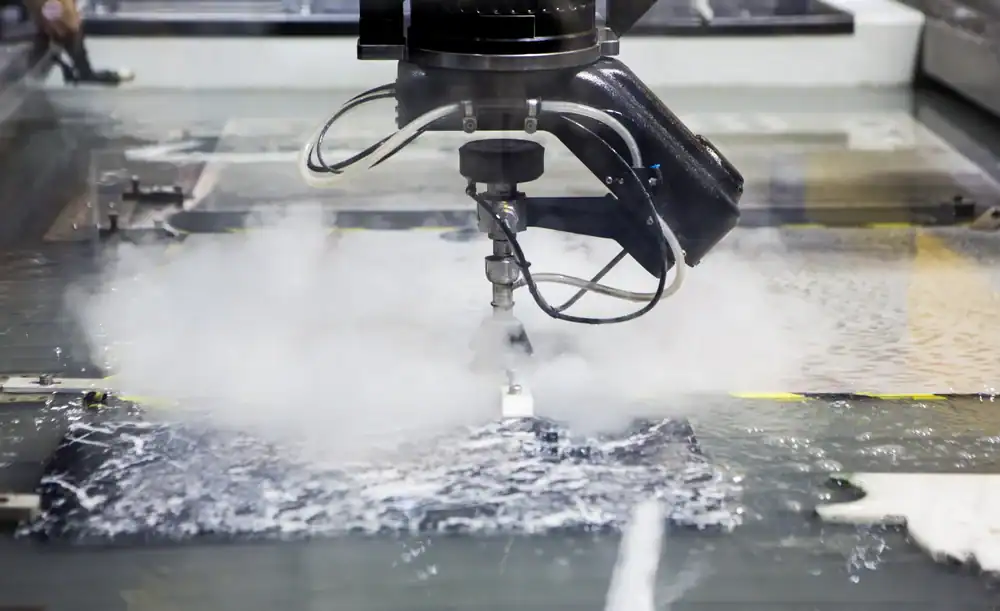
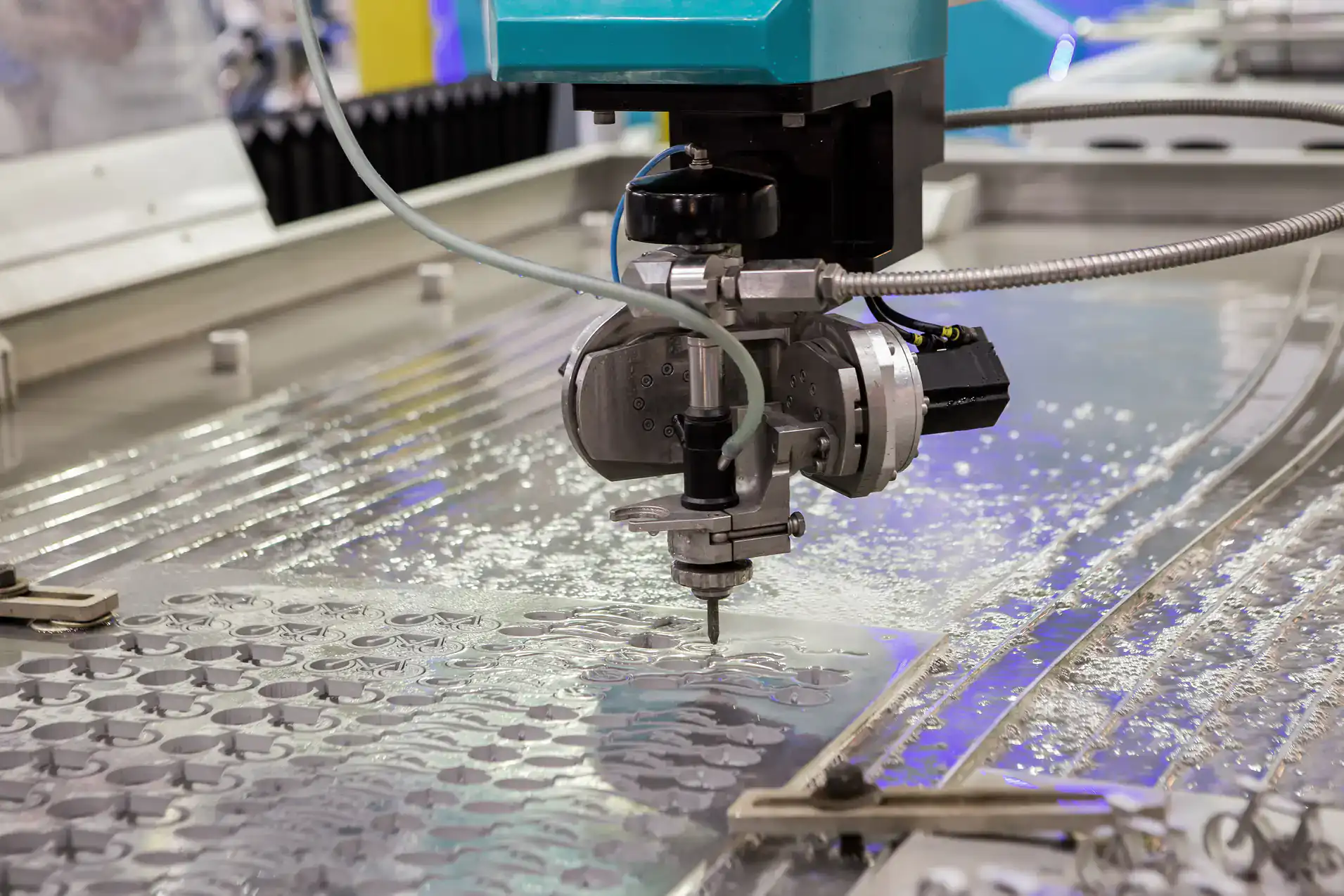
Waterjet cutting eliminates that risk entirely. The process uses high-pressure water mixed with fine abrasive particles to cut through marble without any physical contact that causes stress fractures. No heat buildup means no micro-cracks forming in the stone’s crystalline structure. No blade pressure means no chipping along cut lines.
What you get is accuracy within five-thousandths of an inch. Edges come out smooth enough that most projects need minimal finishing work. Complex patterns with tight radiuses and intricate inlays become possible because there’s no blade width to account for and no tool limitations on direction changes.
The material savings add up fast. Traditional cutting methods can waste up to 30% more marble because of wider kerf widths and the need for safety margins around potential chip zones. With custom marble waterjet cutting in Glen Cove, NY, you’re cutting exactly what you need with minimal waste between pieces.
Tri-State Waterjet serves architects, stone fabricators, and contractors throughout Glen Cove and Long Island, NY who need industrial marble waterjet cutting in Glen Cove, NY that meets commercial-grade specifications. We’re not a retail countertop shop trying to do custom work on the side.
Our facility handles everything from architectural medallions for historic restorations to custom inlay work for high-end residential builds. Glen Cove’s established stone industry means you already know what quality looks like. We’re here to give you another option when traditional methods won’t cut it—literally.
The CNC-controlled systems we use aren’t new technology trying to prove itself. This is established manufacturing equipment that’s been refined over decades and is now standard in precision fabrication facilities worldwide.
You send us your design file or specifications. CAD drawings work best, but we can work from templates, sketches, or even existing pieces you need replicated. If your design needs adjustment for structural integrity or optimal cutting paths, we’ll tell you before we start.
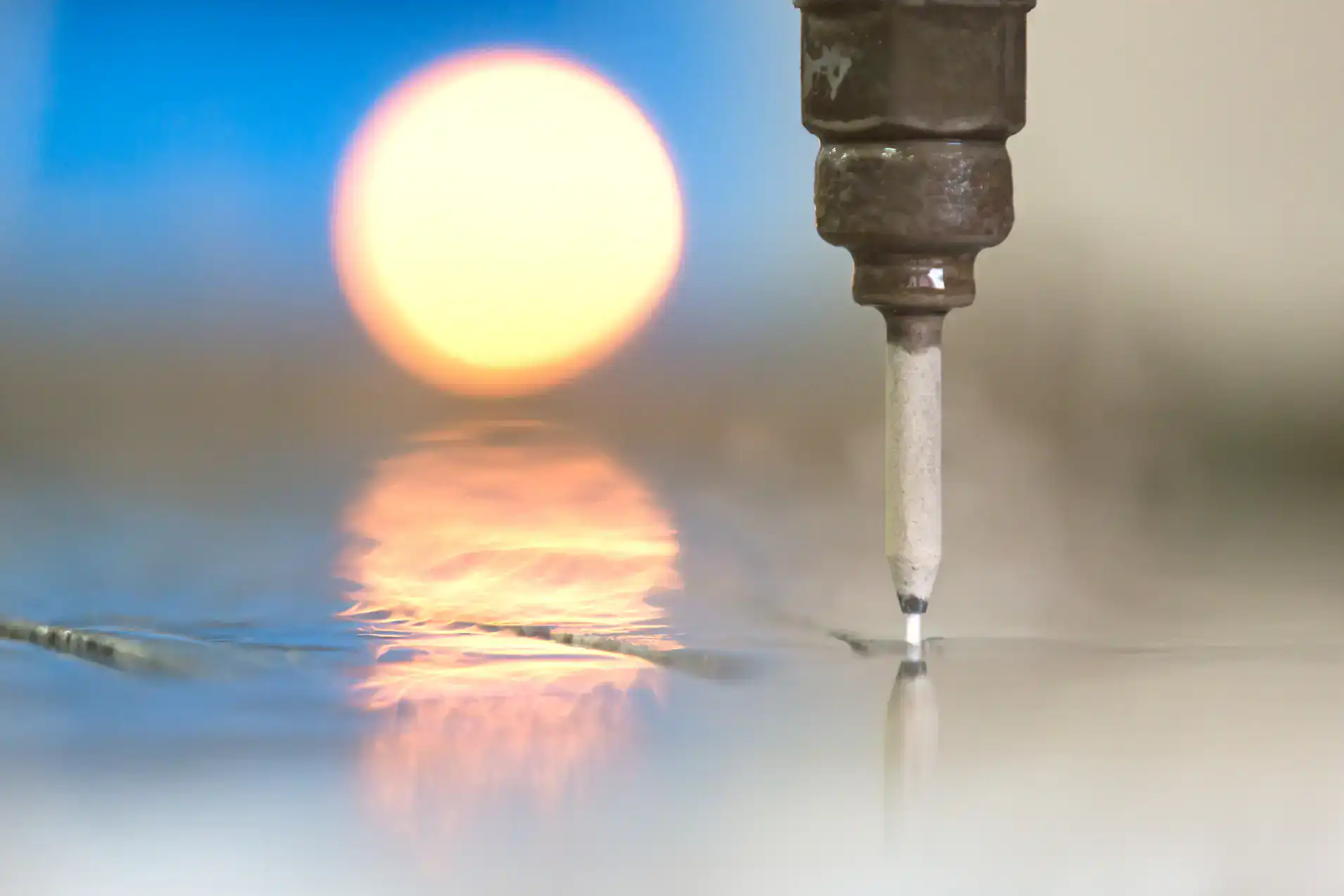
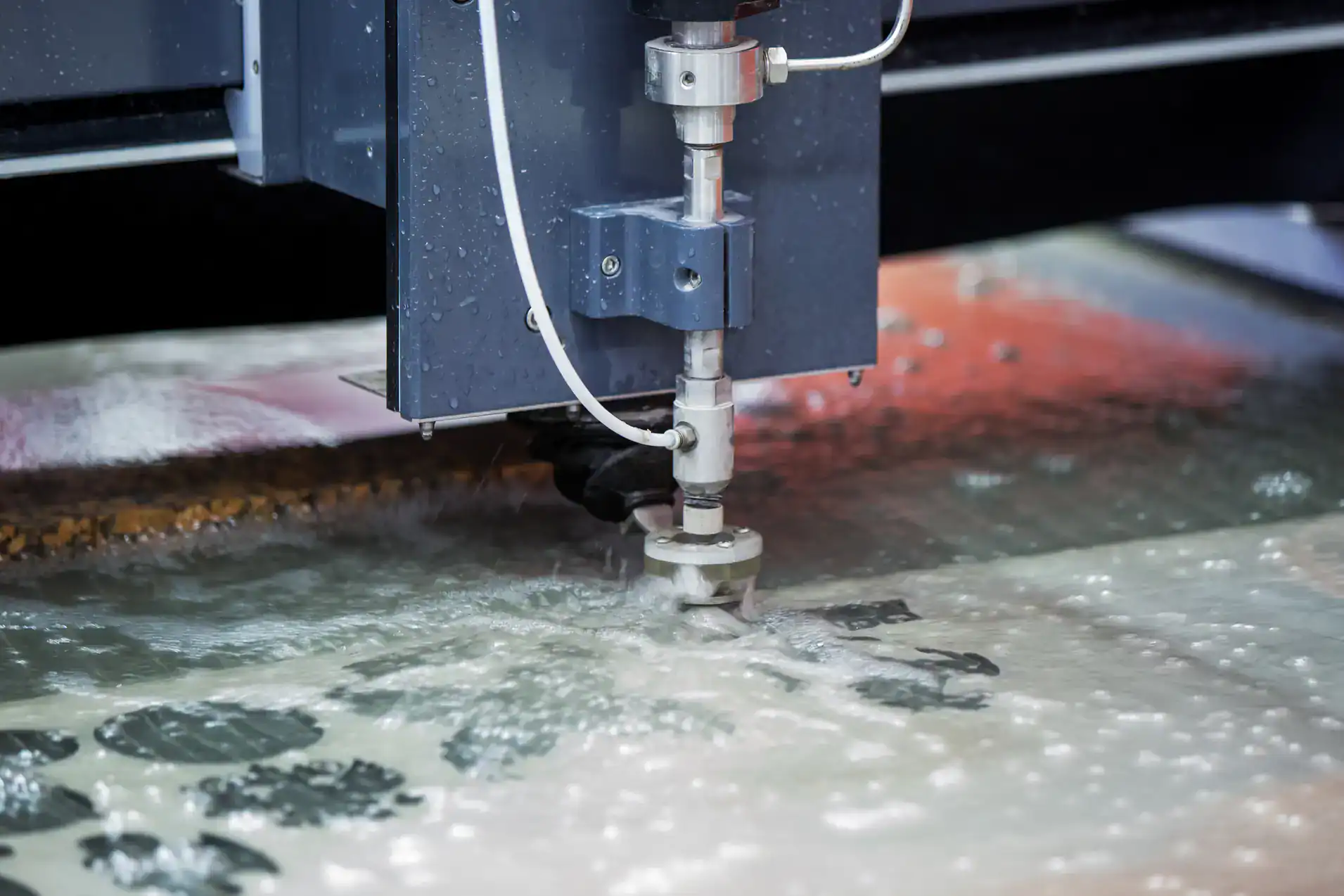
We program the cut path into the CNC system and secure your marble slab on the cutting bed. The waterjet nozzle moves along the programmed path while ultra-high-pressure water mixed with garnet abrasive cuts through the stone. The pressure is around 60,000 PSI, but because it’s water and not a physical blade, there’s no impact stress transferred into the marble.
For through-cuts, the process is straightforward. For partial-depth work like texture patterns or relief designs, we control the depth by adjusting pressure and traverse speed. The cutting table has a tank underneath that catches the water and spent abrasive, so there’s no dust and minimal mess.
Once cutting is complete, we clean the piece and inspect edge quality. Most projects are ready to go as-is. If you need specific edge profiles or polishing, we can handle that too, but the waterjet process typically produces edges that need far less secondary work than saw-cut marble.
Ready to get started?
The CNC marble cutting in Glen Cove, NY that we provide covers straight cuts, curved cuts, inside corners, and intricate patterns that would be impossible or prohibitively expensive with traditional methods. That includes medallions, inlays, custom edge profiles, decorative panels, and architectural elements.
Thickness isn’t usually a limitation. We can cut through marble slabs up to several inches thick, though cutting speed decreases with thickness. If you’re working with book-matched slabs and need identical cuts on both pieces, the CNC programming ensures perfect repeatability.
Glen Cove’s architectural landscape includes everything from historic homes to modern commercial buildings. Whether you’re restoring original marble features in a century-old estate or creating contemporary geometric patterns for a new build, the process adapts to your design requirements. We’ve cut everything from traditional Victorian-style borders to angular modern patterns that would break saw blades.
Material consultation is included. If you’re not sure whether your design will work structurally or if there’s a more efficient way to lay out cuts to minimize waste, we’ll walk through options before committing your material to the cutting table.
The per-hour cutting rate for waterjet is typically higher than running a bridge saw, but that’s not the full cost picture. You need to factor in material waste, secondary finishing time, and the risk of ruined pieces.
Traditional saw cutting creates a kerf width of around 3-4mm and often requires additional safety margins to prevent chipping. Waterjet cutting has a kerf of about 1mm and needs minimal safety margin. On a project using multiple expensive marble slabs, that difference in waste can offset the higher cutting rate entirely.
Then there’s finishing time. Saw-cut edges usually need significant grinding and polishing to achieve a smooth finish. Waterjet-cut edges come out of the process much smoother, often requiring only light finishing or none at all for edges that won’t be visible. If you’re paying someone hourly for finishing work, those savings add up.
The biggest cost factor is risk. If a traditional cutting method cracks a $3,000 slab, you’re eating that cost plus delays while new material is sourced. Waterjet cutting eliminates most of that risk because there’s no mechanical stress on the material.
Yes, waterjet cutting works across all marble varieties regardless of density, color, or veining patterns. The process doesn’t rely on hardness differences or structural properties the way blade cutting does.
Softer marbles like Carrara or Calacatta that are prone to chipping with traditional methods cut cleanly with waterjet because there’s no impact force. Harder marbles or those with complex veining patterns that can cause blades to bind or deflect also cut without issue because the water stream doesn’t care about internal stone structure.
The one consideration is existing cracks or fissures in the stone itself. Waterjet cutting won’t create new cracks, but if your marble slab already has a hairline fracture, the cutting process could potentially cause it to propagate. That’s why we inspect material before cutting and discuss any concerns about existing flaws.
Exotic or rare marbles with unusual mineral compositions cut just as reliably as common varieties. The abrasive garnet mixed into the water stream is harder than any marble, so the cutting action remains consistent regardless of what specific minerals make up your stone.
Cutting time depends on three factors: total linear feet of cuts, marble thickness, and design complexity. A simple rectangular cutout in 3cm marble might take 15-20 minutes. An intricate inlay pattern with tight curves and detail work could take several hours.
As a rough baseline, waterjet cutting moves at around 4-6 inches per minute through standard 2-3cm marble for quality cuts. Thicker material slows that down. Very thin material or situations where edge quality is less critical can speed it up.
Complex designs take longer not just because there’s more cutting, but because the nozzle has to slow down for tight radiuses and direction changes. A 12-inch diameter circle cuts faster than a 12-inch square with sharp corners, even though the perimeter length is similar.
Setup and programming time adds to the overall timeline. Simple cuts with straightforward geometry might only need 15-30 minutes of setup. Complex multi-piece projects with detailed CAD work could require several hours of programming and test runs before we cut your actual material. We’ll give you a realistic timeline estimate once we see your specific design requirements.
CAD files in DXF or DWG format work best because they translate directly into CNC cutting paths with no interpretation needed. If you’re working with an architect or designer, they can typically export these formats from whatever software they’re using.
Vector files like AI or PDF also work well as long as the paths are clean and to scale. We can import these into our CAM software and generate toolpaths. The key is that curves need to be actual vector curves, not rasterized images or low-resolution approximations.
If you don’t have digital files, we can work from physical templates or detailed dimensioned drawings. We’ll digitize these in-house, though that adds some time to the setup process. For replication work where you have an existing piece that needs to be duplicated, we can measure and create the cutting file from the physical sample.
What we need to know beyond just the shape: marble thickness, whether cuts are through-cuts or partial depth, what edge quality you need, and how the piece will be installed or supported. A delicate inlay that will be epoxied into a surrounding field needs different edge characteristics than a structural element that will bear weight. Give us the context for how the piece will be used, and we’ll optimize the cutting parameters accordingly.
No dust at all. The water used in cutting suppresses any particles that would otherwise become airborne. This is a significant advantage over dry-cutting methods that create clouds of marble dust requiring extensive ventilation and cleanup.
The cutting process happens over a water-filled catch tank. The spent abrasive and marble particles fall into the tank where they settle out. We manage the water and abrasive waste according to proper disposal protocols, so you don’t have to worry about environmental compliance issues.
For the marble piece itself, there’s no embedded dust or residue in the cut edges. The water flow keeps everything flushed clean during cutting. Once we pull the piece from the table, it needs basic rinsing and drying, but there’s no grinding dust worked into the surface or edges like you’d see with dry-cut methods.
This also means better air quality in the cutting facility and no dust contamination on your marble’s polished surfaces. If you’re having multiple pieces cut from the same slab, the uncut portions stay clean throughout the process. That matters when you’re working with book-matched or sequenced pieces where surface consistency is important.
Yes, and this is where CNC waterjet cutting shows its biggest advantage over hand-cutting methods. The computer-controlled positioning ensures that mating pieces fit together with consistent gaps and alignment.
For inlay work where you’re cutting both the recess and the insert piece, we program both cuts from the same reference file. This ensures the insert matches the recess exactly, accounting for the kerf width of the water stream. The typical fit tolerance is tight enough that pieces interlock cleanly without gaps or forcing.
Multi-piece patterns like geometric floors or wall installations can be cut from a single slab or across multiple slabs with maintained accuracy. If you’re creating a repeating pattern, the CNC programming ensures each repeat is identical. That’s nearly impossible to achieve with manual cutting methods where small variations accumulate across multiple pieces.
Book-matched inlays where the pattern needs to mirror across a centerline also benefit from CNC precision. We can cut both halves simultaneously or sequentially with guaranteed symmetry. For projects where you’re mixing marble colors in an inlay pattern, we cut each color separately and the pieces fit together as designed. The accuracy level we’re working at—five-thousandths of an inch—means you’re not shimming or filling gaps during installation.
Useful Links
Other Services we provide in Glen Cove