Hear from Our Customers
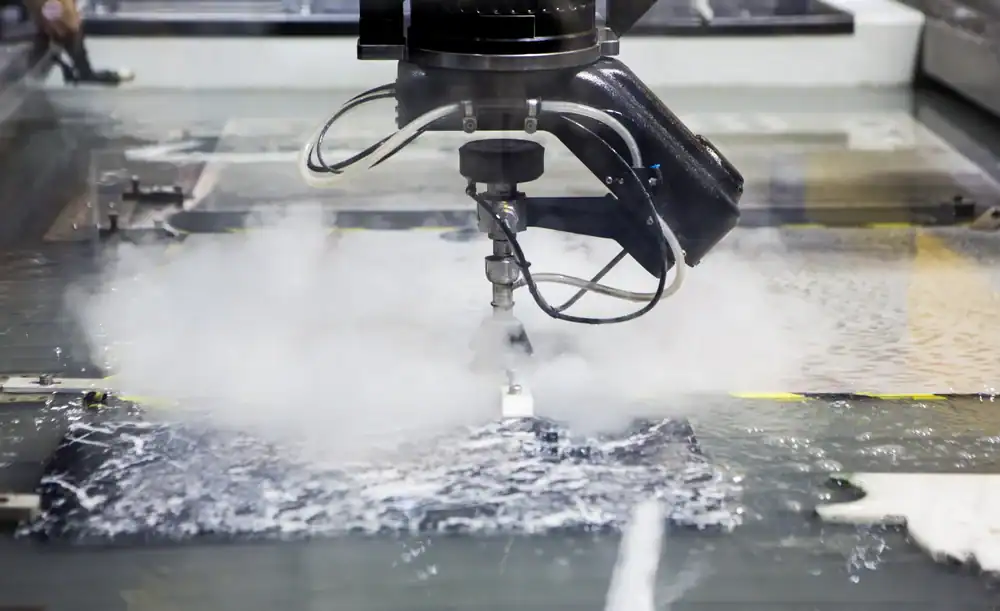
You’ve seen it happen. A traditional saw hits marble wrong, and suddenly you’re dealing with chips along the edge or microcracks that show up later. That’s not just frustrating—it’s expensive, especially when you’re working with high-end material or tight project deadlines.
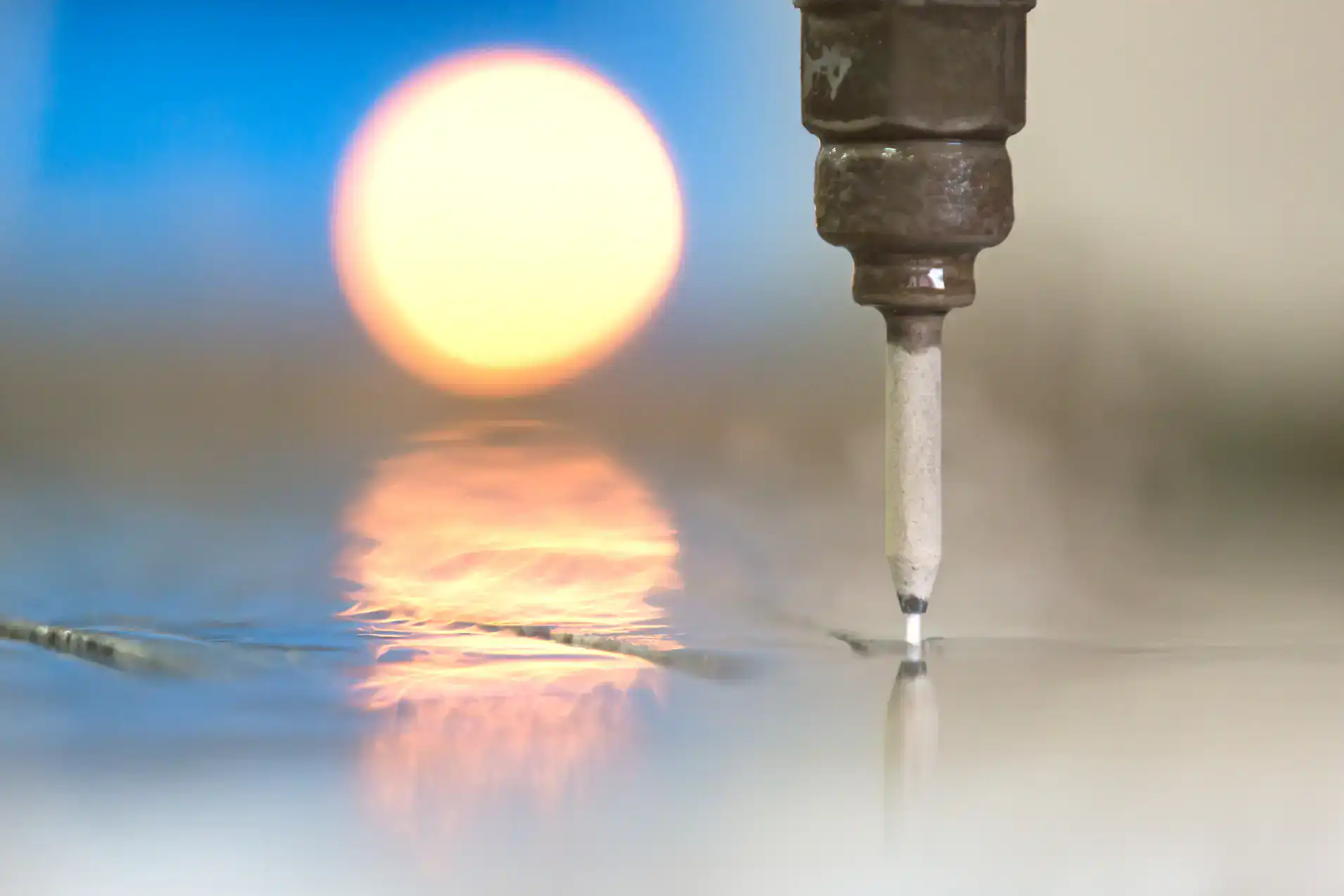
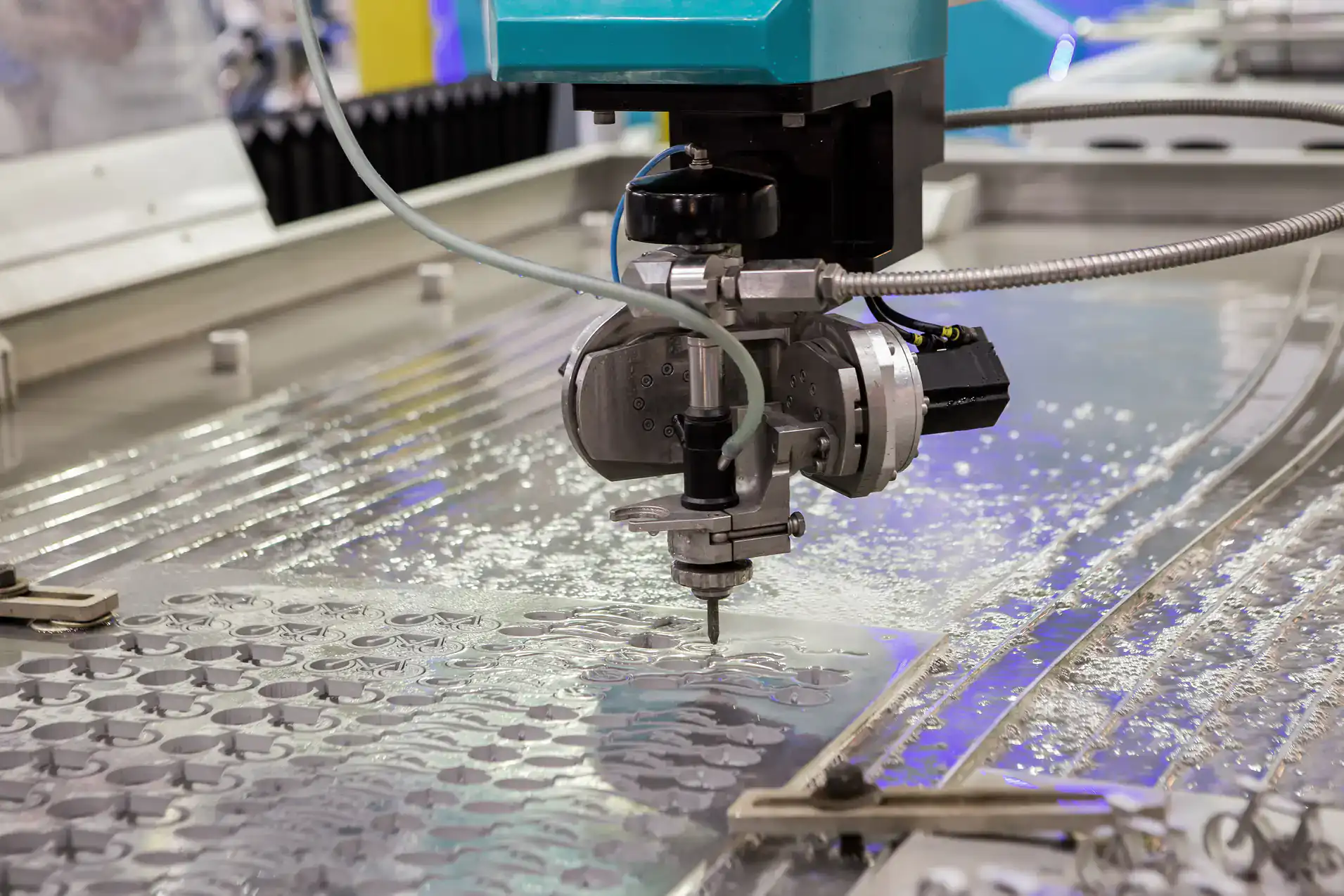
Waterjet cutting uses nearly 60,000 PSI of pressure to cut through marble without generating heat. No thermal stress means no warping, no discoloration, and no microscopic damage that compromises the integrity of your piece. The edges come out smooth and uniform, which means you’re not spending extra time or money on secondary finishing.
If you’re cutting intricate patterns, inlays, or custom shapes for countertops, backsplashes, or architectural features, waterjet handles curves, sharp corners, and detailed designs that would be nearly impossible with a blade. You draw it, we cut it—accurately, consistently, and without the headaches that come with traditional cutting methods.
We work with architects, contractors, designers, and fabricators across Long Island, NY who need precision marble cutting for projects that don’t leave room for error. We’re based in West Islip, and we’ve built our reputation on accuracy, fast turnaround, and understanding what’s actually at stake when you’re working with expensive materials.
Manorville sits in a market where construction standards are high and clients expect flawless results. Whether you’re fabricating custom countertops for a luxury home or cutting decorative marble elements for a commercial build, you need cuts that fit right the first time. That’s what we do—CNC marble cutting in Manorville, NY that meets tolerances within ±0.1 to ±0.2 mm, so your installations go smoothly and your clients stay happy.
You start by sending us your design file—CAD drawings, DXF files, or even detailed sketches work. Our CNC system translates that into precise cutting paths, so what you designed is exactly what gets cut.
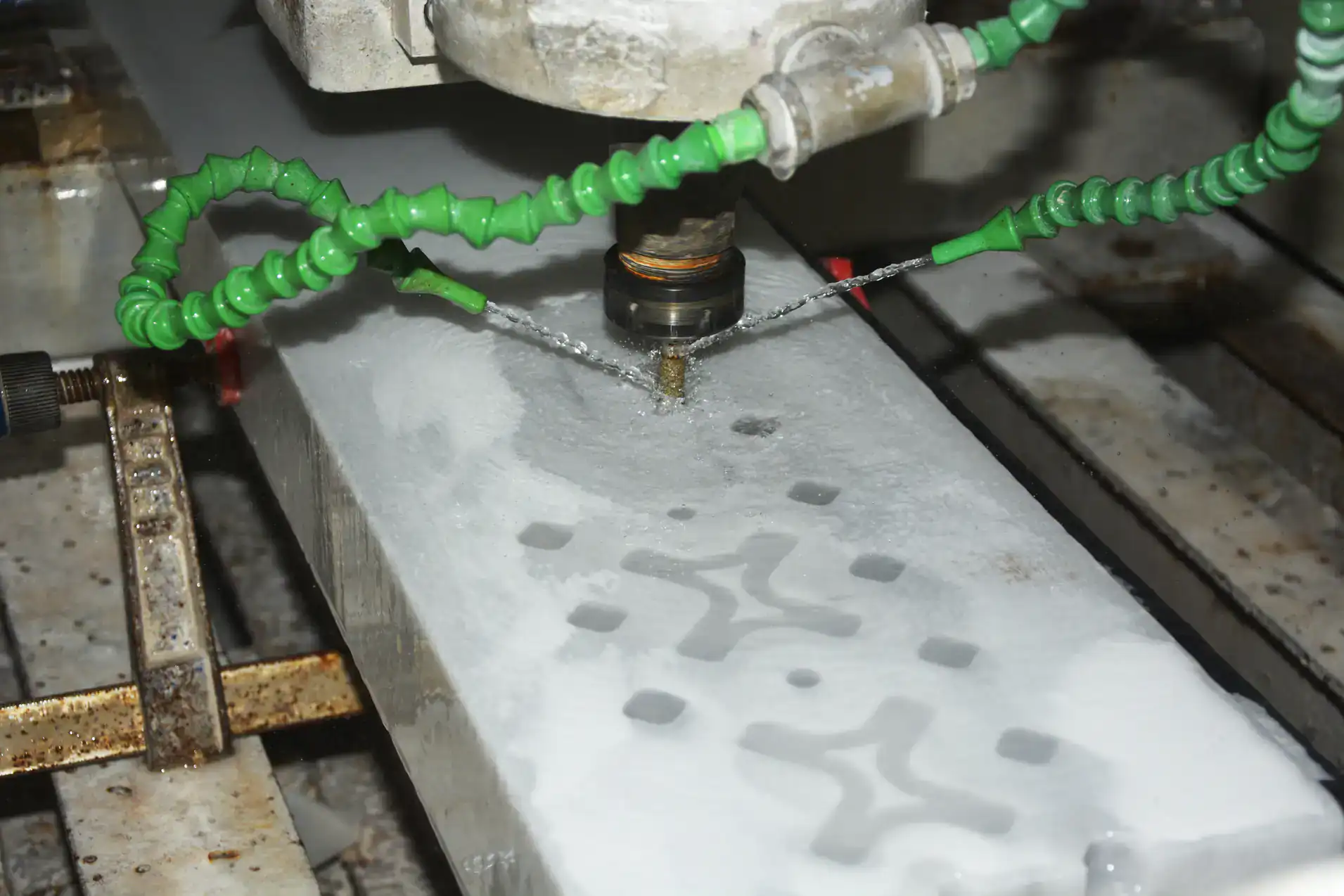
Once we load your marble slab, the waterjet nozzle follows those paths using a high-pressure stream mixed with fine abrasive garnet. The stream is thinner than a credit card, which means minimal material waste and tight nesting of multiple pieces if you’re cutting several parts from one slab. There’s no blade contact, no vibration, and no heat, so the marble stays intact without stress fractures or edge damage.
After cutting, your pieces come off the table ready to install or assemble. The edges are clean and burr-free, which eliminates the grinding and polishing steps you’d normally need with saw cuts. If you’re working on a timeline, that’s time saved. If you’re managing costs, that’s labor and equipment you don’t have to pay for.
Ready to get started?
You get cuts that handle thickness. Waterjet systems cut through marble up to six inches thick, which gives you flexibility on material selection and design depth that other methods can’t match. If you’re working with substantial slabs for feature walls, fireplace surrounds, or structural elements, the equipment handles it without issue.
You also get complex geometry without compromising speed. Curves, radiuses, intricate inlays, medallion patterns—waterjet cuts them as easily as straight lines. That’s especially useful in Manorville’s higher-end residential market, where custom marble work is a selling point and cookie-cutter designs don’t cut it. Architects and designers working on luxury builds need fabricators who can execute detailed visions, and waterjet makes those visions possible without the trial-and-error that comes with traditional methods.
And you get consistency across multiple pieces. If you’re cutting matching panels, repeating patterns, or components that need to fit together precisely, CNC waterjet systems lock in the same pressure, abrasive flow, and cutting speed for every piece. That repeatability keeps your project on schedule and reduces the scrap rate that eats into your material budget.
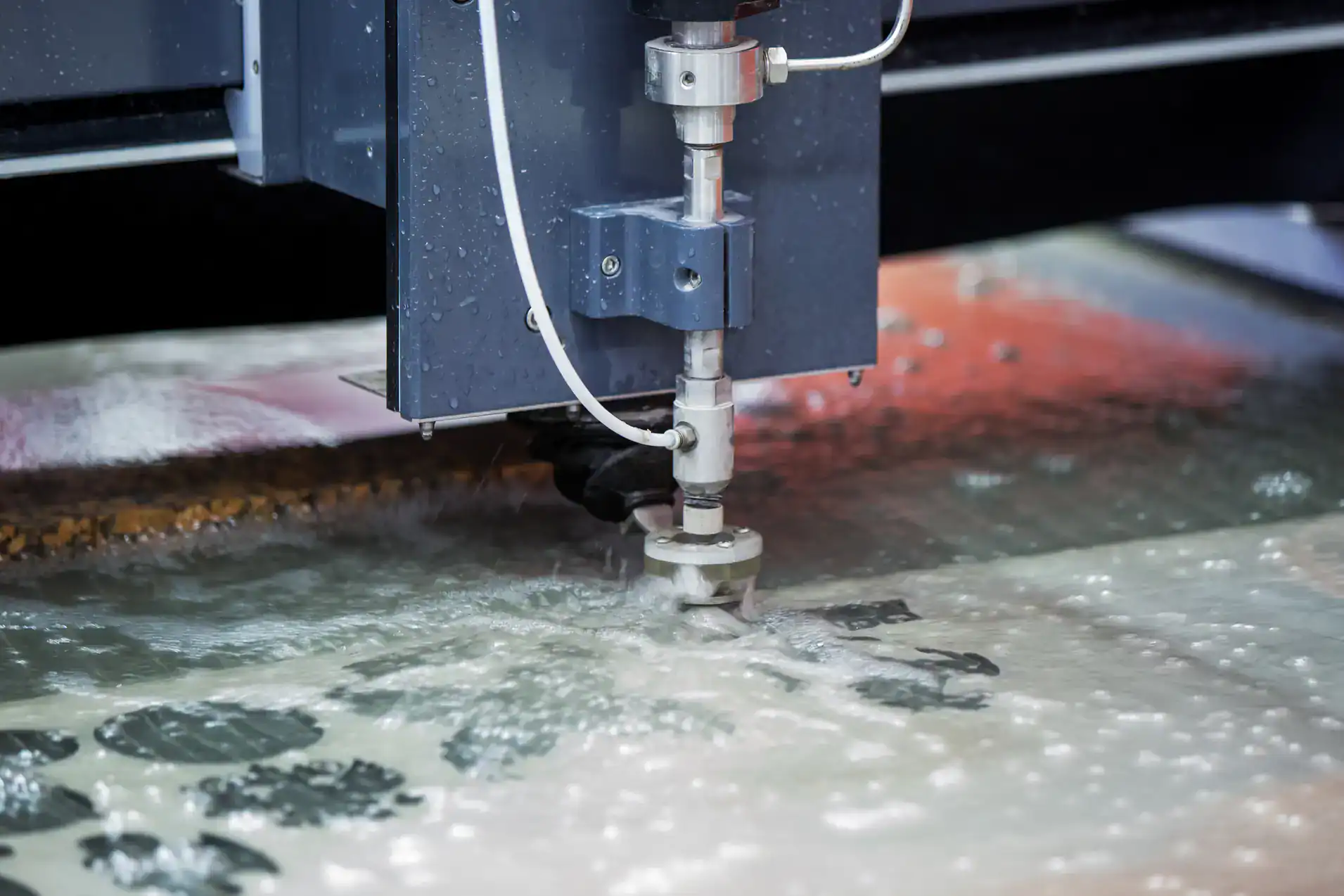
Yes, and that’s one of the main reasons contractors and fabricators choose waterjet over saws or routers. Marble chips easily when you apply mechanical force or heat, especially near edges or corners. Waterjet cutting doesn’t use blades, so there’s no impact force that could cause fractures.
The cutting stream is a focused jet of water and abrasive that erodes material gradually rather than striking it. That means even delicate edges, thin sections, or intricate cutouts stay intact. You’re not dealing with vibration or heat buildup, which are the two biggest culprits behind edge damage in traditional marble cutting.
If you’re cutting sink openings, intricate backsplash patterns, or decorative inlays, waterjet gives you clean results without the chips and microcracks that show up later and cause callbacks or rework.
CNC waterjet cutting holds tolerances within ±0.1 to ±0.2 mm, which is significantly tighter than what you’ll get with manual cutting or even guided saws. That level of precision matters when you’re fitting pieces together, matching seams, or installing components that need to align perfectly with surrounding materials.
Manual cutting depends on the skill of the operator and the steadiness of the tool, which introduces variability. Even experienced fabricators can’t match the repeatability of a CNC system that follows digital paths with sub-millimeter accuracy. If you’re cutting multiple identical pieces or components that need to fit together without gaps, CNC eliminates the guesswork.
For architects and contractors working on high-end projects in Manorville, that precision translates to faster installations, fewer adjustments on-site, and finished work that looks as clean as the design renderings promised.
Waterjet handles any design you can draw. If you’re working with straight cuts, simple rectangles, or basic shapes, waterjet does those quickly and accurately. But where it really stands out is with complex geometry—curves, radiuses, sharp internal corners, pierce holes, and intricate patterns that would be difficult or impossible with traditional saws.
Custom inlays, medallions, decorative borders, and mosaic patterns are all common waterjet applications. If you’re designing feature walls, fireplace surrounds, or statement countertops with embedded patterns, waterjet makes those designs feasible without hand-carving or multi-step fabrication processes that drive up labor costs.
The system cuts based on your CAD file, so if you can design it digitally, it can be cut. That gives designers and architects more creative freedom and gives fabricators the ability to execute those designs without compromising quality or blowing the budget.
No, waterjet actually minimizes waste compared to other cutting methods. The cutting stream is extremely thin—typically less than 1 mm wide—which means you lose very little material to the kerf. That narrow kerf allows you to nest multiple pieces closely together on a single slab, maximizing how much usable material you get from each piece of marble.
If you’re cutting several components from one slab, the CNC system can optimize the layout to reduce scrap. That’s especially valuable when you’re working with expensive or rare marble where every square inch matters. Traditional saws have wider blades and often require more spacing between cuts, which increases the amount of material that ends up as waste.
For fabricators managing material costs or working with clients who want to minimize waste for environmental or budget reasons, waterjet cutting offers a more efficient approach that gets more finished pieces out of each slab.
Cutting time depends on the thickness of the marble, the complexity of the design, and the level of detail required. Simple straight cuts on thinner material go quickly—often just a few minutes per piece. More intricate designs with curves, tight radiuses, or detailed patterns take longer because the cutting head moves more slowly through complex paths to maintain precision.
As a rough benchmark, cutting a standard countertop with a sink opening and a few edge details might take 30 to 60 minutes, depending on specifics. Thicker slabs or highly detailed inlays can take longer, but you’re still saving time compared to traditional methods that require multiple steps—rough cutting, grinding, polishing, and finishing.
The key advantage isn’t just speed—it’s that waterjet delivers finished edges in one pass. You’re not adding hours of secondary work to clean up rough cuts or fix damage. For contractors working on tight schedules in Manorville’s competitive construction market, that streamlined process keeps projects moving without sacrificing quality.
Yes, waterjet works across both markets. For residential projects, it’s commonly used for custom countertops, backsplashes, fireplace surrounds, shower walls, and decorative inlays. Homeowners investing in luxury finishes want precision and unique designs, and waterjet delivers both without the limitations of traditional cutting.
For commercial projects, waterjet handles larger-scale applications like lobby flooring, feature walls, reception desks, and architectural panels. The ability to cut thick material, replicate patterns consistently, and execute complex designs makes it a go-to method for commercial fabricators working on hotels, office buildings, and high-end retail spaces.
In Manorville and across Long Island, NY, both residential and commercial construction markets demand high-quality marble work. Waterjet cutting meets those standards whether you’re fabricating a single custom piece for a homeowner or producing dozens of matching panels for a commercial build.
Useful Links
Other Services we provide in Manorville