
Hear from Our Customers
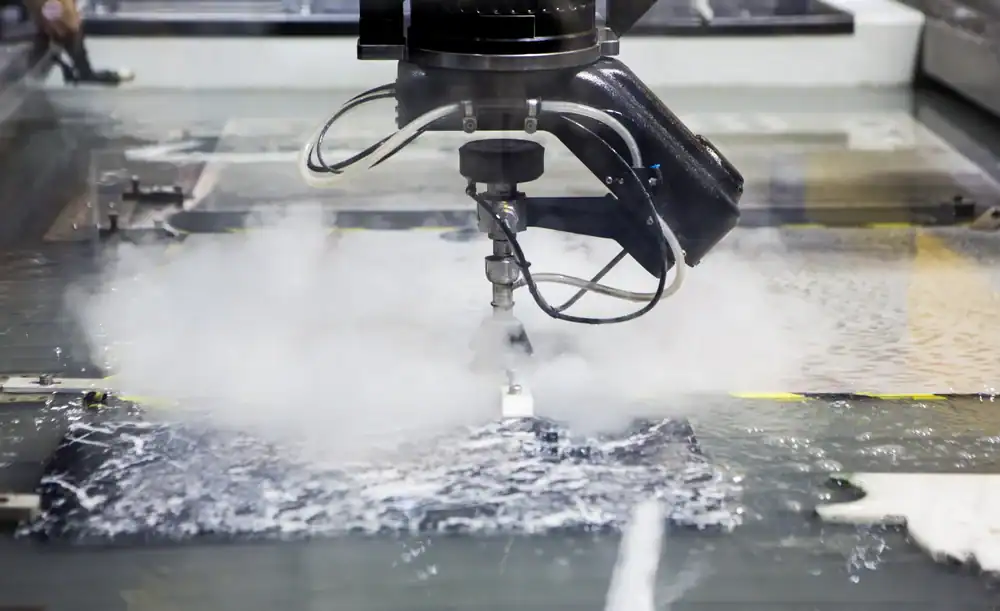
You’re not paying for the cut itself. You’re paying for what happens after: installations that fit the first time, grout lines that stay tight, and edges clean enough that you skip the secondary finishing work entirely.
When you’re working with marble that costs $200+ per piece, there’s no room for thermal cracks, chipped edges, or cuts that miss by even a sixteenth of an inch. Waterjet technology uses high-pressure water mixed with abrasive garnet to slice through stone without generating heat. That means no structural damage, no micro-cracks forming weeks later, and no callbacks because the material failed.
The difference shows up in your timeline too. Complex patterns and intricate inlays that would take days with traditional methods get processed 40% faster with CNC marble cutting in Patchogue, NY. You’re not waiting on multiple finishing passes or dealing with blade changes every few hours. The cut comes out smooth, the tolerances hold, and your install crew isn’t fighting with pieces that don’t line up.
We work with the 4,200+ architects, designers, and contractors across Patchogue, NY who need custom marble waterjet cutting that actually matches their drawings. We handle everything from initial design consultation through final fabrication, so you’re not coordinating between three different vendors to get one piece cut right.
The Long Island, NY market moves fast. Between high-end residential renovations and commercial hospitality projects, there’s constant demand for architectural stone elements that stand out. We built our process around that reality: quick turnarounds, tight tolerances, and direct communication with the people who actually need to install what we cut.
You’ll find us working on everything from lobby medallions to custom kitchen islands, handling both one-off designer pieces and production runs for larger developments. If you can draw it, we can cut it.
Start by sending us your design file—CAD drawings, PDFs, even detailed sketches work. We’ll review it for any fabrication issues that might cause problems during cutting or installation. This is where we catch things like inside corners that are too tight or pattern repeats that won’t align properly.
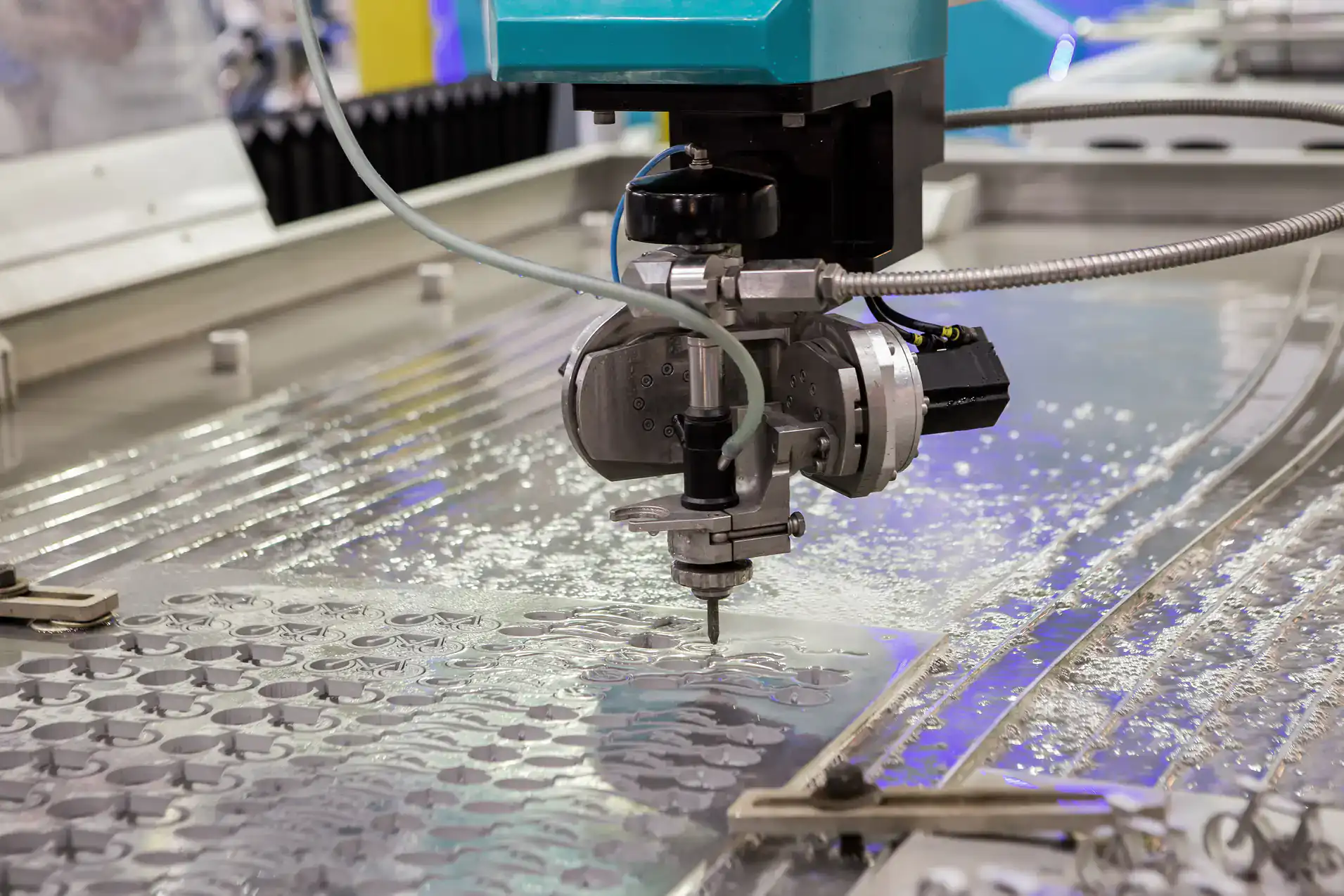
Once the design is confirmed, we program the waterjet system with your exact specifications. The CNC controls handle the actual cutting, following your design with consistent pressure and speed across the entire piece. You’re getting the same quality on cut number one as you do on cut number fifty.
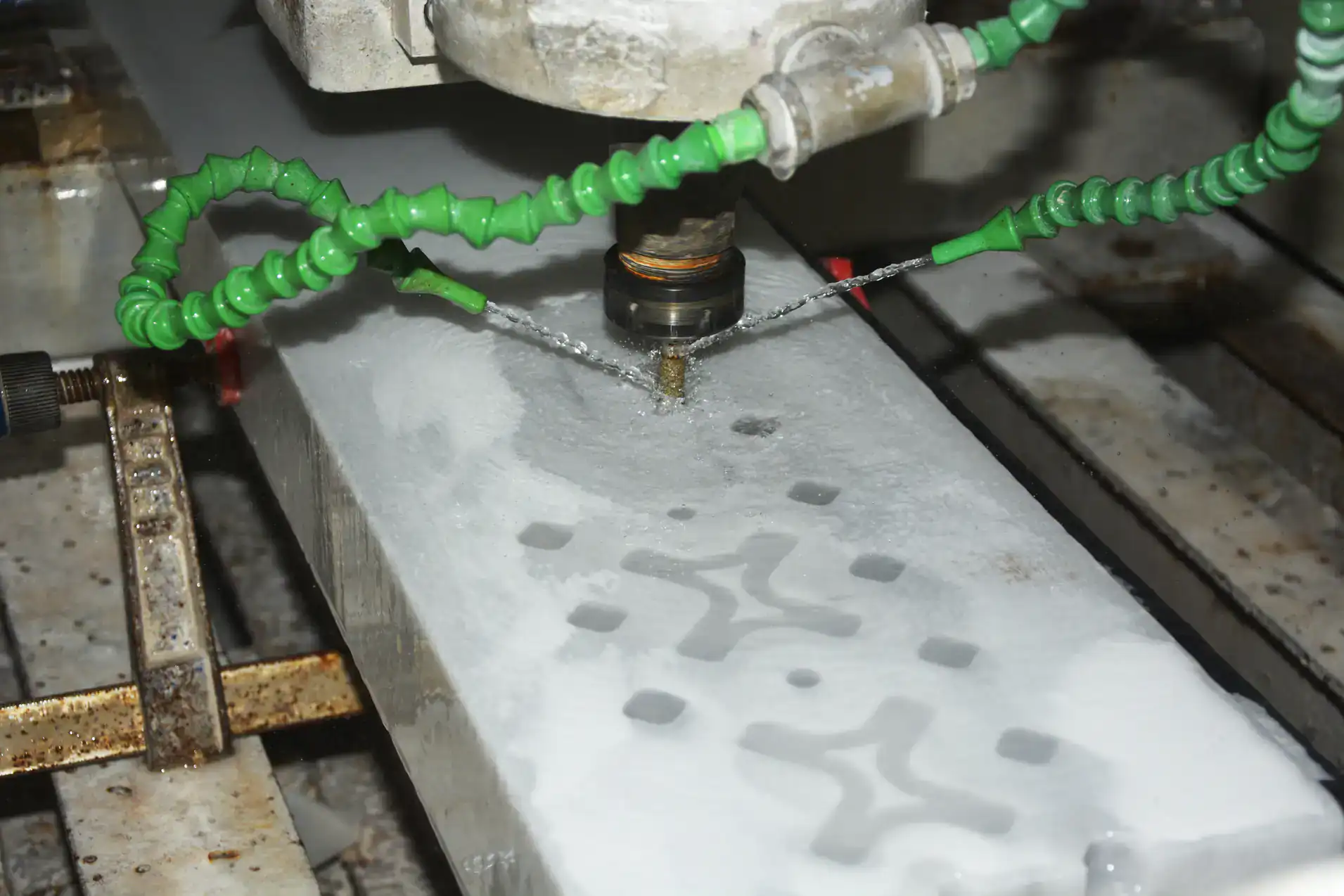
Material gets secured to the cutting bed, and the waterjet head moves through its programmed path. The stream cuts completely through the marble in a single pass—no flipping, no repositioning, no chance of misalignment between entry and exit points. For pieces up to 72 x 144 inches, everything stays locked in place from start to finish.
After cutting, pieces get a quality check for dimensional accuracy and edge condition. Most cuts are ready for installation as-is. If your project requires specific edge profiles or additional finishing, we’ll handle that before delivery.
Ready to get started?
Every precision marble waterjet cutting project in Patchogue, NY includes design review and material consultation upfront. We’re looking at your drawings before any cutting starts, flagging potential issues with installation, structural integrity, or pattern alignment. This isn’t an upsell—it’s how we avoid expensive mistakes.
You’ll get cuts that hold tolerances within ±0.005 inches across the entire piece, not just at test points. Edge quality comes out smooth enough that most architectural applications don’t need additional finishing. For intricate patterns—circular inlays, geometric borders, custom medallions—the waterjet handles internal cutouts and tight radiuses that would be nearly impossible with traditional blade cutting.
Material waste drops significantly because the waterjet stream is only about 0.04 inches wide. Compare that to a 0.125-inch saw blade, and you’re saving substantial material on every cut, especially when you’re nesting multiple pieces from a single slab. On high-end marble, that waste reduction pays for itself quickly.
The Patchogue area sees a lot of custom residential work and commercial renovation projects where architectural stone elements make or break the design. We’re set up to handle both the one-off designer pieces for luxury homes and the production runs needed for hotel lobbies or retail spaces across Long Island, NY.
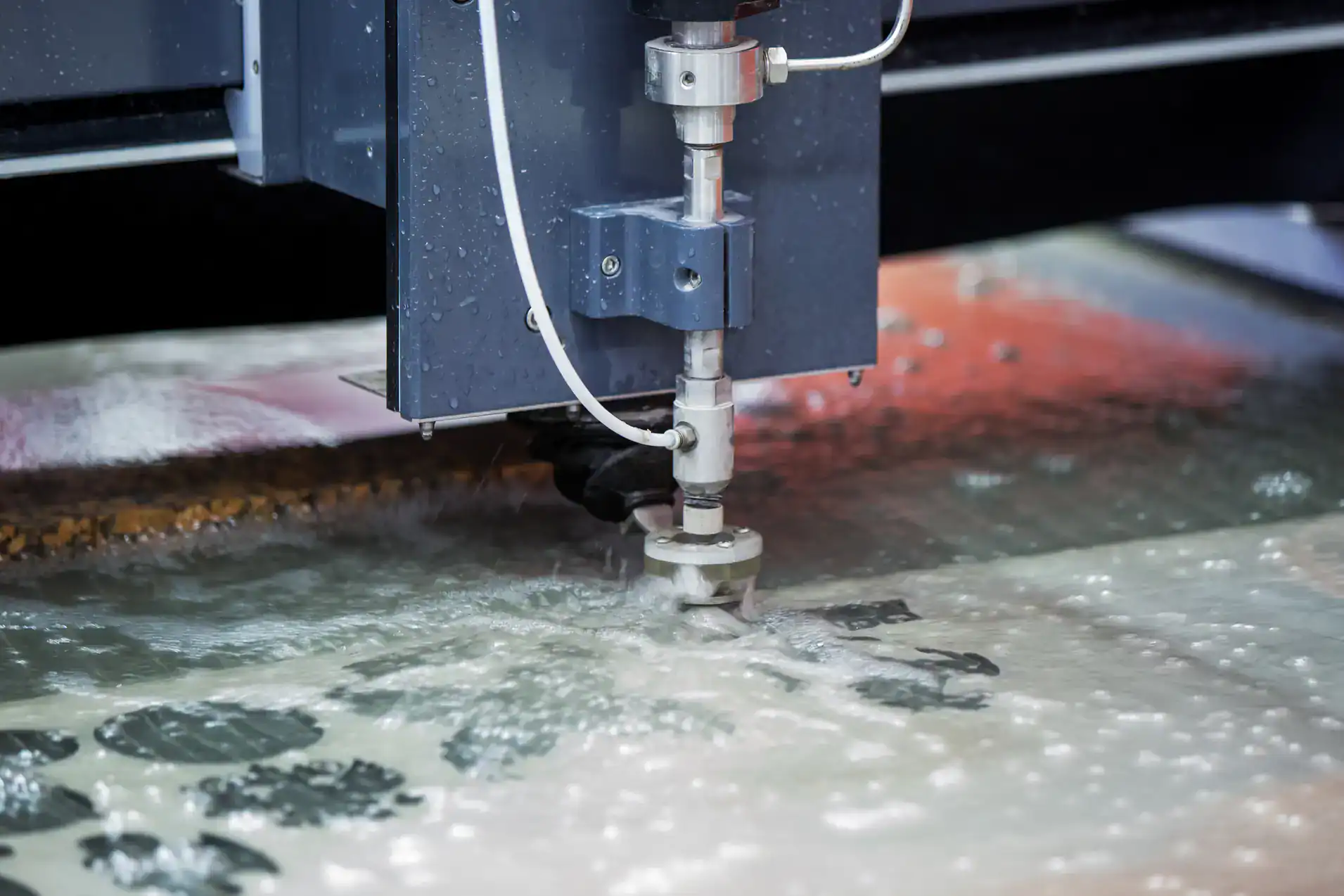
Waterjet cutting uses high-pressure water mixed with abrasive garnet particles instead of friction-based cutting methods. There’s no blade generating heat through contact with the stone. The water stream does all the cutting work at temperatures that never affect the marble’s structural integrity.
Heat is the enemy when you’re cutting natural stone. Traditional saws generate enough friction to cause micro-cracks in marble, especially in pieces with existing veining or color variation. Those cracks might not show up immediately, but they compromise the stone’s strength and can lead to failures during installation or months down the road.
With waterjet technology, the marble stays at ambient temperature throughout the entire cutting process. You’re not introducing thermal stress that could cause expansion, contraction, or internal fracturing. This matters especially on complex cuts where the stone is being shaped into curves or intricate patterns—areas where heat-induced stress would be most likely to cause problems.
We hold tolerances within ±0.005 inches on marble cuts. That’s five-thousandths of an inch—tight enough that pieces fit together without gaps and pattern alignments stay consistent across multiple sections.
For context, most architectural applications specify tolerances between ±0.010 and ±0.030 inches. We’re working at the high end of that precision range because that’s what complex installations require. When you’re creating a marble floor medallion with eight separate pieces that need to form a perfect circle, being off by even 0.010 inches creates visible gaps that ruin the finished look.
CNC control means the waterjet follows your programmed path exactly, with no variation from operator fatigue or manual tool handling. The same precision applies whether we’re cutting straight lines, tight curves, or intricate interior cutouts. You’ll see that consistency when your installer isn’t shimming pieces or fighting to make corners meet.
Waterjet cutting typically reduces material waste by 25-30% compared to traditional saw cutting. The difference comes down to kerf width—the amount of material removed during the cut itself.
A standard marble saw blade removes about 0.125 inches of material with every pass. The waterjet stream is only about 0.04 inches wide. When you’re making dozens of cuts on a single slab, or nesting multiple pieces together, those extra millimeters add up fast. You’re getting more usable pieces from the same amount of raw material.
This matters most when you’re working with expensive marble varieties or book-matched slabs where material cost is a significant part of the project budget. Being able to fit an extra piece or two from each slab directly impacts your material costs. For contractors working on projects across Patchogue, NY, where material lead times can stretch weeks, maximizing yield from available inventory keeps projects moving.
Yes. If you can draw it in a CAD file, waterjet cutting can fabricate it. The technology handles everything from simple geometric shapes to complex organic patterns with curves, interior cutouts, and tight radiuses that would be extremely difficult or impossible with traditional cutting methods.
The waterjet stream cuts in any direction without needing to reposition the material or change tools. That means a single continuous cut can create elaborate patterns with sharp corners, flowing curves, and detailed inlays all in one pass. You’re not limited by blade diameter, bit size, or the physical constraints of rotating cutting tools.
For architectural projects in Patchogue, NY, this opens up design possibilities that weren’t practical before. Custom lobby medallions, intricate backsplash patterns, geometric floor borders—designs that would have required hand-cutting or multiple specialized tools can now be programmed and cut with precision. The limitation isn’t the cutting technology; it’s what you can design.
Turnaround depends on design complexity and current project load, but most custom marble waterjet cutting jobs in Patchogue, NY get completed within 5-10 business days from design approval to finished pieces ready for pickup or delivery.
Simple cuts with straightforward patterns process faster—sometimes within 2-3 days. Complex designs with multiple pieces, intricate inlays, or tight tolerances need additional programming time and more careful quality control, which extends the timeline. Large production runs actually move efficiently once programming is complete because the CNC system can run continuously without operator intervention for each piece.
The bigger variable is usually design approval. Projects that come to us with complete, fabrication-ready CAD files move immediately into production. Projects that need design consultation, pattern adjustments, or material selection discussions add time upfront but prevent problems during cutting and installation. We’d rather spend an extra day on design review than rush into cutting pieces that won’t work.
Waterjet cutting works on virtually all marble varieties, granite, limestone, travertine, and engineered stone products. The technology isn’t limited by material hardness or density the way blade cutting is.
Different stones do require different cutting parameters. Softer marbles like Carrara cut quickly with lower pressure settings. Harder materials like granite need higher pressure and slower feed rates to maintain edge quality. The waterjet system adjusts for these differences through programming—we’re controlling water pressure, abrasive flow rate, and cutting speed based on the specific material you’re using.
The real advantage shows up when you’re working with expensive or delicate stone varieties. Materials that are prone to chipping with traditional saws—like heavily veined marble or stones with existing fissures—cut cleanly with waterjet because there’s no mechanical force trying to fracture the material. You’re eroding it away with abrasive particles, not hammering through it with a blade.
Useful Links
Other Services we provide in Patchogue