Hear from Our Customers
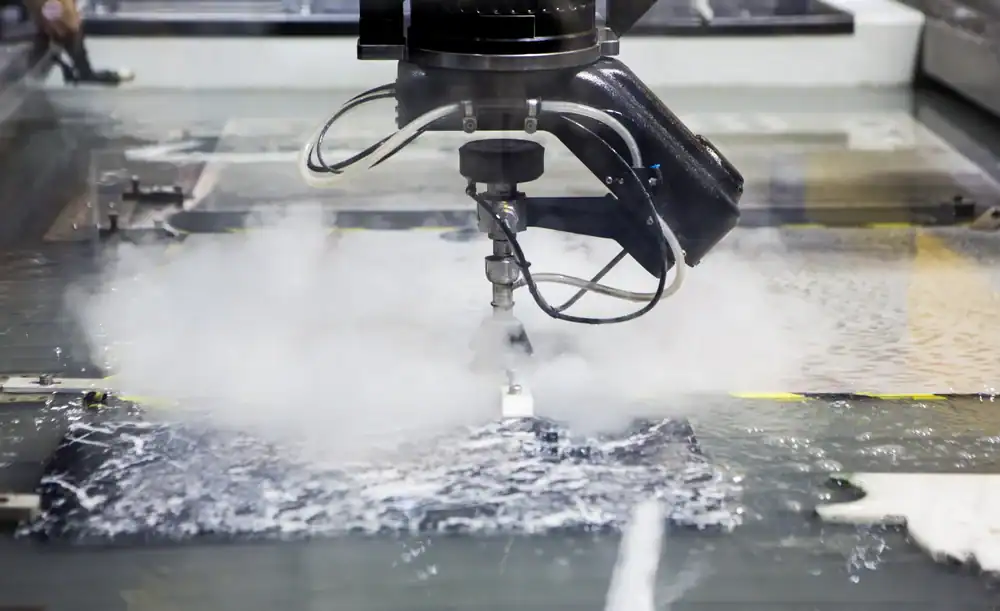
Traditional bridge saws introduce tension that shatters brittle marble mid-cut. You’ve seen it happen on complex patterns or thin slabs. Waterjet cutting eliminates that risk entirely because there’s no blade, no heat, and no surface stress.
You get clean edges on intricate designs without secondary finishing work eating into your timeline. The kerf is minimal, so material waste drops and your cost per project stays predictable. Whether you’re fabricating custom countertops for high-end residential builds or cutting architectural elements for commercial installations, the precision stays consistent.
Tolerances hold within +/- 0.005″ on most marble thicknesses. That means perfect fits on the first try, fewer callbacks, and installations that look exactly how the architect drew them. Your reputation stays intact because the quality stays consistent.
We’ve been operating out of West Islip since 2001, serving architects, designers, and contractors across Suffolk County who can’t afford inconsistent cuts or missed deadlines. We’re not the cheapest option in Sayville, and that’s intentional. You’re paying for equipment that handles the intricate work your competitors can’t touch and experience that understands what luxury projects actually demand.
Long Island, NY’s high-end residential market doesn’t tolerate mediocre craftsmanship. The million-dollar custom homes going up in Sayville and surrounding communities require marble work that matches the design vision exactly. That’s where waterjet technology becomes non-negotiable, and that’s what we’ve specialized in for over 20 years.
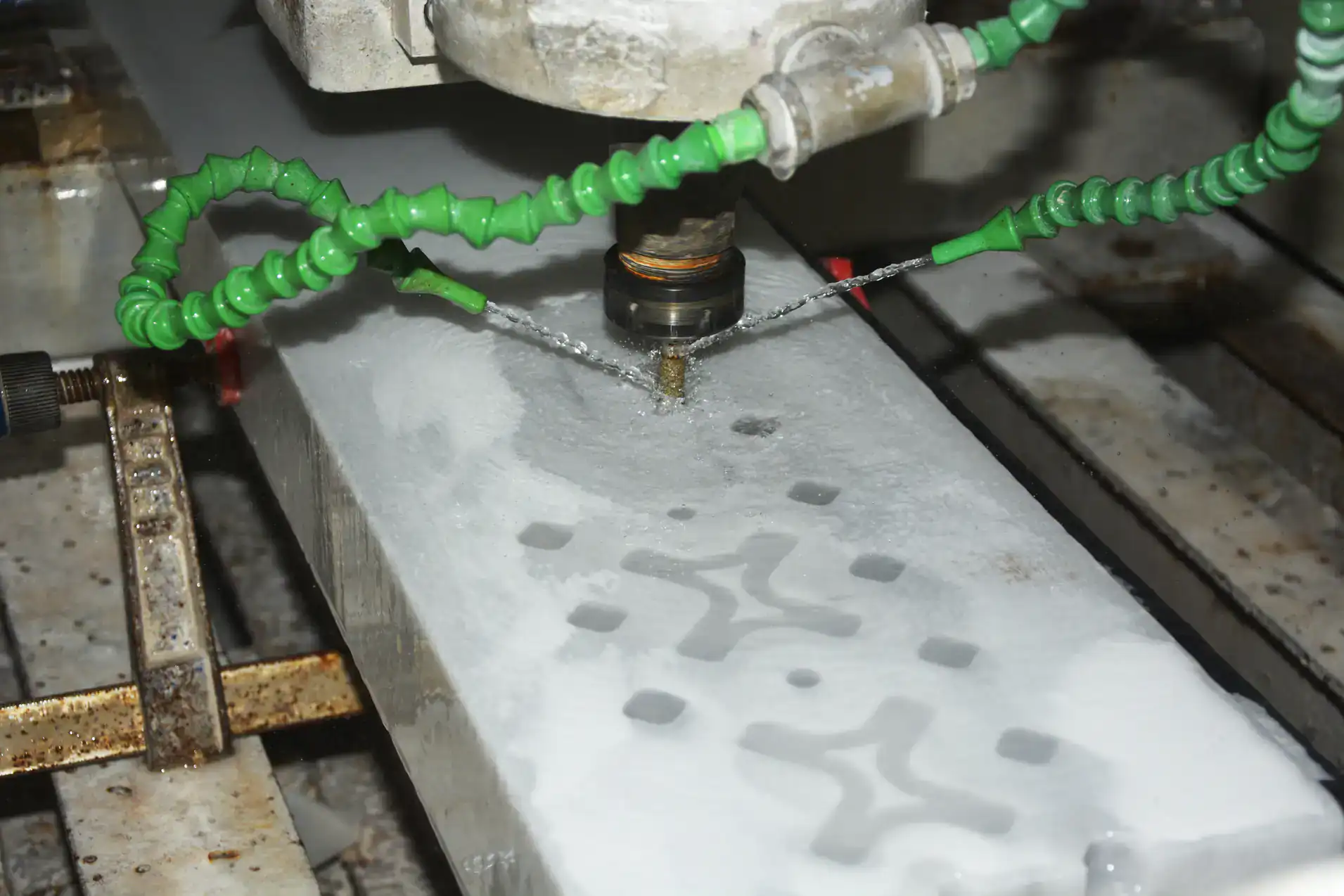
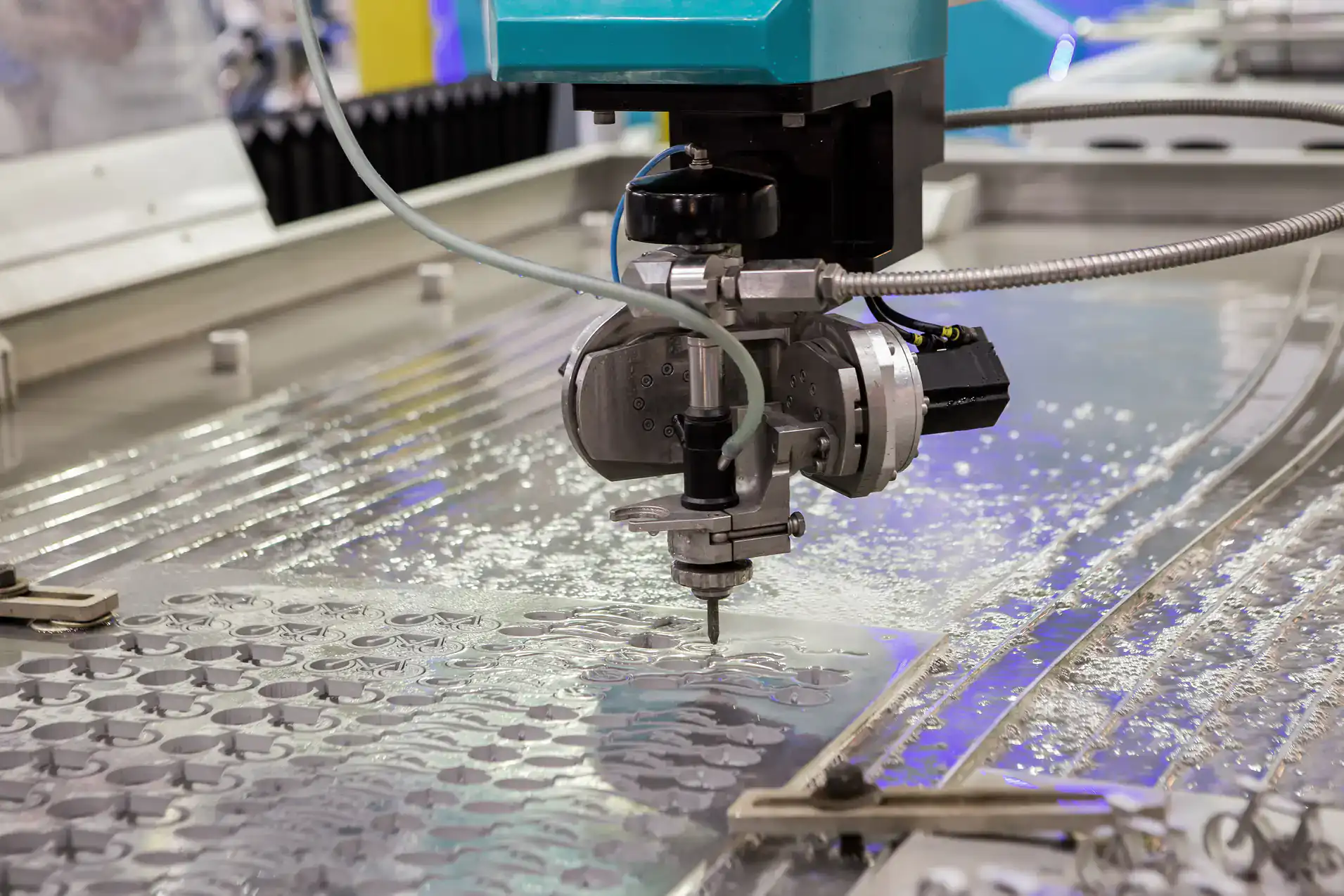
You send us your design file or template. If you’re working from a physical pattern, we can digitize it. Our CNC system translates that into precise cutting paths that account for material thickness and edge requirements.
The waterjet stream mixes water with fine abrasive particles and cuts at pressures up to 60,000 PSI. There’s no blade making contact, so there’s no chipping on edges and no heat warping the stone. Complex curves, tight inside corners, and delicate inlays all cut cleanly without the breakage risk you’d face on a bridge saw.
Most projects turn around within days, not weeks. Rush timelines are manageable because we’re not waiting for multiple finishing passes or dealing with shattered pieces that need replacement. You get the cut marble ready for installation, with edges clean enough that secondary polishing is minimal or unnecessary depending on your specs.
Ready to get started?
Every project starts with material consultation. Not all marble cuts the same, and engineered stone behaves differently than natural slabs. We’ll tell you upfront if your material choice creates issues or if your design needs adjustment to avoid structural weak points.
You get CNC precision on thicknesses up to 10 inches. That covers everything from standard countertop slabs to thick architectural elements for building facades. Intricate patterns, medallions, inlays, and custom edge profiles all stay within scope.
Sayville’s construction market leans heavily toward custom residential work where cookie-cutter solutions don’t fly. The homeowners renovating historic properties or building new luxury estates expect unique marble features that reflect serious design thought. Waterjet cutting makes those one-off designs feasible without the cost blowing up from excessive hand-finishing labor. You’re not paying for someone to spend days smoothing out rough saw marks or piecing together broken attempts.
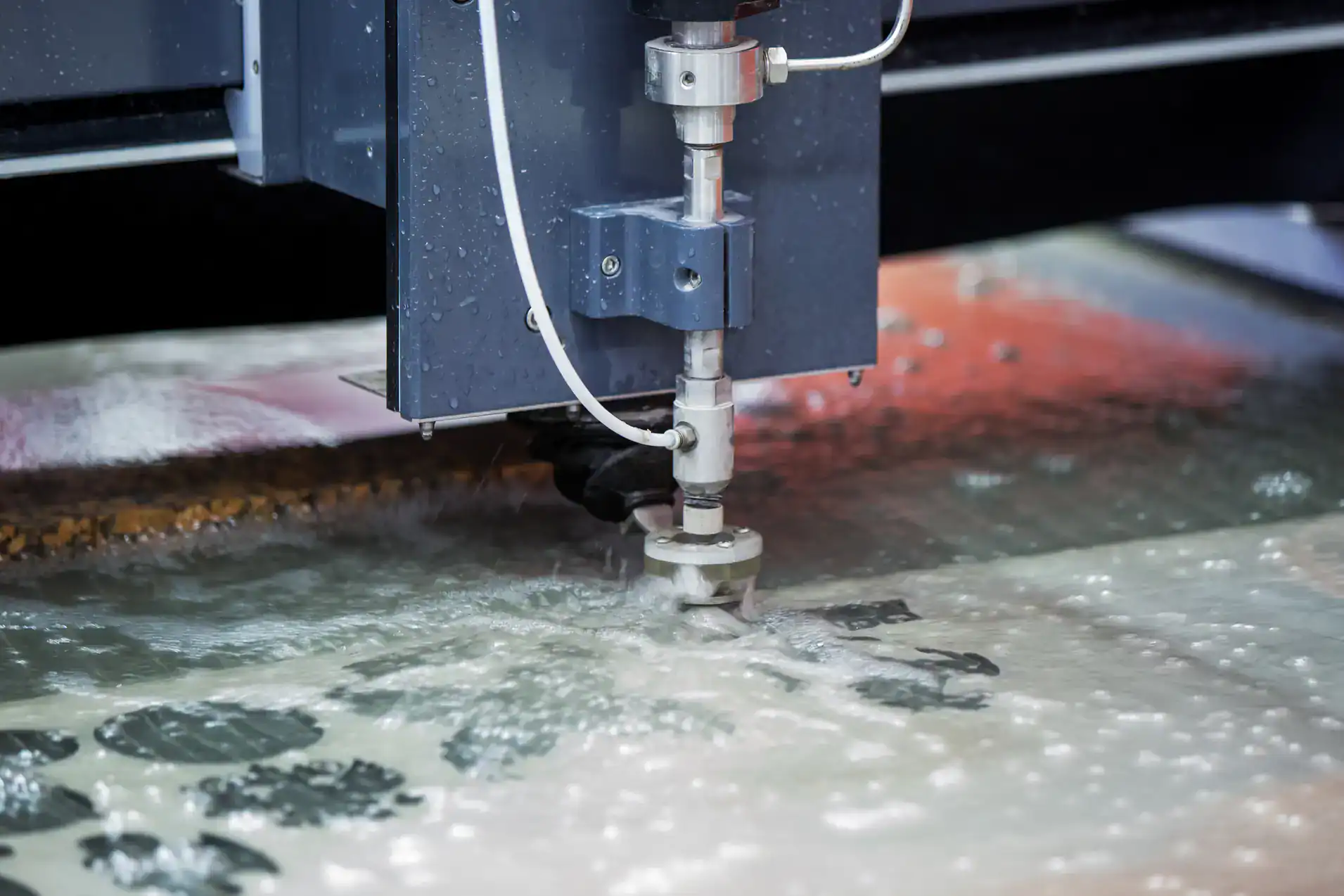
Marble cracks under tension, and traditional saws create that tension through blade contact and heat buildup. The material expands microscopically from friction, then contracts unevenly as it cools. On brittle stone or engineered marble with high internal stress, that’s enough to cause fractures mid-cut or shortly after.
Waterjet cutting uses a high-pressure stream instead of physical blade contact. There’s no heat generated, so thermal expansion never happens. The cutting force is distributed across the narrow stream rather than concentrated at a blade edge, which means internal stress in the marble doesn’t get triggered the same way.
This matters most on thin materials, tight curves, and patterns with multiple direction changes. Those are exactly the cuts where bridge saws fail most often. Waterjet handles them without the breakage risk because the process fundamentally doesn’t introduce the stresses that cause cracks.
Most custom marble cutting projects are completed within 3-5 business days from the time we receive your material and finalized design file. That timeline assumes standard complexity and typical marble thickness. Highly intricate patterns with extensive detail work or unusually thick slabs may add a day or two.
Rush service is available when your project timeline gets compressed. We’ve turned around emergency cuts in 24-48 hours for contractors facing installation deadlines. That flexibility exists because waterjet cutting doesn’t require the multi-step process that traditional methods do—no rough cut, then finish cut, then extensive edge work.
The key variable is design finalization. If you’re still adjusting measurements or pattern details, that delays the start. Come with a locked design file and material ready to go, and we can move quickly. Changes mid-process reset the timeline because CNC programming has to be redone.
Yes, and this is one area where waterjet has a clear advantage over conventional cutting methods. Natural marble varies in density and internal structure depending on where it was quarried. Engineered stone is manufactured under tension, which makes it prone to shattering when cut with blade-based saws.
Waterjet doesn’t care about those differences because it’s not relying on blade hardness or cutting through material with friction. The abrasive stream erodes both natural and engineered stone at a controlled rate. You get the same edge quality and precision whether you’re cutting Carrara marble or a quartz composite.
This matters when you’re working on projects that mix materials. A kitchen might have natural marble countertops with an engineered stone island. Matching edge profiles and ensuring consistent quality across different materials becomes straightforward when the cutting method handles both equally well. You’re not switching between equipment or adjusting technique mid-project.
Waterjet cutting produces significantly less waste than bridge saws because the kerf—the width of the cut—is much narrower. A typical waterjet kerf runs about 0.03 to 0.04 inches. Bridge saw blades are often 0.125 inches or wider. That difference adds up fast when you’re making multiple cuts on expensive marble slabs.
On a standard kitchen countertop project with cutouts for sinks and cooktops, you might save 15-20% in material costs just from reduced kerf waste. For intricate patterns with lots of interior cuts, the savings climb higher. Less waste also means more usable remnants for smaller projects or repairs down the line.
The precision of CNC programming also eliminates waste from mistakes. When cuts are off by even a few millimeters on traditional equipment, you’re either living with a poor fit or scrapping the piece and starting over. Waterjet’s tight tolerances mean first-run accuracy, so you’re not buying extra material to account for expected errors.
Edge quality from waterjet cutting falls into different finish categories depending on cutting speed and abrasive flow rate. A standard production cut gives you a smooth edge with minimal striations—clean enough for most applications without additional polishing. If you need a higher finish, we can slow the cutting speed to produce an edge that’s nearly polished straight off the machine.
There’s virtually no chipping, even on thin marble or delicate edge profiles. Traditional saws often chip the top or bottom edge where the blade enters and exits, requiring grinding to clean up. Waterjet eliminates that because there’s no mechanical impact—just erosion from the abrasive stream.
For most architectural and countertop applications, the as-cut edge is acceptable for installation. If your design calls for a high-polish finish, you’re starting from a much better baseline than you would with saw-cut marble. That reduces finishing labor and gives you more control over the final appearance. The edge is also square and true to your design file, so fitting against walls or joining multiple pieces happens without gaps.
Waterjet cutting makes economic sense for small custom projects specifically because it eliminates the waste and rework costs that kill profitability on one-off jobs. When you’re cutting a single custom piece, you can’t absorb mistakes across volume. Every error is a total loss.
Setup time on waterjet equipment is minimal compared to traditional methods. We’re programming a CNC file, not building jigs or making test cuts to dial in blade depth. That means small jobs don’t carry the same overhead burden. You’re paying for actual cutting time and expertise, not extensive prep work.
The bigger cost advantage shows up in what you don’t pay for. No secondary finishing labor to fix rough edges. No replacement material because a piece shattered mid-cut. No delays waiting for a second attempt to be fabricated. For custom residential work in Sayville where clients are paying premium prices and expecting flawless execution, those avoided costs matter more than the per-hour cutting rate.
Useful Links
Other Services we provide in Sayville