
Hear from Our Customers
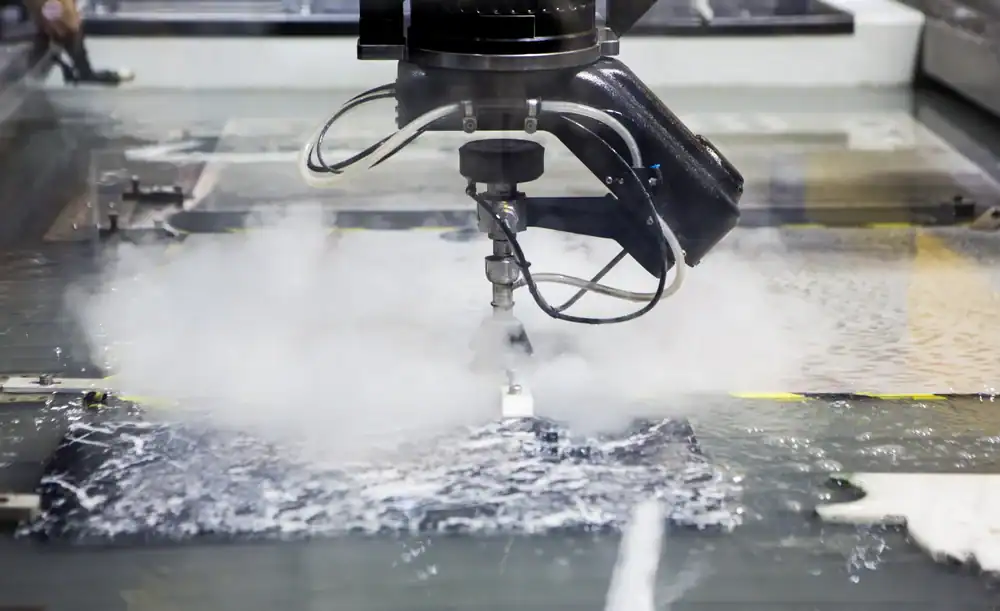
Traditional marble cutting creates problems you shouldn’t have to deal with. Heat from saw blades causes micro-cracks that weaken the stone. Manual methods waste material and drive up costs. Complex patterns either get simplified or require extensive hand-finishing that adds weeks to your timeline.
Waterjet changes that equation completely. The cold-cutting process uses high-pressure water mixed with fine abrasive particles to slice through marble without generating any heat. Your stone stays structurally sound, with no thermal stress and no hidden damage that shows up months later.
You get cuts accurate to 0.1mm, which means intricate medallions, circular inlays, and custom edge profiles come out exactly as designed. The edges are smooth enough that most projects skip secondary finishing entirely. That’s time saved and labor costs eliminated.
For architects and designers working on high-end residential projects in Southampton, this means you can actually execute the vision you sold to your client. No compromises. No “we’ll have to simplify that part.” If you can draw it, we can cut it.
We serve architects, designers, contractors, and homeowners throughout Southampton and the surrounding Hamptons area. We understand what’s expected when you’re working on luxury residential projects where details matter and timelines are tight.
Southampton’s design aesthetic demands precision. From custom kitchen islands in estate homes to architectural features in commercial spaces, the work here doesn’t leave room for “close enough.” Our CNC waterjet technology delivers the accuracy your projects require.
We handle everything from initial design consultation through final fabrication. You bring us your concept, and we’ll walk through material selection, cut specifications, and timeline. Most projects move faster than you’d expect because waterjet eliminates the back-and-forth of traditional cutting methods.
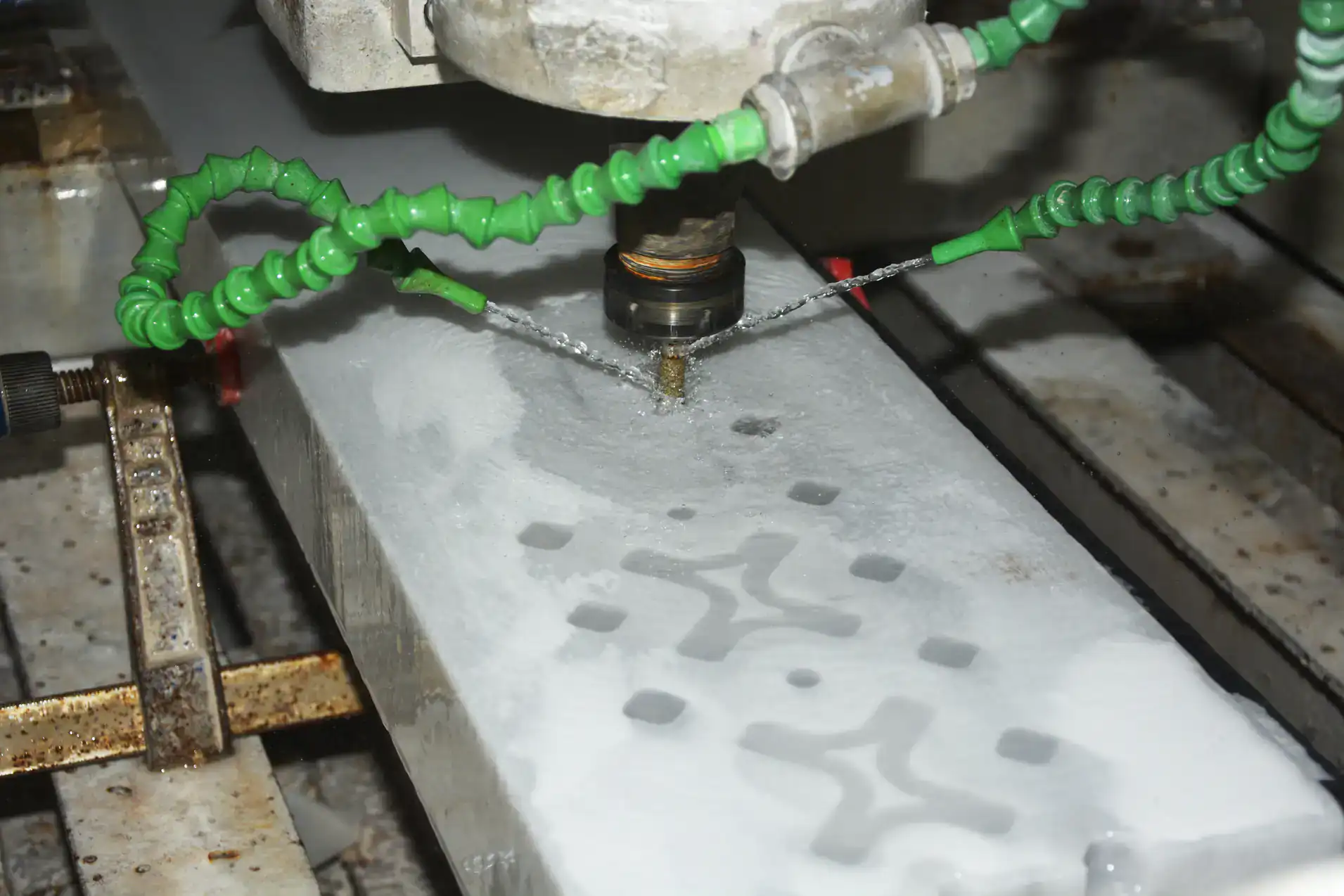
You start by sending us your design file or working with us to create one. CAD drawings work best, but we can work from templates, sketches, or even photos of what you’re trying to achieve. We’ll review the design for any potential issues and suggest adjustments if needed.
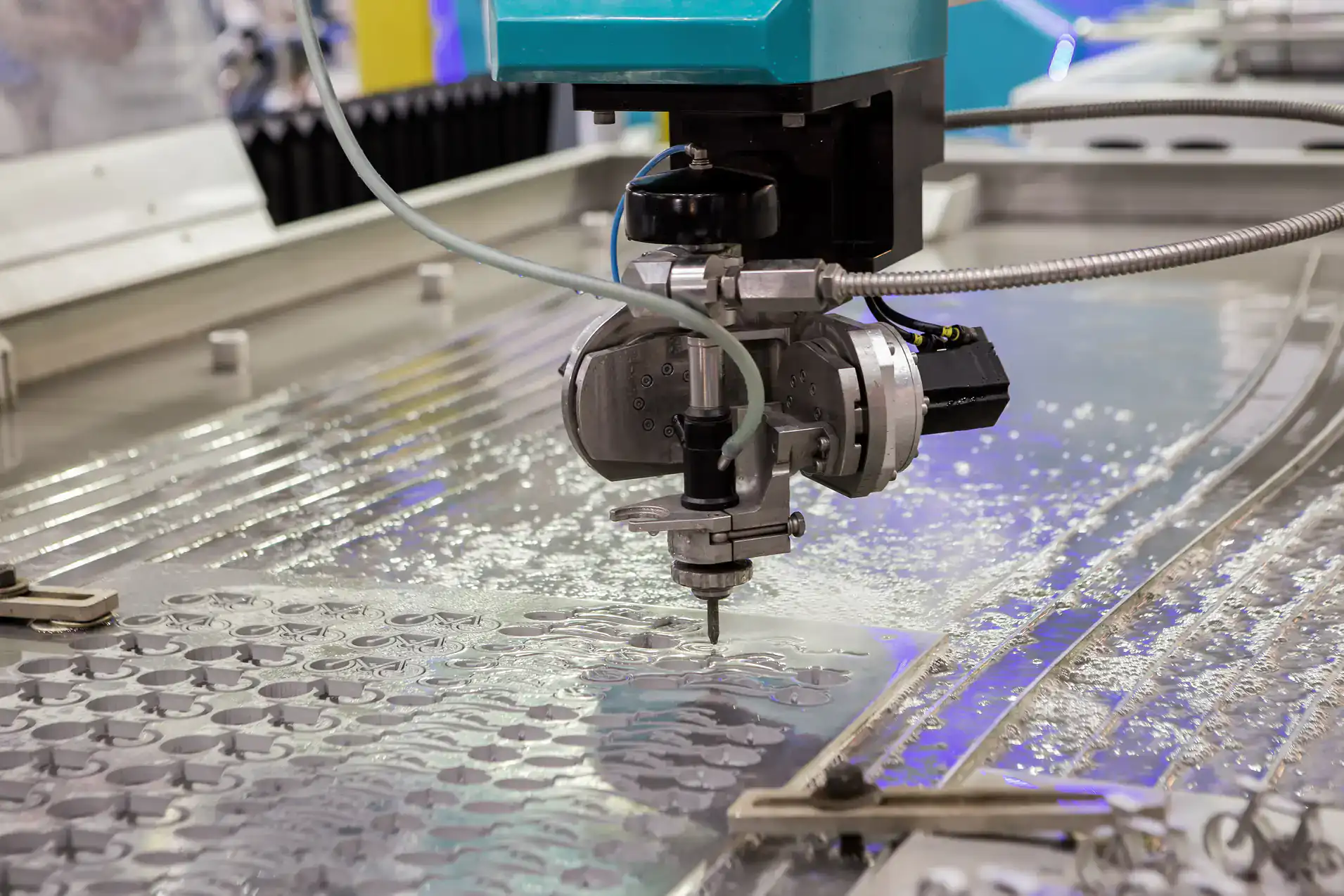
Once the design is finalized, we program it into our CNC waterjet system. The machine uses a high-pressure stream—up to 60,000 PSI—mixed with garnet abrasive to cut through the marble. The process is cold, so there’s no heat affecting the stone’s structure. The computer controls every movement, which is why you get consistent results across multiple pieces.
Cutting time depends on complexity and thickness, but waterjet is typically 40% faster than traditional methods for detailed patterns. After cutting, we inspect each piece to ensure it meets specifications. Most edges come off the machine smooth enough for installation, though we can provide additional finishing if your project requires it.
You receive pieces that fit together precisely, with clean edges and no structural compromise. For large projects, we can coordinate delivery timing so you’re not storing materials longer than necessary.
Ready to get started?
Waterjet cutting handles marble in thicknesses from thin decorative pieces up to substantial slabs. The process works for Carrara, Calacatta, Emperador, Statuario—any marble type you’re specifying. You’re not limited by material hardness or grain direction.
The technology excels at complex geometries that traditional methods struggle with. Circular patterns, intricate inlays, custom edge profiles, and tight inside corners all come out clean. There’s no chipping at entry or exit points, which is a common problem with saw cutting.
Southampton projects often involve matching existing architectural elements or creating statement pieces that define a space. Waterjet’s precision means you can replicate patterns exactly or create complementary designs that align perfectly. For kitchen islands, bathroom vanities, fireplace surrounds, and flooring medallions, the consistency matters.
Material waste drops significantly compared to saw cutting—often by 30% or more. That’s less marble going to the dumpster and lower material costs for your project. The environmental aspect matters too: waterjet uses recycled water and produces minimal dust, which keeps job sites cleaner.
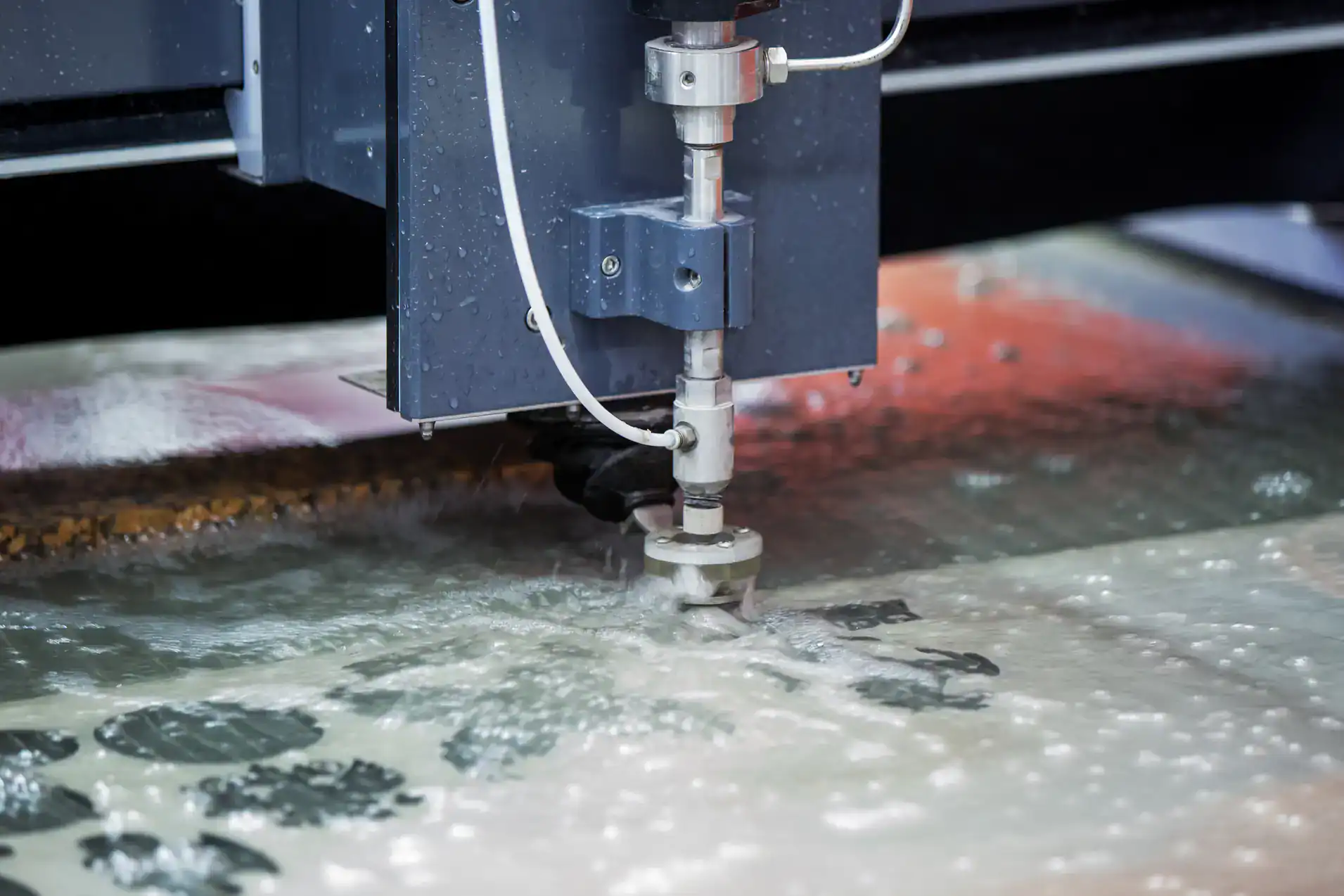
The fundamental difference is heat. Saw blades generate friction heat that creates thermal stress in marble. That stress causes micro-cracks you can’t always see immediately, but they compromise the stone’s structural integrity over time.
We use high-pressure water and abrasive particles, so the cutting process stays cold. Your marble’s natural properties remain intact. There’s no thermal damage, no micro-cracking, and no weakened areas that might fail later.
Precision is the other major difference. Saw cutting relies on operator skill and blade stability. Our waterjet is computer-controlled, delivering accuracy within 0.005 inches consistently. For complex patterns or tight tolerances, that precision eliminates the trial-and-error approach that wastes time and material.
Edge quality matters too. Saw cuts typically need grinding, polishing, and finishing work. Our waterjet edges come off the machine smooth, often ready for installation without additional processing. That’s labor saved and faster project completion.
If you can create a digital design file, we can cut it. The technology doesn’t have the geometric limitations of traditional cutting methods. Circular patterns, oval shapes, intricate medallions, custom edge profiles, tight inside corners—all of these are straightforward with waterjet.
Complex inlay work is where waterjet really shows its value. When you’re creating patterns that require multiple pieces to fit together precisely, the computer-controlled accuracy ensures everything aligns. There’s no gap-filling or forcing pieces to fit.
Thickness isn’t a limiting factor either. We handle thin decorative elements and thick structural slabs with the same precision. The cutting stream adjusts for material depth, maintaining accuracy throughout.
For Southampton projects, this means you’re not simplifying designs to accommodate cutting limitations. The architectural vision you’re presenting to clients can actually be executed as drawn. That’s particularly important for high-end residential work where custom details define the project.
Waterjet typically reduces marble waste by 25-30% compared to traditional saw cutting. That difference comes from two factors: cutting precision and kerf width.
The waterjet stream is narrow—usually around 0.04 inches. Saw blades are wider and remove more material with each cut. When you’re cutting multiple pieces from a single slab, that kerf width adds up quickly. Less material removed per cut means more usable pieces from each slab.
Precision matters for waste reduction too. When cuts are accurate the first time, you’re not remaking pieces that don’t fit or don’t meet specifications. With traditional methods, tolerance issues often mean cutting replacement pieces, which doubles material usage for those components.
For large projects, the waste reduction translates directly to cost savings. If you’re fabricating marble elements for multiple rooms or creating matching pieces, the material efficiency can reduce your overall project costs by 20-25%. That’s significant when you’re working with premium marble varieties.
Turnaround depends on project complexity and current queue, but waterjet processing itself is 40% faster than traditional cutting for detailed patterns. Simple cuts might be completed within a few days. Complex multi-piece projects typically take one to two weeks from design approval to finished pieces.
The speed advantage comes from reduced setup time and minimal secondary finishing. Once the design is programmed, our CNC system runs continuously without operator intervention. There’s no stopping to change blades, adjust angles, or reposition material.
Edge finishing is where waterjet saves the most time. Traditional cutting requires grinding and polishing after the initial cut. Our waterjet edges are smooth enough that most projects skip those steps entirely. That’s days removed from the timeline.
For Southampton projects with tight construction schedules, the faster processing means marble elements don’t become the bottleneck. We can coordinate delivery timing with your installation schedule, so pieces arrive when you’re ready for them, not weeks early when they’re taking up space and at risk of damage.
Waterjet cuts any marble variety without limitation. Carrara, Calacatta, Emperador, Statuario, Crema Marfil—the process works regardless of hardness, grain pattern, or color. The high-pressure water stream doesn’t care about material properties the way saw blades do.
Thickness range is equally flexible. We handle thin decorative pieces starting around 1/4 inch up to thick structural slabs of 3 inches or more. The cutting stream penetrates consistently, maintaining the same precision whether you’re working with delicate material or substantial pieces.
Grain direction isn’t a concern with waterjet either. Traditional cutting sometimes requires specific approach angles to prevent chipping or cracking along the grain. Waterjet’s cold-cutting process eliminates that consideration. You can orient patterns based on aesthetic goals rather than cutting limitations.
For projects using exotic or expensive marble varieties, waterjet’s consistency reduces risk. There’s no learning curve for different materials and no test cuts needed to dial in settings. The first piece comes out right, which matters when you’re working with stone that costs hundreds per square foot.
Precision determines whether pieces fit together correctly and whether your finished installation looks professional or amateurish. When you’re creating multi-piece patterns, inlays, or elements that need to align with existing architecture, tolerance matters.
Waterjet accuracy within 0.005 inches means pieces fit together without gaps, forced placement, or visible seams that need filling. For medallion designs or geometric patterns, that precision is the difference between crisp lines and sloppy execution.
Edge quality affects both appearance and installation time. Precise cuts with smooth edges go in faster because installers aren’t compensating for irregularities or grinding down rough spots on-site. That’s labor cost saved and less risk of damage during installation.
For Southampton’s luxury residential market, precision is about meeting expectations. When clients are investing in custom marble elements, they’re expecting flawless execution. We deliver that consistently, which is why architects and designers specify us for high-end projects where details define quality.
Useful Links
Other Services we provide in Southampton