Hear from Our Customers
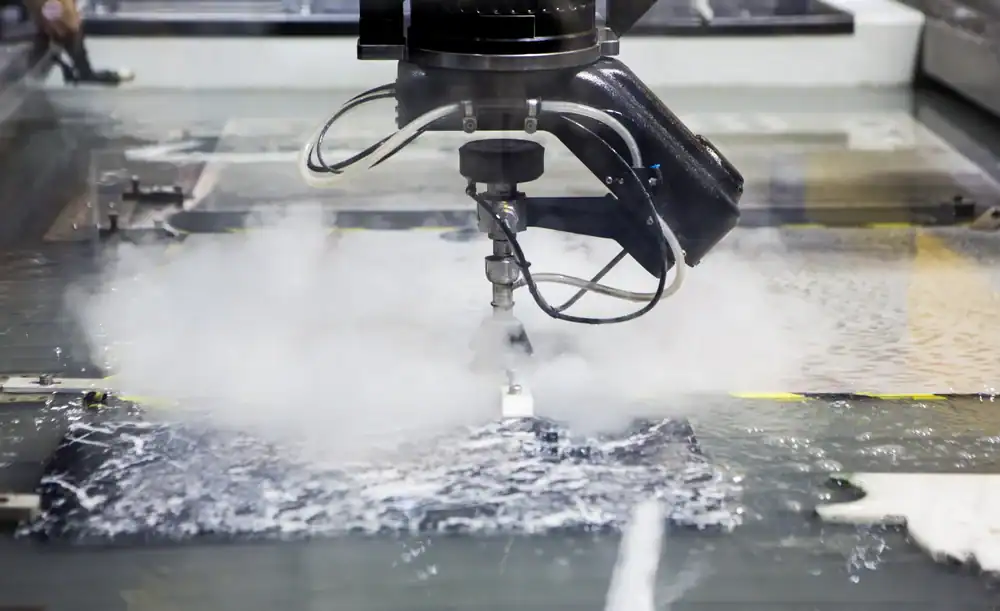
You’ve got a CAD file with curves, inlays, or medallions that traditional saws can’t touch. Maybe it’s a custom backsplash, a lobby floor pattern, or architectural accents that need to fit perfectly the first time.
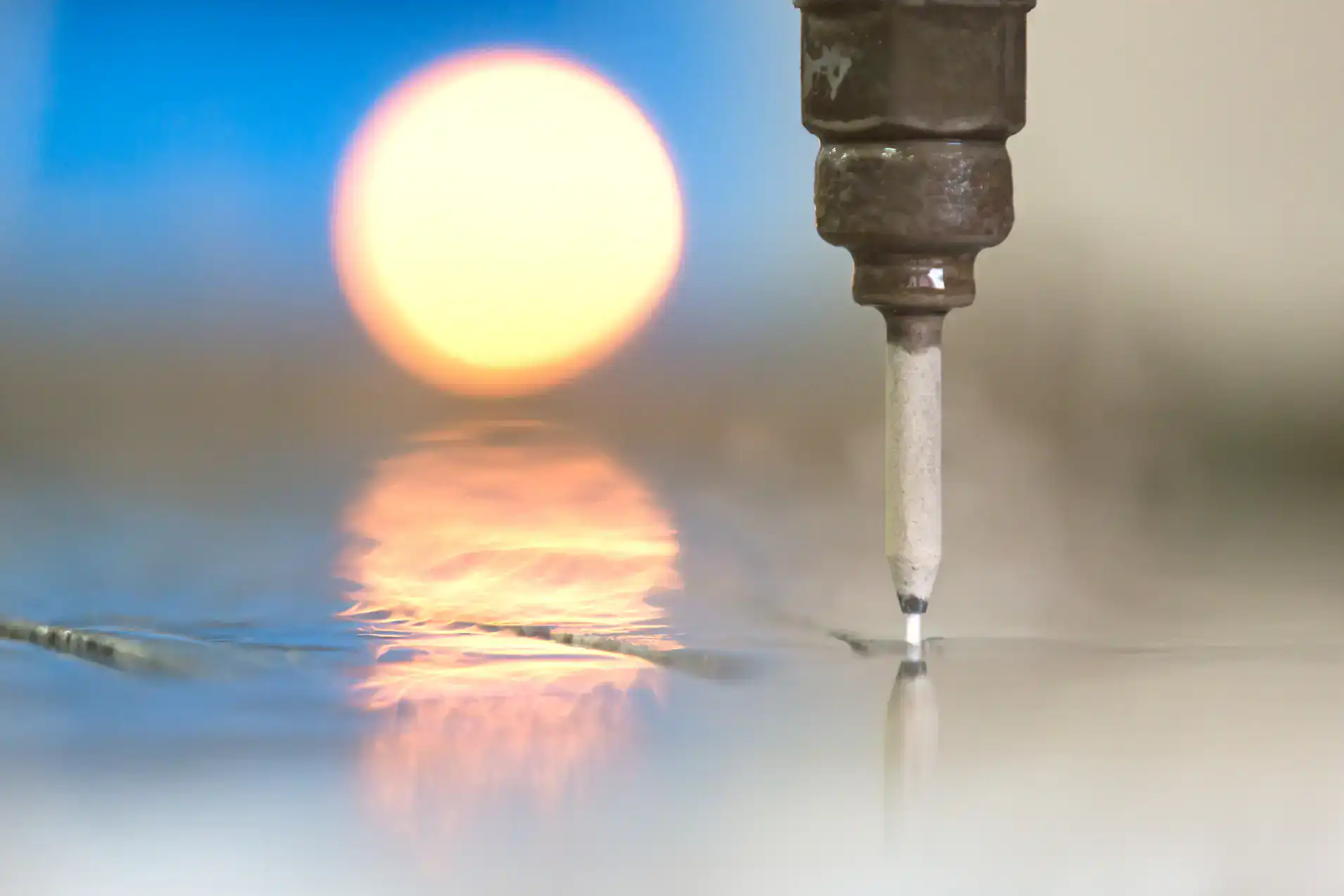
Waterjet cutting handles what blade-based methods can’t. The high-pressure stream follows your digital design exactly, cutting through marble without generating heat or vibration. That means no thermal cracks, no chipped edges, and no need to rework pieces that don’t fit.
You get parts that align on-site without forcing, filing, or explaining to your client why there’s a gap. The edge quality comes off the machine clean enough for most installations—no secondary grinding unless you want it. For architects and contractors working on high-end residential or commercial projects in Stony Brook, NY, that level of precision marble waterjet cutting translates to faster installs and fewer callbacks.
We operate out of West Islip and serve the broader Long Island, NY area, including Stony Brook, NY. We’ve worked with architects, designers, contractors, and fabricators who need CNC marble cutting that holds tight tolerances and handles complex geometry.
Our Flow Mach 500 system runs directly off your CAD files. Every part gets inspected for dimension, edge finish, and squareness before it leaves our shop. We’re not a high-volume production mill—we’re a precision shop that reviews your files, catches issues early, and delivers components that fit the way they’re supposed to.
Stony Brook’s mix of historic estates and modern builds means projects here often require custom stonework that standard fabrication can’t deliver. We handle that work regularly.
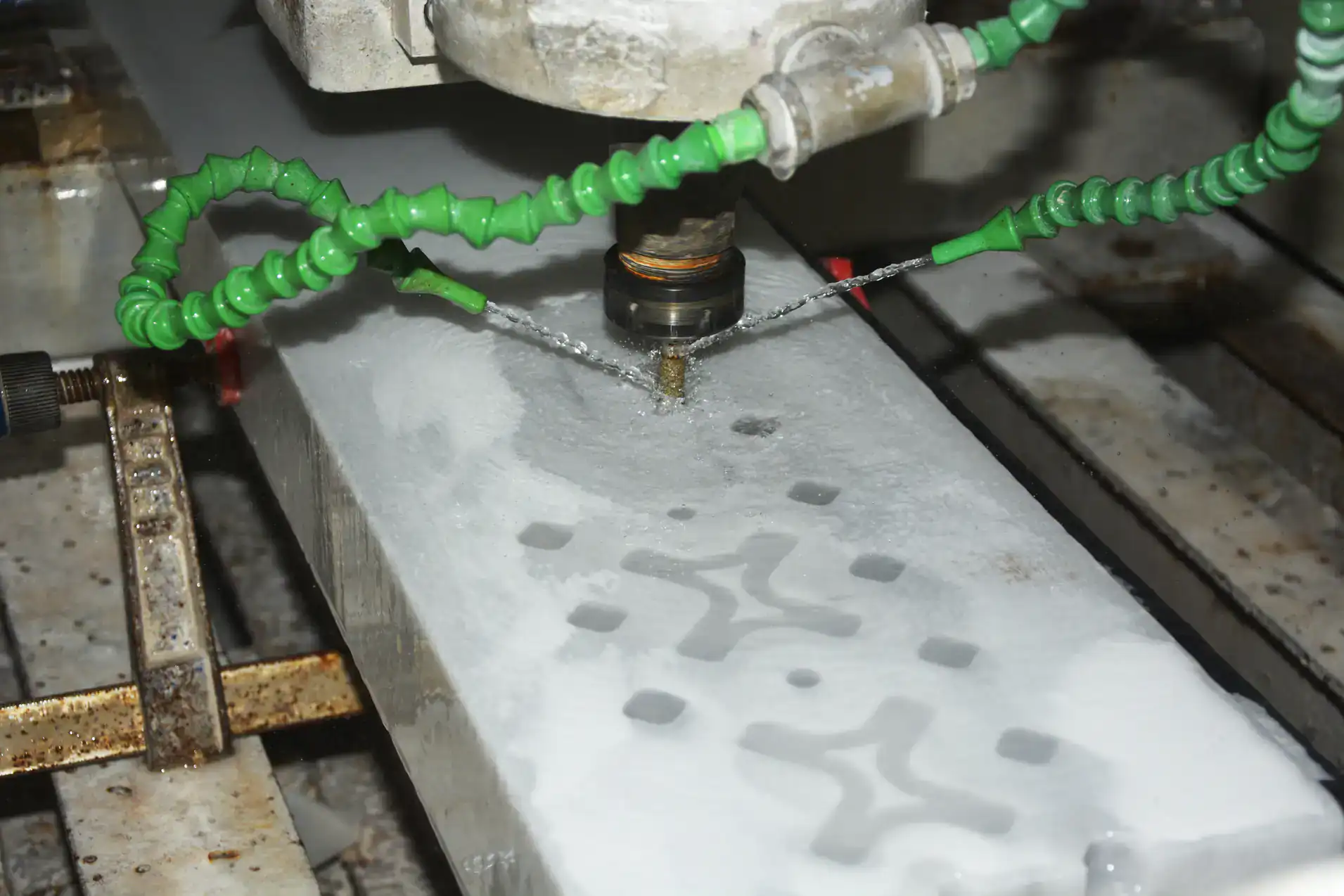
You send us your design file—DXF, DWG, or most CAD formats work. We review it for toolpath issues, kerf width, and any geometry that might cause problems during cutting. If something won’t work, we’ll tell you before we start.
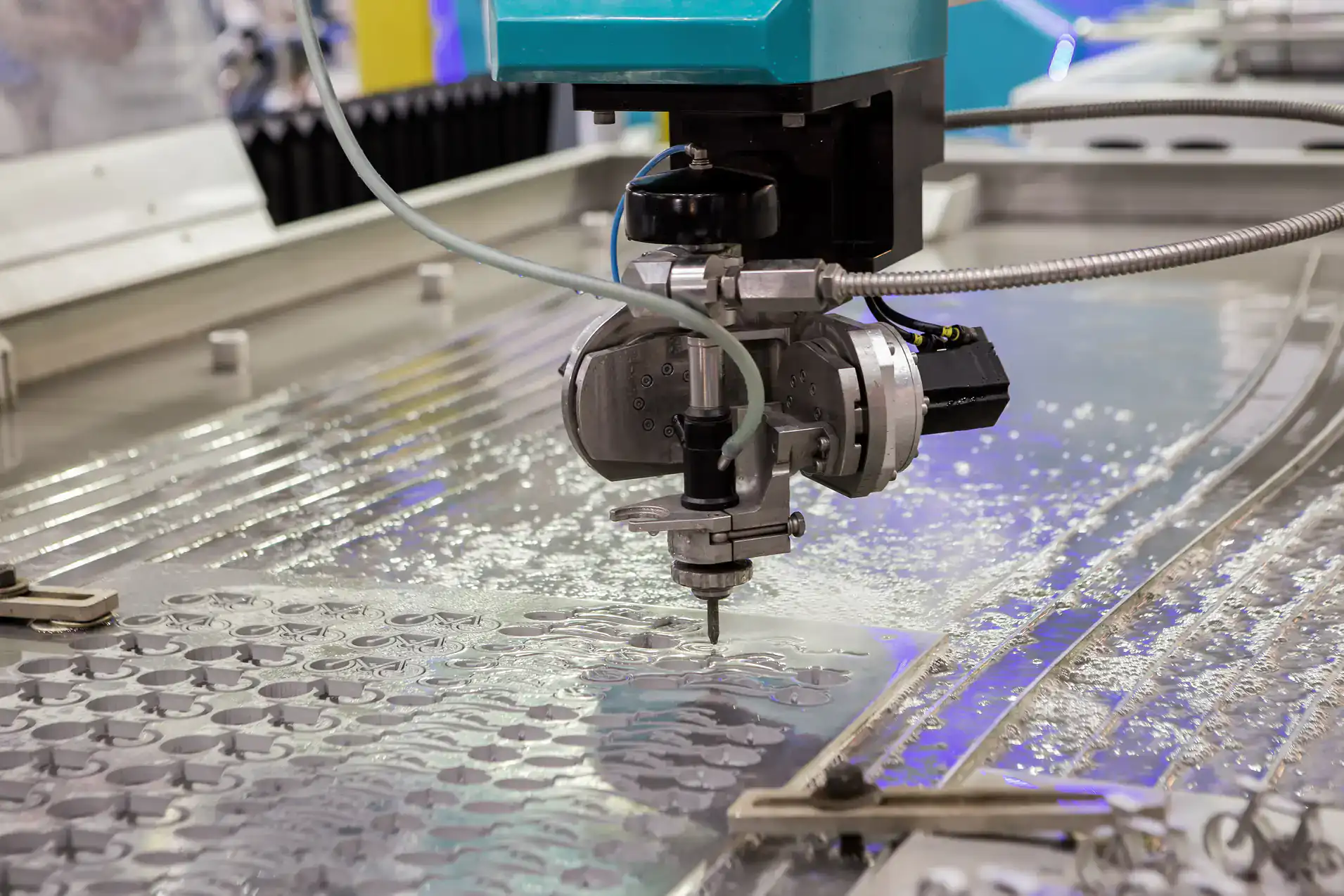
Once the file is approved, it goes directly into our CNC system. The waterjet stream, mixed with garnet abrasive, cuts through the marble following your design. Pressure stays consistent, speed adjusts based on material thickness and detail level. There’s no blade deflection, no heat buildup, no vibration that shifts the material.
After cutting, each piece gets checked against your specs. If it’s architectural work, we’re typically hitting Q3 to Q4 tolerances. For mechanical or specialized applications, we can push to Q5. You get parts that match your drawings and fit your installation without modification.
Ready to get started?
You’re not just getting cut marble. You’re getting parts that have been reviewed by people who understand fabrication, cut on equipment that holds accuracy within 0.005 inches, and inspected before they ship.
Stony Brook’s architecture leans heavily on natural stone—both in historic restorations and new luxury construction. That means tight tolerances matter. A fireplace surround that’s off by even a sixteenth of an inch becomes a problem on-site. Waterjet cutting eliminates that risk because the machine follows your file exactly, every time.
You also get material efficiency. Traditional methods waste up to 30% more material due to blade width and breakage. Waterjet cutting minimizes that waste, which matters when you’re working with expensive marble slabs. The process is also faster for complex patterns—about 40% quicker than conventional methods—so your project timeline stays on track.
The edge finish is smooth and clean. Depending on your application, you might not need any additional polishing or grinding. That saves labor and keeps your costs predictable.
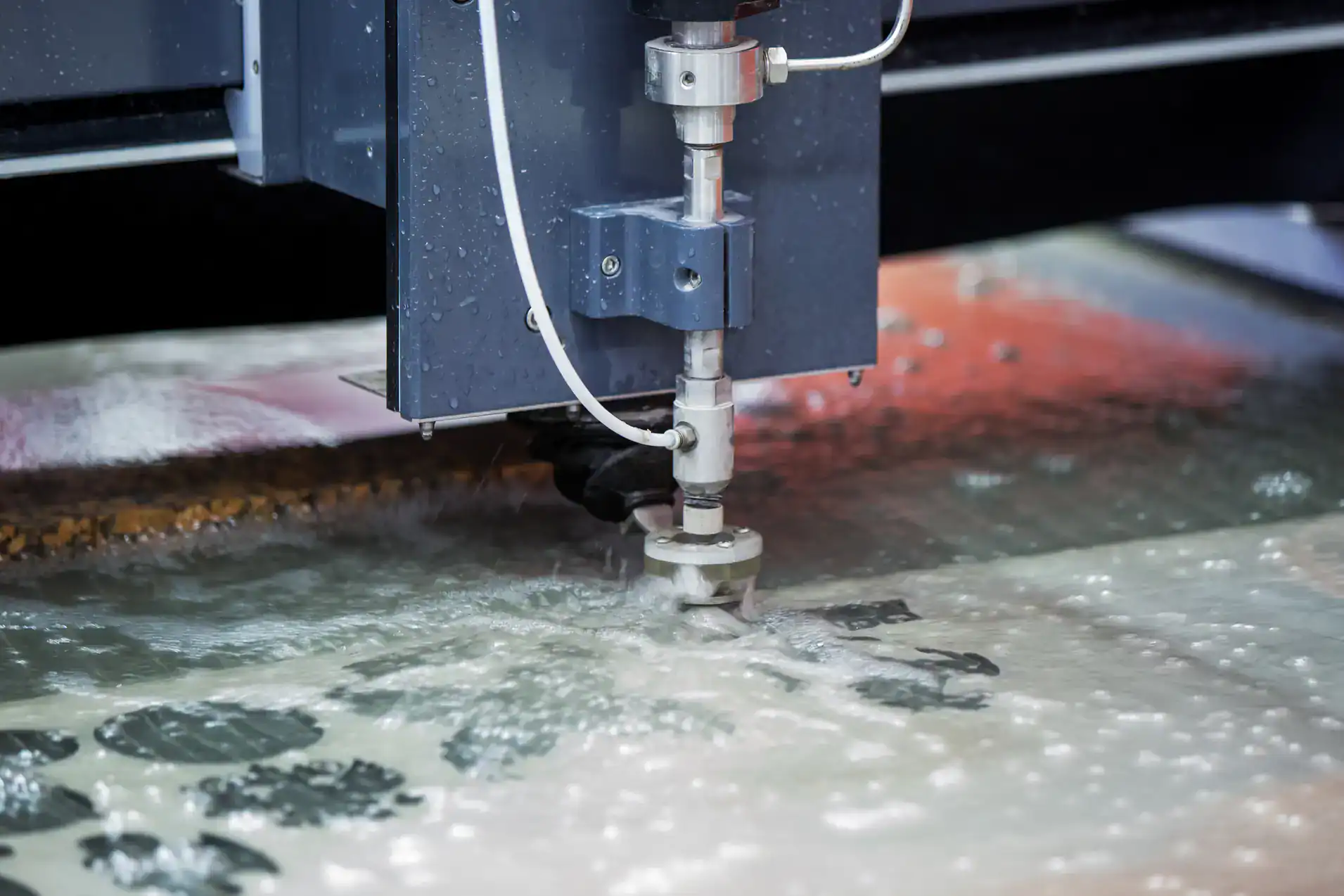
Yes. Waterjet cutting is a cold process, meaning there’s no heat generated during the cut. Heat is what causes marble to crack or lose structural integrity when you’re using saws or other blade-based methods.
The high-pressure water stream, mixed with fine garnet abrasive, erodes the material rather than forcing through it. There’s no mechanical stress, no vibration, and no thermal expansion. That’s why waterjet works so well for delicate inlays, tight inside corners, and detailed patterns that would shatter under traditional cutting methods.
You can cut curves, radiuses, and complex geometries without worrying about the stone fracturing. The process is controlled by CNC, so the cut path is consistent and repeatable. If your design file is clean, the finished piece will match it exactly.
Modern waterjet systems achieve linear cutting accuracy of ±0.003″ to ±0.005″. That’s significantly tighter than what you’ll get from a bridge saw or hand-guided router, where tolerances can vary depending on operator skill and blade deflection.
CNC control means the machine follows your CAD file without deviation. There’s no guesswork, no manual adjustment mid-cut, and no accumulation of small errors across multiple pieces. If you’re cutting ten identical parts, all ten will be within spec.
For architectural installations in Stony Brook, NY, that level of precision means components fit together on-site without gaps, shims, or rework. Contractors appreciate that because it reduces labor time and eliminates the frustration of trying to make ill-fitting pieces work. It also means less material waste, since you’re not scrapping parts that came out wrong.
Saws are limited to straight cuts and basic shapes. They use a rotating blade that generates heat, vibration, and mechanical force. That’s fine for cutting slabs down to size, but it doesn’t work for curves, intricate patterns, or tight tolerances.
Waterjet cutting uses a focused stream of high-pressure water mixed with abrasive. It can follow any path your CAD file specifies—curves, angles, inside corners, whatever the design requires. There’s no blade deflection, no chipping from exit points, and no heat-affected zones.
The edge quality is also different. Saw cuts often leave rough surfaces that need grinding or polishing. Waterjet edges come off the machine smooth and clean, often ready for installation without additional finishing. That saves time and labor, especially on projects with a lot of detailed cuts. For custom marble waterjet cutting in Stony Brook, NY, that flexibility is what makes complex designs feasible.
Waterjet cutting typically reduces waste by about 30% compared to traditional methods. The kerf width—the amount of material removed during the cut—is only about 0.04 inches. Compare that to a saw blade, which can be three times wider, and you’re losing significantly less material per cut.
There’s also less breakage. Because the process doesn’t generate mechanical stress or heat, you’re not dealing with cracked pieces or chipped edges that have to be scrapped. The CNC control means you can nest parts efficiently on the slab, maximizing yield from each piece of marble.
For high-end projects where material cost is a significant portion of the budget, that efficiency matters. You’re getting more usable parts per slab, which directly impacts your bottom line. It also means less waste going to the landfill, which aligns with the environmental standards many Stony Brook projects are now required to meet.
It depends on your application and aesthetic preferences. Waterjet cutting leaves a satin-smooth edge that’s clean and free of burrs or discoloration. For many installations—especially those where the edge won’t be highly visible—that finish is acceptable as-is.
If you need a polished edge for countertops, tabletops, or other applications where the edge is a design feature, you can request additional finishing. But unlike saw cuts, which almost always require grinding and polishing to remove roughness and chipping, waterjet edges start from a much better baseline.
That reduces the amount of secondary work needed, which saves labor time. For contractors managing tight schedules on Stony Brook projects, that can be the difference between finishing on time and running over. It also gives you more control over the final look—you’re not spending time fixing problems, you’re choosing the level of finish that matches the design intent.
Yes. Waterjet systems can cut through marble several inches thick, well beyond the standard 2cm or 3cm slab dimensions you’d use for countertops. The cutting depth is limited by the power of the system and the time you’re willing to invest, not by mechanical constraints like blade diameter.
Thicker cuts do take longer because the waterjet stream has to erode more material, but the process remains consistent. There’s no loss of accuracy as you go deeper, and there’s no risk of the blade binding or overheating like you’d see with traditional saws.
For architectural elements like thick wall panels, custom columns, or structural components, that capability opens up design options that wouldn’t be feasible otherwise. If you’re working on a restoration project in Stony Brook, NY, where matching existing thick stonework is critical, waterjet cutting gives you the flexibility to replicate those dimensions accurately.
Useful Links
Other Services we provide in Stony Brook