Hear from Our Customers
You’ve probably dealt with chipped edges, cracked corners, or cuts that don’t quite line up. Maybe you’ve had to rework pieces on-site or scrap expensive slabs because traditional cutting couldn’t handle the detail you needed.
Waterjet cutting changes that. The cold-cutting process means no thermal stress, no micro-fractures, and no discoloration around cut edges. Your marble stays intact, even on complex curves and tight radiuses that would crack under a blade.
You get smooth, finished edges that often don’t need secondary polishing. Installation goes faster because pieces fit precisely where they’re supposed to. Less field adjustment means less labor cost and fewer delays on your timeline.
For architects and contractors working on high-end residential builds or commercial installations across West Hempstead, NY, this level of precision isn’t just nice to have—it’s what keeps projects on schedule and clients satisfied.
We operate with equipment that cuts at pressures exceeding 40,000 PSI. That’s not a spec to impress you—it’s what allows us to handle the intricate inlays, medallions, and custom architectural elements that designers in West Hempstead, NY specify for luxury projects.
We work with architects, interior designers, and general contractors who need a fabrication partner that understands tolerances matter. When you’re coordinating marble installations in high-rise lobbies or custom residential builds, you need cuts that arrive ready to install.
West Hempstead’s proximity to New York City means projects here often involve tight timelines and high expectations. We’ve built our process around meeting both without the usual trade-offs between speed and accuracy.
You send us your design file—CAD drawings, DXF files, or even detailed sketches work. We review dimensions and material specs to identify any potential issues before cutting begins. If something won’t work as drawn, you’ll know before we touch your marble.
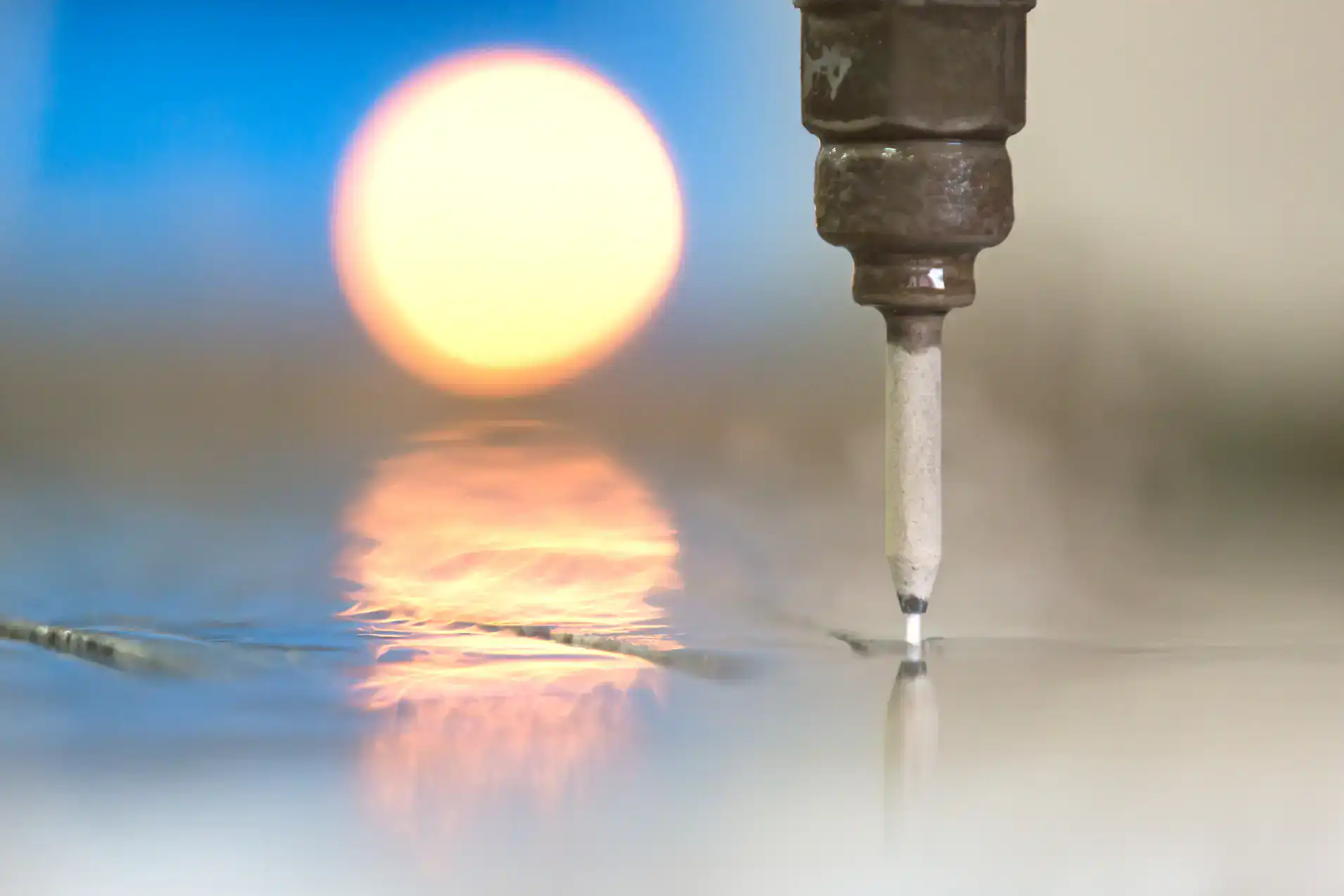
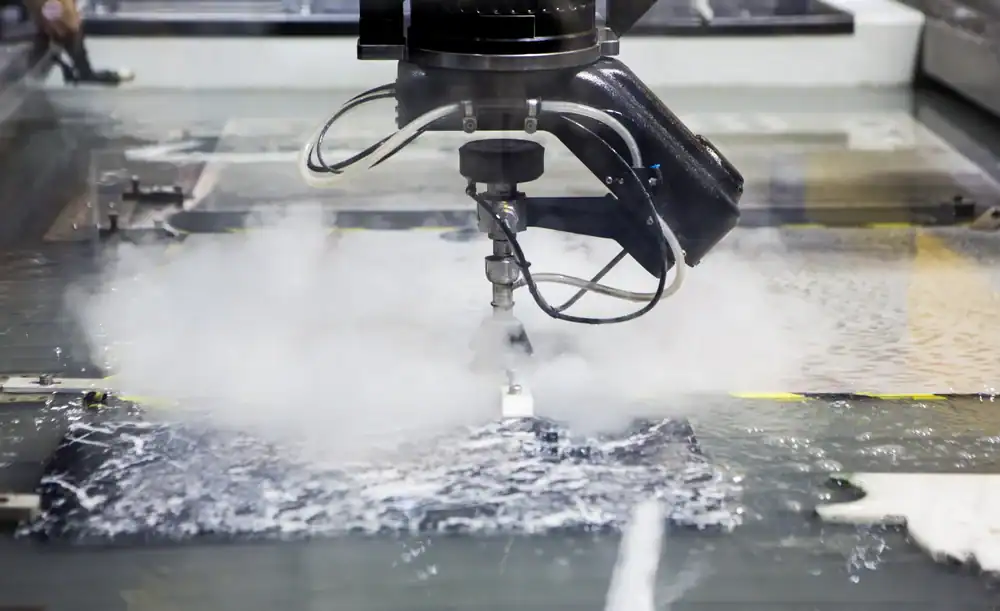
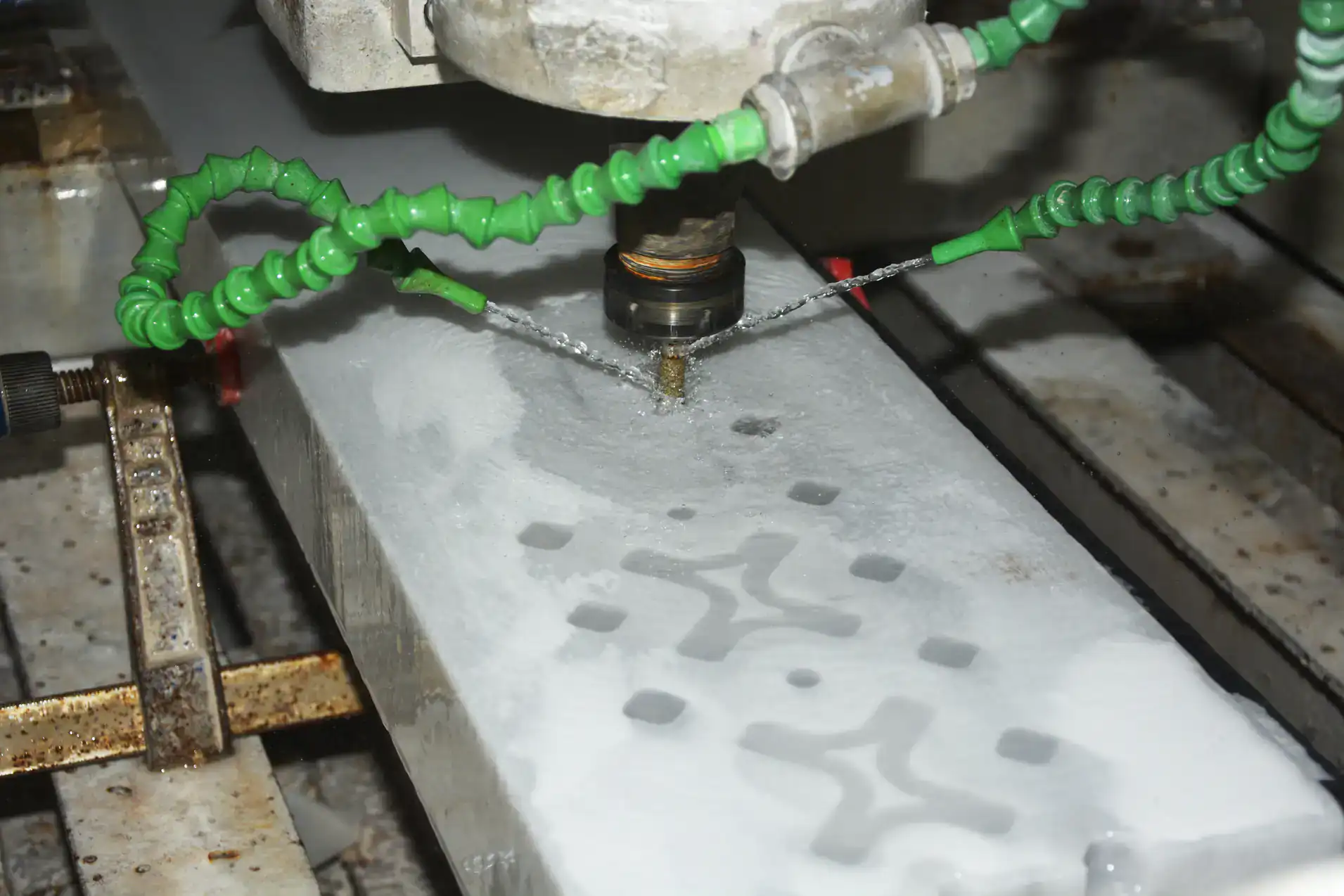
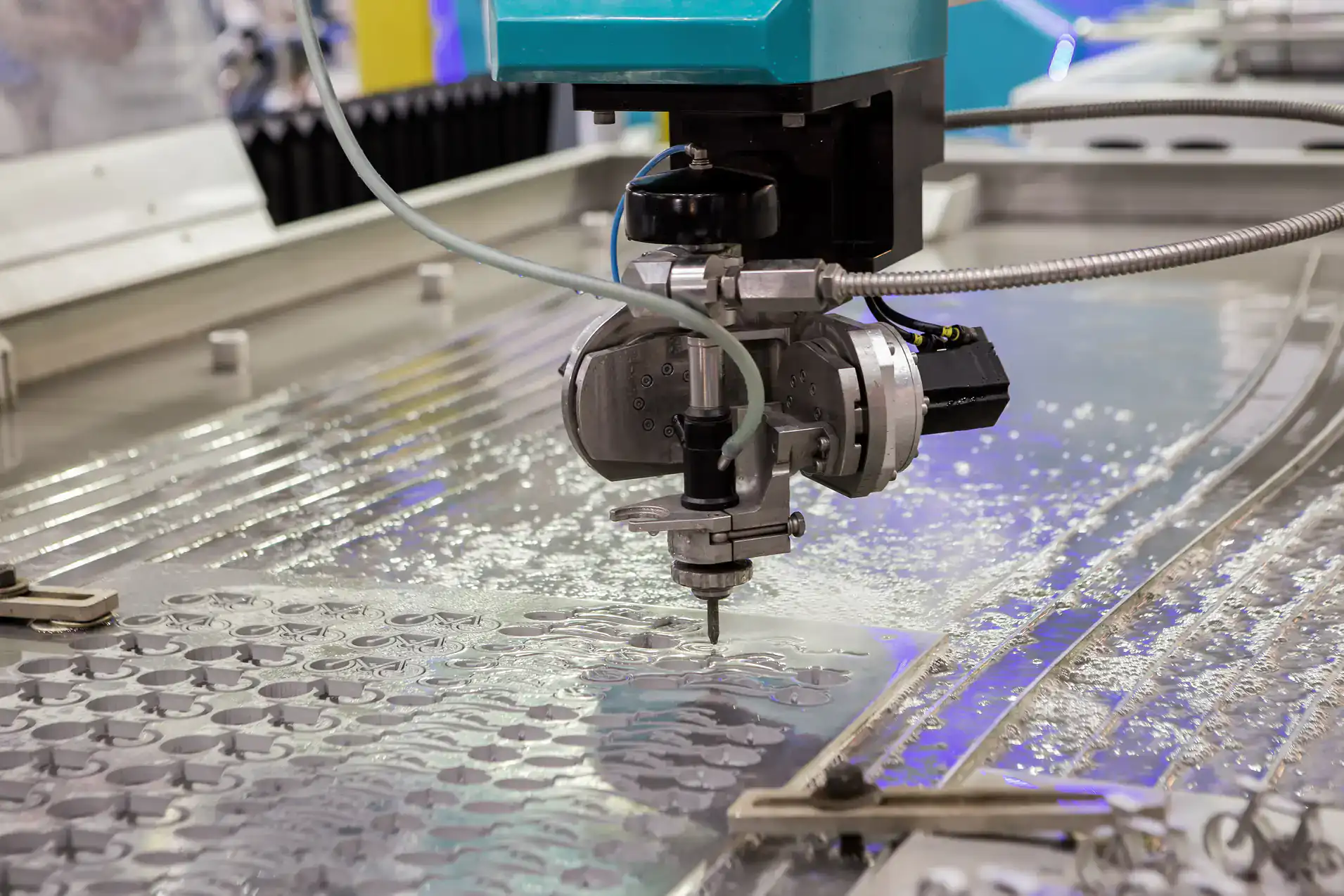
Once the file is programmed, we secure your slab and run the waterjet path. The cutting head moves along your exact specifications, using a high-pressure stream of water mixed with fine abrasive garnet. No heat, no vibration, no mechanical stress on the stone.
After cutting, we inspect every piece against our quality protocol. Edges are checked for smoothness, dimensions are verified, and any secondary finishing you’ve requested gets completed. You receive pieces that are ready for installation, packaged to prevent damage in transit.
The whole process typically runs faster than traditional methods because there’s no tool changing for different cut types and no waiting for blades to cool. Complex jobs that might take days with conventional equipment often finish in hours with waterjet technology.
Ready to get started?
You’re working with technology that can cut through 6-inch thick marble or handle delicate 3/8-inch material without changing the approach. The same equipment that creates bold architectural features also produces intricate inlay work with detail down to 1mm tolerance.
Material waste drops significantly compared to saw cutting. The waterjet kerf—the width of the cut—measures about 0.04 inches. That means more usable material from each slab and fewer offcuts that can’t be repurposed. On large projects across West Hempstead, NY, that difference adds up to real cost savings.
The process works with nearly any marble type. Carrara, Calacatta, Emperador, Statuario—the cutting parameters adjust to the material’s density and characteristics. You’re not limited by what a particular blade can handle or worried about heat sensitivity in certain stone varieties.
Because there’s no mechanical force applied to the stone, you can cut right up to edges without risk of chipping. Intricate corners, sharp internal angles, and delicate connecting points all stay intact. That opens up design possibilities that traditional methods simply can’t achieve reliably.
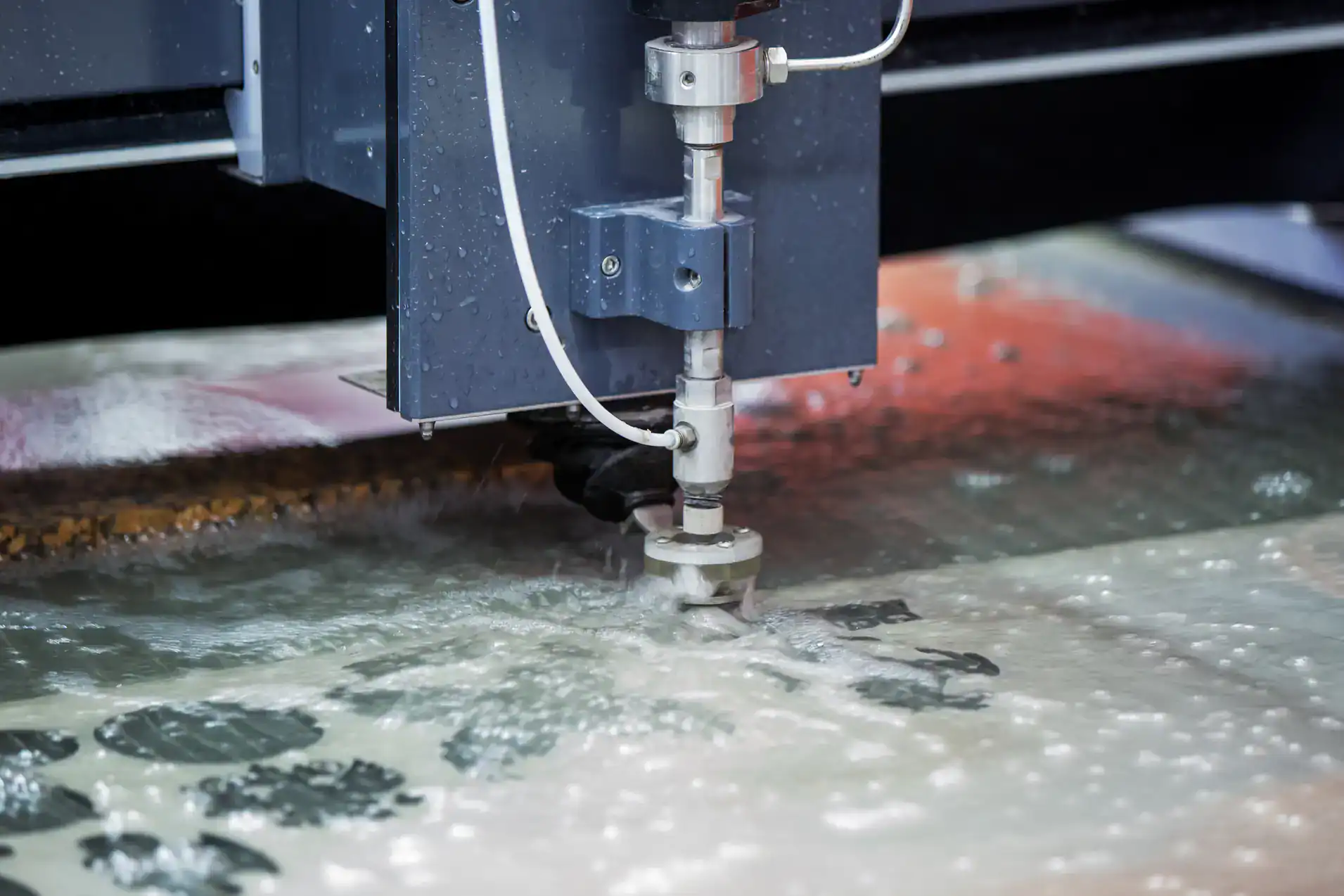
Saw cutting generates heat from blade friction, which can cause micro-fractures in marble and discoloration along cut edges. You’ve probably seen the burn marks or slight color changes on saw-cut stone—that’s thermal damage affecting the material’s integrity.
Waterjet cutting uses a cold process. The high-pressure water stream mixed with abrasive garnet cuts through marble without generating heat. Your stone’s natural properties stay unchanged, and there’s no thermal stress that could lead to cracking later.
The practical difference shows up in edge quality and design capability. Saw blades have minimum radius limitations—you can’t cut tight curves or intricate patterns without multiple setups and blade changes. Waterjet handles complex geometries in a single pass, following your exact design file without the physical constraints of rotating blades. You also avoid the dust and noise issues that come with traditional saw cutting, which matters when you’re working in occupied buildings or residential areas in West Hempstead, NY.
Simple cuts—straight edges, basic shapes, standard dimensions—typically process within 24 to 48 hours once material is in-house. That includes cutting time, quality inspection, and any edge finishing you’ve specified.
Complex projects with intricate patterns, multiple piece coordination, or detailed inlay work generally take 3 to 5 business days. The timeline depends more on design complexity than material thickness. A detailed medallion with multiple radiuses takes longer to program and cut than a thick slab with straight edges.
What speeds things up compared to traditional methods is the lack of tool changes and setup adjustments. The waterjet cuts curves, angles, and straight lines without stopping to swap blades or reposition equipment. If you’re coordinating installation schedules for projects in West Hempstead, NY, we can provide specific timelines once we review your design files. Rush services are available when project deadlines require faster turnaround, though that depends on current production schedules.
Waterjet technology processes virtually all marble varieties, from soft stones like White Carrara to dense materials like Black Marquina. The cutting parameters—water pressure, abrasive flow rate, and cutting speed—adjust based on the stone’s specific characteristics.
Softer marbles cut faster because they require less abrasive force. Denser stones take more time but achieve the same precision and edge quality. Veined marbles, which can be unpredictable with saw cutting due to varying density across the slab, cut consistently with waterjet because the process doesn’t rely on mechanical force that might follow or break along vein lines.
If you’re working with exotic or particularly expensive marble, waterjet cutting actually reduces risk. There’s no vibration that could propagate existing fissures, no heat that might expand natural variations in the stone, and no mechanical pressure that could cause unexpected breaks. For high-value materials being used in West Hempstead, NY projects, that reliability means fewer costly mistakes and less material waste.
The cutting stream measures approximately 0.04 inches in diameter, which sets the baseline for detail capability. In practical terms, you can achieve internal radiuses as tight as 0.06 inches and cut intricate patterns that would be impossible with traditional methods.
For architectural applications, this means detailed inlay work, complex border patterns, and custom medallions with fine detail all stay within achievable parameters. The CNC control system follows your design file with repeatability across multiple pieces, so if you need matching elements or pattern repetition, each cut maintains the same precision.
The limitation isn’t usually the technology—it’s the marble itself. Very thin connecting points or extremely delicate features might not have the structural integrity to survive handling and installation, regardless of how cleanly they’re cut. When we review your design files, we’ll flag any areas where the marble’s physical properties might create issues. That conversation happens before cutting starts, so you can adjust designs if needed rather than discovering problems after the fact. For custom projects across West Hempstead, NY, this upfront review prevents expensive mistakes.
Waterjet cutting typically costs more per linear foot than basic saw cutting. You’re paying for precision equipment, specialized expertise, and the ability to handle complex cuts that traditional methods can’t achieve reliably.
But the real cost comparison includes what happens after cutting. Waterjet-cut pieces usually need minimal edge finishing, which saves labor time and cost. Installation goes faster because pieces fit precisely, reducing field labor expenses. Material waste drops because the narrow kerf width and accurate cutting mean more usable stone from each slab.
For straightforward cuts where precision isn’t critical, saw cutting might make financial sense. For projects requiring tight tolerances, intricate designs, or expensive marble where waste is costly, waterjet cutting often costs less overall when you factor in the complete project. Many contractors working on West Hempstead, NY projects find the upfront cutting cost gets offset by savings in installation labor, reduced material waste, and fewer callbacks for pieces that don’t fit correctly. The calculation depends on your specific project requirements.
CAD files in DXF or DWG format work best because they contain precise vector paths that translate directly to cutting instructions. If you’re working with an architect or designer, these are standard file types they’ll already be producing.
PDF files with accurate scale can work for simpler designs, though they require conversion to vector format before programming. Hand sketches or marked-up drawings are usable if they include clear dimensions and specifications—we can convert those to CAD files, though it adds time to the process.
What matters most is dimensional accuracy and clarity about what you want cut. If your file shows a 2-inch radius but you actually need 2.5 inches, that’s the kind of discrepancy we’ll catch during the review phase. We’ll send back a confirmation drawing showing exactly what will be cut before starting production. For ongoing projects in West Hempstead, NY, many contractors establish file templates that streamline the process for repeat work.
Useful Links
Other Services we provide in West Hempstead