
Hear from Our Customers
When you’re working with expensive marble, there’s no room for error. A single crack from heat stress or a cut that’s off by even a few millimeters can ruin the entire piece and blow your budget.
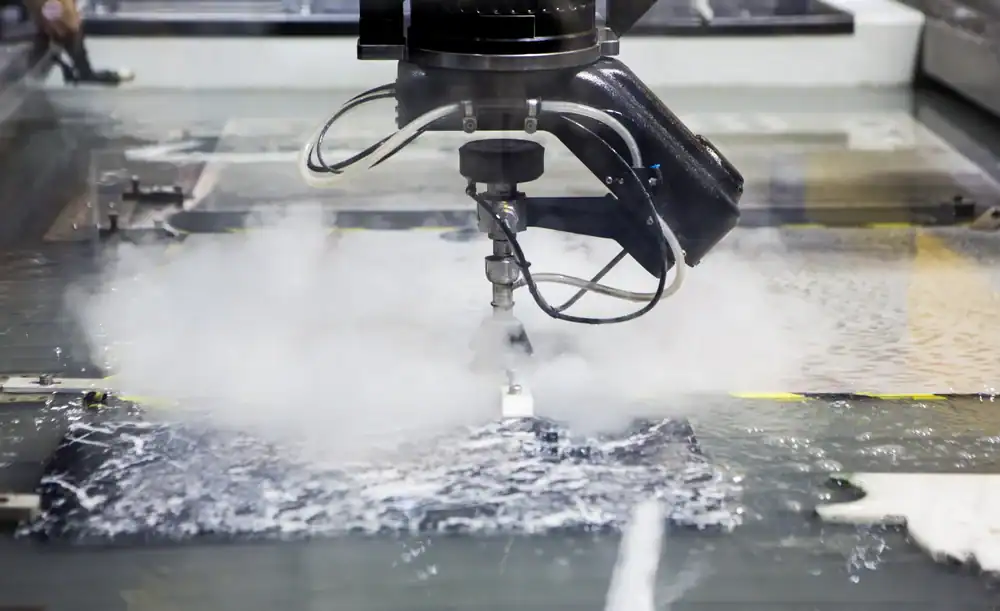
Waterjet cutting eliminates those risks entirely. The process uses high-pressure water mixed with fine abrasive garnet to cut through marble without generating any heat. That means no thermal stress, no cracking, no warping, and no burnt edges that need additional finishing work.
You get cuts that hold tolerances within 0.005 inches. Intricate patterns, tight curves, custom inlays, decorative borders—whatever your design calls for, the cut comes out clean and ready to install. No secondary grinding or polishing to fix rough edges. No wondering if the piece will fit when it arrives on site.
The material waste drops significantly too. Traditional saw cuts remove more material with each pass, but waterjet cutting uses a narrow kerf that preserves more of your marble slab. When you’re working with premium stone, that difference adds up fast.
We operate right here in Wyandanch, NY, serving fabricators, architects, designers, and contractors throughout Long Island, NY and the broader tri-state region. We’ve handled projects for major brands and local businesses alike—from custom furniture manufacturers to high-end architectural installations.
Our shop runs state-of-the-art CNC waterjet equipment, and we’ve built our reputation on precision work and straight answers. When you call, you’re talking to people who actually run the machines and understand what your project needs.
Long Island, NY has one of the largest concentrations of stone fabrication facilities in the region, with over 200,000 slabs moving through local shops. That means competition is tight, timelines are real, and quality can’t slip. We get it, because we work in that same environment every day.
You start by sending us your design file—CAD drawings, DXF files, or even a detailed sketch if that’s what you’re working from. We’ll review it and let you know if there are any issues with tolerances, material thickness, or cut complexity before we start.
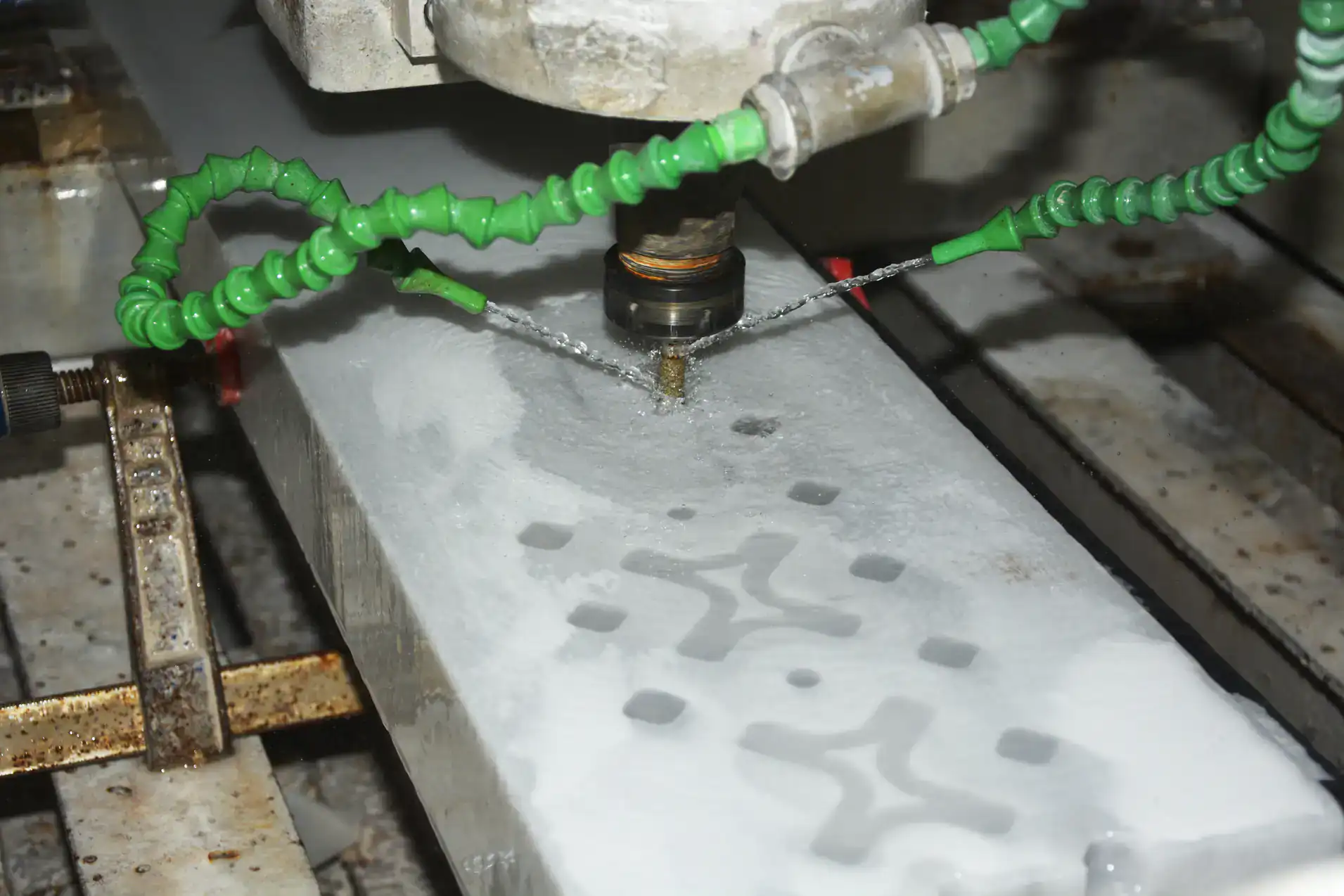
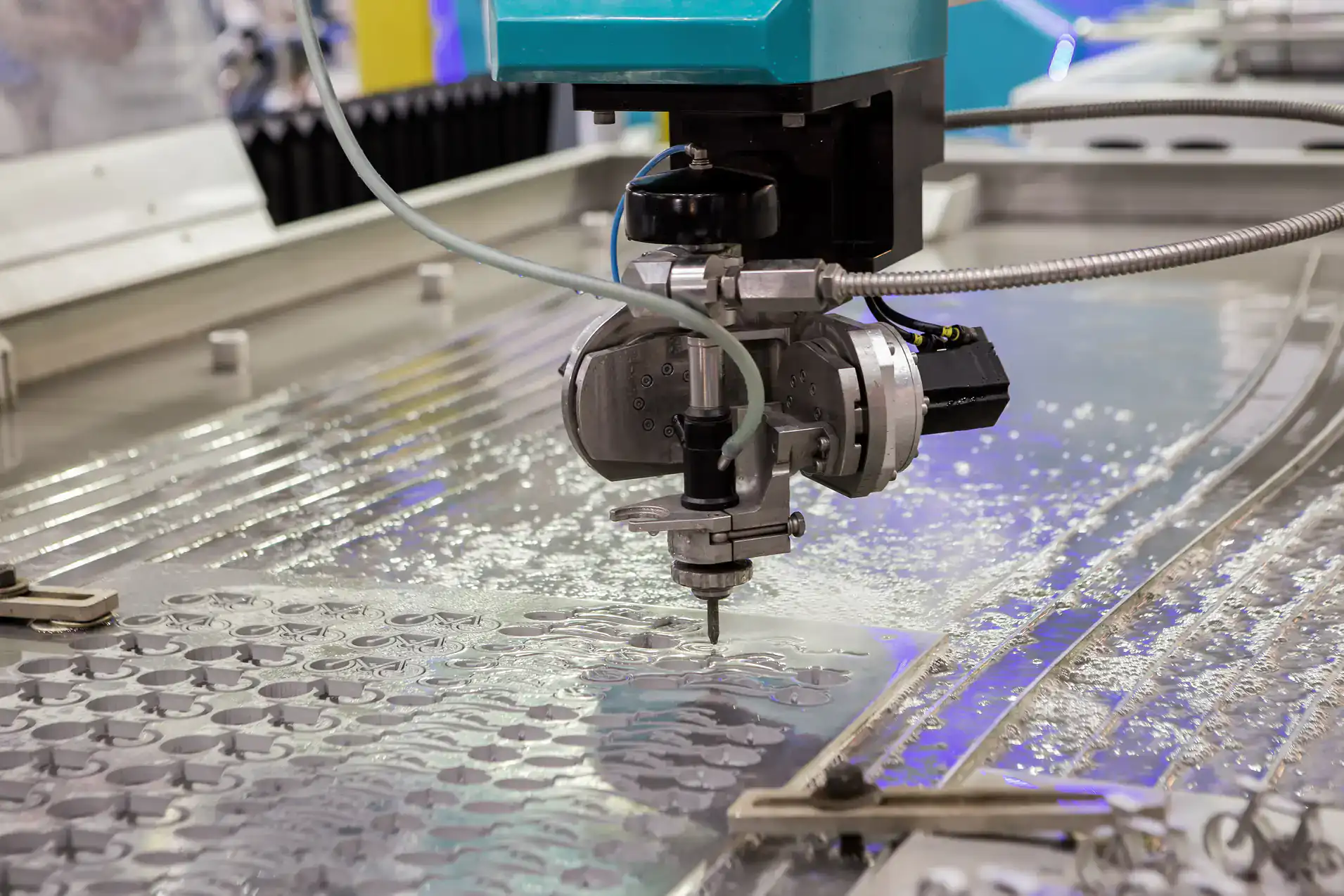
Once the file is dialed in, we load your marble onto the cutting table and secure it. The CNC system follows the programmed path, and the waterjet nozzle moves across the material at high speed. Water pressure hits around 60,000 PSI, mixed with garnet abrasive that does the actual cutting. The process is cold, so there’s no heat transfer into the stone.
For thicker marble or more intricate cuts, we adjust the feed rate to maintain accuracy. The system can handle curves, sharp angles, and interior cutouts without needing multiple setups or tool changes. When the cut finishes, the edges are smooth and the piece is ready to go.
If you need multiple identical pieces, the CNC programming ensures every cut matches exactly. No variation between the first piece and the fiftieth. That consistency matters when you’re doing large installations or need replacement parts down the line.
Ready to get started?
You get precision that traditional saws and routers can’t match. Cuts hold tight tolerances, which means your pieces fit together correctly the first time. No gaps, no forced fits, no field adjustments that eat up your installation time.
The process works on any type of marble—Carrara, Calacatta, Emperador, Crema Marfil, whatever your project specifies. It also cuts granite, limestone, travertine, engineered stone, and other materials without switching equipment. If you’re combining different stones in one design, we can handle the entire job in one setup.
We’re located in the heart of Long Island, NY’s industrial corridor, which means quick access whether you’re coming from Nassau County, Suffolk County, or anywhere in the tri-state area. Local pickup is straightforward, and we can coordinate delivery for larger projects.
The stone fabrication market on Long Island, NY has grown significantly over the past decade, driven by both residential renovations and commercial construction. That growth means more demand for specialized cutting services that can handle complex designs without the lead times of outsourcing to distant shops. Keeping production local speeds up your project timeline and gives you direct access when questions come up.
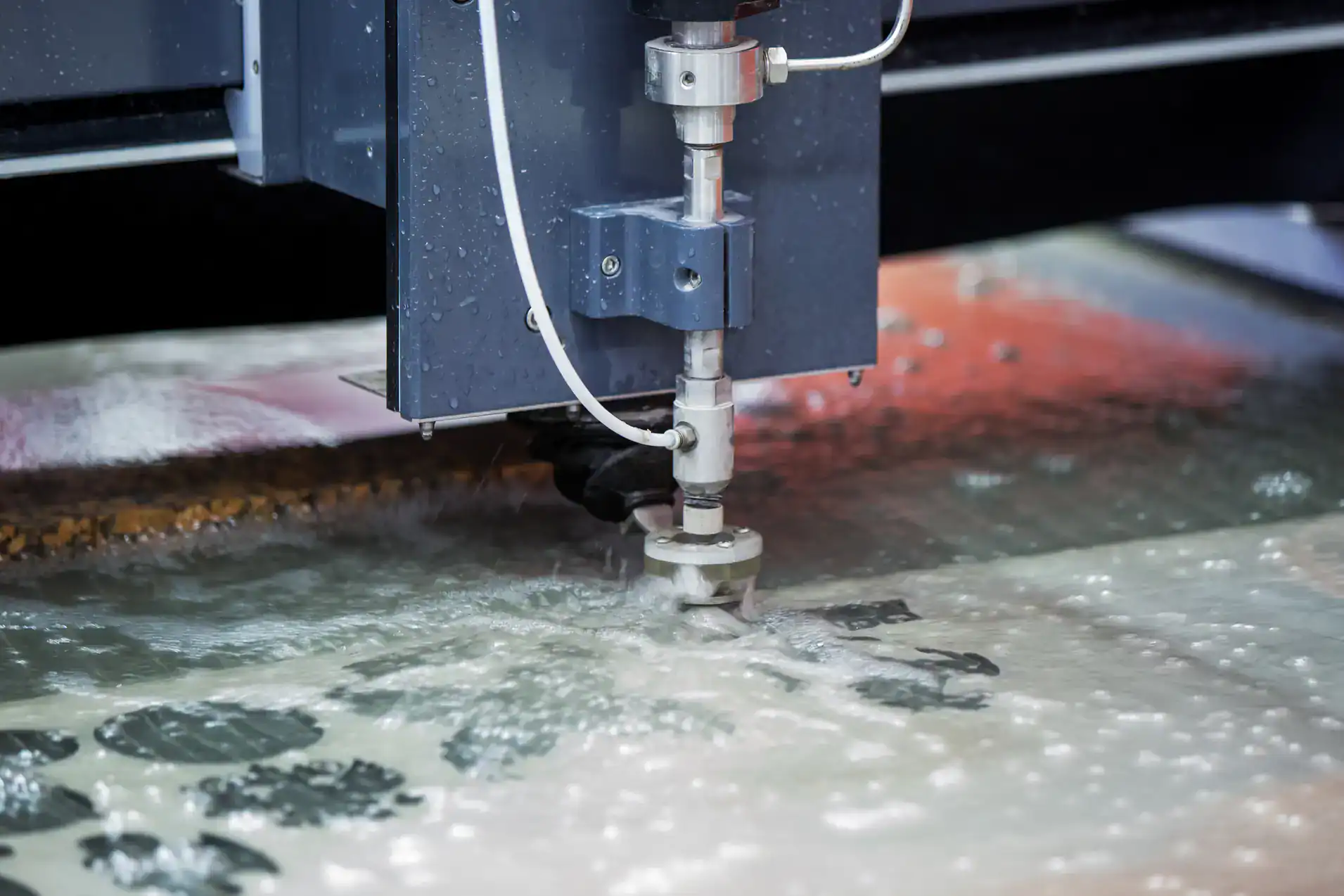
Traditional cutting methods generate friction, and friction creates heat. When marble heats up unevenly during cutting, internal stresses develop. Those stresses cause cracks—sometimes immediately, sometimes days later after the piece is already installed.
Waterjet cutting is a cold process. The water stream doesn’t generate meaningful heat because it’s cutting through abrasion, not friction. The marble stays at room temperature throughout the entire cut, so there’s no thermal expansion, no stress buildup, and no cracking from temperature changes.
This matters especially with veined marble or stone that already has natural fissures. Heat-based cutting can turn a minor natural characteristic into a structural failure. Waterjet cutting works with the stone’s natural properties instead of fighting against them.
The system can cut curves with radii as tight as the material thickness allows—usually down to about 1/8 inch inside radius depending on the stone. For decorative work like medallions, borders, or custom inlays, that means you can create genuinely intricate patterns without simplifying your design to accommodate tool limitations.
Interior cutouts work the same way. If your design calls for negative space, pierced patterns, or complex shapes within the main piece, waterjet handles it in a single operation. No need to drill starter holes for jigsaws or make multiple passes with different bits.
The cutting tolerance typically holds within 0.005 inches across the entire piece. For reference, that’s about the thickness of two sheets of paper. When you’re fitting marble pieces together or matching them to metal frames, that level of precision eliminates the guesswork and the gap-filling.
Yes, significantly less. A standard diamond blade removes about 1/8 inch of material with each cut—that’s the kerf width, and it’s just gone, turned into slurry and dust. Waterjet cutting uses a kerf of about 0.030 to 0.040 inches, roughly one-third the width.
When you’re nesting multiple pieces on a single slab, those kerf differences add up fast. You can fit more pieces onto the same amount of raw material, which directly reduces your material cost. For expensive marble varieties, that savings can be substantial.
The narrow kerf also means less structural disruption to the stone. You’re removing less material, which preserves more of the marble’s natural strength and reduces the chance of stress fractures near the cut line. The pieces you cut are more stable and less likely to develop problems during handling or installation.
Waterjet cuts through thick marble without issue. We regularly process slabs up to 6 inches thick, and the system can handle even thicker material if your project requires it. The process doesn’t rely on blade depth or bit length, so material thickness doesn’t create the same limitations you’d face with mechanical cutting.
Thicker material does require slower feed rates to maintain cut quality, but the precision stays consistent. Whether you’re cutting 3/4 inch countertop material or 4-inch architectural stone, the edges come out clean and the tolerances hold.
This capability matters for projects that mix different thicknesses—like a countertop with an integrated thick edge detail, or decorative panels that transition from thin to thick sections. We can cut the entire piece in one setup without repositioning or switching equipment.
Cutting time depends on material thickness, design complexity, and total linear footage of cuts. A simple rectangular piece with straight cuts might take 15-20 minutes. An intricate decorative panel with curves and interior cutouts could take several hours.
The CNC system runs unattended once it’s set up and started, which means we can process your job efficiently without constant manual intervention. For production runs where you need multiple identical pieces, the per-piece time drops because we’re running the same program repeatedly.
Most projects in Wyandanch, NY turn around within a few days from file approval to finished cuts. If you’re on a tight deadline, we can prioritize rush work—and because we’re local, you’re not waiting on shipping from out of state. Emergency turnaround is available when your project timeline demands it.
Send us your design file in a vector format—DXF, DWG, or AI files work best. Include dimensions and specify the marble thickness you’re working with. If you have a specific marble type selected, let us know that too, though it usually doesn’t affect the cutting process.
Tell us the quantity you need. Single custom pieces price differently than production runs of identical parts. If you’re not sure about quantities yet, we can quote both scenarios so you understand the cost structure.
Photos or sketches work if you don’t have CAD files yet. We can discuss what’s feasible and help you understand if any design elements need adjustment for cutting. The more detail you provide upfront, the faster we can give you a solid number and timeline.
Useful Links
Other Services we provide in Wyandanch