Hear from Our Customers
You’re working with expensive marble on projects where there’s zero room for error. Traditional cutting methods leave you dealing with chipped edges, heat cracks, and pieces that don’t quite line up when it’s time to install.
Precision marble waterjet cutting in Suffolk County, NY changes that completely. You get cuts controlled to tolerances of 0.001 inches—tighter than most machining work. No heat means no distortion, no micro-fractures, and no structural stress that shows up later.
Your pieces fit together seamlessly the first time. Edges come out smooth enough to go straight into installation without secondary finishing eating into your timeline. Complex geometries that other fabricators turn down? Those become straightforward when you’re cutting with a high-pressure waterjet instead of fighting against blade limitations and heat zones.
We operate from West Islip with Flow Mach 500 CNC waterjet technology designed specifically for the precision work that Suffolk County’s construction market demands. You’re looking at a county where median home prices hit $800,000 in 2024—up 23% from the year before. That’s not basic construction. That’s luxury residential and high-end commercial work where marble installations need to be flawless.
We handle the projects that require direct CAD integration, engineering team review before programming, and cutting precision that makes expensive marble go further. Our engineering team checks every file before it hits the machine to catch errors and prevent material waste.
You get access to our design team for technical guidance on toolpathing, optimal nesting for material efficiency, and how to structure complex patterns so they actually work in the real world. The process is transparent from your first call to final delivery.
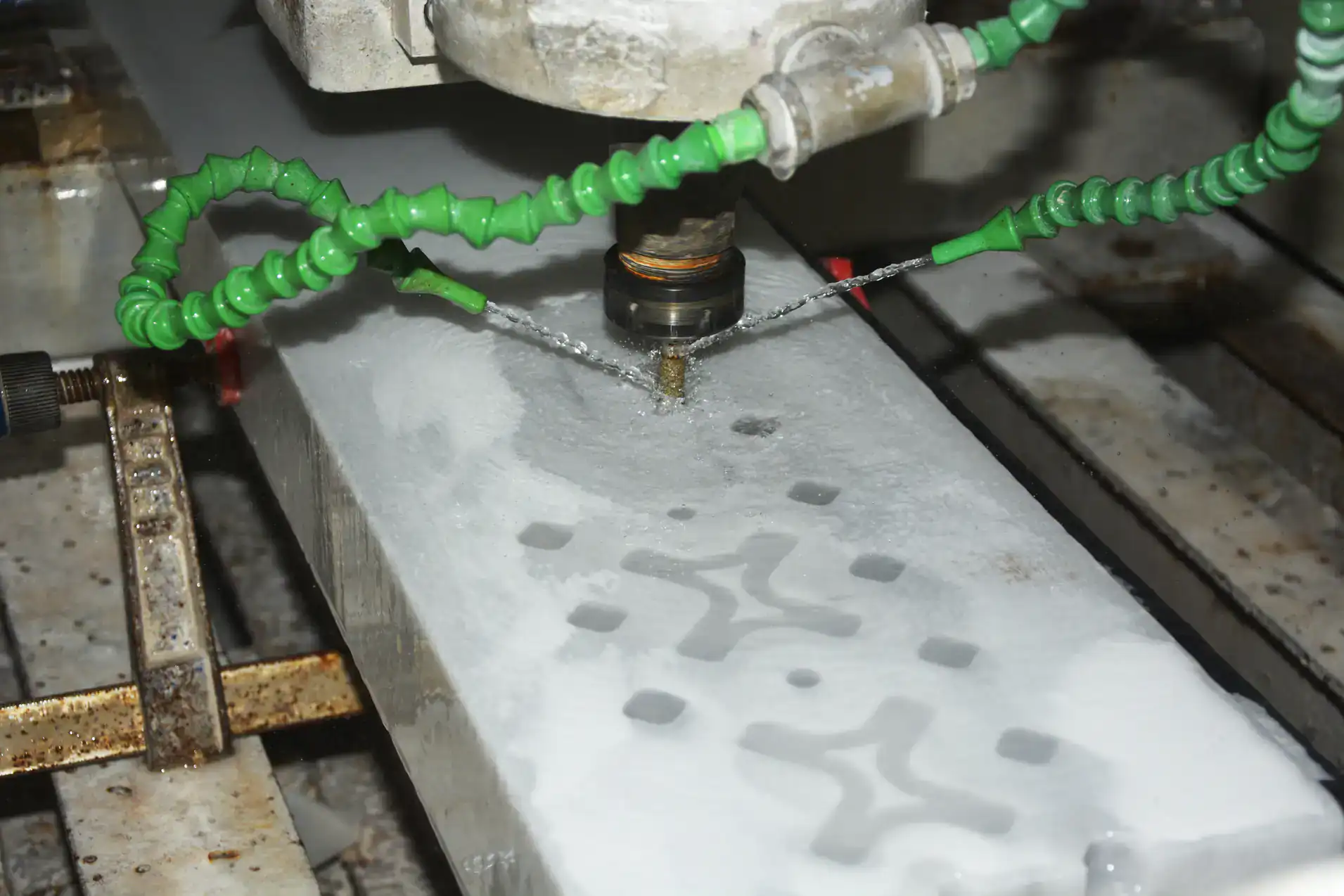
You send us your CAD file or work with our design team to create one. Our engineering team reviews it before programming—catching potential issues, optimizing material usage, and making sure your pieces will fit together exactly as intended.
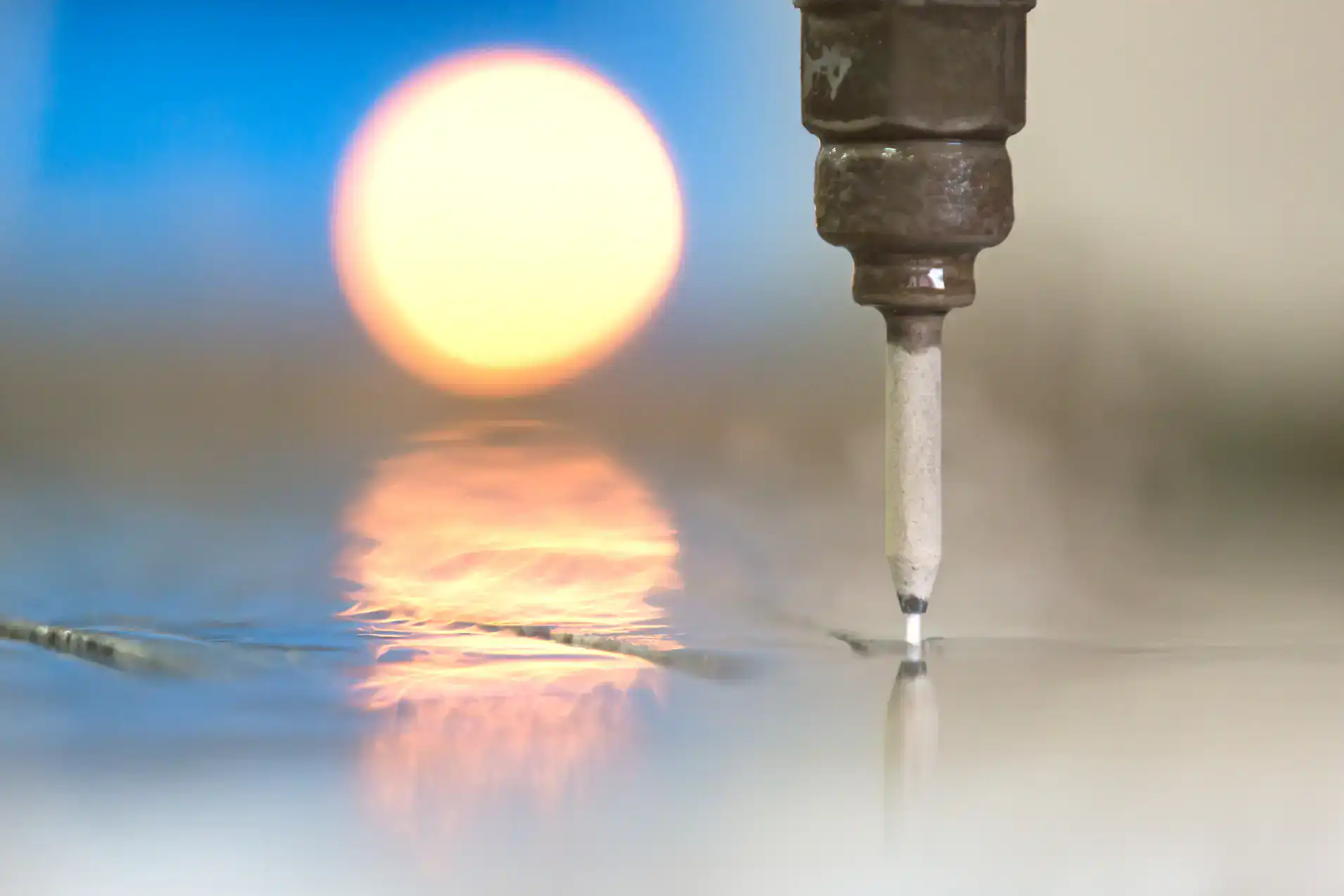
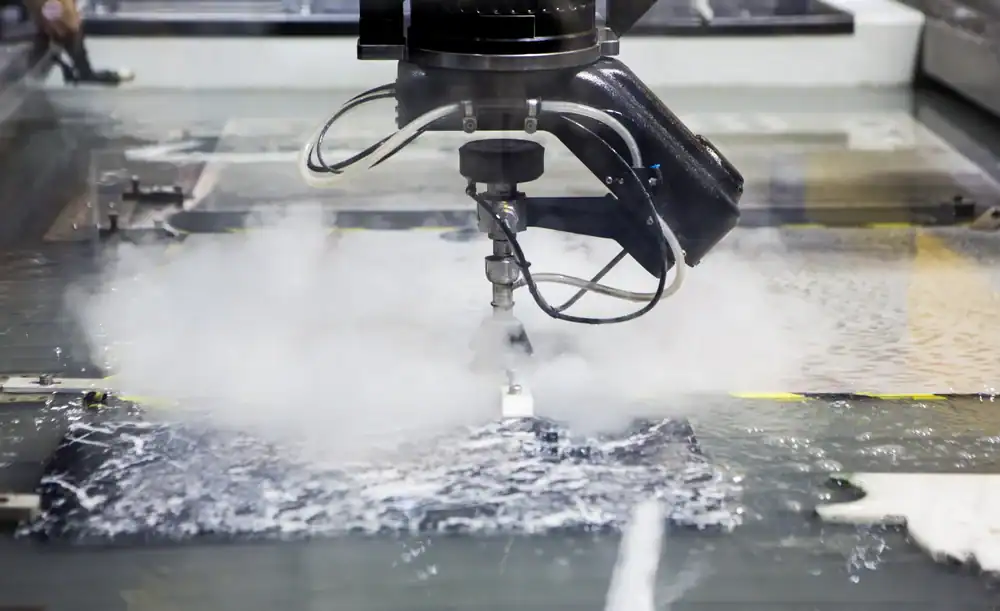
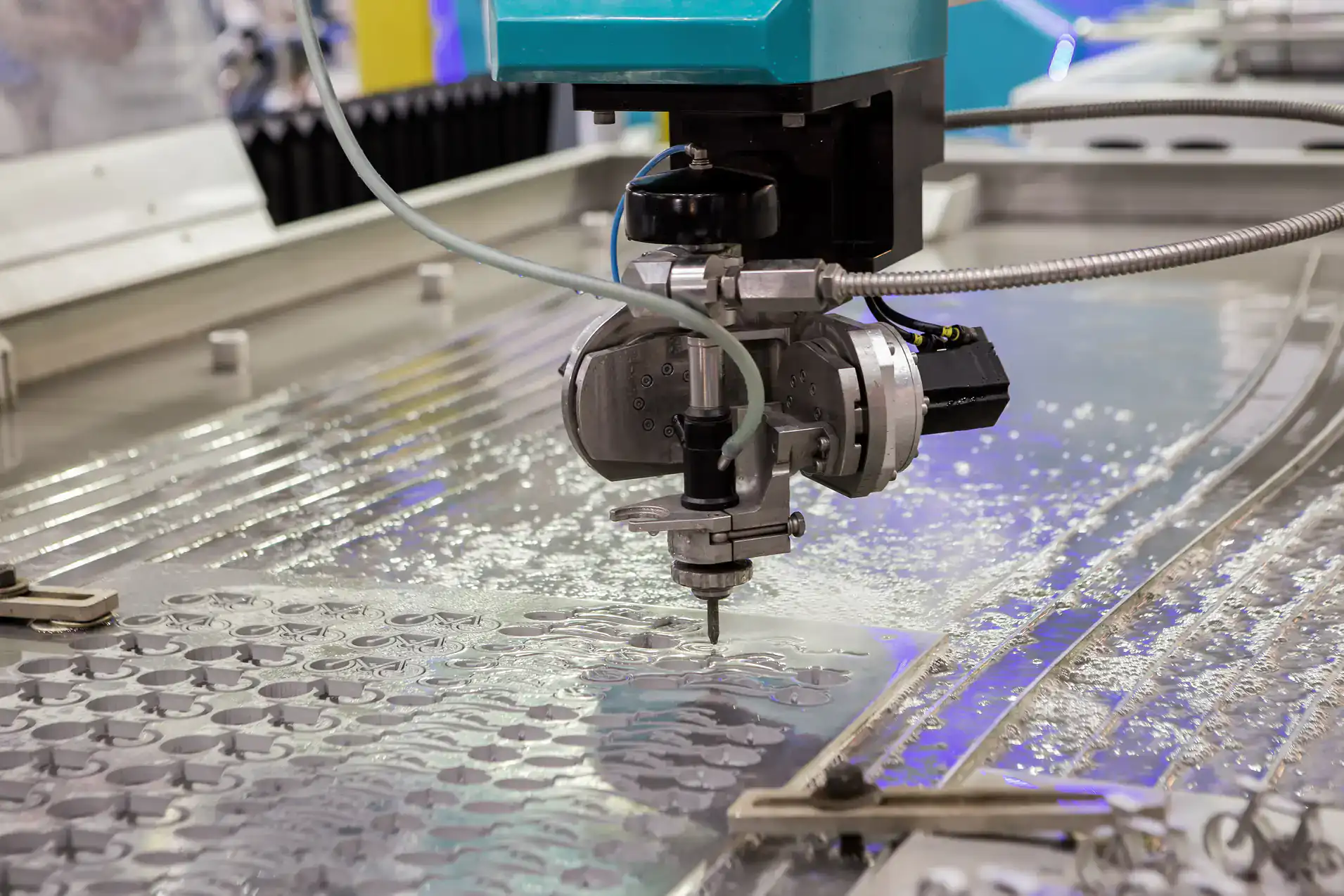
The Flow Mach 500 cuts directly from that file using abrasive waterjet technology. High-pressure water mixed with abrasive particles makes cuts without generating heat. No thermal stress, no warping, no heat-affected zones changing material properties at the cut edge.
You get pieces with burr-free edges ready for installation. Tolerances stay within 0.001 inches across the entire cut. Complex inside corners, intricate patterns, tight geometries—the waterjet handles what traditional methods can’t touch.
Our operation is built to handle volume without sacrificing the precision that makes custom marble waterjet cutting worthwhile. You’re not waiting weeks for small runs, and you’re not getting sloppy work on larger orders.
Ready to get started?
Material consultation happens upfront. We discuss which marble types work best for your specific application, how thickness affects both cutting and installation, and where you might run into problems before you’re standing on a job site dealing with them.
CAD integration means what you design is exactly what you get. No operator interpretation, no guesswork, no “close enough” measurements. The CNC system follows your file with precision that eliminates the human error factor completely.
Suffolk County’s luxury market—with over 300,000 premium residential units and commercial projects specifying marble at rates not seen in a decade—demands this level of precision. You’re competing for projects where architects and designers expect aerospace-grade tolerances, not traditional stone cutting standards.
Cold cutting preserves your material integrity. You’re not introducing stress fractures that compromise strength. You’re not creating heat zones that change how the marble behaves. You’re getting clean cuts through any thickness without the limitations that come with saw blades fighting through hard material.
Traditional cutting methods use blades or saws that generate significant heat and vibration. That heat creates thermal stress in the marble, leading to micro-fractures along the cut line that you might not see immediately but that compromise structural integrity. You also get chipping at the edges that requires secondary grinding or polishing.
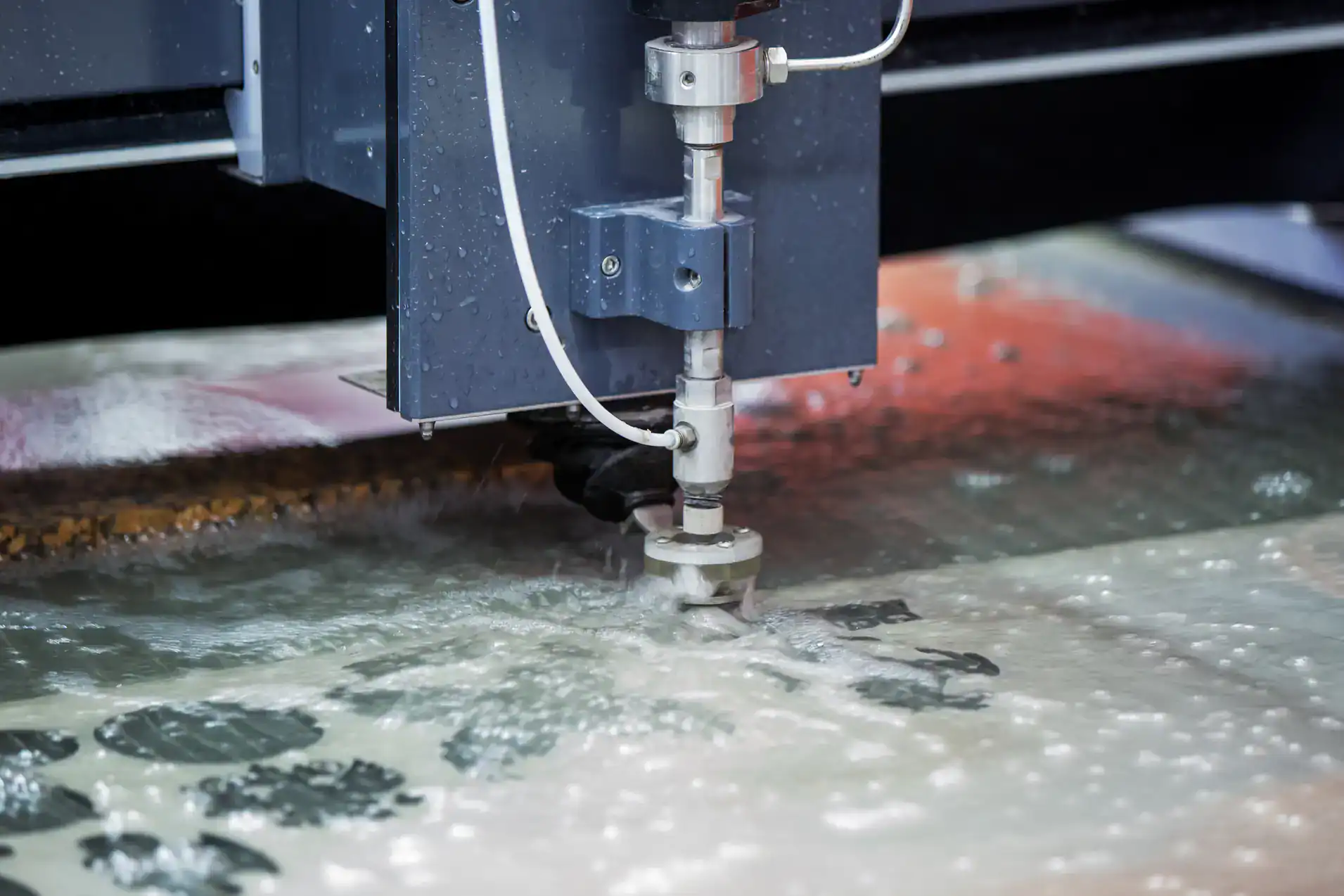
Abrasive waterjet cutting uses high-pressure water mixed with garnet particles. There’s no heat generation, so there’s no thermal stress and no heat-affected zone. The cut edge comes out smooth and burr-free without secondary finishing work.
The precision difference is substantial. Traditional methods might get you within a few millimeters if the operator is skilled. Waterjet cutting holds tolerances to 0.001 inches because it’s CNC-controlled and follows your CAD file exactly. For complex geometries, tight inside corners, or intricate patterns, waterjet is often the only method that works.
Waterjet cuts marble at virtually any thickness without the limitations you hit with blade cutting. Saw blades have maximum depth capacities and struggle with thicker material—cutting speed drops, heat buildup increases, and precision suffers.
The waterjet stream cuts through thick slabs with the same precision and edge quality you get on thinner material. Whether you’re working with standard residential thickness or heavy commercial slabs, the process stays consistent.
For Suffolk County’s commercial projects specifying premium finishes, this matters significantly. You’re not compromising on design because your fabrication method can’t handle the material thickness. Complex patterns, inlays, and custom work stay feasible regardless of how thick the marble needs to be for structural or aesthetic reasons.
Precision to 0.001 inches means you’re using every inch of marble you paid for. Traditional cutting methods require wider tolerances and safety margins because the process isn’t as precise. You end up with more scrap and offcuts that can’t be used.
Our engineering team optimizes nesting before cutting starts. We arrange your pieces on the marble slab to minimize waste, fitting complex shapes together like a puzzle to maximize usable material from each slab.
The kerf—the width of material removed by cutting—is significantly narrower with waterjet than with traditional blades. A typical saw blade removes 3-5mm of material with each cut. The waterjet stream is less than 1mm. When you’re making multiple cuts on expensive marble, that difference adds up to real cost savings and less material ending up as unusable dust.
Turnaround depends on project complexity and current volume, but the process is faster than most people expect because there’s no secondary finishing required. Your pieces come off the machine ready to install.
Simple cuts with straightforward geometry might be completed within days. More complex projects with intricate patterns, multiple pieces, or detailed inlays take longer but still move faster than traditional methods that require multiple steps and finishing work.
The engineering review happens quickly—usually within a day of receiving your CAD file. Programming is straightforward because the CNC system cuts directly from your file. The actual cutting time varies based on material thickness and pattern complexity, but our operation is built to handle volume without creating bottlenecks that delay your project timeline.
Our design team provides technical guidance throughout the process. If you’re an architect or designer working on a luxury residential or commercial project in Suffolk County, we can consult on what’s actually feasible with waterjet cutting, how to optimize your design for fabrication, and where you might run into installation challenges.
For contractors, we review plans to catch potential fit issues before cutting starts. Our engineering team has seen enough projects to know where problems typically show up—pieces that look fine on paper but don’t account for real-world installation constraints, patterns that create weak points, or designs that waste material unnecessarily.
You’re not just dropping off a file and hoping it works. The consultation and material guidance are part of the process. We discuss which marble types work best for your application, how thickness affects cutting and installation, and how to structure complex patterns so they actually function as intended when you’re on site.
Waterjet cutting excels with projects that demand precision and have zero room for error. Intricate floor mosaics where pieces need to fit together perfectly. Complex wall inlays with tight inside corners. Custom countertops with detailed edge profiles. Architectural features with geometric patterns that traditional methods can’t execute cleanly.
High-end residential renovations across Suffolk County’s luxury market are ideal candidates. When you’re installing marble in homes with $800,000+ price points, the installation needs to be flawless. Waterjet precision ensures first-time perfect fits without the rework that eats into project budgets and timelines.
Commercial projects specifying premium finishes benefit significantly. Lobby installations, feature walls, custom reception desks—anywhere the marble work is a focal point and needs to reflect the quality level of the overall build. The cold cutting process also works well for restoration projects where you’re matching existing marble work and need exact dimensions to integrate new pieces with old.
Useful Links
Other Services we provide in Suffolk County