Hear from Our Customers
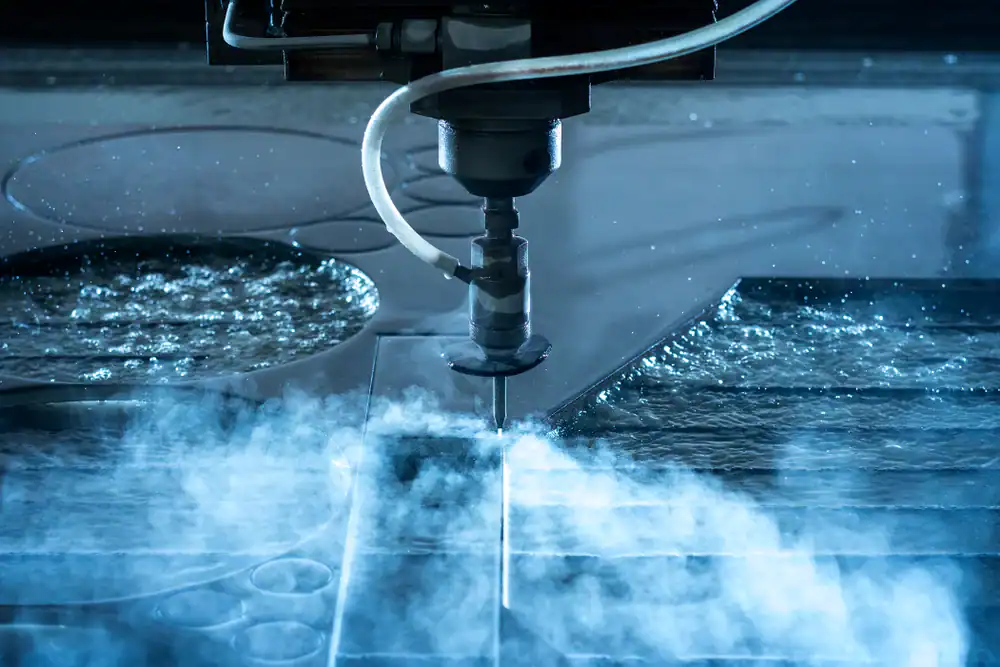
You’re working with tight tolerances. Maybe it’s a complex geometry that other shops said was too difficult, or a material combination that makes traditional cutting methods risky. You need the part to fit perfectly without warping, without burned edges, and without starting over.
That’s what abrasive waterjet cutting handles. The process uses high-pressure water mixed with fine abrasive particles to cut through virtually any material—steel, titanium, aluminum, glass, stone, composites, even rubber—without generating heat. No thermal distortion means your parts come out dimensionally accurate, with clean edges that often don’t need secondary finishing.
You get cuts accurate to ±0.005 inches. You get complex shapes and tight inside corners that would require multiple setups on other machines. You get finished parts in 2-3 business days for most jobs, not weeks. And because there’s no heat-affected zone, the material properties stay intact—critical when you’re working with hardened metals or heat-sensitive composites.
We’ve been providing custom waterjet cutting services to manufacturers, fabricators, and contractors in Brentwood, NY for over 20 years. We’ve built our reputation on delivering precision-crafted parts when you need them, without the runaround.
Brentwood’s industrial sector—from metal fabrication shops along Suffolk Avenue to aerospace component suppliers—requires cutting services that understand both the technical demands and the timeline pressures. We run high-performance CNC waterjet equipment that handles everything from one-off prototypes to production runs, and we’ve cut just about every material you can think of.
You’re not getting a sales pitch here. You’re getting straight answers about what’s possible, realistic lead times, and parts that meet your specifications the first time.
You send us your design file—DXF, DWG, or most CAD formats work. We review it for any potential issues with material choice, thickness, or geometry that might affect the cut quality or cost. If something looks off, we’ll tell you before we start cutting.
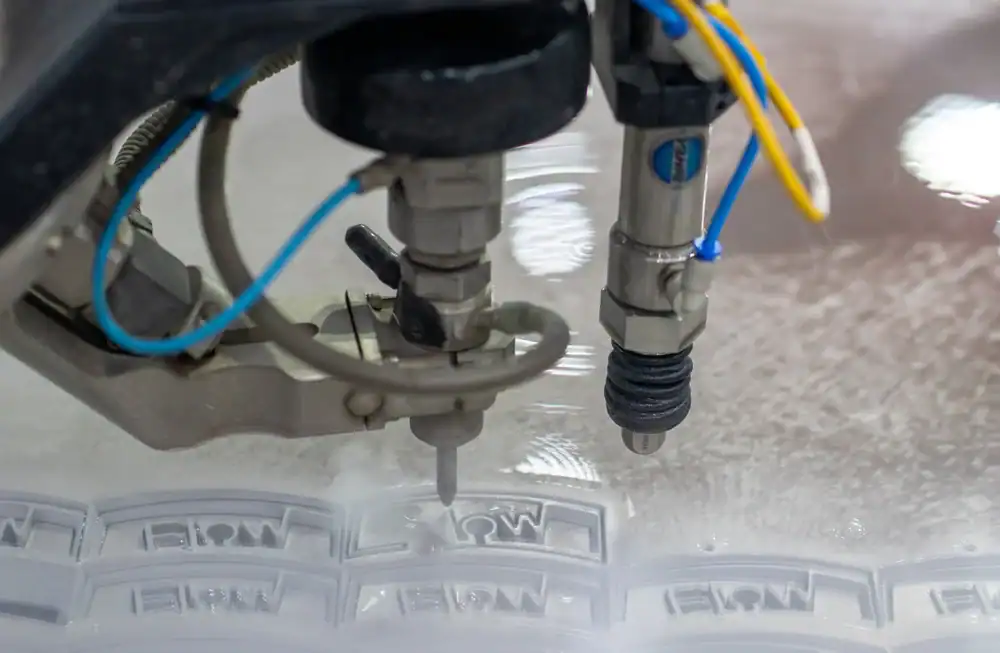
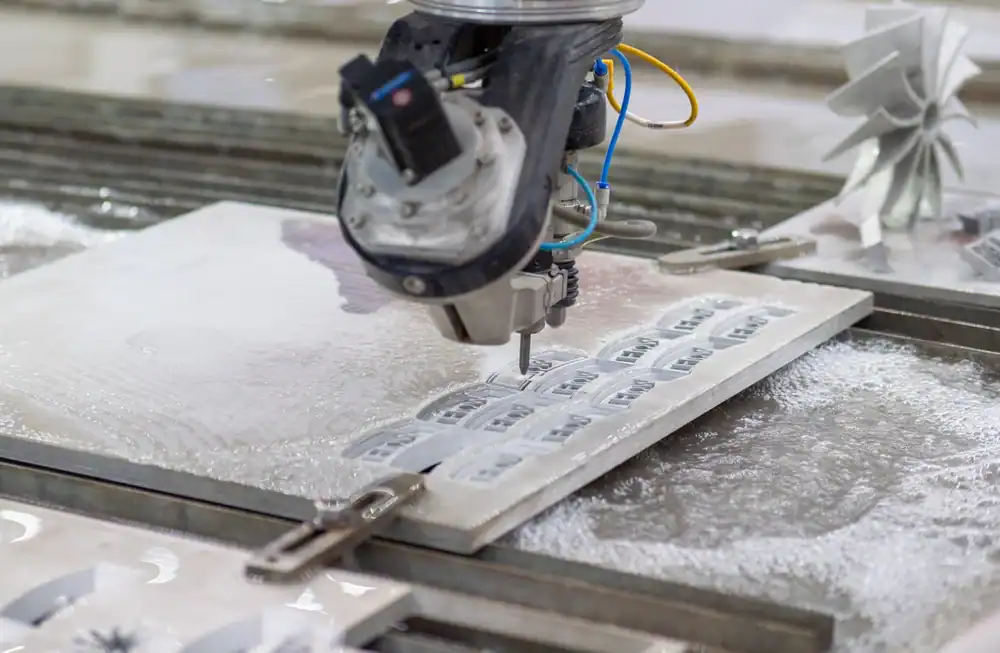
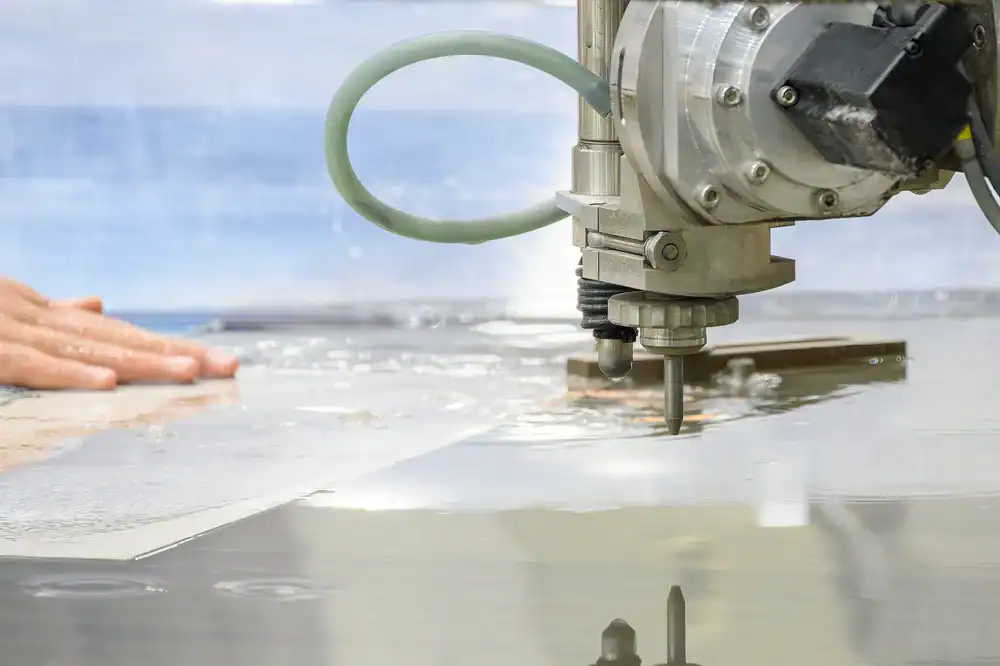
Once the file is programmed into our CNC system, we secure your material on the cutting table. The waterjet nozzle follows the programmed path, mixing water at up to 60,000 PSI with garnet abrasive to cut through the material. The stream is thinner than a credit card but powerful enough to slice through 8 inches of steel if needed.
For most jobs in Brentwood, you’re looking at 2-3 business days from file approval to finished parts. Thicker materials or extremely intricate cuts might take longer, but we’ll give you a realistic timeline upfront. The parts come off the table with clean edges—usually ready to use without grinding, deburring, or additional machining. If your project needs faster turnaround, talk to us. We’ve handled rush jobs for local contractors who needed custom brackets by end-of-week, and we’ll work with your schedule when we can.
Ready to get started?
You get access to cutting capabilities that handle materials from 1/16 inch up to several inches thick. Metals like stainless steel, aluminum, tool steel, titanium, and brass. Non-metals including glass, ceramic, stone, plastics, composites, and foam. If you’re not sure whether your material will work, ask—we’ve probably cut it before.
The process doesn’t create heat-affected zones, so there’s no hardening, warping, or metallurgical changes to worry about. That matters in Brentwood’s manufacturing environment, where aerospace and precision component work demands materials that maintain their engineered properties. You’re also not dealing with toxic fumes or hazardous waste—the spent abrasive is inert and recyclable.
You get parts cut to your exact specifications with ±0.005-inch accuracy. Complex geometries, tight inside radii, and intricate patterns that would require multiple operations on a mill or lathe get done in one setup. Stack cutting is possible for thinner materials when you need multiple identical parts. And because there’s no tooling to wear out or change, your 100th part comes out the same as your first.
Brentwood’s industrial landscape includes everything from small custom fabrication shops to larger production facilities supplying the aerospace and automotive sectors. Whether you’re a designer needing a one-off architectural element or a manufacturer requiring repeatable production parts, the waterjet process scales to your volume without sacrificing precision.
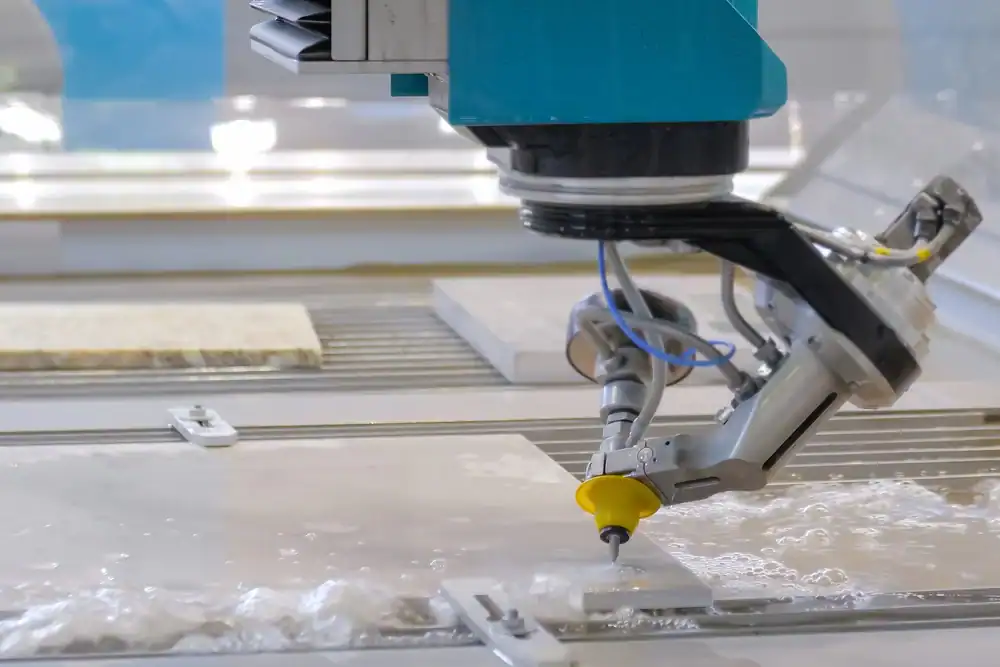
Waterjet cuts materials that are difficult or impossible with thermal cutting methods. You can cut hardened tool steels without worrying about heat treating them again afterward. Tempered glass stays intact because there’s no thermal shock. Titanium and other reactive metals don’t oxidize or develop a heat-affected zone that compromises strength.
Composite materials—carbon fiber, fiberglass, layered laminates—cut cleanly without delamination. Try that with a saw and you’ll spend hours fixing frayed edges. Stone, ceramic tile, and glass cut without cracking. Rubber, foam, and gasket materials that would tear or melt under a blade or laser come out with clean edges.
The real advantage shows up when you’re working with material combinations. A part that’s aluminum bonded to plastic, or steel with a rubber gasket attached—waterjet handles it in one pass. You’re not switching tools or methods halfway through the job.
Waterjet delivers ±0.005-inch accuracy consistently, which puts it in the same range as laser cutting for most applications. The difference is that waterjet maintains that accuracy across a much wider range of materials and thicknesses without the edge quality issues that lasers have with thicker metals.
Plasma cutting is faster for thick steel, but you’re looking at ±0.030-inch tolerance at best, with a heat-affected zone and dross on the bottom edge that needs grinding. Laser works great on thinner metals but struggles with reflective materials like aluminum and copper, and anything over an inch thick slows way down with edge quality problems.
Waterjet doesn’t care what you’re cutting. The accuracy stays consistent whether it’s 1/4-inch aluminum or 6-inch stainless. You’re not dealing with taper, bevel, or heat distortion. For precision parts where fit and finish matter—brackets that need to bolt up without modification, parts that mate with tight tolerances—waterjet gives you the dimensional accuracy you actually need.
Most waterjet cutting jobs in Brentwood get completed in 2-3 business days from the time we approve your file and receive material. That includes programming, cutting, and quality check. Simple parts in common materials often finish faster—sometimes same-day or next-day if we’re not backed up.
Longer lead times happen when you’re cutting very thick material (over 3 inches), extremely intricate designs with lots of small details, or large production runs. A single complex part in 4-inch steel might take a full day of cutting time just for that one piece. We’ll tell you upfront if your job falls into that category.
Rush service is available when you’re in a bind. We’ve turned around emergency jobs for local contractors and manufacturers who had production delays or last-minute design changes. It costs more, but if you need parts by Friday to keep a project moving, talk to us. We’ll tell you honestly whether it’s doable.
Waterjet typically produces a finished edge that’s ready to use without secondary operations. The edge quality depends on material type, thickness, and cutting speed, but for most applications you’re getting a smooth, clean cut that doesn’t need deburring or grinding.
Thinner materials—up to about 1/2 inch in most metals—come off the table with edges smooth enough for welding, assembly, or powder coating without additional prep. Thicker materials might show some texture on the bottom edge where the stream exits, but it’s still cleaner than plasma or torch cutting.
If you need a truly polished edge for aesthetic reasons, that’s a different story. Waterjet won’t give you a mirror finish. But for functional parts—brackets, flanges, gears, structural components—the edge quality is more than adequate. You’re saving time and money by eliminating the grinding and finishing steps that other cutting methods require.
Waterjet cutting costs more per hour than plasma or oxy-fuel cutting, but less than wire EDM. Operating costs run around $14 per hour, with abrasive material being the biggest expense. For your project, the real cost comparison depends on what you’re cutting and what happens after the cut.
If you’re cutting thick stainless steel plate, plasma might be cheaper on the cutting time but you’ll spend extra on grinding off dross and cleaning up heat-affected zones. Laser is competitive on thin materials but gets expensive fast when thickness increases. EDM is painfully slow—waterjet finishes profile cuts up to 10 times faster.
The cost advantage shows up when you factor in the finished edge quality and lack of secondary operations. Parts that come off the waterjet ready to use save you labor hours in finishing. No heat damage means no scrapped parts from warping. No tool changes or setup time between different operations means lower overall job costs. For complex parts in difficult materials, waterjet often ends up being the most cost-effective option when you account for total job time and finished part quality.
Waterjet handles both prototype and production work effectively. The CNC programming means once your part is set up, we can run identical copies with consistent quality. No tool wear means part number 500 comes out the same as part number one.
Production speed depends on part complexity and material thickness. Simple brackets in 1/4-inch aluminum might cut in 2-3 minutes each. Intricate parts with lots of detail take longer. For high-volume production of simple parts, stamping or laser might be faster. But for medium production runs—say 50 to 500 parts—or complex geometries that would require expensive stamping dies, waterjet makes economic sense.
Stack cutting speeds up production for thinner materials. We can stack multiple sheets and cut several parts in one pass. That works well for gaskets, thin metal parts, or plastic components. The flexibility is valuable for Brentwood manufacturers who need production capabilities without committing to expensive tooling for parts that might change or have limited volume.
Useful Links
Other Services we provide in Brentwood