Hear from Our Customers
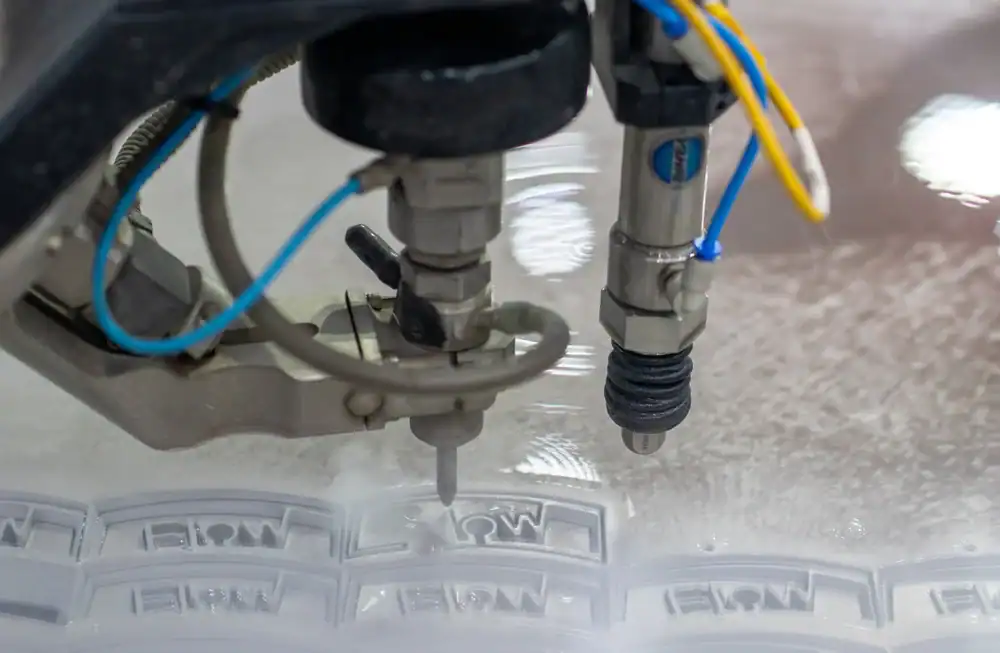
You’re not looking for close enough. You need parts that fit perfectly the first time, materials that don’t warp under heat, and a fabrication partner who catches file issues before they become expensive mistakes.
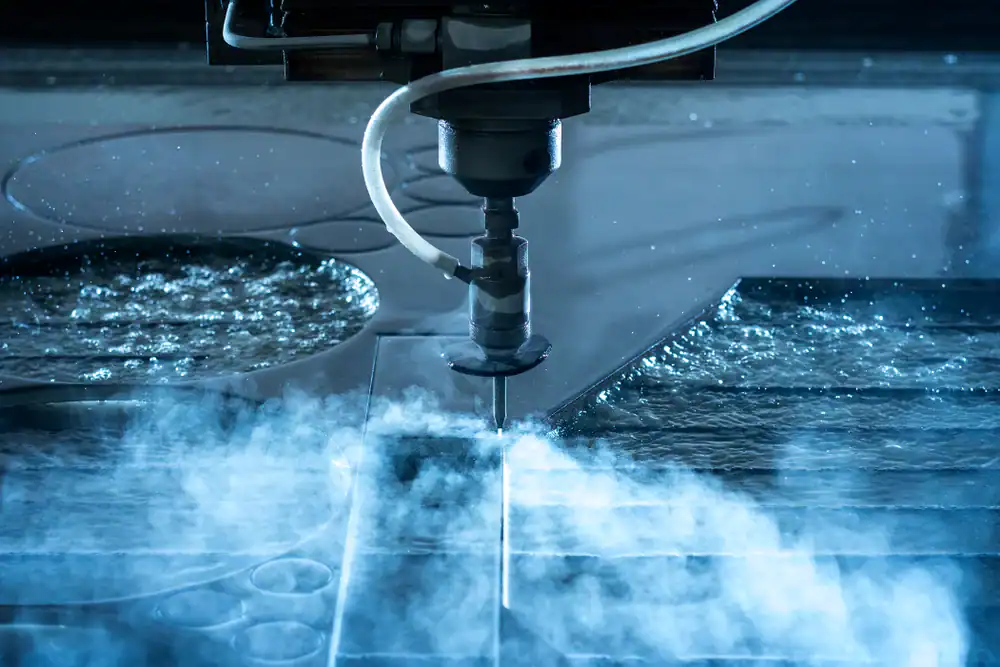
Waterjet cutting in East Hampton, NY gives you clean cuts through metal, glass, stone, and composites without heat distortion. No burned edges. No material stress. Just precise geometry that matches your CAD file down to the thousandth of an inch.
Your timeline matters. So does your budget. That’s why every project gets reviewed by our in-house design team before programming begins. We spot potential problems early, fix them fast, and deliver parts that work the way you designed them. Whether you’re fabricating architectural components for a Hamptons project or industrial parts that need exact tolerances, you get the same level of attention to detail.
We serve architects, designers, contractors, and manufacturers throughout East Hampton and the surrounding Tri-State area. We understand the expectations that come with Hamptons projects—where precision isn’t optional and quality shows in every detail.
Our waterjet cutting services in East Hampton, NY combine engineering precision with real-world fabrication experience. We’ve worked with enough complex files and challenging materials to know where problems hide, and we’ve built our process around catching them before they cost you time or money.
You’re working with a team that reviews every file, verifies every dimension, and programs every job with the understanding that your reputation depends on what we deliver.
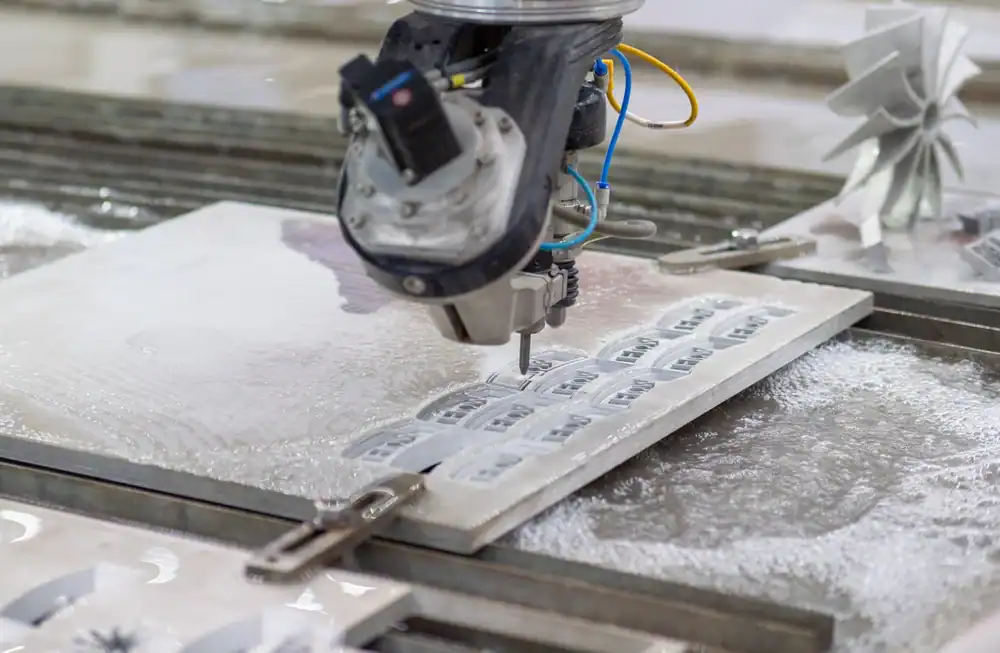
Send us your CAD file—DXF, DWG, STEP, or IGES format. Our design team reviews it for potential issues: missing vectors, scaling problems, geometry that won’t cut cleanly. If something needs adjustment, you’ll know before we start cutting.
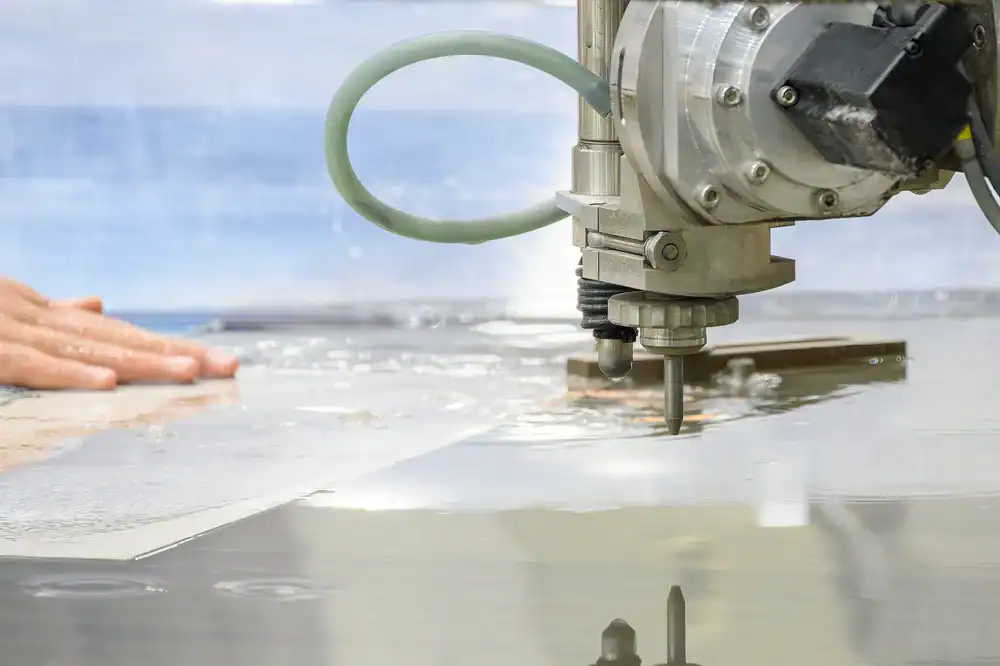
Once your file is verified, we program the waterjet with your exact specifications. High-pressure water mixed with abrasive garnet cuts through your material with precision measured in thousandths. No heat means no warping, no hardened edges, no material distortion. Just clean cuts that match your design.
You get parts that fit right the first time. No surprises during assembly. No rework because dimensions were off. The process is straightforward because we’ve eliminated the guesswork that causes delays and drives up costs.
Ready to get started?
Waterjet cutting handles virtually any material you’re working with. Metals like steel, aluminum, brass, and copper. Glass and stone for architectural details. Composites and plastics for specialized applications. If you can design it, we can cut it.
East Hampton projects often demand custom architectural components—metal panels, stone inlays, glass features, decorative screens. Our abrasive waterjet cutting in East Hampton, NY delivers the clean edges and precise geometry these applications require. No secondary finishing to clean up rough cuts. No heat-affected zones that compromise material integrity.
You’re not limited by standard shapes or simple geometry. Complex curves, tight inside corners, intricate patterns—waterjet cutting handles details that other fabrication methods can’t touch. Your design stays intact from file to finished part, with tolerances tight enough for precision assembly and clean enough for visible installations.
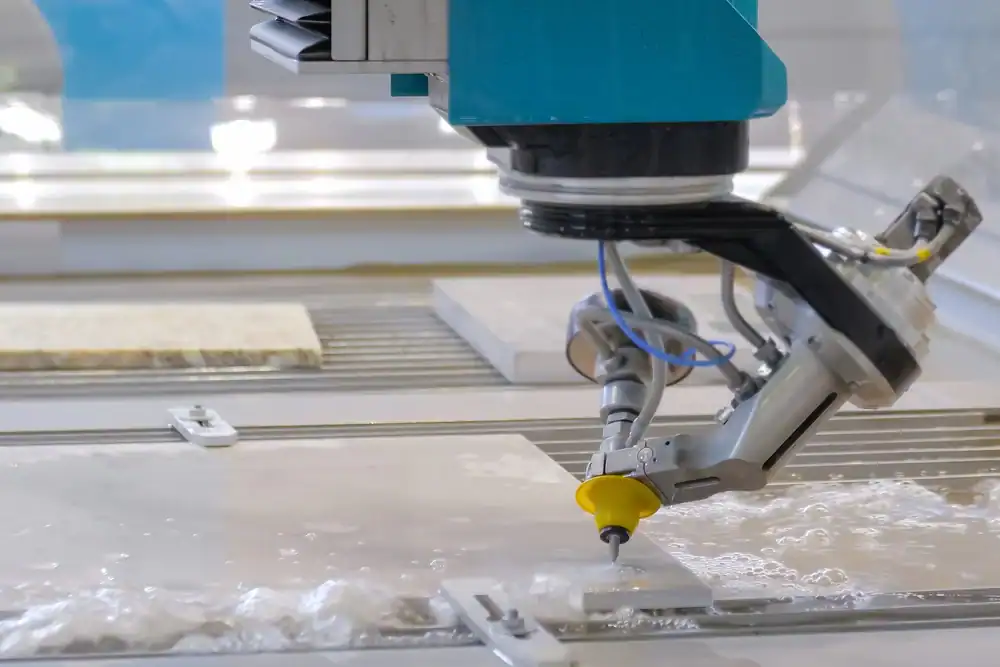
Waterjet cutting works on almost any material you’re using for architectural, industrial, or custom fabrication projects. Metals are straightforward—steel, stainless steel, aluminum, brass, copper, titanium. We cut glass and stone for architectural details, composites for specialized applications, and plastics when your design calls for it.
The process doesn’t rely on heat, which means we’re not limited by melting points or material hardness. Stone medallions, metal panels, machine parts, decorative screens—if you can draw it in CAD, we can cut it. Thickness depends on the material, but we handle everything from thin gauge sheet metal to thick plate and solid stone.
What matters most is that your material properties stay intact. No heat-affected zones. No hardened edges that cause problems during assembly. The cut quality stays consistent whether you’re working with soft aluminum or hardened steel.
Accuracy is measured in thousandths of an inch. That’s the level of precision you need when parts have to fit together without gaps, when holes need to align perfectly, or when dimensional tolerances actually matter for function.
Our waterjet cutting services in East Hampton, NY maintain tight tolerances because the cutting stream is narrow and the motion control is precise. Your CAD file translates directly to machine movement with minimal deviation. We verify dimensions before programming, check critical features during setup, and deliver parts that match your specifications.
This level of accuracy matters for architectural installations where panels need to align seamlessly, for industrial components where fit affects performance, and for any application where “close enough” creates problems during assembly. You get parts that work the first time, not parts that need adjustment to fit.
Turnaround depends on three things: file complexity, material type, and current production schedule. Simple parts in common materials often cut within days. Complex geometries or specialized materials take longer.
Here’s what actually affects your timeline: file review happens first. If your CAD file needs adjustments, we’ll catch that immediately and let you know what needs to change. Clean files move faster because we’re not stopping to clarify dimensions or fix geometry problems.
Cutting time varies by material thickness and part complexity. Thicker materials cut slower. Intricate details with tight curves take more time than simple shapes. But the process itself is efficient—once programming is done, the waterjet runs continuously until your parts are finished. Most projects complete faster than traditional fabrication methods because there’s no tooling to create and no multiple setups required.
Every file gets reviewed by our in-house design team before we program a single cut. This isn’t a quick glance—we’re checking for issues that cause problems during fabrication or assembly.
Common problems we catch: scaling errors where dimensions don’t match your intent, open vectors that won’t cut as closed shapes, geometry that’s too complex for clean cutting, and features that are too small for your material thickness. We also verify that your file format preserves all the details you designed.
This review step saves you money and time. Catching a dimension error before cutting means you don’t pay for parts that don’t fit. Fixing a geometry issue in the file takes minutes; fixing it after cutting takes days and costs material. You get confirmation that your file is ready, or you get specific feedback about what needs adjustment before we start.
Waterjet cutting doesn’t use heat. That’s the fundamental difference that matters for most applications.
Laser and plasma cutting create heat-affected zones—areas where the material’s properties change due to high temperatures. You get hardened edges that are difficult to machine, warping in thin materials, and discoloration that requires secondary finishing. Waterjet cutting eliminates all of that because the process is cold.
You also get more material versatility. Lasers struggle with reflective metals and can’t cut stone or glass. Plasma only works on conductive materials. Waterjet handles everything—metals, glass, stone, composites, plastics—with the same equipment and the same level of precision. If your project involves multiple materials or requires clean edges without secondary finishing, waterjet cutting in East Hampton, NY delivers results that other methods can’t match.
We work with standard CAD formats: DXF, DWG, STEP, and IGES files. These formats preserve the vector precision and dimensional accuracy your design requires.
DXF and DWG files are most common for 2D cutting—they’re straightforward, widely supported, and contain all the geometry we need for programming. STEP and IGES files work well for more complex parts or when you’re providing 3D models that we’ll convert to cutting paths.
What makes a good file: clean vectors with no gaps, proper scaling with clear units, and layers organized so we can identify cut paths versus reference geometry. If your file has issues, we’ll catch them during review and work with you to fix them. The goal is getting from your design to finished parts without translation errors or dimensional problems that show up during cutting.
Useful Links
Other Services we provide in East Hampton