Hear from Our Customers
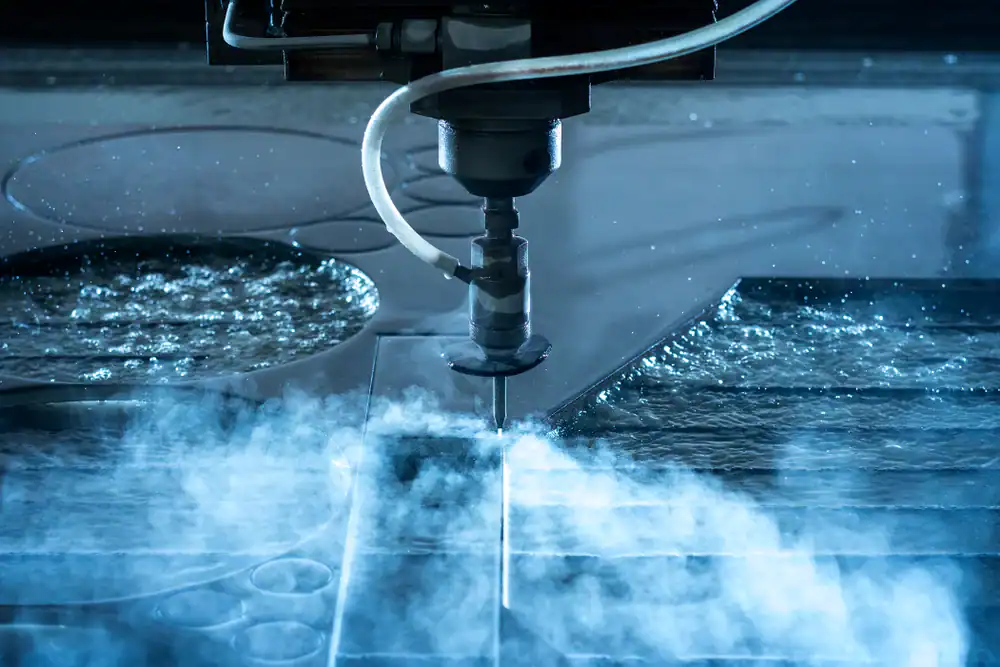
You’re not looking for close enough. You need brackets that bolt up without modification, panels that align perfectly, and intricate designs that don’t require hours of secondary finishing. High pressure water cutting gives you that level of precision because there’s no blade deflection, no heat-affected zones, and no material hardening to throw off your tolerances.
The difference shows up when you’re assembling components or installing architectural elements. No grinding down edges that came out too rough. No rework because dimensions shifted during cutting. Just parts that meet spec, fit correctly, and look clean—whether you’re working with titanium, granite, foam, or glass.
Your timeline matters too. Abrasive waterjet cutting moves fast—up to four times faster than conventional methods on certain materials—and produces finished edges that often eliminate grinding, polishing, or drilling. That’s less time per part and faster turnaround on your entire project.
We’ve been serving East Northport and the surrounding Long Island manufacturing community since the early 1990s, back when waterjet technology was just gaining traction in precision fabrication. We’re family-owned, now in our third generation, and we’ve built our reputation on delivering tight-tolerance work for architects, contractors, designers, and manufacturers who can’t afford mistakes.
East Northport has a strong industrial backbone—machine shops, fabricators, and precision manufacturers who understand quality. We work with that same standard. Our OMAX machines handle everything from one-off prototypes to full production runs, and our ISO 9001:2015 certification backs up our commitment to consistent quality control.
You’re working with people who’ve seen this technology evolve and know how to apply it to real-world projects across industries.
You send us your design file—DXF, DWG, or most CAD formats work. If you’re still in the concept phase, we can consult on design feasibility and material selection before you finalize anything. That front-end conversation often saves time and cost down the line.
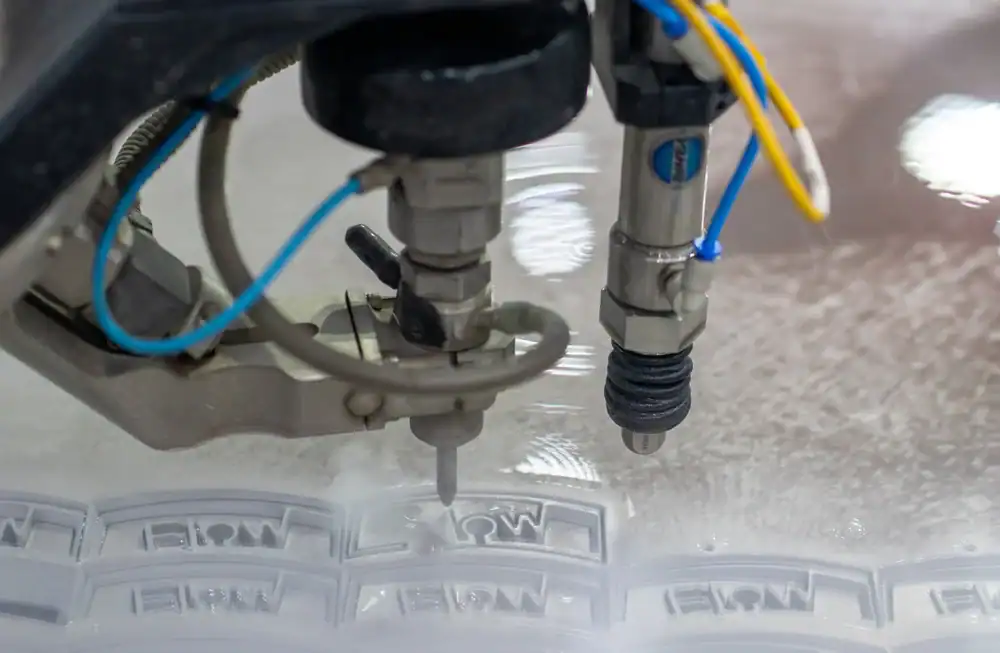
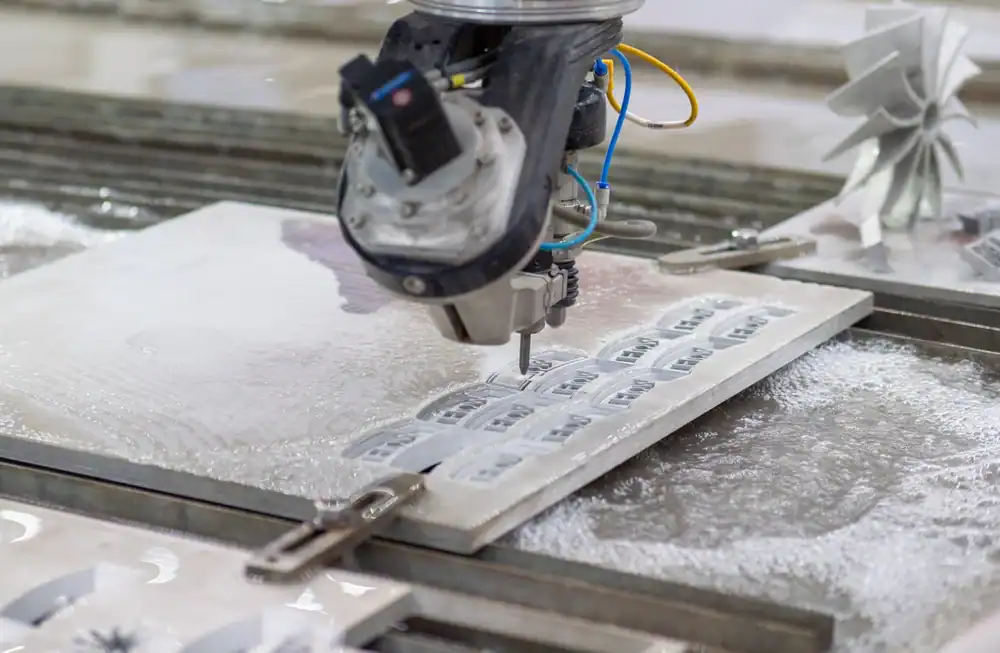
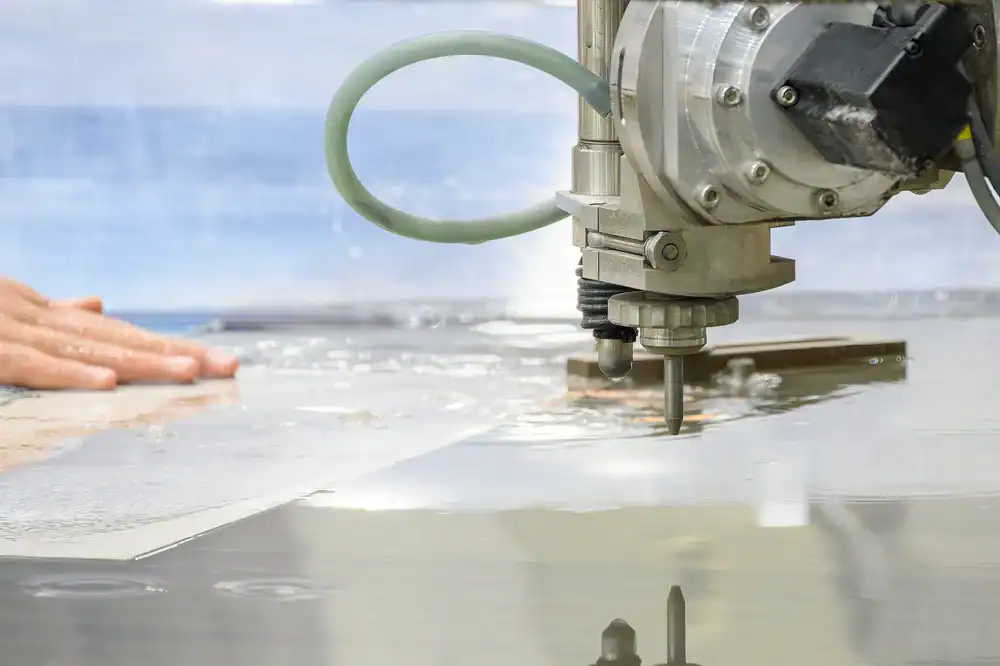
Once we have your specs, we program the cut path into our CNC waterjet system. The machine uses a high-pressure stream—up to 60,000 PSI—mixed with fine abrasive garnet to cut through your material. No heat, no blades, no warping. The waterjet follows your design with accuracy within +/- 0.005 inches, handling intricate curves, sharp angles, and complex geometries that would be difficult or impossible with traditional cutting methods.
After cutting, we inspect dimensions and edges. Most parts come off the machine ready to use, with smooth edges and no burrs. If your project requires additional services—fabrication, finishing, or assembly support—we coordinate that too. You get parts that meet your specifications and arrive on schedule.
Ready to get started?
Material versatility is a major advantage here. We cut metals—aluminum, stainless steel, titanium, tool steel—along with stone, glass, composites, plastics, rubber, and foam. Thickness capacity goes up to 10 inches on most materials, so whether you’re cutting thin gaskets or thick plate steel, the process handles it without changing tooling or setup.
You also get minimal material waste. The cutting stream is narrow—often less than 0.040 inches—which means tighter nesting of parts and better material utilization. That directly impacts your material costs, especially on expensive metals or stone.
For East Northport’s manufacturing sector—where precision machining and metal fabrication are core industries—waterjet cutting integrates well with existing workflows. You’re not introducing thermal stress that affects material properties or creates secondary operations. Parts maintain their original strength and appearance, which matters when you’re working with aerospace components, architectural installations, or any application where material integrity is non-negotiable. The process is also environmentally cleaner than many alternatives, producing minimal hazardous waste and eliminating the need for coolants or cutting oils.
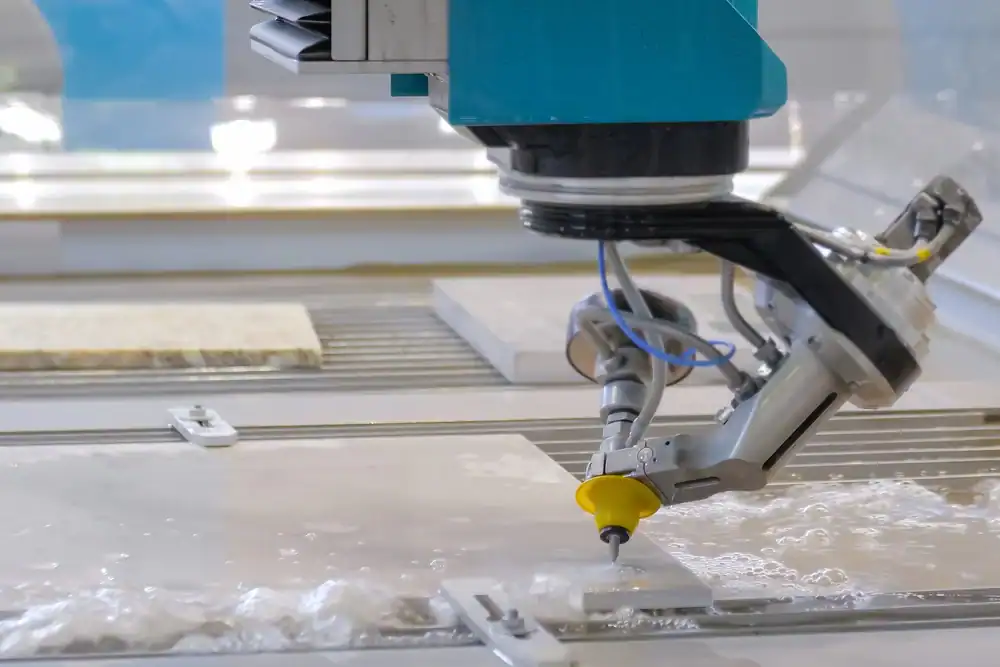
We cut virtually any material—metals like aluminum, stainless steel, titanium, brass, and tool steel; stone including granite, marble, and quartz; glass, ceramics, composites, plastics, rubber, foam, and wood. The only materials that don’t work well are tempered glass and certain hardened materials that can shatter under the pressure.
Thickness capacity depends on the material, but we regularly cut up to 10 inches on metals and stone. Softer materials can go even thicker. If you’re unsure whether your material or thickness will work, we can run tests or provide guidance based on similar projects we’ve completed.
The key advantage is that we’re cutting with abrasive and water, not heat. That means no melting, no warping, no heat-affected zones, and no change to the material’s structural properties. Your material comes out the same as it went in, just cut to your exact specifications.
Our waterjet systems hold tolerances of +/- 0.005 inches consistently, and we can achieve +/- 0.003 inches on certain materials and geometries with optimized programming. That level of accuracy works for most precision manufacturing, architectural metalwork, and custom fabrication projects.
Accuracy depends on several factors: material type, thickness, part geometry, and edge quality requirements. Thicker materials or very intricate curves may have slightly wider tolerances, but we program each job specifically to meet your dimensional requirements. If you need tighter tolerances than standard waterjet can provide, we’ll tell you upfront and discuss alternatives or secondary operations.
Because there’s no heat and no mechanical force distorting the material, dimensions stay true throughout the cutting process. You don’t get the warping or springback that happens with laser cutting or plasma, and you don’t have blade deflection like you do with saws or routers. The cut path is controlled digitally, and the stream follows it precisely.
Turnaround depends on part complexity, material type, thickness, and current shop schedule. Simple parts in thinner materials might be done in a day or two. More complex projects with thicker materials or high part counts could take a week or more.
Cutting speed itself is fast—abrasive waterjet can cut up to four times faster than pure waterjet on harder materials, and significantly faster than many traditional methods. But total turnaround includes programming time, material prep, cutting, quality inspection, and any secondary services you need.
We give you a realistic timeline upfront based on your specific project. If you’re on a tight deadline, let us know—we can often prioritize rush jobs or adjust scheduling to meet critical dates. For production runs or repeat orders, turnaround gets faster because programming is already done and we can optimize material usage and cut sequences.
Most waterjet cuts produce a smooth, finished edge that doesn’t require secondary grinding or polishing. The edge quality depends on material type, thickness, and cutting speed, but in general, you get a clean cut with minimal burrs and no heat discoloration.
On thinner materials—under 1 inch—edges typically come out very smooth with little to no taper. Thicker materials may show slight striations or a small amount of taper at the bottom of the cut, but this is usually within acceptable limits for most applications. If your project requires a perfectly smooth edge for aesthetic or functional reasons, we can adjust cutting parameters or add a finishing step.
The advantage over thermal cutting methods is significant. Laser and plasma leave heat-affected zones, discoloration, and hardened edges that often need grinding. Waterjet doesn’t introduce heat, so there’s no oxidation, no hardness change, and no warping. For many projects, parts come off the machine ready to install or assemble without any additional work.
Waterjet cutting typically costs more per hour than plasma or oxy-fuel cutting, but less than laser cutting for thicker materials. Operating costs run between $12-$30 per hour depending on material and abrasive usage. But cost per hour doesn’t tell the whole story.
You save money by eliminating secondary operations. No deburring, no grinding off heat-affected zones, no straightening warped parts. Material waste is lower because of the narrow kerf, so you get more parts per sheet. And because there’s no heat distortion, scrap rates drop—parts come out to spec the first time.
For materials that are difficult to cut with other methods—titanium, stone, thick composites, layered materials—waterjet is often the most cost-effective option because it’s the only method that works well. The real comparison should be total project cost, not just cutting cost. When you factor in material savings, reduced labor for finishing, and lower scrap rates, waterjet often comes out ahead, especially on complex or high-value projects.
Yes. Waterjet excels at intricate cuts, tight inside corners, and complex geometries that would be difficult or impossible with mechanical cutting methods. The cutting stream is narrow—typically 0.020 to 0.040 inches—so it can navigate detailed patterns, sharp angles, and small radii without the limitations of blade width or tool access.
CNC control means the cut path follows your design file exactly, whether that’s organic curves, repeating patterns, or geometric precision. We’ve cut everything from decorative architectural panels with intricate scrollwork to precision gaskets with dozens of small holes and complex profiles.
The limitation isn’t the machine’s capability—it’s usually the material itself. Very brittle materials might crack on tight inside corners, and extremely thick materials may have a practical limit on how tight a radius you can achieve. But for most applications, if you can draw it, we can cut it. Bring us your design file and we’ll review it for manufacturability and suggest any adjustments that might improve results or reduce cost.
Useful Links
Other Services we provide in East Northport