Hear from Our Customers
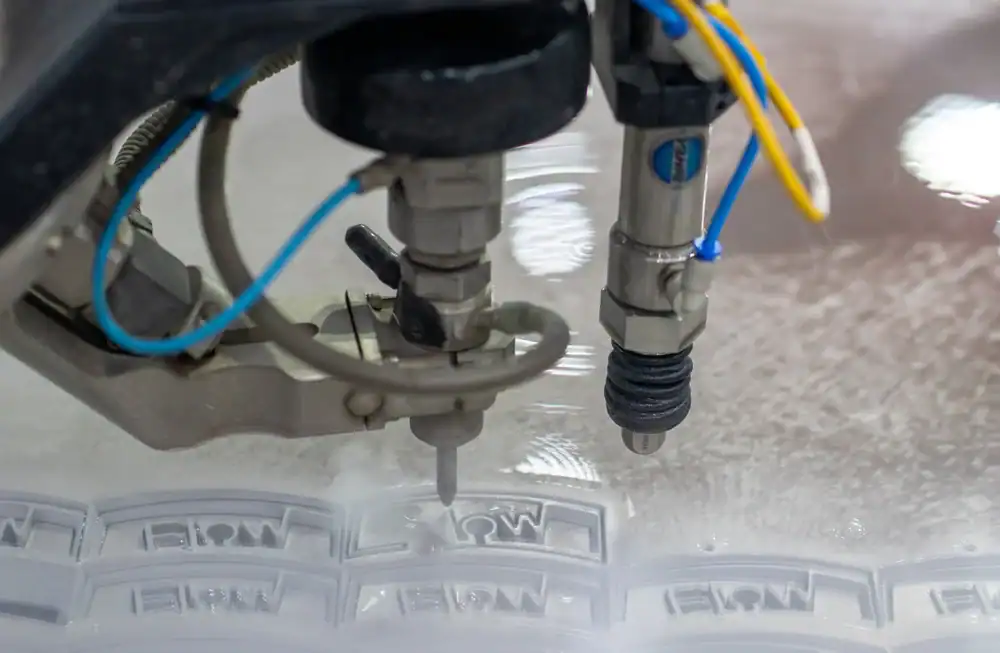
When you’re working with materials that don’t forgive mistakes, traditional cutting methods create problems you shouldn’t have to fix. Heat distortion changes your material properties. Rough edges mean hours of secondary finishing. Inconsistent tolerances mean scrapped parts and missed deadlines.
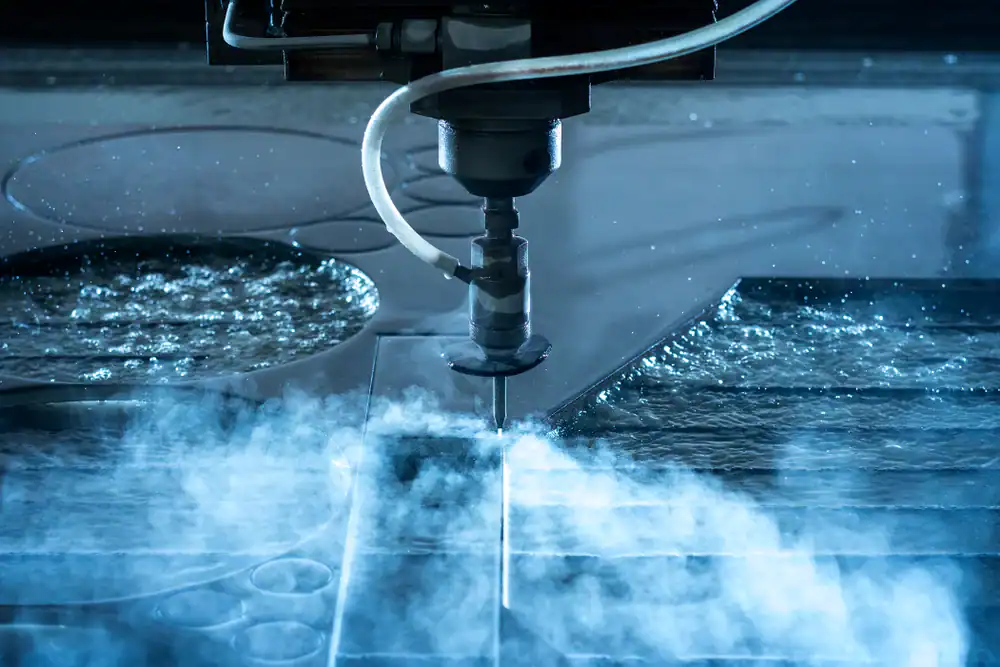
Waterjet cutting in East Patchogue, NY solves that. The process uses high pressure water cutting—no flames, no plasma, no lasers generating heat. Your aluminum doesn’t warp. Your composites don’t delaminate. Your stainless keeps its integrity.
You get clean edges that often don’t need finishing at all. Tolerances hold to 0.001 inches, consistently. And because there’s no heat-affected zone, your material behaves exactly how it’s supposed to after the cut. That means less rework, faster turnaround, and parts that actually work the way you designed them.
We serve manufacturers, fabricators, and builders throughout East Patchogue, NY and the surrounding tri-state area. We’re not the only waterjet cutting shop around, but we’ve built our reputation on doing the work right—tight tolerances, clean cuts, and straight answers.
Our equipment includes multi-axis capabilities that handle complex geometries most shops can’t touch. Whether you’re cutting aerospace-grade titanium or architectural stone, the process stays consistent. We’ve worked with everyone from automotive performance builders to architectural firms, and the common thread is simple: they need precision they can count on.
East Patchogue sits in a manufacturing corridor where tolerances matter and deadlines are real. We get that, because we’re part of it.
You send us your design file—DXF, DWG, or whatever CAD format you’re working in. We review it for any potential issues with tolerances, material choice, or geometry that might cause problems during cutting. If something looks off, we’ll tell you before we start.
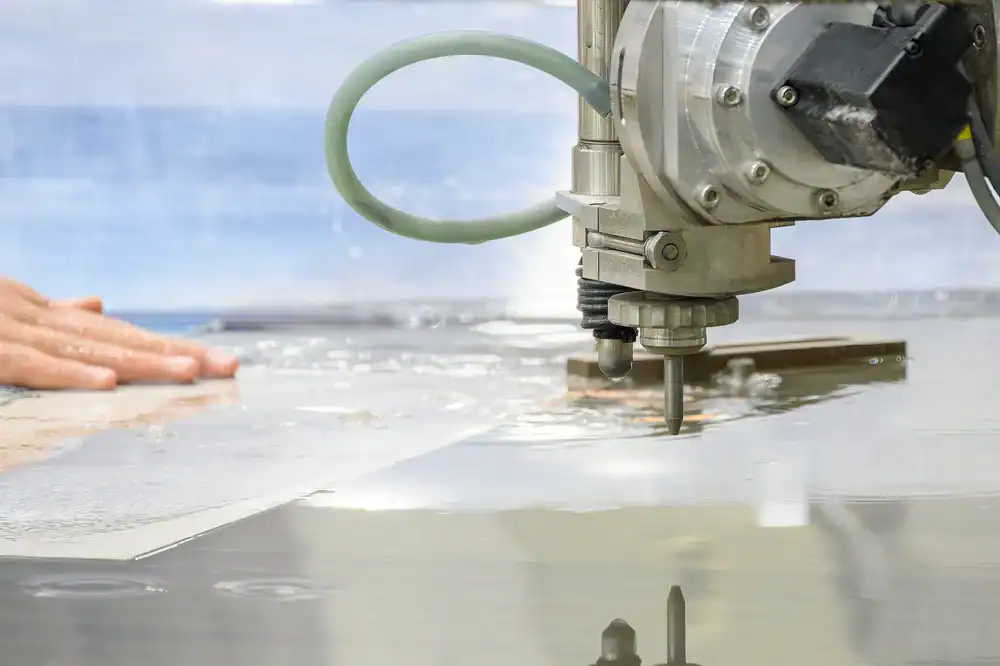
Once the file is dialed in, we load your material onto the cutting table. For harder materials like metals, stone, or composites, we use abrasive waterjet cutting in East Patchogue, NY—that means adding garnet to the high pressure water stream. For softer materials like rubber or foam, pure water does the job.
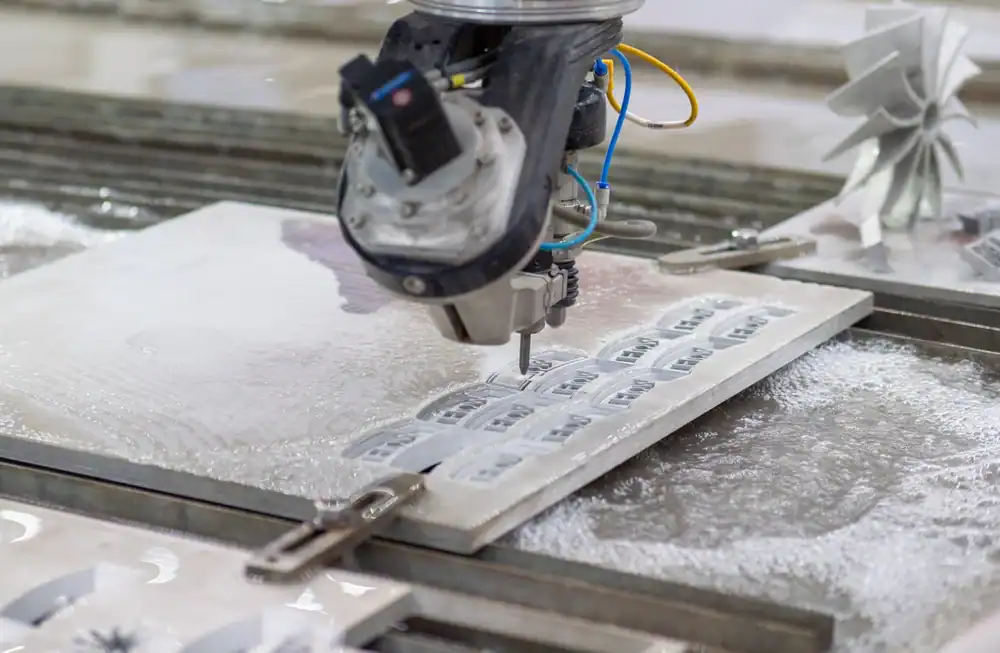
The cutting head moves along your programmed path, slicing through the material with a stream thinner than a credit card. No heat buildup, no tool wear changing your dimensions halfway through the run. When it’s done, you get parts with clean edges and dimensions that match your file. Most customers skip secondary operations entirely.
Ready to get started?
Waterjet cutting services in East Patchogue, NY handle materials other processes struggle with. Thick aluminum plate. Titanium alloys. Layered composites. Stone and glass. Even stacked materials if your project calls for it. The versatility comes from the process itself—water doesn’t care how hard your material is.
You also get flexibility in part complexity. Tight inside corners, intricate patterns, holes and cutouts in the same operation. Our multi-axis equipment cuts at angles, which matters when you’re working with beveled edges or complex 3D forms. One setup often replaces what used to take three or four different operations.
For East Patchogue manufacturers dealing with prototype runs or custom fabrication, this matters. You’re not locked into minimum quantities because of expensive tooling. Design changes don’t mean scrapping thousands of dollars in dies. And because the process is CNC-controlled, your tenth part comes out identical to your first—or your thousandth, if that’s what the job requires.
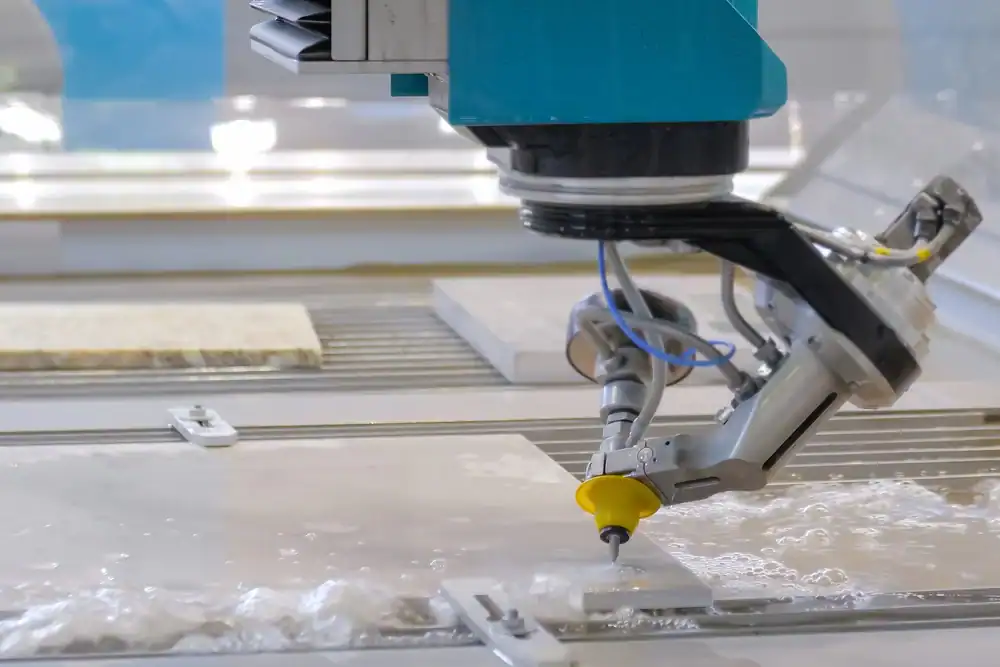
Waterjet cutting in East Patchogue, NY works on materials that cause problems for thermal cutting methods. Titanium and high-nickel alloys don’t harden at the cut edge like they do with plasma or laser. Composites and laminates don’t delaminate because there’s no heat pulling layers apart.
You can cut thick materials—several inches in some cases—without the edge quality degrading like it does with mechanical methods. Stone, glass, and ceramics that would crack under mechanical stress cut cleanly. Even heat-sensitive plastics that warp or melt with other processes stay dimensionally stable.
The process also handles stacked cutting. If you need multiple identical parts from thinner material, you can stack sheets and cut them in one pass. That’s not practical with most other methods, but with high pressure water cutting, it works fine.
Waterjet cutting services in East Patchogue, NY typically hold tolerances around ±0.003 to ±0.005 inches on most materials. With proper setup and calibration, you can get down to ±0.001 inches on critical dimensions. That’s tighter than plasma, which usually runs ±0.020 inches or more.
Laser cutting can match waterjet on thinner materials, but laser accuracy drops off as material thickness increases. Waterjet stays consistent whether you’re cutting 1/8-inch aluminum or 3-inch stainless plate. The kerf width—the width of the cut itself—stays narrow and consistent throughout the entire depth.
The other advantage is no heat-affected zone changing your material properties at the cut edge. With laser or plasma, you get a hardened zone that can measure differently than the base material. That matters when you’re machining or welding afterward. Waterjet doesn’t create that issue.
Most parts cut with abrasive waterjet cutting in East Patchogue, NY come off the table ready to use. The edge finish typically measures between 125 and 250 Ra, which is smooth enough for most applications without additional work. You’re not dealing with slag, dross, or rough oxidized edges that need grinding.
There are situations where you might want secondary finishing. If you need a polished edge for aesthetic reasons, or if your application requires a specific surface finish below what waterjet produces, you’d add a finishing step. But that’s the exception, not the rule.
Compare that to plasma cutting, where you’re almost always grinding or machining edges afterward. Or punch press work, where burrs and deformation are standard. Waterjet eliminates most of that secondary work, which saves time and keeps your costs down. You’re paying for cutting, not cutting plus cleanup.
Pure waterjet uses only high pressure water—typically 50,000 to 60,000 PSI—to cut softer materials. That works for foam, rubber, gaskets, paper, thin plastics, and similar materials. The stream is narrow and precise, but it doesn’t have enough cutting power for metals or hard materials.
Abrasive waterjet cutting in East Patchogue, NY adds garnet particles to that high pressure water stream. The garnet acts like thousands of tiny cutting tools, giving the stream enough power to slice through steel, titanium, stone, glass, and composites. The abrasive gets mixed into the water right before it hits the material, and the used garnet and water get filtered out and disposed of properly.
For most industrial and manufacturing applications, you’re using abrasive waterjet. The added cutting power is what makes the process viable for metals and hard materials. Pure waterjet is faster and cheaper for the materials it can handle, but it’s limited in scope.
Waterjet cutting services in East Patchogue, NY don’t change your material properties because there’s no heat input. When you cut steel with plasma or laser, you’re melting the material. That creates a heat-affected zone where the grain structure changes, hardness increases, and residual stresses develop. If you’re welding or machining that edge later, it behaves differently than the base material.
Waterjet is a cold cutting process. Your material stays at ambient temperature throughout the cut. The metallurgical properties at the cut edge match the properties everywhere else. There’s no hardened zone, no temper change, no stress relief needed afterward.
This matters most with materials sensitive to heat. Aluminum alloys that age-harden can lose temper near a thermal cut. Tool steels can crack from rapid heating and cooling. Composites delaminate when the resin softens. Custom waterjet cutting in East Patchogue, NY avoids all of that because the process never generates heat in the first place.
Standard CAD formats work fine for waterjet cutting in East Patchogue, NY. DXF and DWG files are the most common and easiest to work with. If you’re designing in AutoCAD, SolidWorks, Inventor, or similar programs, you can export directly to DXF and we’ll import it into our CAM software.
We can also work with STEP, IGES, and other 3D formats if your parts have angled cuts or complex geometries that require multi-axis cutting. For simpler 2D parts, a clean DXF with your cut paths clearly defined is all you need. Make sure your file shows actual part dimensions—not scaled drawings—and indicate any critical tolerances or edge finish requirements.
If you don’t have CAD files, we can work from PDF drawings or even marked-up prints for simple parts. The clearer your documentation, the faster we can generate an accurate quote and get your parts into production. When there’s any question about design intent, we’ll reach out before we start cutting.
Useful Links
Other Services we provide in East Patchogue