Hear from Our Customers
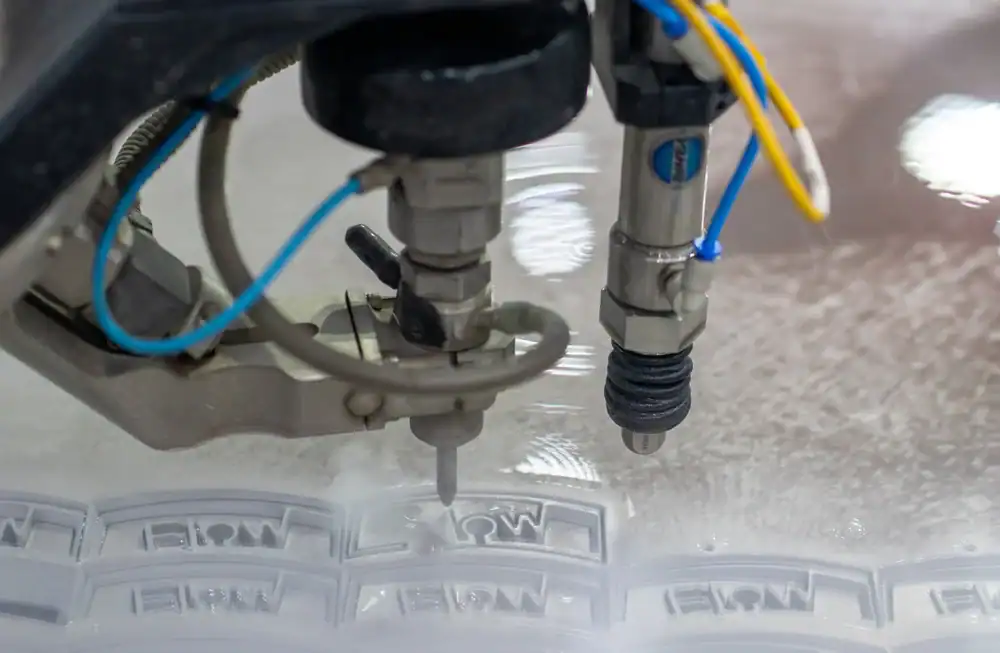
You need parts that fit. Not parts that need rework, secondary finishing, or explanations to your customer about why the tolerances are off.
Waterjet cutting services in Farmingville, NY give you finished edges straight off the machine. No heat-affected zones means no warping on thin materials. No hardening on metals that need to stay workable. No explaining why the part doesn’t match the CAD file.
The process is straightforward: a high-pressure stream mixed with abrasive cuts through your material following your exact specifications. Tolerances hold to 0.003″ to 0.005″ on most jobs. You can stack materials and cut multiple pieces in one pass. The edge quality is clean enough that most parts go straight to assembly or installation without additional work.
Whether you’re running production parts or need a one-off prototype, the setup is fast and the results are consistent. That’s what matters when you’re on a deadline and your reputation depends on the quality of what you deliver.
We serve manufacturers, fabricators, architects, and contractors across Long Island who need precision cutting without the limitations of traditional methods. Based in West Islip and serving Farmingville, NY, we’ve built our reputation on delivering accurate parts when you need them.
Long Island’s manufacturing sector is diverse. You might be cutting decorative panels for a commercial build in one job and precision aerospace components in the next. That’s why material versatility matters—and why we’ve invested in equipment that handles everything from 1/8″ aluminum to 6″ steel plate without changing setups.
You’re not looking for the cheapest option. You’re looking for the option that doesn’t create more problems than it solves. That’s what custom waterjet cutting in Farmingville, NY should deliver: fewer callbacks, less rework, and parts that perform the way you designed them to.
The process starts with your design file—DXF, DWG, or most CAD formats work. We review it for any potential issues with material choice, thickness, or features that might affect cutting. If something looks off, we’ll tell you before we start cutting.
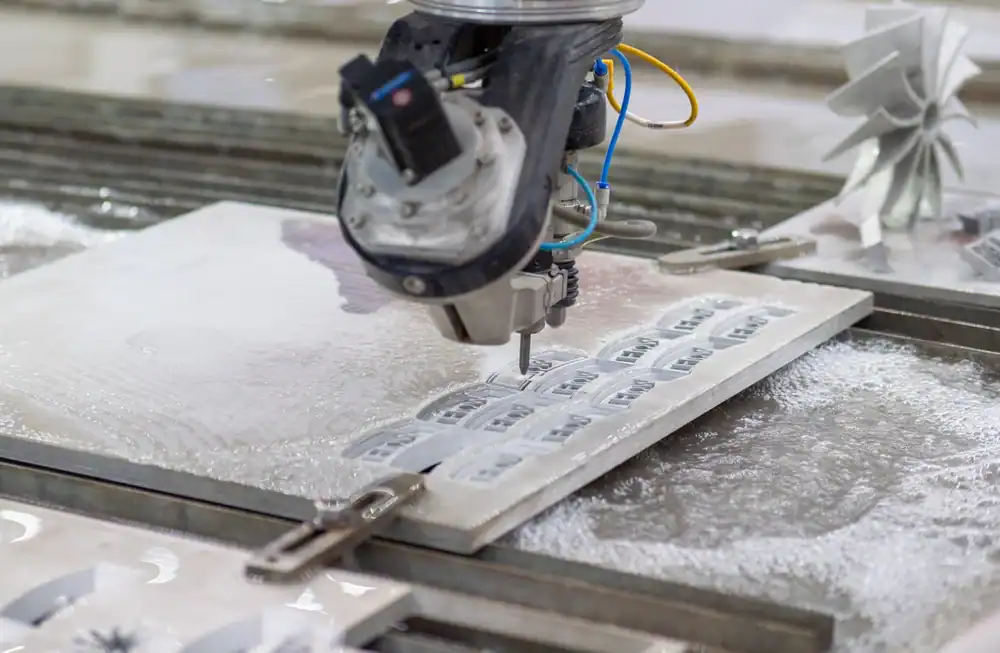
Programming happens quickly. The CNC system converts your design into a tool path that accounts for material type, thickness, and the kerf width of the cutting stream. For most jobs, we’re cutting within hours of receiving your file, not days.
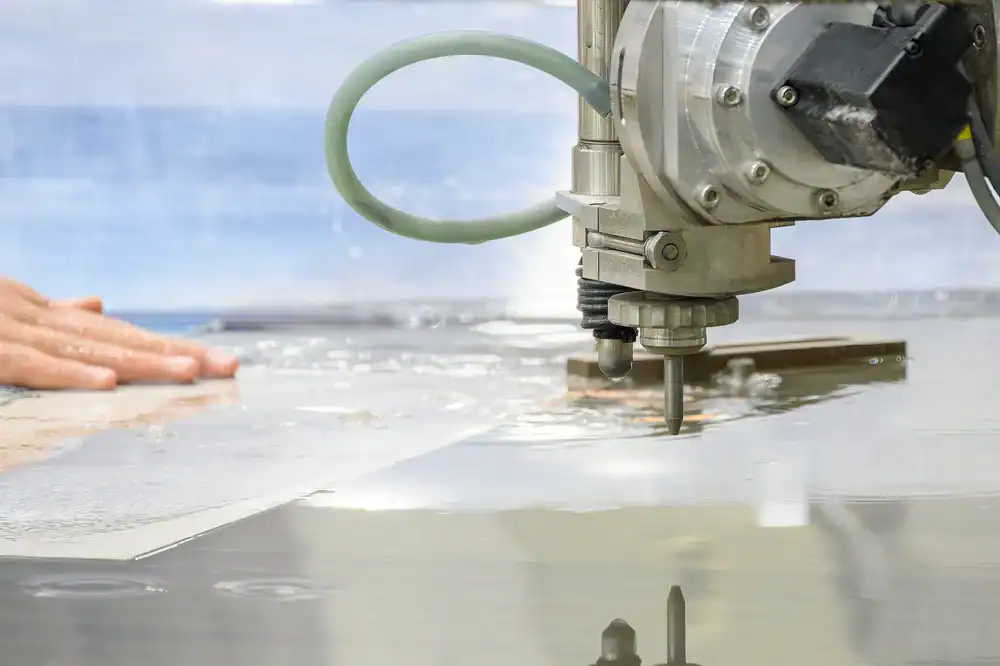
During cutting, a stream of water pressurized to 60,000 PSI mixes with garnet abrasive and erodes through your material. The stream is thinner than a credit card, which means tight nesting and minimal waste. There’s no heat, so materials that warp under laser or plasma stay flat and true to dimension.
After cutting, parts come off the table ready to use. Most applications don’t need deburring or edge finishing. If your design requires multiple parts, we can often stack materials and cut them simultaneously, which speeds up production and keeps your per-piece cost down.
You get parts that match your specifications without the secondary operations that eat into your schedule and budget.
Ready to get started?
Material options include steel, stainless steel, aluminum, titanium, brass, copper, plastics, composites, stone, glass, and rubber. If you’re not sure whether your material will work, ask. Chances are we’ve cut it before.
Thickness capacity ranges from thin foils up to 6″ plate, depending on material hardness. The cutting stream doesn’t discriminate—it handles soft materials without fraying and hard materials without tool wear because there is no tool.
Farmingville’s manufacturing landscape includes job shops, prototype developers, and production facilities that need both one-off custom pieces and repeat production runs. Waterjet cutting in Farmingville, NY accommodates both. Setup time is minimal compared to traditional machining, which makes short runs economically viable.
Turnaround depends on complexity and queue, but most jobs cut within 24 to 48 hours of file approval. Rush services are available when your timeline doesn’t allow for standard lead times.
The environmental aspect matters too. The process generates no hazardous fumes, no burnt material, and the abrasive is inert garnet that’s safe to handle and dispose of. For shops working in shared facilities or near residential areas, that’s not a small consideration.
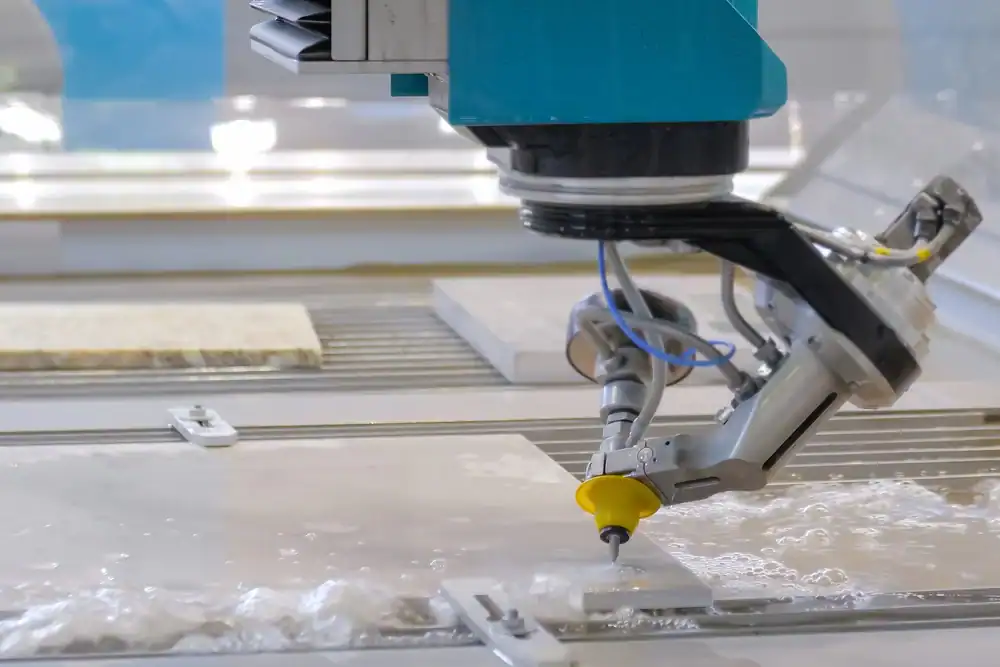
Waterjet cuts materials that would burn, melt, or deform under heat-based cutting. That includes composites with mixed densities, laminates that would delaminate under heat, and thin metals that warp under laser or plasma.
Rubber and foam cut cleanly without compression. Glass and stone cut without cracking. Titanium and hardened tool steels cut without work hardening the edge. If you’ve been told a material is “difficult to cut,” waterjet is usually the answer.
The cold-cutting process also means you can cut materials with pre-applied finishes, coatings, or heat-sensitive adhesives without damaging them. That saves you from having to cut first and finish later, which reduces handling and potential for damage between operations.
Laser works well for thinner materials and extremely fast cutting speeds on mild steel. But it introduces heat, which creates a heat-affected zone along the cut edge. That zone can be harder than the base material, which matters if you’re bending, welding, or machining after cutting.
Waterjet produces no heat-affected zone. The material properties remain consistent right up to the cut edge. For thicker materials—anything over 1/2″ in most cases—waterjet is faster than laser and produces a better edge quality.
Reflective materials like aluminum, copper, and brass are problematic for lasers because they reflect the beam. Waterjet doesn’t care about reflectivity. It cuts all metals at the same efficiency regardless of surface finish or material color. If you’re working with mixed materials or thicker plate, waterjet is the more versatile option.
Standard waterjet cutting holds tolerances between 0.003″ and 0.005″ depending on material type and thickness. That’s tight enough for most mechanical assemblies, brackets, and structural components.
For applications requiring tighter tolerances—aerospace parts, precision tooling, or medical components—abrasive waterjet cutting in Farmingville, NY can achieve 0.001″ with specialized nozzles and slower cutting speeds. You’ll pay a bit more for that level of precision, but it’s available when your application demands it.
Tolerances also depend on material behavior. Softer materials like rubber or foam have more inherent variability than metals. Thicker materials take longer to cut, which can introduce slight taper. We’ll tell you upfront what’s realistic for your specific combination of material, thickness, and feature size.
Most jobs cut within 24 to 48 hours after we receive and approve your file. Simple parts with straightforward geometry cut faster. Complex parts with intricate details or very thick materials take longer.
Programming time is minimal—usually 15 to 30 minutes for typical jobs. The actual cutting speed depends on material type and thickness. Thin aluminum might cut at 20 inches per minute. Thick stainless steel might cut at 2 inches per minute. We’ll give you an accurate time estimate once we review your file.
Rush services are available if your timeline is tighter. We’ve turned around emergency jobs in same-day timeframes when the situation requires it. Production runs get scheduled based on volume and complexity, but repeat orders typically move faster because the programming is already done.
Waterjet creates less waste than most cutting methods because the cutting stream is so narrow—typically 0.030″ to 0.040″ wide. That means parts can nest tightly on the sheet with minimal space between them.
For production runs, efficient nesting can reduce material waste by 10% to 20% compared to wider-kerf processes like plasma cutting. That adds up quickly when you’re cutting expensive materials like stainless steel, titanium, or specialty alloys.
The abrasive material—garnet—is a natural mineral that’s non-toxic and safe to dispose of in standard waste streams. The water recirculates in a closed system, so water consumption is lower than you might expect. We recycle the garnet when possible and dispose of it responsibly when it’s spent. There are no hazardous fumes, no toxic byproducts, and no special ventilation requirements.
DXF and DWG files are the most common and easiest to work with. These CAD formats translate directly into tool paths without conversion issues. Most design software—AutoCAD, SolidWorks, Inventor, Fusion 360—exports to these formats.
We can also work with STEP, IGES, and PDF files, though PDFs sometimes require cleanup if they contain raster images instead of vector lines. The cleaner your file, the faster we can program and cut.
If you’re not sure about your file format or need help preparing drawings for cutting, we’ll walk you through it. It’s better to ask upfront than to discover issues after cutting starts. Include material type, thickness, and quantity in your request so we can give you an accurate quote and timeline. Most custom waterjet cutting in Farmingville, NY starts with a quick conversation about your file and your expectations—it takes five minutes and prevents problems later.
Useful Links
Other Services we provide in Farmingville