Hear from Our Customers
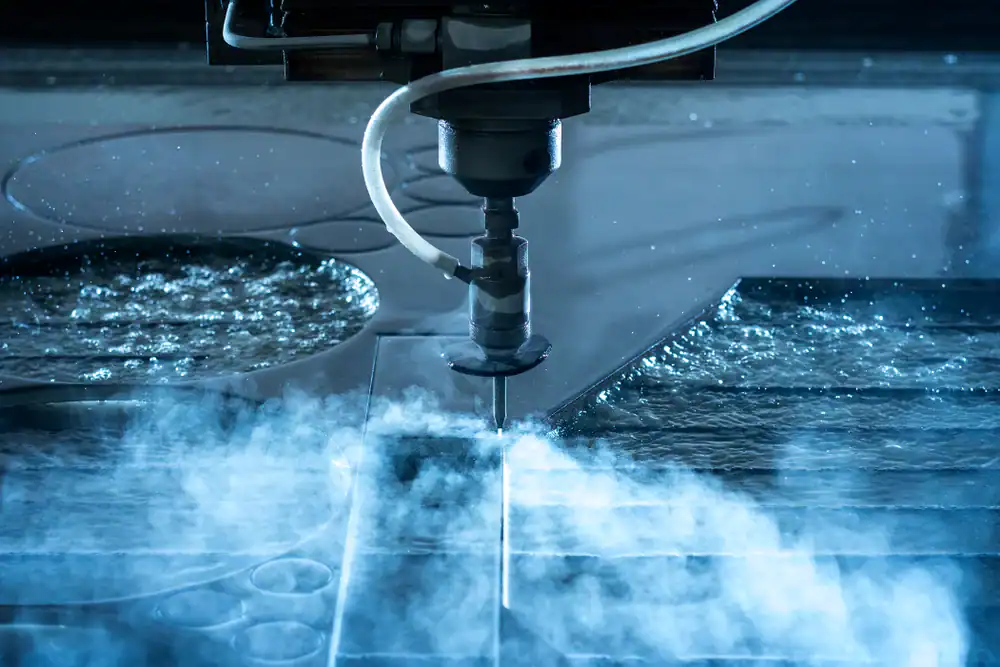
You’re dealing with materials that can’t handle thermal stress. Laser cutting leaves heat-affected zones that compromise material integrity. Plasma warps thin stock. Traditional methods force you into secondary finishing that eats up time and budget.
High pressure water cutting in Freeport, NY solves that. The process stays cold from start to finish. Your aluminum doesn’t warp. Your stainless keeps its properties. Your composites don’t delaminate. You get a finished edge that’s ready to use, not one that needs another trip through the shop.
That matters when you’re supplying aerospace companies that reject parts for missing tolerance by thousandths of an inch. It matters when your production schedule doesn’t have room for do-overs. And it matters when your reputation depends on consistency across every piece you deliver.
We operate in the heart of Long Island’s manufacturing corridor. That’s not marketing talk—Suffolk County is home to over 2,000 manufacturing companies, many supplying aerospace giants like Boeing, Lockheed, and Northrup-Grumman. We know what those contracts demand because we cut parts that meet those same standards.
Our abrasive waterjet cutting in Freeport, NY handles everything from one-off prototypes to production runs. We work with engineering teams who need CAD files turned into components fast, and we work with fabricators who need complex geometries cut clean the first time.
You’re not getting a national provider who treats your job like a ticket number. You’re working with a local shop that understands tight deadlines, tighter tolerances, and the cost of getting it wrong.
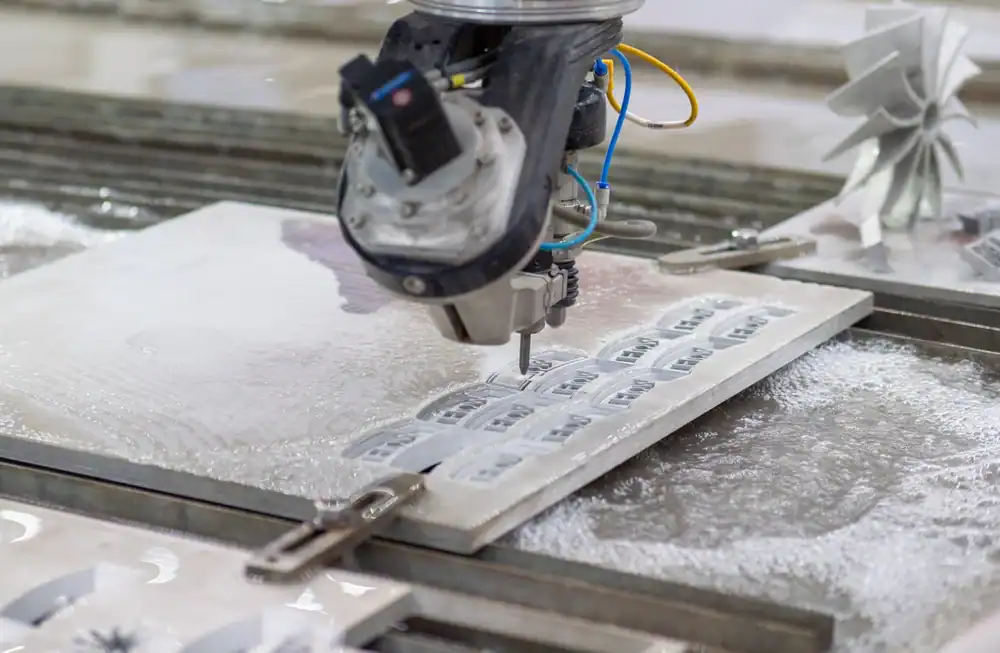
You send us your CAD file or design specs. We review it for material type, thickness, and tolerance requirements. If something won’t cut cleanly or needs adjustment for optimal results, we’ll tell you before we start—not after.
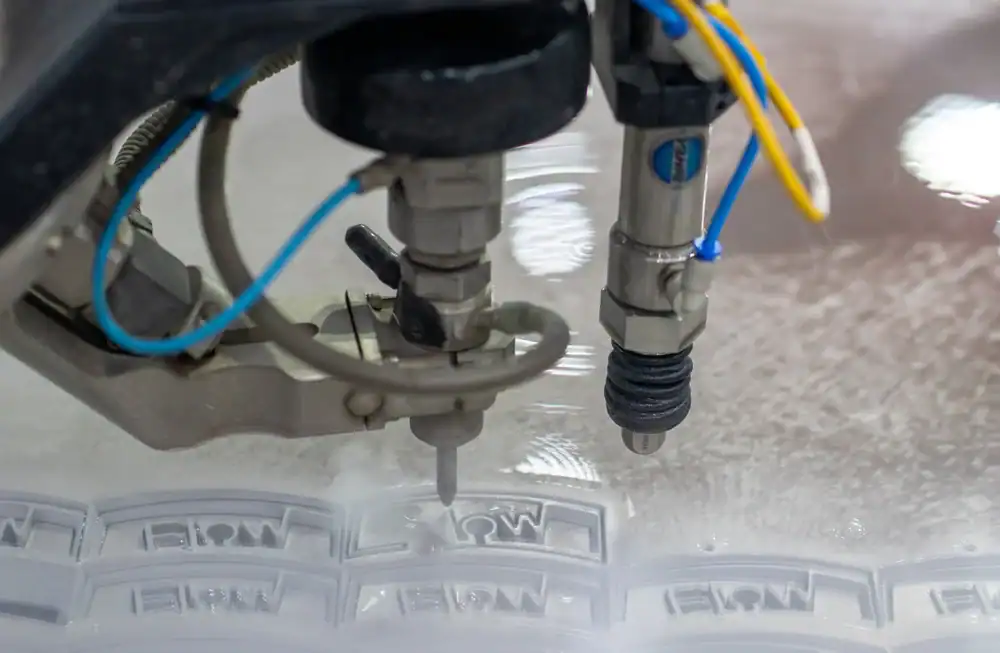
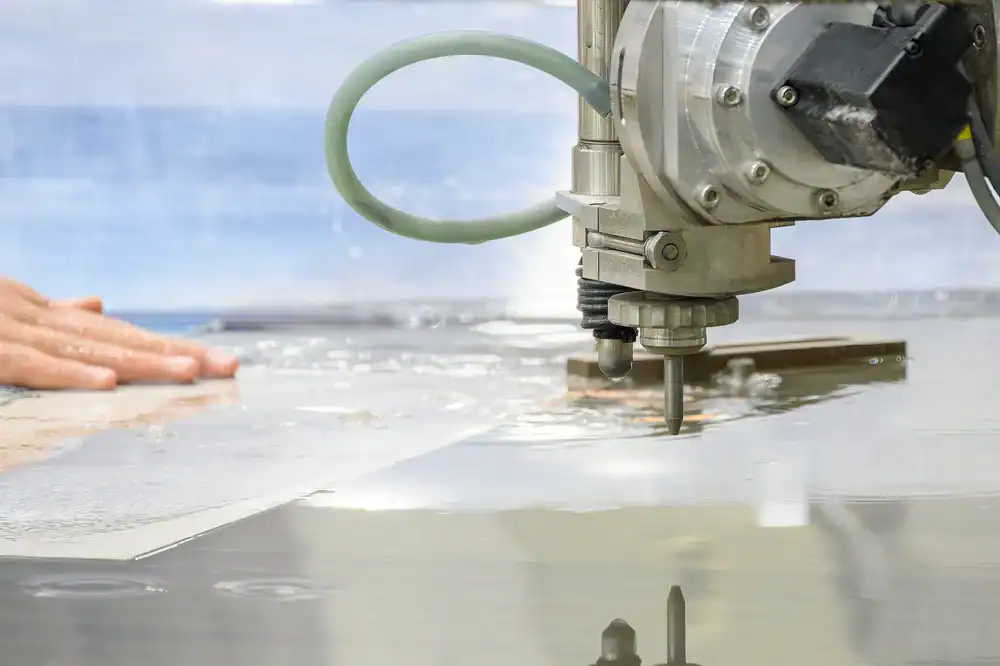
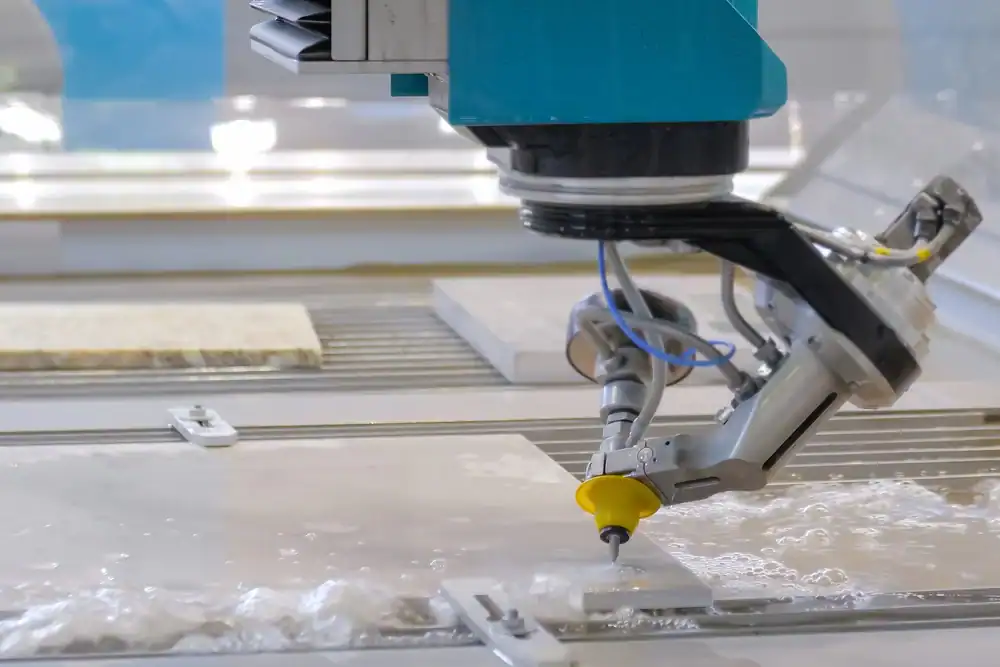
Once the file is programmed, our CNC waterjet system handles the rest. A high-pressure stream of water mixed with fine abrasive garnet cuts through your material at speeds up to 60,000 PSI. The cutting head follows your design with precision control, holding tolerances as tight as ±0.002″ when the job calls for it. There’s no heat, no fumes, no material distortion.
After cutting, parts come off the table ready for assembly or finishing. Most jobs don’t need additional edge work. If you’re running production quantities, we maintain consistency across every piece. If it’s a prototype, you get it back fast so you can test, iterate, or move to manufacturing.
The process works across metals, glass, stone, plastics, rubber, composites—basically anything except tempered glass. Thickness ranges from 1/32″ rubber gaskets up to 6″ steel plate.
Ready to get started?
Custom waterjet cutting services in Freeport, NY means you’re getting material versatility that other processes can’t match. We cut titanium for aerospace applications, stainless for marine components, aluminum for architectural elements, and composites for specialty manufacturing. Each material gets dialed-in parameters that account for thickness, hardness, and your tolerance requirements.
You also get speed where it counts. Prototypes turn around in days, not weeks. Production runs stay on schedule because our systems are built for volume without sacrificing accuracy. And because waterjet cutting produces minimal waste with tight nesting capabilities, your material costs stay lower than they would with punch presses or traditional fabrication methods.
Freeport’s location puts you near major shipping routes and Long Island’s dense manufacturing ecosystem. That means faster material sourcing and shorter lead times when you’re coordinating multi-supplier projects. It also means we understand the local pace—aerospace contracts don’t wait, marine season has deadlines, and construction schedules are non-negotiable.
The environmental angle matters too. Waterjet systems don’t produce hazardous waste or toxic fumes. The water recycles. The garnet abrasive is inert and disposable in standard landfills. If your company tracks sustainability metrics or needs to meet environmental standards, this process checks those boxes without compromise.
Standard waterjet cutting in Freeport, NY holds ±0.005″ consistently across most materials and thicknesses. That’s tight enough for the majority of aerospace, manufacturing, and fabrication work without premium pricing.
If your application demands ±0.002″, we can hit it—but it requires test cuts, fresh calibration, and slower cutting speeds. That level of precision comes at a premium because it’s not a standard production setting. Most projects don’t need it.
The real question is whether your design actually requires that tolerance or if it’s spec’d tighter than necessary. We’ll walk through your prints and tell you honestly where you can relax tolerances to save cost and where you need to hold the line. That conversation happens before we cut, not after you’ve paid for precision you didn’t need.
Laser cutting is fast and works well for thinner metals with simple geometries. But it generates intense heat that creates a heat-affected zone around every cut. That zone changes the material’s properties—hardness, tensile strength, and dimensional stability all shift. For aerospace or precision applications, that’s a problem.
Waterjet cutting in Freeport, NY stays completely cold. There’s no heat-affected zone, no warping, no hardened edges that dull your tools during secondary operations. The material’s integrity stays intact from edge to edge.
Lasers also struggle with thicker materials and reflective metals like aluminum or copper. Waterjet handles both without issue, cutting up to 6″ thick steel or delicate 1/32″ rubber with the same system. If your project involves multiple material types or thicknesses, waterjet gives you more flexibility without switching processes or vendors.
Yes, but there are physical limits based on the kerf width—the width of the cut itself. Standard abrasive waterjet cutting uses a kerf around 0.040″, which means inside corners will have a small radius rather than a sharp 90-degree angle.
For most applications, that’s not an issue. But if your design requires sharp internal corners or extremely fine details smaller than the kerf width, we’ll flag it during file review. Sometimes a design tweak solves it. Other times, a secondary process like EDM makes more sense for those specific features.
Complex external shapes, intricate patterns, artistic designs, and tight curves are all fair game. The CNC control follows your CAD file precisely, so if you can draw it, we can usually cut it. We’ve handled everything from architectural panels with detailed cutouts to custom gaskets with dozens of bolt holes to aerospace brackets with complex geometries.
Abrasive waterjet cutting in Freeport, NY cuts metals (aluminum, stainless steel, titanium, tool steel, copper, brass), composites (carbon fiber, fiberglass, Kevlar), plastics (acrylic, polycarbonate, UHMW, nylon), stone (granite, marble, quartz), glass, rubber, foam, and wood. Basically anything except tempered glass, which shatters under the pressure.
Each material behaves differently under the cutting stream, so we adjust pressure, abrasive flow, and cutting speed accordingly. Softer materials like rubber or foam cut fast with minimal abrasive. Harder materials like titanium or tool steel require more abrasive and slower speeds to maintain edge quality and tolerance.
Thickness capacity ranges from 1/32″ up to 6″ depending on material hardness. Thicker cuts take longer and may have slightly wider tolerances on the bottom edge due to stream deflection, but we account for that in programming. If your project mixes materials—say, a stainless steel frame with rubber gaskets—we can handle both in one setup rather than forcing you to coordinate multiple suppliers.
Prototypes and small custom runs typically turn around in 3-5 business days from file approval. Rush jobs can move faster if the schedule allows—sometimes same-day or next-day for urgent needs.
Production runs depend on quantity, material, and complexity. A hundred parts with simple geometries might finish in a week. A thousand parts with intricate cuts and tight tolerances will take longer. We’ll give you a realistic timeline upfront based on your specific job, not a generic estimate.
The advantage of working with a waterjet cutting shop in Freeport, NY is proximity. You’re not shipping parts across the country and waiting on freight delays. You’re working with a local provider who can coordinate pickups, adjust schedules when your project changes, and communicate in real time when issues come up. That flexibility matters when you’re managing tight deadlines or last-minute design revisions.
Waterjet cutting costs more per hour than plasma or oxy-fuel cutting, but it often costs less overall because you’re not paying for secondary finishing, fixturing, or scrapped parts. The edge comes off the table ready to weld, assemble, or coat—no grinding, no deburring, no cleanup.
Compared to laser cutting, waterjet is slower on thin materials but faster on thick stock. It also handles a wider range of materials without needing different machines or setups. If your project involves multiple material types, waterjet saves you the cost and coordination headache of managing multiple vendors.
The real cost comparison depends on your specific job—material type, thickness, quantity, and tolerance requirements all factor in. We’ll quote your project honestly based on what the work actually requires, not what we think we can sell. Sometimes waterjet is the most cost-effective option. Sometimes it’s not. We’ll tell you either way before you commit.
Useful Links
Other Services we provide in Freeport