Hear from Our Customers
You’re not looking for another vendor who promises fast turnaround but delivers parts that need secondary finishing. You need custom waterjet cutting in Greenlawn, NY that shows up accurate, on time, and ready to use.
That’s what cold-cutting technology does. No heat-affected zones means your material properties stay intact. No warping, no hardening, no microfractures that show up later when you’re already in production.
Whether you’re cutting half-inch aluminum brackets or two-inch titanium plates, the process stays consistent. Tolerances hold to ±0.003 inches. Edges come out clean enough that most jobs skip deburring entirely. You save time, you save money on secondary operations, and your production schedule doesn’t get held up waiting for parts that need correction.
We serve manufacturers, architects, contractors, and designers across Greenlawn, NY who need precision cutting without the limitations of traditional methods. We’re not the cheapest option, and that matters when you’re working with expensive materials or tight deadlines.
Greenlawn’s manufacturing sector relies on precision fabrication, especially with the area’s concentration of aerospace component suppliers and custom metal shops. When 51% of aerospace manufacturers depend on waterjet technology for critical parts, you need a cutting partner who understands what’s at stake.
We’ve built our reputation on delivering what we promise: accurate cuts, transparent communication, and turnaround times that keep your projects moving. No surprises, no excuses.
You send us your design file or specs. We review it for any potential issues with material choice, thickness, or geometry that might affect the cut quality or your timeline. If something looks off, we tell you before we start cutting.
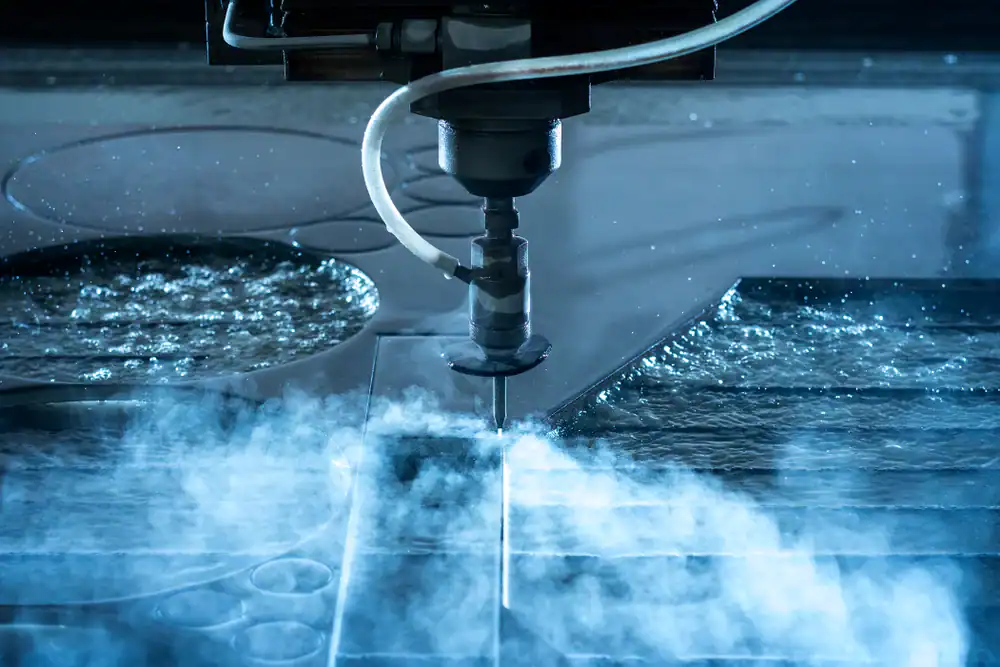
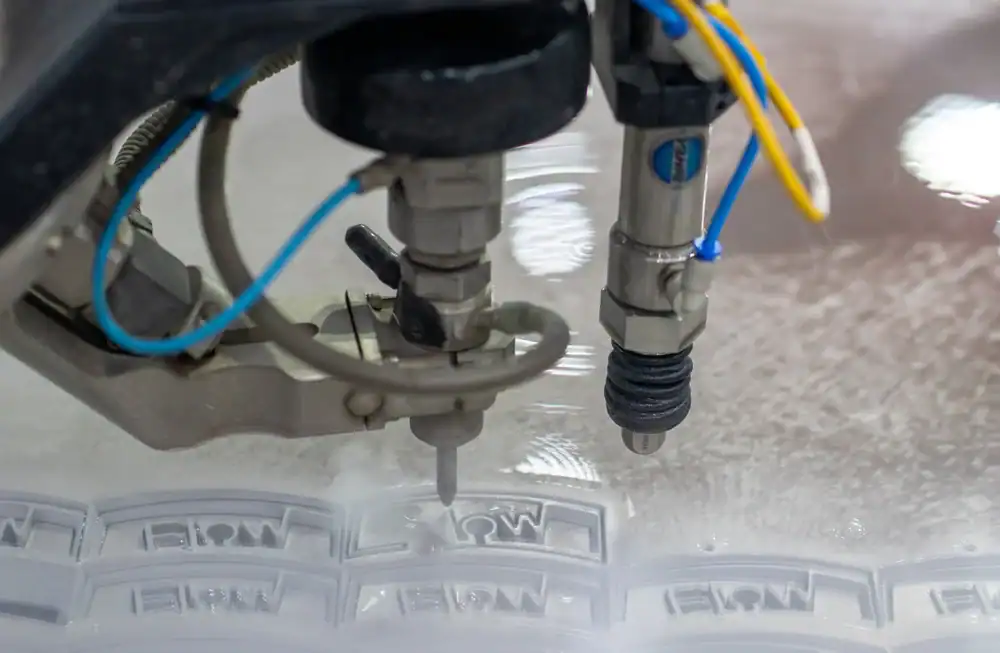
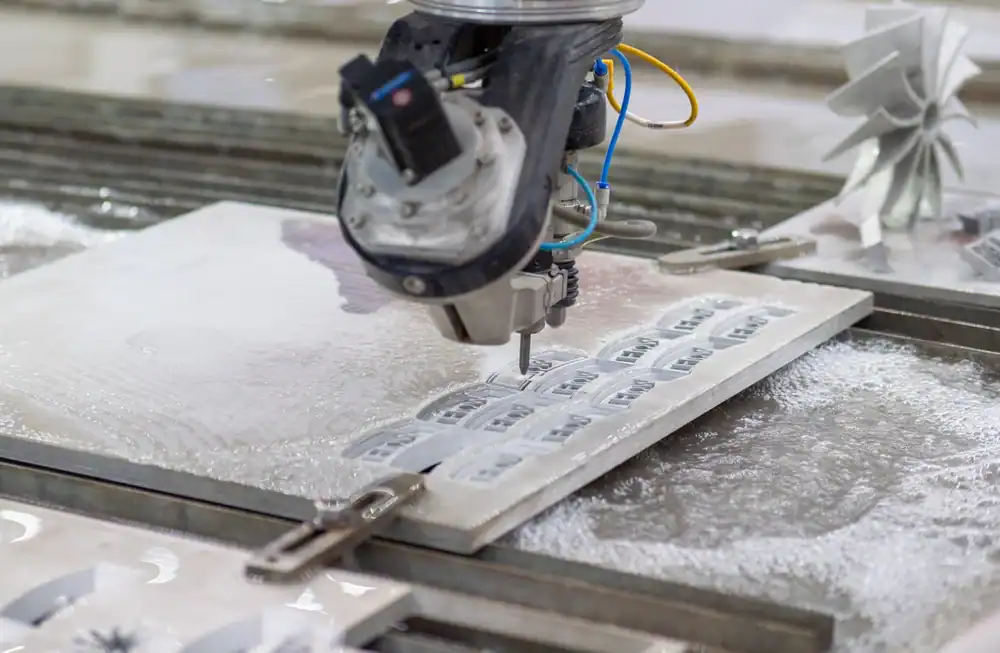
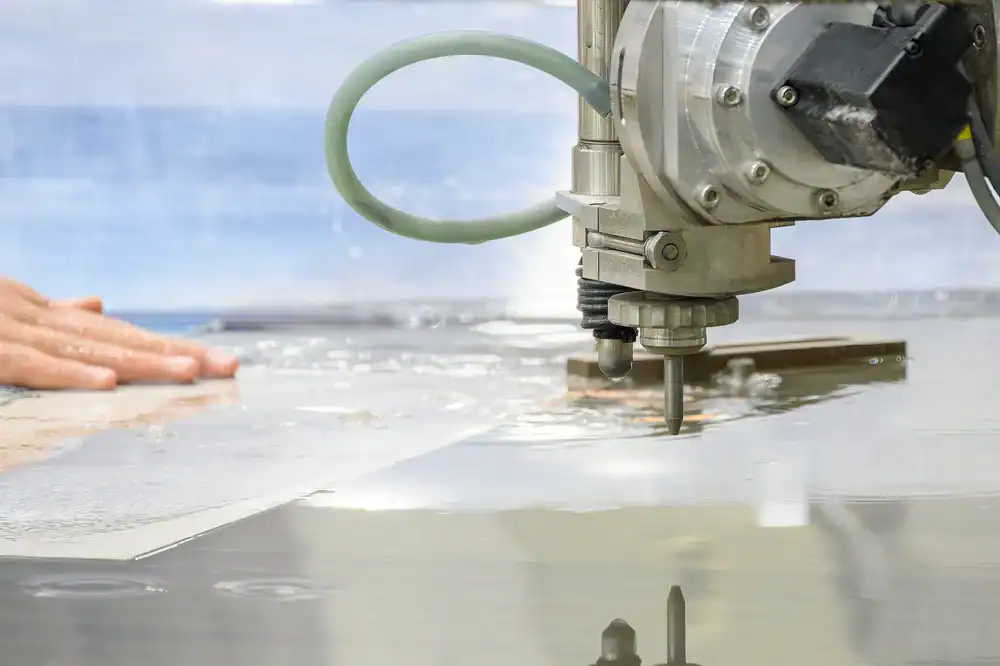
Once we’ve confirmed everything, we program the cut path and load your material. Our high pressure water cutting system in Greenlawn, NY uses a stream thinner than a needle, mixed with garnet abrasive, pressurized up to 60,000 PSI. That stream cuts through your material following the exact path we programmed.
The process is fast. Complex geometries that would take hours on a mill or require multiple setups get done in a single pass. No tool changes, no repositioning, no accumulated tolerance stack-up. When the cut finishes, your parts come off the table ready for inspection and use. Most jobs ship same-day or next-day, depending on material availability and queue.
Ready to get started?
You get cuts through virtually any material. Steel, aluminum, titanium, brass, copper. Glass, stone, ceramic, composites. Plastics, rubber, foam. If it’s a solid material under six inches thick, abrasive waterjet cutting in Greenlawn, NY handles it without changing tooling or setup.
You get complex geometry without the complexity. 5-axis capability means we cut tapers, bevels, and contoured surfaces in the same pass as the profile. No need to move your part to a secondary machine for angled cuts.
You get edge quality that often eliminates finishing. The kerf width stays consistent, typically 0.030″ to 0.040″ depending on material and thickness. Corners stay sharp. Inside radii hold tight. Surface finish comes out smooth enough for most applications without additional grinding or sanding.
Greenlawn’s manufacturing facilities increasingly demand environmentally responsible processes. Waterjet cutting produces no hazardous fumes, no toxic dust, and the water plus abrasive can be filtered and recycled. The garnet abrasive is inert and safe for standard disposal. When 63% of local fabrication shops now prioritize environmental compliance, this matters for your own certifications and reporting requirements.
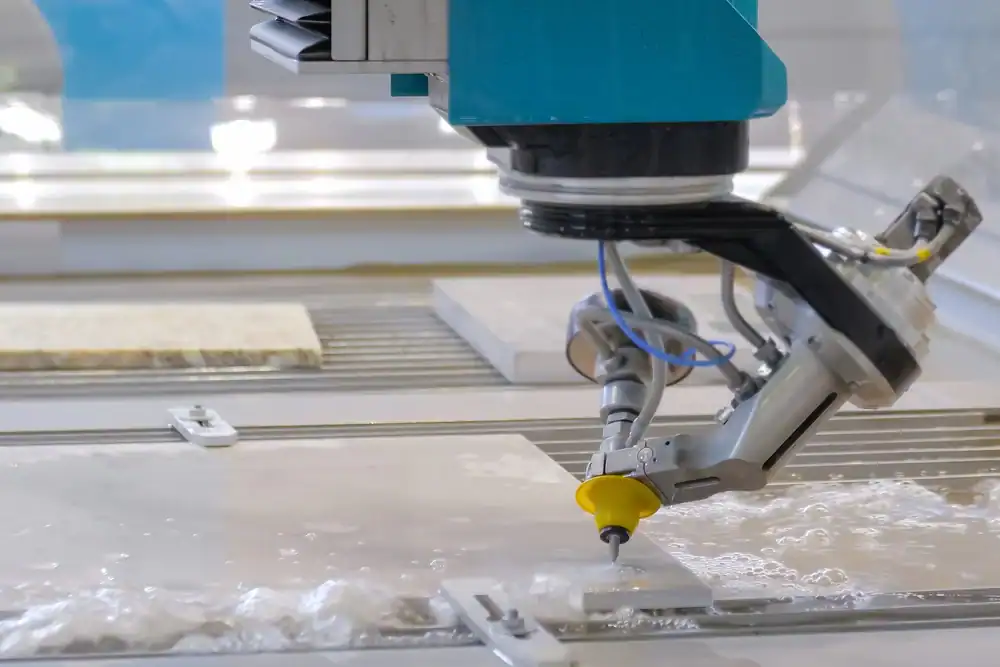
Waterjet cuts materials that would crack, melt, or deform under traditional cutting methods. Tempered glass comes out clean without shattering. Titanium cuts without work hardening the edges. Layered composites separate without delamination.
The cold-cutting process means there’s zero heat input into your material. That matters when you’re working with metals that change properties under heat, plastics that melt at low temperatures, or any material where thermal stress causes problems.
Thickness isn’t a limiting factor either. We’ve cut six-inch steel plate and quarter-inch acrylic with the same machine. The stream adjusts for material hardness and thickness, but the process stays the same. If you’re currently using laser, plasma, or mechanical cutting and running into material limitations, waterjet likely solves it.
Modern waterjet systems hold tolerances between ±0.003″ and ±0.005″ depending on material thickness and type. For most precision manufacturing, that’s tight enough to eliminate secondary machining operations.
The accuracy comes from computer-controlled positioning and a cutting stream that doesn’t deflect like a mechanical tool. There’s no tool wear changing dimensions mid-cut, no heat expansion throwing off measurements, and no vibration affecting edge quality.
Where you need to pay attention is material thickness. Thicker materials can develop slight taper as the stream loses energy passing through. For parts under two inches, taper is negligible. Above that, we compensate in the programming or use 5-axis cutting to maintain perpendicular edges. If your prints call out tight perpendicularity or flatness, tell us up front so we can program accordingly.
Most jobs cut and ship within 24 to 48 hours, assuming we have your material in stock or you’re providing it. Rush jobs can turn same-day if you need them and our schedule allows it.
The speed comes from minimal setup time. We’re not building custom tooling or fixtures for each job. Load the material, program the path, start cutting. Complex parts that would take days on conventional equipment often finish in hours on the waterjet.
What slows things down is material procurement. If you’re cutting something unusual or need certified material with specific test reports, that adds lead time. The actual cutting is fast—it’s the logistics around it that determine your delivery date. If you’ve got a hard deadline, tell us that when you request the quote so we can plan accordingly.
Most waterjet cuts come off the table with minimal to no burrs, especially on metals under one inch thick. The exit side might have slight burr depending on material type, but it’s usually light enough to wipe off by hand.
Compare that to laser cutting, which leaves heat-affected zones and hardened edges that need grinding. Or plasma, which produces heavy dross that requires significant cleanup. Waterjet’s mechanical cutting action shears through material cleanly without melting or burning.
Thicker materials and harder alloys sometimes develop more pronounced exit burrs. If your application can’t tolerate any burr at all, we can adjust cutting parameters to minimize it, though that might add time to the cut. For most manufacturing applications, the edge quality straight off the waterjet is acceptable for final use. If you need specific edge finish or surface roughness, include those specs in your drawing notes.
Waterjet typically costs more per hour of machine time than laser or plasma, but you’re comparing the wrong metric. What matters is total cost to get a finished, usable part.
Waterjet often comes out cheaper when you factor in the full process. No secondary deburring. No heat treatment to relieve stress. No scrapped parts from warping or cracking. No expensive tooling for complex shapes. You’re paying for machine time, but you’re eliminating other costs that don’t show up on the cutting invoice.
Material thickness changes the equation too. Laser loses efficiency on thick materials and can’t cut some materials at all. Plasma produces rough edges that need extensive finishing. Waterjet maintains consistent quality and speed regardless of thickness. If you’re cutting anything over half an inch thick, or working with materials that don’t laser well, waterjet usually ends up being the more economical choice when you calculate total manufacturing cost.
Waterjet works for both. The lack of hard tooling means there’s no setup cost penalty for small quantities. Cutting one part costs the same per piece as cutting one hundred parts—you’re just paying for more machine time.
For production runs, the speed depends on part complexity and material. Simple profiles in thin material cut fast enough that waterjet competes with stamping or punching for quantities up to several hundred pieces. Complex geometries with tight tolerances often make waterjet the only practical option regardless of quantity.
The break-even point versus stamping or hard tooling usually sits somewhere between 500 and 2,000 pieces, depending on part complexity. Below that, waterjet almost always costs less when you account for tooling expense and lead time. Above that, it depends on whether your part geometry justifies the tooling investment. If your volumes fluctuate or you’re still refining the design, waterjet gives you flexibility that hard tooling doesn’t.
Useful Links
Other Services we provide in Greenlawn